
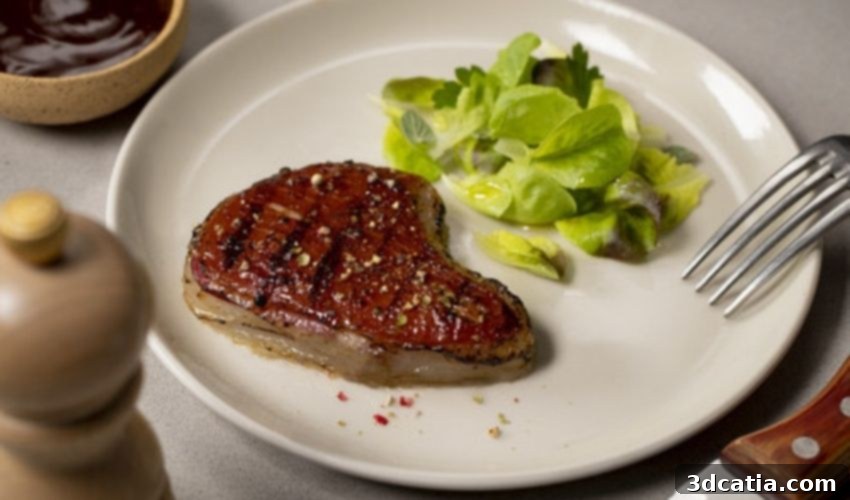
3D Printed Meat: MeaTech Unveils the World’s Largest Bioprinted Steak, Revolutionizing Sustainable Food
The future of food is taking a delicious and innovative turn as 3D printed meat is once again making headlines. MeaTech 3D, a pioneering company at the forefront of cultured meat development, has achieved a groundbreaking milestone by successfully bioprinting a 3.67oz (104g) steak. This remarkable accomplishment is not just a technological feat; it is claimed to be the largest cultured steak worldwide to date, marking a significant leap forward in the quest for sustainable and ethical meat alternatives. MeaTech utilized its innovative bioprinting method, which leverages real animal cells, to bring this vision to fruition. This news underscores a continuous and accelerating progression in the realm of 3D printed meat, a sector that has been steadily expanding in recent years, driven by a growing global imperative to address animal welfare concerns and mitigate the escalating environmental impact associated with conventional livestock farming.
The creation of this unprecedented bioprinted steak involved a meticulously designed and executed process. MeaTech initiated the journey by carefully isolating bovine stem cells from animal samples, a crucial first step in their sophisticated cellular agriculture approach. These isolated stem cells were then meticulously multiplied in a controlled laboratory environment, ensuring a sufficient volume of cellular material for the subsequent stages. Once harvested, these cells were ingeniously transformed into specialized bio-inks. These bio-inks are uniquely formulated to be compatible with MeaTech’s proprietary 3D bioprinter, a marvel of precision engineering. The printer then meticulously deposited these bio-inks according to a sophisticated digital design that replicates the complex, heterogeneous structure of a natural steak, including muscle and fat distribution. Following the printing phase, the nascent steak was carefully transferred to an incubator. This critical maturation process allowed the printed stem cells to differentiate into their respective target tissues – muscle cells developing into muscle fibers and adipose (fat) cells forming fat tissue. This differentiation is paramount, as it is what imparts the resulting bioprinted steak with the realistic texture, marbling, and flavor profile characteristic of conventional meat, making it much more authentic and appealing to consumers.

MeaTech’s strategic decision to employ 3D bioprinting for steak production was rooted in a profound understanding of the inherent complexities involved in replicating the intricate tissue patterns found in premium cuts of meat. Achieving the characteristic marbling, grain, and mouthfeel of a traditional steak demands a level of precision that simpler methods often cannot provide. With this latest monumental achievement, MeaTech is confidently advancing towards its ambitious overarching goal: to develop a true and indistinguishable replacement for conventional steak. Their vision prioritizes maximizing cell-based content, diverging significantly from many contemporary meat alternatives that heavily rely on non-meat ingredients like plant proteins. This approach is relatively unique and sets MeaTech apart within the burgeoning cultured meat sector. Instead of attempting to mimic meat using plant-derived proteins such as soy or pea, MeaTech has pursued a more direct route, applying for a patent for a novel bioprinting method specifically designed to create chicken and steak products utilizing real animal cells. While many other available 3D printed meat products are plant-based, the concept of printing meat using actual cells is not entirely new. As a notable example, in February, Aleph Farms garnered attention by announcing their successful creation of a ribeye steak through 3D bioprinting real cow cells, underscoring the collaborative and competitive spirit driving innovation in this space.
The past few years have indeed witnessed a significant and accelerating trend in the development and introduction of 3D printed meat products. This innovation encompasses both plant-protein-based alternatives and sophisticated cell-based approaches. Drawing inspiration from similar bioprinting projects that aim to create human organs for medical applications, 3D printed meat endeavors to provide tangible solutions to the escalating environmental and animal welfare concerns that increasingly burden the traditional meat industry. The advantages of bioprinted meat extend beyond these critical ethical and ecological considerations. As MeaTech highlights, their bioprinted steaks offer several compelling benefits that could revolutionize the food supply chain. For instance, the production cycle for bioprinted steak is dramatically faster compared to farm-raised steak, which typically requires approximately 18 months to reach the consumer’s plate. This efficiency in production offers a potential pathway to enhanced food security and responsiveness to market demands. Furthermore, since bioprinted meat is cultivated in a highly controlled, sterile laboratory environment, the risk of bacterial contamination, a common issue in conventional meat processing, is significantly minimized. MeaTech hopes that this inherent cleanliness will translate into a longer shelf life for their bioprinted steaks, potentially reducing food waste and improving consumer safety. While MeaTech’s steaks are not yet available in supermarkets, the company is actively engaged in crucial discussions and collaborative efforts with regulatory bodies worldwide to secure the necessary approvals for global distribution, paving the way for these innovative products to reach consumers around the world.
The Environmental and Ethical Imperative for Cultured Meat
The urgency to develop sustainable meat alternatives like MeaTech’s bioprinted steak stems from pressing global challenges. Traditional livestock farming is a major contributor to greenhouse gas emissions, deforestation for pastureland, and excessive water consumption. By producing meat in a lab, the environmental footprint can be drastically reduced. Estimates suggest that cultured meat could use up to 96% less water, 99% less land, and emit 78-96% fewer greenhouse gases than conventional beef production. Furthermore, the ethical considerations surrounding animal welfare are paramount. The industrial scale of traditional meat production often raises concerns about animal cruelty, factory farming conditions, and the widespread use of antibiotics. Bioprinted meat eliminates the need for animal slaughter, offering a cruelty-free solution that aligns with evolving consumer values. This technological leap represents not just a food innovation, but a humanitarian and ecological necessity.
Addressing Challenges: From Cost to Consumer Acceptance
Despite the exciting progress, the cultured meat industry faces significant hurdles. One of the primary challenges is cost. Currently, producing bioprinted meat remains significantly more expensive than conventional meat due to the specialized equipment, growth mediums, and R&D investment required. However, like all nascent technologies, costs are expected to decrease rapidly with scaling, technological advancements, and increased production efficiency. Another critical aspect is scalability. Moving from laboratory prototypes to industrial-scale production capable of feeding millions presents complex engineering and biological challenges. Companies like MeaTech are investing heavily in automation and optimizing their bioprocesses to achieve this. Finally, consumer acceptance is perhaps the most crucial factor. Public perception of “lab-grown” or “frank-meat” needs to be carefully managed through transparent communication about the safety, taste, and nutritional value of these products. Education about the environmental and ethical benefits will be vital in overcoming initial skepticism and fostering widespread adoption.
Sharon Fima, the visionary CEO and CTO of MeaTech, eloquently encapsulated the significance of their achievement, stating: “Today’s breakthrough is the culmination of over one year’s efforts in our cellular biology and high-throughput tissue engineering processes, as well as our precision bioprinting technology. By bioprinting a 3.67 oz steak comprised of living tissue, we believe we have both validated our core technologies and placed ourselves at the forefront of the race to develop high-end, real cell-based cultivated premium meat products.” This statement not only highlights the rigorous scientific work and dedication invested by the MeaTech team but also firmly positions the company as a leading innovator in the competitive landscape of cultivated meat. Their success validates the potential of bioprinting to create complex, structured meat products that can genuinely compete with traditional cuts in terms of sensory experience and nutritional value. This milestone is a clear signal that the era of sustainable, ethical, and delicious meat is rapidly approaching, promising a transformative impact on how we produce and consume food globally. You can learn more about MeaTech and their groundbreaking work by visiting their official website HERE.
What are your thoughts on this pioneering bioprinted steak from MeaTech? Do you believe cultured meat is the ultimate solution for a sustainable food future? Share your insights and join the conversation by leaving a comment below or connecting with us on our Linkedin, Facebook, and Twitter pages! Don’t miss out on the latest advancements and news in the world of 3D printing – sign up for our free weekly Newsletter here, delivered straight to your inbox! Additionally, explore all our exciting videos and in-depth content on our dedicated YouTube channel.
*Cover Photo Credits: MeaTech