
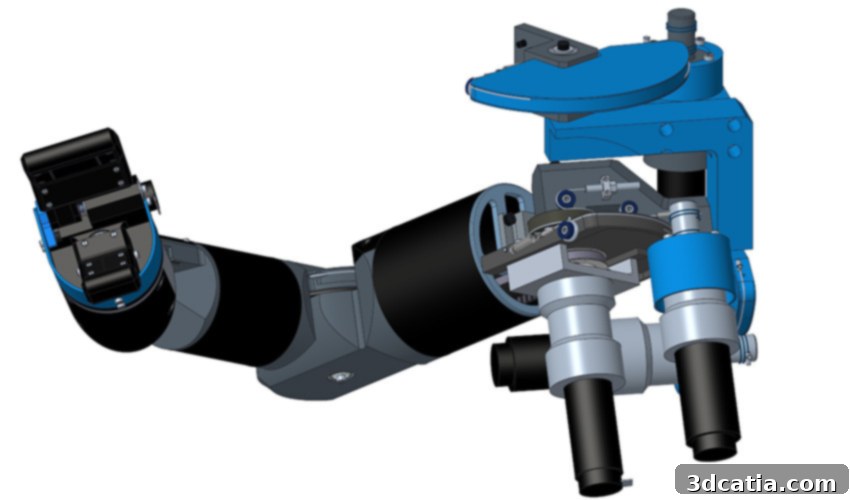
Mastering 3D Product Design with Creo: An In-Depth Guide to CAD for Additive Manufacturing
Computer-Aided Design (CAD) is an indispensable cornerstone of the modern digital workflow within additive manufacturing. It represents the crucial link between initial concept and physical realization. As its name implies, CAD involves the sophisticated application of specialized computer software to meticulously create, modify, analyze, and optimize a product design. This process takes place entirely in the digital realm, allowing engineers and designers to refine every detail and identify potential issues long before the design is prepared for 3D printing. Once a design has been expertly developed and validated through the CAD process, the resulting digital file is then transitioned through the slicing process, which segments the 3D model into thin layers, making it ready for direct transmission to the 3D printer. This comprehensive article will focus intently on CAD, emphasizing why a high-quality CAD/CAM (Computer-Aided Manufacturing) program is not merely advantageous but absolutely essential for generating top-tier products, whether they are intended for rapid prototyping or for final end-use applications. A prime example of such a robust and industry-leading program is Creo.
Creo is a cutting-edge 3D CAD solution renowned for its comprehensive capabilities across various engineering disciplines. It is a flagship product developed by PTC, a global digital software company that delivers a broad spectrum of CAD solutions alongside other innovative digital transformation products for industrial enterprises. Creo is specifically tailored for discrete manufacturing, an industry sector characterized by the production of distinct, individual items such as automotive parts, consumer electronics, and complex machinery. In this environment, precision, intricate design, and iterative development cycles are paramount, and Creo provides the tools necessary to meet these demanding requirements. Its integrated approach to design, simulation, and manufacturing positions it as a powerful asset for professionals aiming to push the boundaries of product innovation and operational efficiency.
How Creo Works: Powering Innovation from Concept to Production
Creo is engineered for seamless integration into diverse engineering ecosystems, running efficiently on widely adopted platforms like Microsoft Windows. Its profound impact on additive manufacturing stems from its exceptional capacity to accelerate product innovation, especially when tackling highly complex designs and assemblies. Creo achieves this by intelligently merging advanced technologies, such as generative design and real-time simulation, with the proven methodologies of traditional CAD software. This powerful combination enables users to explore a significantly broader design space, optimize performance characteristics, and validate designs with unparalleled speed and precision. The result is a more efficient design process that reduces bottlenecks and fosters creativity.
One of Creo’s most compelling features is its unified design environment. This integrated platform allows users to perform a wide array of critical tasks—from initial conceptual design and intricate geometry creation to part optimization for specific manufacturing processes, rigorous simulation analyses, and even comprehensive print checks and validations—all within a single, cohesive interface. By consolidating these formerly distinct stages of the product development lifecycle, Creo dramatically mitigates the risk of errors that frequently arise from data translation issues or the necessity of switching between multiple, disconnected software applications. This streamlined, end-to-end workflow not only translates into substantial savings in time and resources but also significantly elevates the overall quality and reliability of the final manufactured product.
For additive manufacturing, Creo offers advanced capabilities in designing complex internal structures, such as intricate lattice geometries. These innovative, lightweight structures can be strategically embedded within parts to achieve significant material reduction and overall product weight optimization without compromising essential structural integrity or performance. This is particularly crucial for industries where weight savings are critical, such as aerospace, medical devices, and automotive sectors. Moreover, Creo provides comprehensive support for designing and preparing products for 3D printing across an extensive range of materials, including various high-performance polymers and advanced metal alloys, thereby catering to the diverse requirements and application complexities of modern manufacturing.
The process of preparing your completed Creo design for 3D printing is exceptionally intuitive and deeply integrated within the software. To initiate this, users typically need the PTC Creo 3D printing application, which enables direct printing to any Windows 10 supported 3D printer. The workflow usually begins with a straightforward click on the ‘Prepare for 3D Printing’ option within the Creo interface. Following this, designers gain precise control over the resolution of the STL (Stereolithography) file using the dedicated STL Parameter Definitions panel. This control is vital for balancing the desired level of detail with manageable file sizes. The next crucial step is slicing, where the 3D model is digitally divided into a series of thin, horizontal layers. Creo provides robust tools for this process, and once successful layer formation is confirmed, the file can be effortlessly exported in a compatible format, ready for the 3D printer.
Another invaluable feature for optimizing printability and ensuring design success is Creo’s ability to provide a clear view of the model’s interior and accurately predict necessary support structures *before* the actual printing process commences. By simply clicking the ‘Clipping’ function, users can virtually “cut” through their digital model, revealing internal geometries and automatically generated support requirements. This proactive visualization empowers designers to make informed adjustments, minimize material waste by precisely placing supports, and prevent common print failures. This entire process, from initial design through print preparation and validation, is meticulously integrated and engineered for maximum straightforwardness, making advanced additive manufacturing both accessible and highly efficient for engineers. Witness the power of this integrated workflow in the demonstration below:
Technical Advancements and Key Features of the Latest Creo Release
Creo boasts a rich legacy of continuous innovation, with its inaugural edition first introduced in January 2011. Building upon more than a decade of dedicated development and refinement, the latest major iteration, Creo 9.0, was launched in May 2022 and has since solidified its reputation as a significant leap forward in the CAD software landscape. This particular release has been widely acclaimed for its unwavering focus on customer-driven usability and substantial productivity enhancements. PTC’s development philosophy actively prioritizes soliciting and integrating feedback from its extensive global user base. This ensures that each new version directly addresses real-world engineering challenges, streamlines complex design workflows, and ultimately makes the entire product development process more intuitive, efficient, and user-friendly.
In terms of core technical updates, Creo 9.0 introduces substantial improvements to its digital product definition tools, which are instrumental in advancing the practice of Model-Based Definition (MBD). MBD represents a paradigm shift in engineering where the 3D model itself serves as the single, authoritative source of truth for all product information, significantly reducing reliance on traditional 2D drawings. Creo 9.0 enhances MBD by incorporating semantic Product Manufacturing Information (PMI) and symbols that adhere rigorously to international standards. This meticulous compliance with established norms eliminates ambiguity and potential confusion, ensuring that designs are universally understood and accurately interpreted by all downstream stakeholders, from manufacturing engineers on the shop floor to quality control personnel, irrespective of their geographical location or the specific CAD system they utilize.
Further refinements implemented in Creo 9.0 include the introduction of new, highly detailed weld symbols and an expanded library of drawing hatch patterns. While seemingly minor, these enhancements are critically important for producing exceptionally accurate and comprehensive manufacturing documentation. They empower engineers to specify intricate details with greater precision and clarity, thereby improving communication between design and manufacturing teams. The cumulative effect of these various enhancements is a significantly elevated level of clarity for the primary designer, and perhaps even more critically, for all subsequent users and systems that interact with the design data. This enhanced clarity is paramount for minimizing errors, accelerating production cycles, and ultimately improving the overall quality and reliability of the final product.
Visualization and simulation capabilities have also received substantial upgrades in Creo 9.0, dramatically enhancing its ability to predict product performance with greater fidelity. The integrated Creo Ansys Simulation and Creo Flow Analysis tools have been improved, offering more robust analyses and delivering more accurate results. A standout feature is the significantly enhanced Creo Simulation Live, which provides engineers with the groundbreaking ability to conduct multi-physics analysis directly within the design environment and in real-time. This means designers can instantaneously test how their design will perform under various real-world conditions—such as structural stress, thermal loads, or fluid dynamics—and observe its structural integrity and performance characteristics as they make design modifications. This immediate, interactive feedback loop is revolutionary, enabling rapid design iteration and optimization, thereby drastically reducing the need for costly and time-consuming physical prototyping and testing cycles.
All of these sophisticated features are profoundly significant for advancing additive manufacturing processes. They collectively empower engineers to produce exceptionally detailed and high-quality designs that can be rigorously tested and validated within a virtual environment *before* any material is committed to physical printing. This comprehensive pre-validation process is a true game-changer, as it proactively identifies potential design flaws, optimizes material usage for efficiency, and significantly increases the likelihood of print success on the first attempt. This, in turn, translates into immense savings in development time, a substantial reduction in material waste, and the conservation of valuable resources, making the additive manufacturing process more sustainable and cost-effective. As Brian Thomson, Divisional Manager and General Manager of Creo at PTC, aptly articulated, the ninth edition “is an important release, and our customers’ feedback played a big part in making that happen,” truly underscoring the user-centric philosophy that drives Creo’s continuous evolution.
Creo Packages, Industry Adoption, and Competitive Edge
Creo is thoughtfully offered in a flexible range of different software packages, each meticulously tailored to address the diverse needs of individual users, small design teams, and large multinational enterprises. While specific pricing can naturally vary based on regional market conditions and the tiered level of features included in each package, the cost typically starts around $2780 for entry-level professional solutions, reflecting its position as a premium-grade engineering tool. Despite variations in advanced features, all Creo packages inherently include a robust suite of core functionalities essential for contemporary product development. These encompass comprehensive 3D part assembly and design capabilities, advanced data management and performance optimization tools, precise 2D drawing creation for manufacturing documentation, intuitive direct modeling features for flexible design changes, and integrated tools specifically designed for additive manufacturing, alongside many other powerful utilities. Recognizing the importance of user evaluation, PTC also generously provides a free 30-day trial, offering prospective users a valuable opportunity to fully explore the software’s extensive capabilities and ascertain its suitability for their specific design challenges before committing to a purchase.
The widespread adoption of Creo across various high-stakes and technologically advanced industries stands as a testament to its reliability, robust power, and exceptional versatility. The official PTC website proudly highlights numerous prestigious industrial applications of the software, vividly illustrating its transformative impact across a broad spectrum of complex engineering projects. From the intricate design of advanced helicopter components, where uncompromising precision and structural integrity are paramount, to the agile development of high-performance motorbikes, where aesthetic form meets engineering excellence, Creo consistently proves its indispensable value. Leading global brands such as Volvo, renowned for its commitment to safety and innovation, and KTM, a leader in off-road and street motorcycles, are among the many industrial giants that leverage Creo for their cutting-edge product innovation, relying on its robust features for everything from initial concept development to detailed manufacturing preparation and beyond.
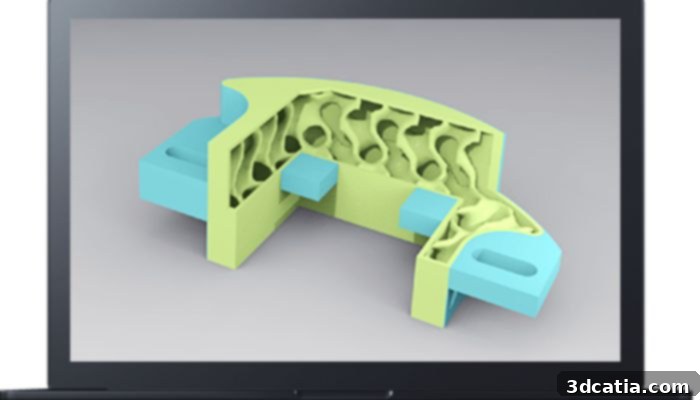
Creo design software. (Photo credit: PTC.com)
In the highly competitive landscape of professional CAD software, Creo certainly faces formidable competition from other major industry players, notably SolidWorks, which also offers a compelling suite of design and engineering products. However, Creo distinctively sets itself apart through its exceptionally well-developed and deeply integrated packages. These offerings extend far beyond mere foundational CAD functionalities to include state-of-the-art simulation capabilities for predicting real-world performance, integrated augmented reality (AR) features for immersive design review and collaborative workflows, and powerful tools that support the broader model-based enterprise (MBE) strategy. While SolidWorks is often praised for its general user-friendliness and broad appeal across many industries, Creo typically excels in handling extremely large and complex assemblies, advanced surfacing for intricate geometries, and providing more robust, specialized engineering analyses. This strategic focus on deep engineering functionality, coupled with its proactive integration of cutting-edge technologies like AR and generative design, allows Creo to maintain a strong competitive edge for the most demanding and sophisticated professional engineering applications.
What Users Think of Creo: A Balanced Perspective
User reviews and community feedback consistently position Creo 9.0 as an exceptionally powerful and profoundly useful tool within the professional engineering and design sectors. Many users frequently highlight its overall success and robust functionality as key strengths, praising its consistent ability to effectively tackle complex design challenges that might overwhelm lesser software. It is particularly lauded for its superior proficiency in managing and working with very large files and extensive assemblies—a critical advantage in professional environments where design projects can involve thousands of individual components. Users widely appreciate the depth and breadth of its features, finding them invaluable for intricate modeling, detailed analysis, and precise preparation for manufacturing processes.
However, a balanced perspective on user feedback also reveals certain common challenges. A frequently recurring theme is the perceived steep learning curve associated with fully mastering Creo. Its extensive feature set, coupled with a highly sophisticated interface, can present a significant initial hurdle for new users or those transitioning from simpler CAD platforms. While this initial investment in learning is often seen as necessary to unlock the software’s full, powerful potential, it does require dedicated time for training and consistent practice. Some users also suggest that Creo’s automation capabilities, particularly in terms of programming integrations, might be somewhat less extensive compared to certain competing software packages. This could potentially impact highly customized or repetitive workflows that rely heavily on scripting or external APIs for automation.
Another point occasionally raised by some users concerns the User Interface (UI), which is sometimes described as being less intuitive or visually modern when compared to certain direct competitors. While functionality, engineering rigor, and robust performance often take precedence over aesthetic considerations in professional CAD tools, a more contemporary and streamlined UI could undoubtedly enhance the user experience for some designers. Despite these constructive observations, the overarching consensus remains that Creo’s unparalleled depth in advanced engineering features, its robust simulation capabilities, and its seamlessly integrated additive manufacturing workflow make it an indispensable tool for discrete manufacturing and complex product development. For users who require its advanced capabilities, Creo’s profound strengths generally outweigh these perceived weaknesses, solidifying its place as a top-tier CAD solution.
What are your thoughts on Creo, especially its latest version? We’d genuinely love to hear about your experiences, insights, and perspectives! Please feel free to share your comments and contribute to the discussion below, or join us on our LinkedIn, Facebook, and Twitter pages. And don’t forget to sign up for our free weekly Newsletter here to receive the very latest 3D printing news and insights delivered directly to your inbox! You can also find all our informative videos and tutorials on our YouTube channel.
*Cover photo credit: PTC