

The Ultimate Guide to Aluminum 3D Printing: Unlocking Advanced Manufacturing Potential
Aluminum stands as one of the most indispensable metals in modern industrial production, with its influence extending significantly into the realm of additive manufacturing. Renowned for its unique combination of strength and low weight, aluminum and its diverse alloys offer an exceptional array of mechanical and thermal properties that make them ideal for a myriad of applications. Companies specializing in materials development for additive manufacturing have responded to this demand by offering a wide spectrum of aluminum alloys meticulously engineered for metal 3D printing. These advanced materials are incredibly versatile, capable of delivering a multitude of benefits tailored to the specific property requirements of each application. To provide a comprehensive understanding of this remarkable metal, its characteristics, and the profound advantages it brings to 3D printed components, we delve into an in-depth exploration in this complete guide.
Understanding Aluminum as a Material for Additive Manufacturing
Aluminum (Al), distinguished by its atomic number 13, is a ubiquitous chemical element, making up approximately 8% of the Earth’s crust – making it the most abundant metal on our planet. It is fundamentally a non-ferromagnetic metal, which means it does not interact with or become magnetized by a magnetic field, a property crucial for certain electronic and sensitive applications. The aluminum alloys widely adopted in additive manufacturing are typically complex compositions, blending aluminum with other metallic and metalloid elements such as silicon, magnesium, or copper. These alloying elements are critical as they fine-tune aluminum’s intrinsic properties, enhancing its strength, ductility, corrosion resistance, and printability for specific industrial needs.
Some of the most popular and widely utilized aluminum alloys in additive manufacturing include:
- AlSi7Mg – This alloy combines aluminum with approximately 7% silicon and a small percentage of magnesium. Silicon significantly improves the melt flow characteristics, making it highly suitable for powder bed fusion processes, while magnesium contributes to enhanced strength and heat treatability, offering a good balance of mechanical properties.
- AlSi10Mg – Featuring a higher silicon content of about 10% alongside magnesium, this alloy is arguably the most common aluminum powder for laser powder bed fusion (LPBF). Its increased silicon content further improves fluidity and reduces solidification shrinkage, leading to excellent printability, minimal cracking, and good as-built mechanical properties, particularly useful for intricate geometries.
- AlSi12 – With a substantial 12% silicon alloy, AlSi12 offers even greater fluidity during printing, leading to very low porosity and excellent surface finish. It is often chosen for parts requiring high dimensional accuracy and complex features, though it may have slightly different mechanical characteristics compared to magnesium-containing alloys.
- AlSi9Cu3 – This alloy introduces copper (around 3%) in addition to silicon (9%). Copper significantly enhances strength and hardness, particularly at elevated temperatures, making it suitable for applications where heat resistance and wear properties are crucial, such as in engine components.
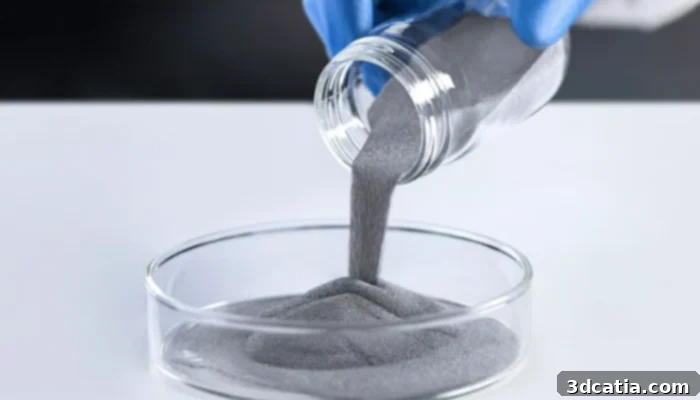
Photo Credits: GE
The journey of aluminum from raw earth to advanced industrial material begins with bauxite, the primary mineral from which it is extracted. To transform bauxite into usable aluminum, it first undergoes the Bayer process, where it’s refined into alumina (aluminum oxide). Subsequently, pure aluminum metal is obtained from alumina through the Hall-Héroult electrolytic process, which is an energy-intensive but highly efficient method. Beyond its lightness and relatively low melting point, aluminum is an outstanding electrical and thermal conductor, second only to copper among common metals. These properties, combined with its excellent corrosion resistance (due to the formation of a protective oxide layer), have cemented aluminum’s status as one of the most vital materials across a vast spectrum of industries, both in terms of sheer volume and the diversity of its applications. Its use spans from aerospace and automotive to construction, packaging, and consumer electronics, underlining its versatility. Now, let’s explore how this extraordinary metal is harnessed in the innovative field of additive manufacturing.
Advanced Aluminum 3D Printing Technologies and Their Advantages
When it comes to fabricating complex parts from aluminum through 3D printing, a sophisticated array of technologies is available, each offering distinct advantages. The choice of technology often depends on the desired part properties, geometric complexity, production volume, and cost considerations.
Key Metal Additive Manufacturing Processes for Aluminum
One of the most dominant and well-established technologies for metal additive manufacturing, particularly for aluminum, is **Laser Powder Bed Fusion (LPBF)**, often referred to as Selective Laser Melting (SLM) or Direct Metal Laser Sintering (DMLS). In LPBF, a high-power laser precisely melts and fuses successive layers of finely atomized metal powder, point by point, according to the digital 3D model. The process occurs within an inert gas atmosphere to prevent oxidation and ensure material purity. LPBF excels at producing parts with very fine features, high density, and excellent mechanical properties, making it ideal for critical applications requiring high precision and intricate internal structures. However, it can be relatively slow and often requires support structures to manage thermal distortion.
Within the same family of powder bed fusion technologies, we also find **Electron Beam Melting (EBM)**. The fundamental difference here is that EBM utilizes a powerful electron beam as its energy source instead of a laser. EBM operates in a vacuum, which is beneficial for reactive metals, and typically at higher temperatures than LPBF. These higher temperatures help reduce residual stresses in the printed parts, which can be advantageous for certain aluminum alloys prone to cracking. While EBM might offer less resolution than LPBF, it often provides higher build rates and can produce parts with fewer internal stresses.
Beyond these two prominent methods, several other metal fabrication processes are capable of printing with aluminum. **Binder Jetting** is a technology where a liquid binding agent is selectively jetted onto a powder bed, bonding the aluminum powder particles layer by layer. Unlike LPBF or EBM, binder jetting does not involve melting the metal, resulting in “green” parts that require subsequent de-binding and sintering in a furnace to achieve full density and mechanical properties. This method is often faster and more cost-effective for larger parts and offers greater design freedom as support structures are typically not required. **Cold Metal Fusion** (also known as Bound Metal Deposition or Metal FDM) involves extruding a filament composed of metal powder bound in a polymer matrix. After printing, the polymer binder is removed, and the metal part is sintered. This process leverages the accessibility of FDM technology to produce metal parts. **Wire Arc Additive Manufacturing (WAAM)** is an entirely different approach, using an electric arc to melt metal wire, building parts layer by layer. WAAM is distinguished by its ability to produce very large metal parts at high deposition rates, though usually with a coarser surface finish that often requires post-machining.
Finally, while less common, the use of aluminum with **Fused Deposition Modeling (FDM)** technology is emerging. Traditionally, FDM works with plastic filaments, but some innovative companies have developed specialized metal-infused filaments (often called “metal FDM” or “composite metal FDM”). These filaments contain a high percentage of fine aluminum powder embedded in a polymer binder. Parts printed with this method also require post-processing steps, including de-binding (to remove the polymer) and sintering (to fuse the metal particles) in a furnace, much like binder jetting or cold metal fusion. This approach aims to make metal 3D printing more accessible by utilizing widely available FDM platforms to create resistant aluminum parts.
Advantages and Considerations of 3D Printing with Aluminum
Aluminum 3D printed parts possess a distinct set of advantages and disadvantages when compared to components made from other metals. Among its most compelling benefits, aluminum is a high-performance material that offers an attractive blend of mechanical and chemical properties. Its low density, coupled with excellent strength, yields an exceptionally high strength-to-weight ratio, which is critical in weight-sensitive applications. Additive manufacturing further allows for the creation of incredibly complex geometric structures and optimized lattice designs that are impossible with traditional manufacturing methods, maximizing this strength-to-weight advantage. Furthermore, aluminum exhibits inherent weather and corrosion resistance due to the passive oxide layer that forms on its surface, increasing part longevity in various environments.
However, there are also considerations. Aluminum 3D printed parts are generally less rigid than those made with high-strength steels, which might be a limiting factor in applications requiring extreme stiffness. Moreover, unlike metals such as titanium, pure aluminum is not typically considered a biocompatible metal (though certain alloys may be). This characteristic means it is generally not the ideal choice for direct implantation in the medical sector, necessitating careful material selection based on regulatory standards. The anisotropy of printed parts, where properties vary depending on the build direction, is another factor that needs to be accounted for in design and application.
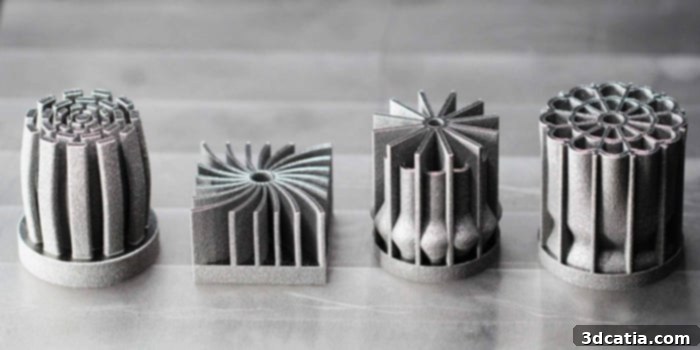
Aluminum is one of the metals with the best strength-to-weight ratio
Essential Post-Processing for Aluminum 3D Printed Parts
Upon the completion of the 3D printing process, the vast majority of aluminum parts, especially those produced via powder bed fusion, necessitate a series of crucial post-processing steps. This is primarily because these technologies often leave behind residual powder and necessitate the use of support structures. One of the initial and most vital processes is the careful removal of excess, unfused powder from the build chamber and from within any intricate internal channels of the part. This powder can often be recycled, contributing to material efficiency. Simultaneously, the removal of fabrication supports, which are essential for anchoring the part to the build plate and dissipating heat during printing, is also performed. These supports can be removed manually, mechanically, or in some cases, chemically or electrochemically, depending on their complexity and the desired surface finish.
Furthermore, parts often emerge from the additive manufacturing machine with a noticeable surface roughness, which can sometimes be higher compared to parts made from other powder materials due to the layer-by-layer nature of the process. To achieve an optimal and smooth surface finish, and to enhance cosmetic appearance and reduce friction, various post-treatment techniques are employed. These include **polishing** (mechanical or electropolishing for finer finishes), **tumbling** (mass finishing to smooth edges and surfaces using abrasive media), or **shot blasting** (impacting the surface with small particles to clean, peen, and create a uniform matte finish). Beyond surface aesthetics, these finishing techniques can also significantly improve the fatigue life of the part by reducing stress concentrators on the surface. Additionally, **heat treatments** are frequently applied to aluminum parts to further reinforce their mechanical properties, relieve internal stresses induced during printing, and achieve desired hardness and strength characteristics, making the final components robust and reliable for their intended applications.
Transformative Applications of 3D Printed Aluminum Alloys
Irrespective of the specific additive manufacturing process utilized, 3D printed parts crafted from aluminum alloys offer an impressive suite of properties, making them indispensable across a multitude of industries. Their commendable chemical resistance, coupled with their inherent light weight, culminates in one of the best strength-to-weight ratios available among all metals. This characteristic is particularly advantageous in applications where reducing mass is paramount without compromising structural integrity. The most common applications for aluminum 3D printing include the efficient manufacture of short-run series production and rapid prototyping, allowing for quick iterations and customization. Other significant applications revolve around **structural lightweighting**, where intricate, topology-optimized designs can shave off considerable weight from components, and **heat transfer management**, leveraging aluminum’s excellent thermal conductivity for custom-designed heat exchangers, cooling plates, and thermal management systems.
When combined with alloying elements like silicon and magnesium, aluminum alloys become the material of choice for many leading players in highly demanding sectors such as the **aerospace and automotive industries**, where performance requirements are exceptionally stringent.
Automotive Sector Innovations
In the automotive sector, additive manufacturing with aluminum has spearheaded significant advancements. A notable example is Porsche, which successfully 3D printed aluminum pistons for its high-performance flagship model, the GT2 RS. The strategic implementation of metal additive manufacturing allowed Porsche to achieve a remarkable increase of up to 30 horsepower from the already potent 700 hp twin-turbo engine. This was made possible by optimizing the piston design for reduced weight and improved cooling channels, thereby enhancing the vehicle’s overall efficiency, performance, and fuel economy. Similarly, Mercedes-Benz has embraced aluminum 3D printing to produce high-quality replacement parts for its extensive line of trucks and cars. This capability not only ensures the availability of complex, on-demand components for maintenance and repairs, guaranteeing greater road safety and vehicle uptime but also streamlines supply chains and reduces inventory costs, especially for older or niche models.
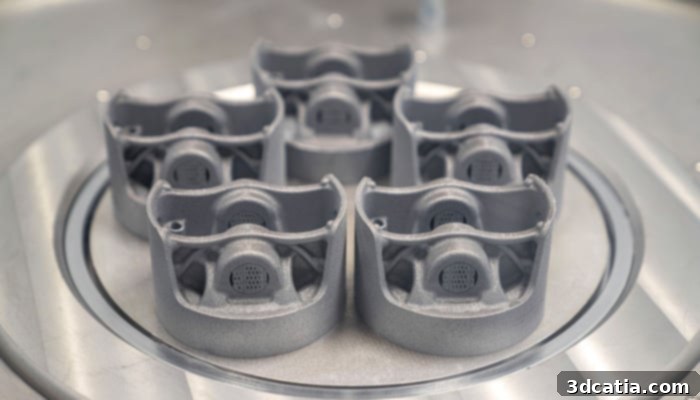
Pistons 3D printed in aluminum (photo credits: Porsche)
Advancing Aerospace and Defense
The aerospace industry, a pioneer in adopting advanced materials and manufacturing techniques, is equally at the forefront of implementing aluminum 3D printing. Airbus, for instance, has successfully manufactured critical parts using high-performance aluminum alloys for its A350 XWB wide-body aircraft, other commercial planes, and even for its communications satellites. The primary drivers here are significant weight reduction, which translates directly to improved fuel efficiency and increased payload capacity, and part consolidation, where multiple traditionally manufactured components can be integrated into a single, more robust 3D printed part. Boeing, another aerospace giant, has also extensively leveraged metal additive manufacturing to create complex aluminum parts for its airplanes, satellites, and helicopters. This cutting-edge technology facilitates the design and production of lighter structural components and optimized internal geometries, enabling aircraft to travel farther on less fuel while enhancing overall operational performance and reliability for mission-critical applications. The defense sector also benefits immensely from this technology for producing lightweight components for drones, missiles, and other military equipment.
Leading Manufacturers and Material Suppliers in the Aluminum 3D Printing Market
The availability of aluminum for 3D printing primarily comes in two main forms: finely atomized powder and wire, catering to different additive manufacturing technologies. The material choice largely depends on the specific printing process. For instance, processes like Laser Powder Bed Fusion (LPBF) and Electron Beam Melting (EBM) predominantly rely on high-quality metal powders.
As of today, the development of aluminum in filament form for FDM (Fused Deposition Modeling) 3D printing is a more niche but growing area. Only a handful of innovative companies have successfully commercialized such products. Notable examples include The Virtual Foundry, which offers “Aluminum 6061 Filamet™,” a composite filament containing a high percentage of aluminum powder. Another is Zetamix, which has developed an alumina-based filament (i.e., aluminum oxide), which after post-processing yields ceramic-like properties. These metal-infused filaments typically require a debinding and sintering step after printing to achieve dense metal parts.
On the other hand, the use of aluminum powder material is far more widespread and supported by a robust ecosystem of suppliers. The market for high-grade aluminum powders specifically tailored for additive manufacturing is extensive, with numerous companies dedicated to their development and production. Leading players in this space include Elementum 3D, renowned for its proprietary C-103™ technology that enables the 3D printing of high-strength, traditionally unweldable aluminum alloys; APWorks, a subsidiary of Airbus, which develops Scalmalloy, a high-strength aluminum-magnesium-scandium alloy optimized for additive manufacturing; Uniformity Labs, known for its high-density, uniform powders that enhance print speed and part quality; ECKA Granules, a long-standing producer of metal powders; Equispheres, specializing in spherical aluminum powders for faster, more cost-effective production; and Constellium, a global leader in aluminum products offering specialized alloys for AM. It is also important to note that many 3D printer manufacturers, such as EOS, also develop and optimize their own range of powdered materials, including various aluminum alloys, to ensure seamless compatibility and optimal performance with their printing systems.
Aluminum’s role in additive manufacturing is continually expanding, driven by ongoing research into new alloys, improved processing parameters, and innovative applications. Its combination of lightweight properties, strength, and thermal conductivity makes it an indispensable material for pushing the boundaries of what is possible in modern engineering and design. The ongoing advancements in material science and printing technology promise an even brighter future for aluminum 3D printing, further cementing its position as a cornerstone of advanced manufacturing.
Do you have experience with aluminum 3D printing? Let us know in a comment below or on our Linkedin, Facebook, and Twitter pages! Don’t forget to sign up for our free weekly Newsletter here, the latest 3D printing news straight to your inbox! You can also find all our videos on our YouTube channel.
*Cover Photo Credits: 3dsla.ru