
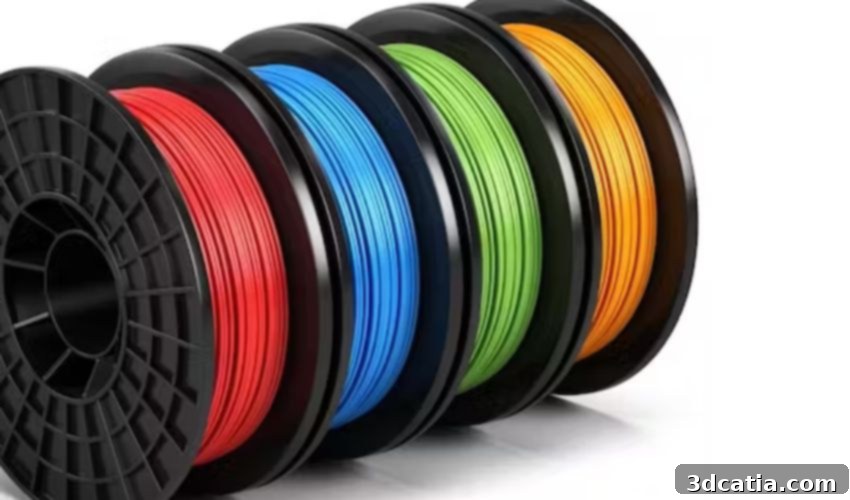
The Ultimate Guide to 3D Printing Filament Storage: Preserve Quality, Prevent Print Failures
FDM/FFF 3D printing has surged in popularity, becoming a staple in both private homes and professional offices. This accessible additive manufacturing method, utilizing a wide array of filaments, offers a convenient and exciting way to create everything from practical everyday objects to intricate artistic designs. It’s an engaging and educational pursuit for all ages, fostering creativity and problem-solving skills. However, alongside the joy and utility, comes a set of challenges that every 3D printing enthusiast eventually encounters. One of the most critical, yet often overlooked, aspects that can significantly impact print quality and material longevity is proper filament storage.
The market for 3D printing filaments is incredibly diverse, with manufacturers continually innovating and expanding their offerings. Today, makers can choose from a vast spectrum of plastics, ranging from common and user-friendly materials like PLA, ABS, and ASA, to more specialized options such as PETG and nylon, and even high-performance engineering plastics like PEEK and PEKK. While these filaments differ greatly in their chemical composition, mechanical properties, and ideal printing parameters, they share one fundamental requirement: they must be stored correctly to ensure optimal performance and achieve the best possible print results. This comprehensive guide will delve into the intricacies of 3D printing filament storage, providing you with the knowledge and best practices needed to protect your materials and enhance your printing experience.
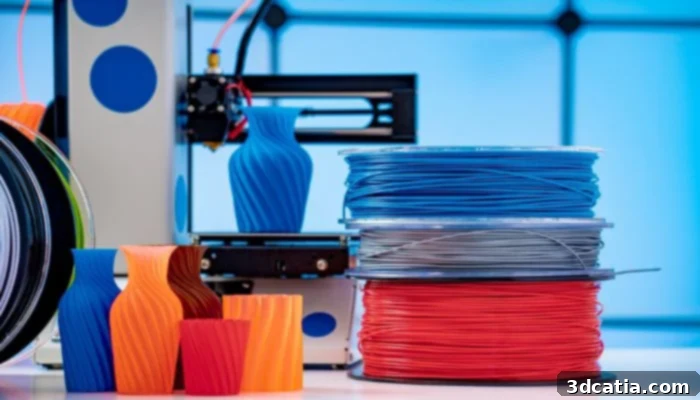
Photo Credits: Cults
Why Is 3D Printing Filament Storage So Important?
Before diving into specific storage techniques, it’s crucial to understand the underlying reasons why 3D printing filaments require careful handling and storage. The fundamental issue revolves around the material properties of plastics, particularly their interaction with moisture. Each filament material possesses a unique set of characteristics, and some plastics, such as nylon and PVA, are far more sensitive to environmental factors, especially humidity, than others. Improper storage of these materials can lead to a cascade of problems, ranging from minor aesthetic flaws to significant print failures and compromised part integrity.
The primary enemy of many 3D printing filaments is moisture. Many plastics used in 3D printing are hygroscopic, meaning they readily absorb water molecules from the surrounding air. When a hygroscopic filament absorbs moisture, these water molecules become trapped within the polymer chains. During the 3D printing process, as the filament is heated to its melting point in the extruder, this absorbed water turns into steam. This sudden expansion of steam creates bubbles within the molten plastic, leading to a variety of undesirable effects.
These effects can manifest as extreme stringing, where fine wisps of plastic are left between printed parts or across open areas, making prints look messy and requiring extensive post-processing. Furthermore, moisture can cause significant degradation of the polymer itself, leading to extremely brittle and fragile parts that lack the intended mechanical strength. Other common indicators of improperly stored, moisture-laden filament include blobs or zits on the component surface, inconsistent extrusion, poor layer adhesion, and even regularly clogged print heads due to the steam expansion and material degradation. These issues not only waste material and time but can also damage your printer components in the long run.
Studies and anecdotal evidence consistently show that the mechanical properties of a filament can be drastically reduced if it has been stored in a damp environment. For instance, the strength of certain materials can be reduced by as much as 33% when moisture is absorbed, directly impacting the durability and functionality of your printed objects. To avoid these frustrating issues and ensure your prints are always of the highest quality, it is absolutely vital to implement effective filament storage practices.
As previously mentioned, not all materials share the same characteristics or sensitivity to moisture. Consequently, the “correct” storage method can vary depending on the specific type of plastic. However, it is a universal truth that every filament, regardless of its material composition, will experience a detrimental change in its printing properties under unfavorable environmental conditions. While some plastics like ABS, PLA and PETG are generally considered more resistant to moisture absorption and thus show less immediate and severe effects from incorrect storage, even these materials will degrade over time. More sensitive, highly hygroscopic materials like nylon, PVA, and some flexible filaments, however, can absorb significant amounts of moisture in a matter of hours, leading to immediate and noticeable print quality issues. Understanding these differences is key to developing a comprehensive and effective filament storage strategy.
Best Practices for Storing 3D Printing Filaments
To ensure the best possible printing process and longevity for your materials, freshly purchased filament should ideally be used within 12 months. Beyond this timeframe, even with proper storage, some material properties may begin to degrade. However, the most critical factor for preserving filament quality over any duration is meticulous storage. Adhering to certain best practices will significantly protect your filament from environmental damage and guarantee optimum print performance.
Optimal Temperature and Environment
One crucial aspect of filament storage is temperature. While not as critical as humidity, extreme temperature fluctuations or excessively high temperatures can still impact filament quality. Filaments should always be stored in as cool and stable a place as possible. The optimum temperature range for general filament storage is typically between 15 and 24°C (59 to 75°F). Storing filament in excessively hot environments can lead to premature material degradation, especially for sensitive plastics, potentially causing the filament to become brittle or warp on the spool even before printing. Conversely, extremely cold temperatures are generally less harmful but sudden changes can still induce stress on the material. A consistent, cool, and dry environment is the ideal starting point for any storage strategy.
Controlling Humidity: The Core Challenge
Humidity is the paramount factor when it comes to filament degradation. All plastics absorb some degree of moisture over time, but the rate and amount differ significantly. We categorize plastics into two main groups based on their moisture absorption characteristics: hygroscopic and non-hygroscopic (or less hygroscopic) materials.
**Less Hygroscopic Materials:** Materials such as ABS, ASA, PETG, and TPU tend to absorb moisture at a slower rate and in smaller quantities compared to their more sensitive counterparts. While they are more forgiving, it is still advisable to dry them before use, especially if they’ve been exposed to humid conditions for an extended period, to ensure optimal printing results. Ignoring moisture in these materials can still lead to reduced part strength and surface imperfections.
**Highly Hygroscopic Materials:** This category includes plastics like PLA, PVA, nylon (Polyamides), and some specialty flexible filaments (e.g., specific TPUs). These materials absorb a particularly large amount of moisture very rapidly. The consequence of this high hygroscopy is that once they absorb significant moisture, they often do not fully regenerate their original properties even after drying. They become more prone to faulty and problematic printing results, such as oozing, popping sounds during extrusion (due to steam), extremely brittle prints, and severe layer delamination. Therefore, proactive moisture prevention for these materials is absolutely essential.
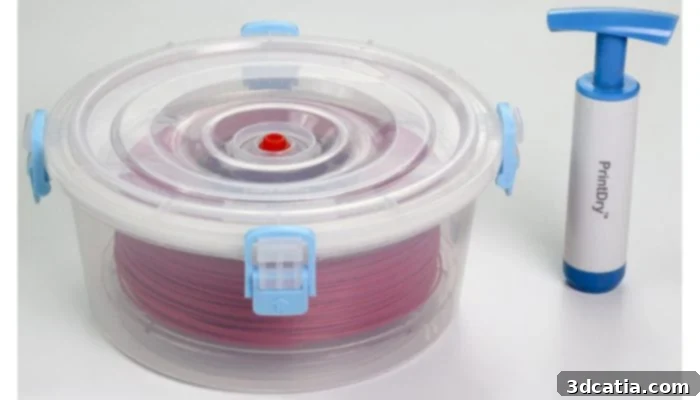
Filaments can be stored in airtight boxes (photo credits: Printdry)
Airtight Containers with Desiccants
One of the most effective and widely adopted measures to protect filaments from moisture is storing them in airtight containers. These containers create a sealed environment that prevents humid air from reaching the filament. To enhance their effectiveness, it is highly recommended to include desiccants within these containers. Small bags filled with silica gel beads, often found in new product packaging, are commonly used. These desiccants are hygroscopic themselves and are designed to absorb any residual moisture present in the air within the container, thereby keeping the filaments dry. Larger and more robust options include reusable silica gel packs that can be recharged by baking them in an oven, or even molecular sieves for superior moisture absorption. Ensure the container is truly airtight; simple plastic bins with loose lids often aren’t sufficient.
Vacuum Sealing
Another highly effective method is using vacuum bags. These bags, often used for food storage, allow you to remove almost all the air from around the filament spool, creating a near-vacuum environment. This dramatically reduces the amount of moisture the filament can absorb. Vacuum bags are particularly useful for long-term storage or for very sensitive filaments like nylon, as they offer an exceptional barrier against humidity. Combining vacuum bags with a desiccant inside can provide an extra layer of protection, ensuring your filament remains in pristine condition.
Dedicated Filament Dry Boxes and Dehydrators
For those seeking a more integrated and often automated solution, dedicated filament dry boxes are available on the market. These devices are specifically designed for proper filament storage and often feature a sealed compartment, a built-in hygrometer to monitor humidity levels, and sometimes even a heating element to actively dry the filament while it’s being stored or even printed from. Some advanced systems function as filament dehydrators, capable of removing significant amounts of moisture from already-wet filament, effectively regenerating it before use. These solutions offer convenience and peace of mind, especially for users with a large collection of various filament types or those living in highly humid climates.
Recognizing Wet Filament
Even with the best storage practices, it’s useful to know how to identify wet filament before it ruins a print. Common signs include:
- **Audible Popping or Hissing:** This is often the most obvious sign. As the wet filament extrudes, the water molecules turn to steam, causing audible pops or hisses as they escape the nozzle.
- **Excessive Stringing and Oozing:** Wet filament often leads to more severe stringing and uncontrolled oozing from the nozzle, making prints appear messy.
- **Blobs, Zits, and Poor Surface Finish:** The steam bubbles can cause imperfections on the surface of your print, leading to an uneven and bumpy texture.
- **Weak and Brittle Parts:** Prints made with wet filament tend to have significantly reduced mechanical strength and are prone to breaking easily.
- **Poor Layer Adhesion:** The quality of the bond between layers can be compromised, leading to prints that delaminate or fall apart.
- **Inconsistent Extrusion:** The flow of plastic through the nozzle may become uneven, resulting in gaps or inconsistencies in your print lines.
Drying Your Filament
If you suspect your filament has absorbed moisture, don’t despair! Most filaments can be dried and restored to their optimal state. Dedicated filament dryers are the most convenient option, offering controlled temperature and time settings. Alternatively, a food dehydrator can be adapted for filament drying, or even a conventional oven on its lowest setting (typically around 40-50°C for PLA, 60-70°C for ABS/PETG) can work, but caution is advised to avoid overheating and further damaging the plastic. Always research the recommended drying temperature and time for your specific filament type. Drying times can range from 4 to 12 hours, or even longer for highly saturated spools.
By keeping these tips and measures in mind, materials that are not dry enough will no longer be an issue in your 3D printing endeavors. Investing a little time and effort into proper filament storage will save you countless hours of troubleshooting, wasted material, and ultimately, elevate the quality of your 3D prints to a professional standard.
Have you already had experience with a brittle and fragile filament due to poor storage? What did you learn about the importance of filament storage and what methods have worked best for you? Let us know in a comment below or on our LinkedIn, Facebook, and Twitter pages! Don’t forget to sign up for our free weekly newsletter here, the latest 3D printing news straight to your inbox! You can also find all our videos on our YouTube channel.
*Cover Photo Credits: Xometry