
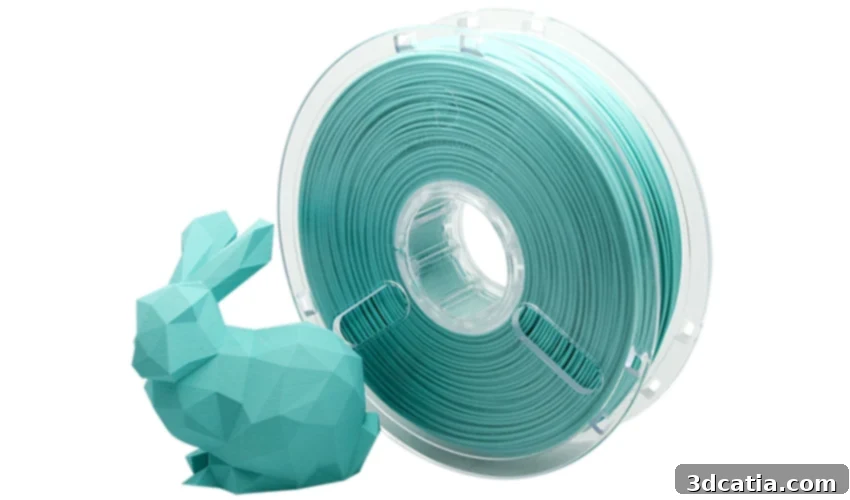
Ultimate Guide: How to Choose the Best 3D Printer Filament for Your Projects – Expert Advice
Choosing the right 3D printer filament is as crucial as selecting the printer itself for successful additive manufacturing. Following our comprehensive previous guide on how to choose a 3D printer, this installment of our “Expert Advice” series delves deep into the intricate nuances of filament selection. The rapidly expanding market is saturated with a vast array of options, ranging from industry stalwarts like ColorFabb, FormFutura, and eSun to specialized flexible filaments from NinjaFlex and unique aesthetic options from Proto Pasta. Each brand and material offers distinct properties, catering to different printing needs, project goals, and user skill levels. Making an informed decision when selecting your 3D printer filament can significantly impact the final print quality, functional performance, and overall success of your 3D printing endeavors. To help navigate this complex and often overwhelming landscape, 3Dnatives has gathered invaluable insights from three distinct and highly experienced voices within the 3D printing community: a passionate artist and hobbyist, a knowledgeable FabLab educator and mechanical engineer, and a leading filament provider. Their diverse perspectives will illuminate the critical factors and considerations necessary for choosing your ideal 3D printing material.
As you embark on your 3D printing journey or seek to optimize your current workflow, many questions naturally arise. Should you prioritize specific material properties like strength or flexibility, or is a proprietary filament always the best choice for your particular machine? Are low-cost 3D printer filaments a viable and economical option for prototyping, or do they inevitably compromise print quality and lead to frustrating failures? This guide addresses these frequently asked questions and more, presenting the collective wisdom and practical advice of our three specialists on how to choose the right 3D printer filament for every scenario, from artistic creations to functional engineering parts.
Mag-Net: 3D Design & Printing Hobbyist
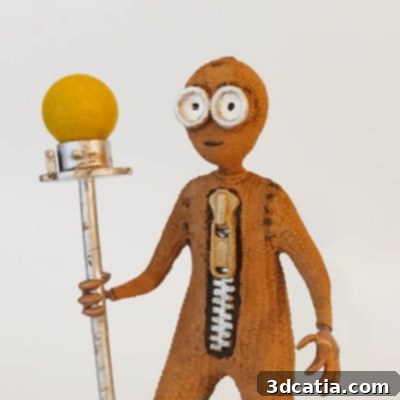
Mag-Net is a uniquely talented individual who skillfully balances a demanding professional career as a 2D designer and large format print production manager with a thriving passion for 3D sculpting in his leisure time. His creative spirit extends beyond personal projects; he generously shares his intricate 3D models across various online platforms, actively fostering a vibrant community of makers and inspiring continuous learning in both himself and others. His innovative designs and impressive portfolio serve as a testament to his dedication, and his ongoing creative journey can be explored further on his engaging Twitter page.
Mag-Net approaches 3D printer filament selection with a distinct and highly specialized artistic perspective. For him, the primary objective is creating visually appealing models that are almost invariably destined for extensive post-processing, including priming, meticulous sanding, and detailed painting. In this context, raw material properties like strength or flexibility are secondary to aesthetic appeal and ease of finishing. For Mag-Net, the fundamental advice on how to choose your filament is to align it perfectly with your project’s specific purpose and the intended post-processing steps. For the vast majority of his artistic models that will be painted, his established go-to material is the 3D Solutech Silver PLA. This particular 3D printer filament was chosen due to its optimal balance of affordability and consistently reliable printing performance, which minimizes headaches during the initial printing phase. He further elaborates on its practical advantages, stating, “It’s also a neutral colour so painting it is easy,” highlighting how a silver base color simplifies the subsequent artistic application of paints and finishes. He also notes a flexible approach for unpainted models: “For my unpainted models, I choose filament based on colour and visual qualities,” indicating that when the filament itself is the final aesthetic, its inherent visual characteristics become paramount. While he predominantly sticks to this one reliable brand for his painted works, he remains open to experimenting with new 3D printer filaments when a specific project demands a unique color, a distinct visual texture, or an unusual effect that his standard PLA cannot achieve.
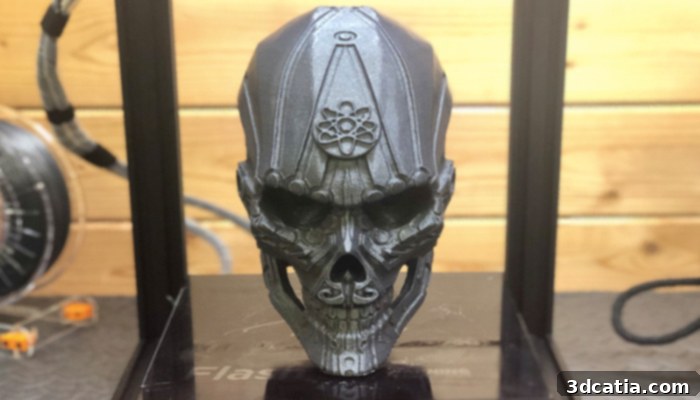
The Aspartame Skull by @Cmag_net
Mag-Net’s Advice for 3D Printing Beginners
Mag-Net’s guidance for newcomers venturing into the world of 3D printing technologies is profoundly practical and strongly encourages active engagement and self-direction. His core advice is straightforward yet powerful: “Learn to design your own files for what interests you.” He stresses that genuine creativity, sustained motivation, and ultimately, the deepest satisfaction in 3D printing stem from the ability to produce custom designs that resonate personally. From his unique artistic perspective, the 3D printer is not merely a device but a canvas that requires both digital blueprints and physical material to come to life: “You must feed your printer both files and filament. Create designs you care about.” This philosophy underscores the critical importance of developing a personal connection to one’s projects, which, in turn, naturally fuels the learning process, enhances problem-solving skills, and maintains enthusiasm through inevitable challenges.
If faced with the constraint of choosing just one 3D printer filament to work with indefinitely, Mag-Net would unequivocally select the 3D Solutech Silver PLA filament. His rationale for this choice is comprehensive and multi-faceted: “It’s easy to print, has great colour, photographs well, and does a good job showing off the details and any flaws in the print.” Beyond its aesthetic and operational benefits, its remarkable affordability, particularly within the U.S. market, makes it an unbeatable and highly practical choice for consistent use. This versatile PLA filament has been a consistent staple in his workflow for the past year, proving its exceptional worth for both rapid prototyping and the final production of his intricate artistic models, demonstrating its reliability and versatility across different stages of his creative process.
Alan Ware: Mechanical Engineer & Teacher at Hacker Lab Sacramento
 Alan Ware is a distinguished mechanical engineer dedicated to empowering others through hands-on learning and practical application. He actively assists individuals in building projects and imparts crucial technical skills across various disciplines. In addition to his extensive teaching roles, Alan offers highly sought-after freelance services in mechanical design, product design, rapid prototyping, and manufacturing consulting, bringing a wealth of real-world experience to his advice. His significant involvement at Hacker Lab includes teaching a diverse range of popular classes such as Graphic Design, Laser Cutting, 3D Design, and 3D Printing, with exciting upcoming courses in both manual and CNC milling and lathe operations. Furthermore, he brings his specialized expertise to Sierra College in Rocklin, CA, where he has been teaching a specialized 3D printing class for four successful semesters. To delve deeper into Alan’s impactful work and insightful perspectives, his comprehensive blog serves as an excellent resource for anyone interested in making and design.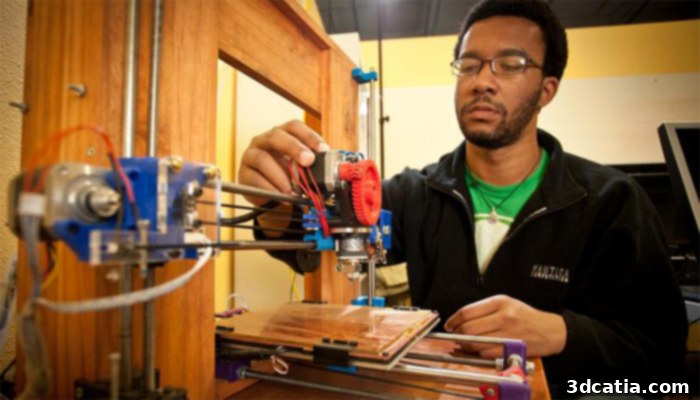
Alan Ware works on a 3-D printer at Hacker Lab Credit: The Business Journals
Alan Ware’s operational practice involves primarily utilizing whatever 3D printer filament is readily available, but this approach is deeply rooted in a clear pedagogical motive rather than mere convenience. He elucidates, “most of how I interact with 3D printers these days is teaching other people how to use them.” While he still engages in a significant amount of prototyping for his own projects, his teaching methodology is meticulously designed to be universally applicable and robust: “with that aim, I try to teach in a way that will be useful in the greatest number of possible situations.” This pragmatic perspective acknowledges that real-world 3D printing environments are rarely ideal or perfectly controlled. Therefore, cultivating a profound understanding of how to manage, troubleshoot, and adapt to less-than-perfect printing conditions is absolutely paramount for long-term success. While the vast array of 3D printing options and specialized materials available can be overwhelming, a deeper and more practical understanding emerges from rigorously analyzing and optimizing one’s specific printing environment and workflow. Alan powerfully illustrates this by contrasting a shared machine in a hacker space or school lab – where diverse users, varied settings, and different materials might be involved – with a personal printer used exclusively by one individual. He strongly advises against ignoring such environmental considerations, stating, “it is a mistake to ignore considerations like this in 3D printing, especially with the nature of the internet, what worked for someone else might not specifically work for you.” While he acknowledges the valuable and extensive discourse surrounding specific 3D printer filament quality and characteristics, he steadfastly emphasizes that for beginners, mastering the foundational aspects of printer operation, maintenance, and systematic problem-solving takes precedence, with the crucial caveat of avoiding genuinely substandard or problematic filament altogether.
Alan Ware’s Essential Advice for 3D Printing Beginners
Alan Ware’s straightforward and highly practical advice for individuals embarking on their 3D printing journey is succinct and powerful: “start small, start cheap, and don’t obsess over quality in the beginning.” He masterfully likens 3D printing to a complex, multifaceted discipline that seamlessly integrates numerous related yet distinct skill sets. As he meticulously details, “There’s actually just making the 3D printer run and troubleshooting, filament selection, 3D modeling, mesh editing, and the list goes from there.” Each of these individual components presents its own unique learning curve, demanding considerable time, unwavering patience, and often leading to moments of frustration. Alan cautions emphatically against approaching 3D printing with an oversimplified or naive mindset, specifically warning against the expectation that “how easy it’s gonna be” – he asserts that such an attitude is fundamentally misguided and will inevitably lead to disappointment. However, he quickly clarifies that 3D printing is by no means an insurmountable challenge or beyond anyone’s grasp. He further elaborates with profound insight, “Just don’t fall into to the trap of thinking that computers/technology are going to fix every little thing. As long as we’re, as in human beings, are the people building the tech, there are going to be issues.” The ultimate key to sustained progress and mastery, according to Alan, lies in realistically accepting these inherent challenges and actively developing systematic strategies to anticipate, address, and mitigate them effectively.
When selecting a good 3D printer filament for beginners, Alan strongly recommends starting with PLA (Polylactic Acid) filament. Its primary and most significant advantage is that it generally “doesn’t need a heated build plate and is a ‘friendly’ plastic,” making it incredibly forgiving and easy to work with for initial experiments and learning. Given the multitude of factors involved in achieving successful 3D prints, mastering the fundamental mechanics and troubleshooting with PLA before introducing additional variables like heated beds is a sensible and highly effective progression. Once a solid foundation in basic 3D printing is established, he suggests gradually moving on to ABS (Acrylonitrile Butadiene Styrene) based on its widespread availability, common applications in engineering, and significant ubiquity in the industry, despite its occasional “annoying” printing characteristics, such as notorious warping tendencies and the emission of fumes that require proper ventilation. Another noteworthy recommendation he makes is PETG (Polyethylene Terephthalate Glycol-modified). Alan observes, “I’ve seen some really good results with PETG, but I’ve heard temperature considerations really come into play hard when dealing with that.” This highlights PETG’s excellent balance of strength, durability, and ease of printability compared to ABS, but also underscores its sensitivity to precise temperature settings for optimal results. Ultimately, with the constantly expanding range of 3D printer filament options available, the decision boils down to a clear and precise understanding of your specific project’s objectives and desired outcomes. Building a reliable printing environment and developing an efficient workflow around these objectives, all while being mindful of budget and avoiding excessive costs, is paramount in the initial phases of your 3D printing journey. Alan Ware masterfully rounds off his advice on how to choose your filament by emphasizing that “Successful design is all about substitution and compromise, at least in the early phases. I’ve found that lesson can be a bit hard for the uninitiated to grasp in the beginning.” This pragmatic and adaptable approach ensures sustainable learning, effective problem-solving, and ultimately, greater success in the dynamic and rewarding world of 3D printing.
********@*******bb.com” data-hovercard-owner-id=”21″>Sander Strijbos / ColorFabb Filament Expert

Sander Strijbos working for ColorFabb
Sander Strijbos, speaking eloquently on behalf of ColorFabb, introduces the company as, “We’re ColorFabb: producer of filaments and increasingly provider of 3D printing solutions in general with hardware and services aside from the filaments.” This concise statement effectively highlights ColorFabb’s significant evolution from merely a premium filament manufacturer to a comprehensive solutions provider within the dynamic additive manufacturing space, now encompassing hardware and various support services. For those interested in delving deeper into their extensive and innovative offerings, Sander directs readers to the wealth of information available on ColorFabb’s official website.
When ColorFabb considers the crucial criteria for both developing new materials and recommending existing 3D printer filament to customers, their approach is deeply rooted in delivering “added value” and consistently meeting specific market demands. From the unique perspective of a leading filament producer, Sander explains their strategic philosophy: “As far as development and production goes, we always look for a filament that has added value and something the market is looking for.” This proactive strategy involves maintaining stable, transparent, and open communication channels with their customer base to continuously assess their unique technical requirements, understand broader market trends and emerging needs, and precisely identify how ColorFabb can effectively address these demands with innovative and high-performing materials. They inherently recognize that different materials are meticulously engineered and optimized to fulfill distinct purposes and performance criteria, ensuring a tailored solution for every application.
For projects demanding exceptional aesthetics and unparalleled visual fidelity, ColorFabb offers a range of specialized 3D printer filaments. Examples include nGen_LUX, renowned for its unique light diffusion properties and luxurious, shimmering finish, or bronzeFill, which allows for prints with a genuine metallic appearance, tactile feel, and realistic weight. These artistic and highly visual materials are perfect for intricate artistic creations, premium decorative pieces, or high-end prototypes where visual impact and material authenticity are paramount. Conversely, when the primary requirement is high functionality, superior durability, and robust mechanical performance, ColorFabb recommends advanced engineering materials like PA-CF Low Warp (a carbon fiber reinforced nylon celebrated for its exceptional strength, rigidity, and minimal warping during printing) or colorFabb_HT (a high-temperature resistant co-polyester engineered for demanding applications requiring resistance to heat, chemicals, and impact). These advanced filaments are ideal for producing functional parts, structural components, or industrial applications. For beginners or those simply needing a reliable, easy-to-print general-purpose filament, options like PLA Economy or the versatile nGen offer excellent starting points, balancing remarkable ease of use with consistent, high-quality results. Ultimately, ColorFabb strives to provide a diverse and comprehensive portfolio of 3D printer filaments meticulously designed and optimized to accommodate an extensive variety of objects, applications, and user skill levels, making them a go-to source for material solutions.
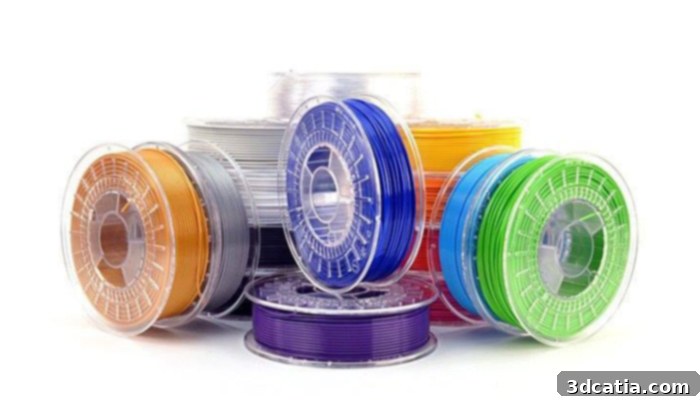
ColorFabb’s Straightforward Advice for 3D Printing Beginners
ColorFabb’s advice for those new to the exciting world of 3D printing is refreshingly simple and direct, yet profoundly comprehensive in its scope: “Know your hardware, know your materials, know your possibilities.” This succinct tripartite recommendation elegantly encapsulates the fundamental understanding required for achieving consistent success in 3D printing. It implies not only a thorough understanding of the specific capabilities, operational parameters, and inherent limitations of your particular 3D printer model, but also a deep familiarity with the distinct properties, optimal printing requirements, and potential applications of various 3D printer filament types. By truly “knowing your possibilities,” you are able to clearly define your project goals, envision the potential end-use applications of your prints, and set realistic expectations for the outcome. Without advocating for any single specific filament as a universal solution, ColorFabb’s overarching recommendation for choosing your filament is to thoroughly explore their extensive product catalogue. This approach actively encourages users to identify and select the material that most precisely aligns with their individual project needs, desired aesthetic qualities, and crucial functional requirements. This user-centric and informed approach ensures that every printer, regardless of their experience level, can find the optimal 3D printer filament to bring their innovative designs and functional prototypes to life effectively and efficiently.
We extend our sincere gratitude to our three esteemed experts—Mag-Net, Alan Ware, and Sander Strijbos—for generously sharing their invaluable insights and diverse perspectives on how to choose the best 3D printer filament. Their combined wisdom offers a comprehensive and pragmatic guide for both nascent enthusiasts and experienced users navigating the complexities of 3D printing materials. We are eager to hear from our vibrant community: what are your personal tips, tricks, and advice for choosing 3D printer filament? Share your experiences, challenges, and recommendations in the comments section below, or engage with us and other 3D printing aficionados on our Facebook and Twitter pages! Don’t miss out on the latest advancements, breaking news, and expert analyses in the additive manufacturing world – remember to sign up for our free weekly Newsletter, meticulously curated and delivered straight to your inbox!
To go further, explore and compare dozens of 3D printer filaments using the 3Dnatives Comparator, your ultimate resource for informed material selection and optimized printing results.