
3D Printing Martian Habitats: Paving the Way for Human Exploration of the Red Planet
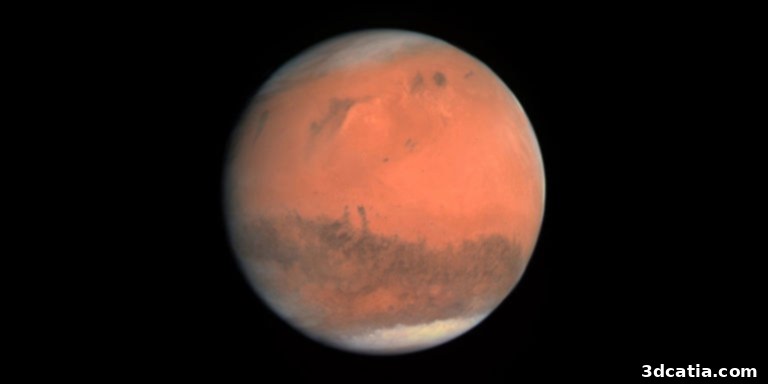
Mars, our celestial neighbor, presents both an irresistible allure and immense challenges for human exploration. Its vast distance from Earth – ranging from 54.6 million kilometers at its closest approach to a staggering 401 million kilometers at its furthest – translates into a travel time of approximately nine months. This immense journey is just one of many hurdles for a crewed mission to the Red Planet, demanding innovative solutions for astronaut survival, logistical supply, and long-term sustainability. Among these critical issues, providing robust and secure shelter for astronauts on the Martian surface stands out as a paramount concern, and this is where the revolutionary potential of 3D printing truly shines.
The Martian Supply Dilemma: Harnessing Local Resources with 3D Printing
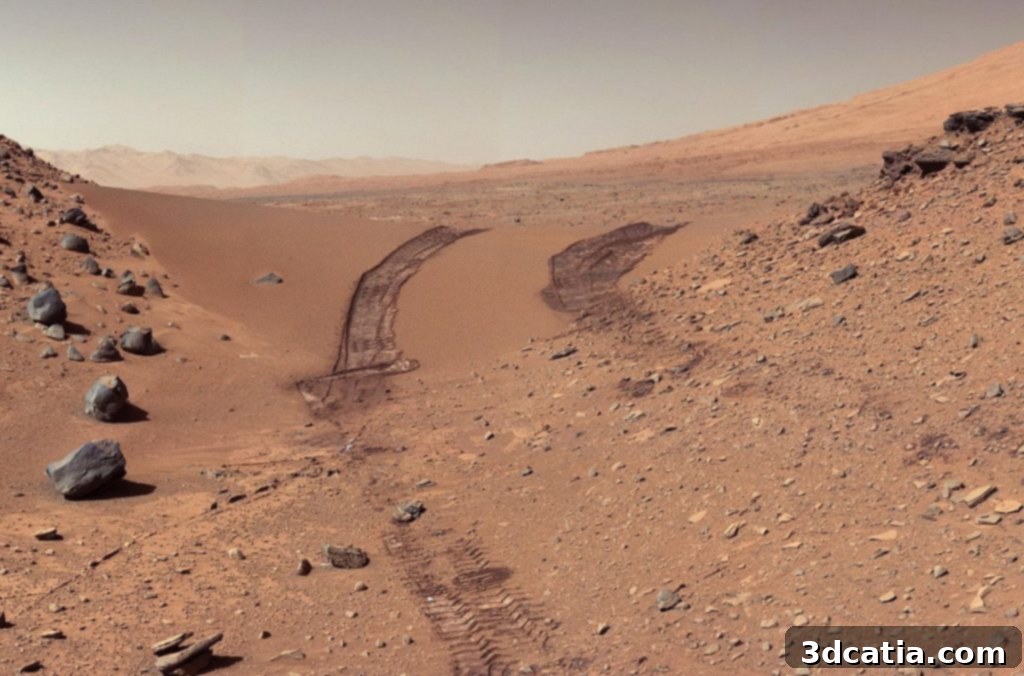
One of the most significant obstacles to establishing a permanent human presence on Mars is the logistical nightmare of transporting construction materials from Earth. Every kilogram launched into space costs an astronomical amount, making it impractical to send pre-fabricated habitats or vast quantities of building supplies. This inherent limitation underscores the necessity of In-Situ Resource Utilization (ISRU) – the practice of “living off the land” by using local resources. Fortunately, recent scientific breakthroughs in 3D printing Martian dust offer a promising path forward.
A pivotal development in this field comes from the research led by Ramille Shah and her team. Their groundbreaking work involved using NASA-approved Martian dust simulants – materials meticulously designed to mimic the physical and chemical properties of actual Martian regolith. These simulants possess a similar particle shape, size, and composition to the real dust found on Mars, making them ideal for experimental purposes. Shah’s team successfully demonstrated the ability to 3D-print various structures directly from this simulated Martian dust.
The process employed by the researchers is both ingenious and straightforward. They combined the Martian dust simulants with simple solvents and a biopolymer, which acted as a binder. This mixture was then fed into a 3D printer using an extrusion process, similar to how conventional FDM (Fused Deposition Modeling) printers operate. Remarkably, the resulting 3D-printed structures were composed of over 90% dust by weight, showcasing an incredibly efficient use of extraterrestrial material. This high percentage of local material minimizes the need for Earth-sourced components, drastically reducing mission costs and complexity.
Commenting on the significance of their findings, Shah emphasized, “For places like other planets and moons, where resources are limited, people would need to use what is available on that planet in order to live.” She added, “Our 3D paints really open up the ability to print different functional or structural objects to make habitats beyond Earth.” This vision of self-sufficiency through additive manufacturing is central to the long-term viability of Mars colonization.
A striking characteristic of these 3D-printed dust structures is their unique mechanical properties: they are described as “flexible, elastic, and tough.” These rubber-like qualities mean the material is not brittle and can withstand deformation, which is a significant advantage in the dynamic and unpredictable Martian environment. Such material can be cut and shaped post-print, allowing for on-the-fly modifications and repairs. Shah further illustrated the versatility, stating, “We even 3D-printed interlocking bricks, similar to Legos, that can be used as building blocks.” This ability to create adaptable, modular components from local dust could revolutionize how structures are built and maintained on Mars.
While the rubber-like material offers flexibility, further research is actively exploring ways to transform this same Martian dust into ceramic-like blocks. Ceramic materials would provide superior rigidity, thermal insulation, and robust protection against Mars’ extreme temperatures, pervasive dust storms, and harmful cosmic and solar radiation. Such advancements are crucial for constructing durable, long-term habitats capable of safeguarding astronauts from the planet’s harsh conditions. The potential to create customized materials, from flexible components to sturdy structural elements, directly from the abundant Martian dust is incredibly exciting. This self-reliance would extend beyond initial construction; imagine custom repairs for essential equipment or even components for return vehicles being printed on Mars, tailored precisely to immediate needs without waiting for resupply missions from Earth.
Building the Future: Contour Crafting for Martian Infrastructure
Assuming we can successfully manufacture diverse materials from Martian dust, the next challenge lies in scaling up this capability to construct entire buildings and critical infrastructure. This is where the innovative “contour crafting” technology, spearheaded by Behrokh Khoshnevis, a NASA engineer at the University of Southern California, comes into play. Khoshnevis is leading groundbreaking research into robotic systems capable of 3D printing large-scale structures, initially designed for Earth-based construction, with the ultimate goal of applying this technology to Mars.
The “contour crafting” method operates on principles similar to conventional 3D printing but on an architectural scale. Instead of small polymers, these massive robotic systems utilize concrete or similar cementitious mixtures to rapidly construct entire buildings layer by layer. The process involves a large gantry system that moves a specialized print head, extruding layers of material to form walls and other structural elements with high precision and speed. This method promises to significantly reduce construction time and labor, which are paramount advantages for off-world construction where human resources are scarce and exposure to the environment is dangerous.
However, applying contour crafting directly to Mars introduces its own set of unique challenges. The soil on Mars, known as regolith, is fundamentally different from Earth’s cement and concrete aggregates. Martian regolith contains a far higher percentage of sulfur, which can interfere with the binding properties of traditional concrete mixtures. This chemical discrepancy has presented significant hurdles for adapting Earth-based construction techniques to the Martian environment. This is precisely where Shah’s research into Martian dust printing could offer a complementary solution, potentially providing binders or specialized aggregates that are more compatible with the Martian chemical composition or allowing for entirely new material formulations.
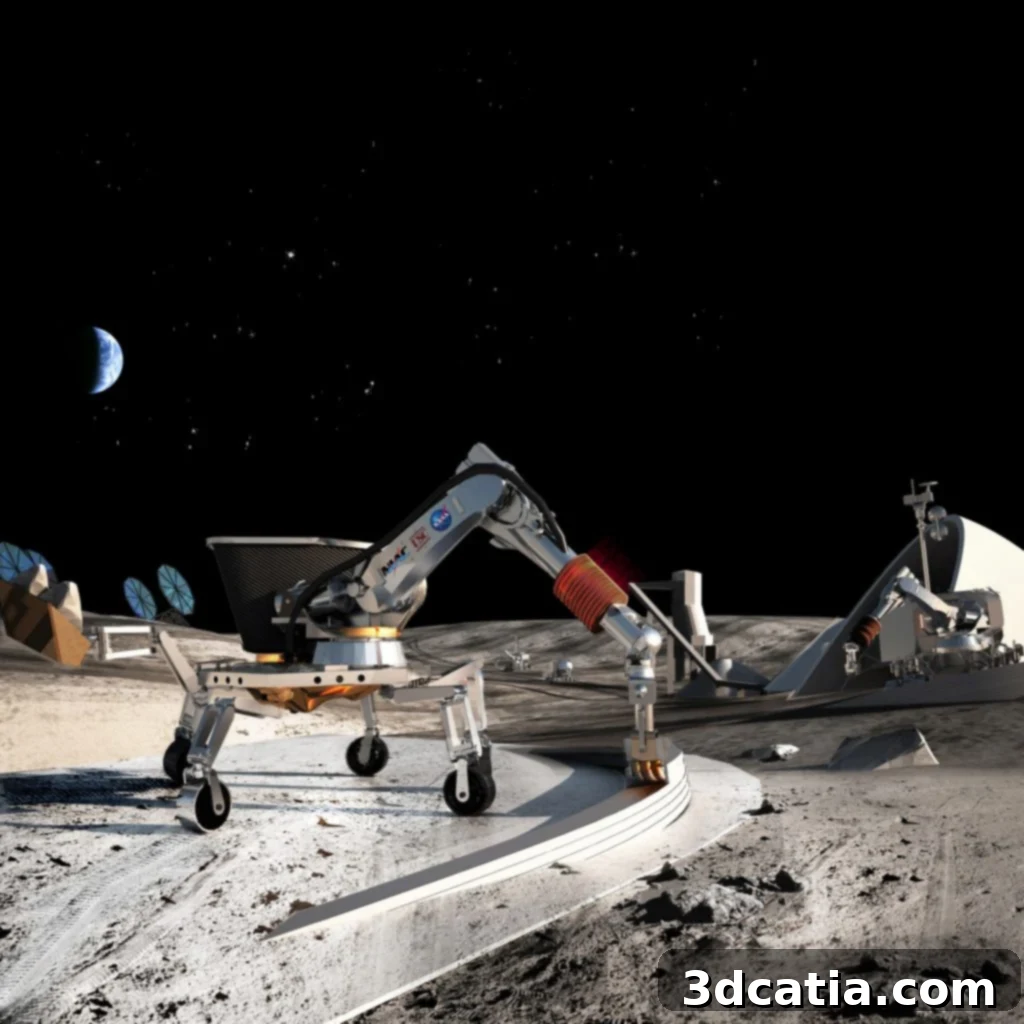
Robots contour crafting
The strategic vision for implementing contour crafting on Mars involves deploying autonomous robots to the planet’s surface prior to any human missions. These robotic pioneers would then systematically 3D-print essential infrastructure, effectively establishing a habitable outpost before astronauts even arrive. According to NASA, this infrastructure would include vital components such as robust landing pads to prevent dust contamination and provide stable ground for spacecraft, multi-layered shields to protect against damaging micrometeorite impacts, and specialized dust-free platforms crucial for sensitive equipment and airlock operations. This pre-deployment strategy significantly enhances astronaut safety, reduces mission risk, and provides a ready-made base of operations upon arrival, accelerating the pace of scientific exploration and potential colonization.
A Synergistic Future: Combining Innovation for Martian Living
The truly revolutionary potential for human settlement on Mars emerges from the synergistic application of both Ramille Shah’s material science breakthroughs and Behrokh Khoshnevis’s large-scale robotic construction methods. Shah’s research into creating diverse 3D-printable materials from Martian dust, ranging from flexible, rubber-like composites to potentially rigid ceramics, provides the essential building blocks. When combined with Khoshnevis’s vision of autonomous robots constructing entire cementitious buildings using contour crafting, a truly viable and self-sufficient solution for Martian habitats begins to materialize.
Imagine a scenario where robotic construction crews, utilizing advanced contour crafting techniques, lay down the primary structural shells of habitats, landing pads, and radiation shields using processed Martian regolith. Simultaneously, other 3D printers, possibly developed from Shah’s concepts, could fabricate interior components like flexible seals for airlocks, customized furniture, tools, spare parts for life support systems, or even intricate scientific instruments, all from the same local Martian dust. This multi-material, multi-scale approach leverages the strengths of both research paths, creating a comprehensive and resilient infrastructure.
While this vision is undeniably promising, it remains largely experimental, and the complexity of such a mission means we are not expected to witness a manned mission to Mars until the mid-2030s or beyond. Numerous challenges persist, including developing reliable long-duration autonomous systems, refining material processing techniques for the Martian environment, ensuring energy efficiency for additive manufacturing in extreme conditions, and establishing robust communication links between Earth and Mars. However, the progress in 3D printing technology for space applications is incredibly encouraging. It underscores how integral additive manufacturing is to the future of space travel, transforming the concept of off-world colonization from science fiction into a tangible reality. By enabling on-demand manufacturing and the utilization of indigenous resources, 3D printing is not just a tool; it’s a fundamental paradigm shift that could unlock humanity’s destiny as a multi-planetary species.
What do you envision for the future of 3D printing in space? Share your thoughts and ideas in a comment below or connect with us on our Facebook and Twitter pages! Don’t forget to sign up for our free weekly Newsletter to receive all the latest news in 3D printing delivered straight to your inbox!