
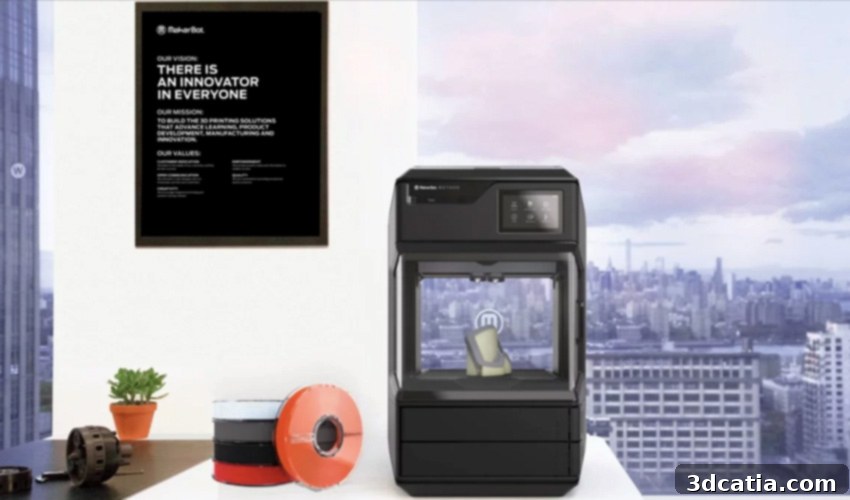
MakerBot Method: Bridging the Gap Between Professional Desktop and Industrial FDM 3D Printing
The landscape of additive manufacturing is constantly evolving, with new innovations pushing the boundaries of what’s possible. In this dynamic environment, a significant announcement comes from MakerBot, a pioneer in FDM 3D printing. The company has officially launched its latest FDM 3D printer, the Method. This machine represents a unique hybrid solution, designed to navigate the space between accessible desktop 3D printers and high-end industrial systems. After several years without new product releases, this launch signifies a major comeback for the American company, originally founded in 2009 and later acquired by the additive manufacturing giant Stratasys in 2013. The MakerBot Method is equipped with a Fused Deposition Modeling (FDM) dual extrusion system and is available starting from $6,499, positioning it as a serious contender in the professional 3D printing market.
MakerBot’s journey in the 3D printing industry is well-documented. Initially celebrated as a leader and innovator in desktop 3D printing, the company experienced a period of turbulence following its acquisition by Stratasys. This era was marked by significant challenges, including substantial layoffs – impacting 20% of its workforce in 2015 – and widespread issues with its “Smart Extruder” system, which led to reliability concerns with its fifth generation of printers. These difficulties somewhat tarnished its once stellar reputation. Since then, MakerBot has diligently worked to rebuild its image, particularly by focusing on the education sector, where its machines have found a stable and appreciated user base for their ease of use and accessibility. Now, a decade after its inception, the introduction of the professional-grade MakerBot Method signals a determined effort to reclaim its position and make a significant return to the broader additive manufacturing market, specifically targeting professional users who demand reliability and precision.
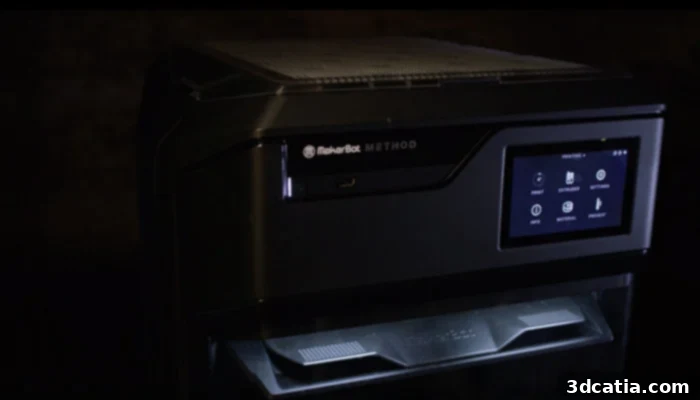
What are the Key Features of the MakerBot Method 3D Printer?
The MakerBot Method is priced higher than its predecessors, such as the Replicator+, costing about twice as much. This pricing strategy is deliberate, as the Method has been engineered to bridge the performance and reliability gap that exists between MakerBot’s more entry-level desktop machines and Stratasys’ high-cost, high-performance industrial solutions. The increased investment reflects a host of advanced features and improved capabilities designed for professional environments. Examining its technical specifications reveals a robust set of features. The Method boasts a generous build volume of 190 x 190 x 196 mm, allowing for the creation of moderately sized parts. Its impressive printing speed of up to 500 mm/second significantly accelerates prototyping and production workflows, a critical factor for businesses. Furthermore, it offers a wide layer resolution range from 20 to 400 microns, providing versatility for various application needs, from highly detailed models to robust functional prototypes.
Precision and Performance with a Heated Chamber
One of the most significant upgrades in the MakerBot Method is its actively heated build chamber. Unlike many desktop FDM printers that operate in open or passively heated environments, the Method’s chamber ensures a consistent, controlled thermal environment around the entire print. The manufacturer highlights that this active heat circulation throughout the printing process yields several crucial benefits. Primarily, it offers substantially greater dimensional accuracy, reducing warping and improving the precision of printed parts. This controlled thermal regulation also leads to better layer adhesion, resulting in stronger and more robust parts that can withstand greater stress. The heated chamber is also essential for expanding material compatibility, particularly for engineering-grade thermoplastics that are prone to warping and delamination without precise temperature control. This feature is a hallmark of industrial-grade machines, bringing professional-level reliability and material performance to a more accessible platform.
Versatile Dual Extrusion for Complex Geometries and Materials
The MakerBot Method features a sophisticated dual extrusion system, allowing users to combine two different materials or colors within a single print. While not the brand’s first foray into dual extrusion – the Replicator 2X was an earlier model – the Method’s implementation is significantly more advanced and reliable. This capability opens up a world of possibilities for designers and engineers. Users can print with soluble support materials like PVA, enabling the creation of intricate geometries and internal structures that would be impossible or extremely difficult to remove with traditional break-away supports. Dual extrusion also facilitates the printing of multi-material functional prototypes, combining, for instance, a rigid base material with a more flexible one, or simply two different colors for aesthetic purposes. The range of compatible filaments currently includes PLA, PETG, MakerBot Tough (a durable material designed for functional prototyping), and PVA. MakerBot has committed to expanding its material ecosystem in the coming months, promising even greater versatility and application potential for the Method platform.
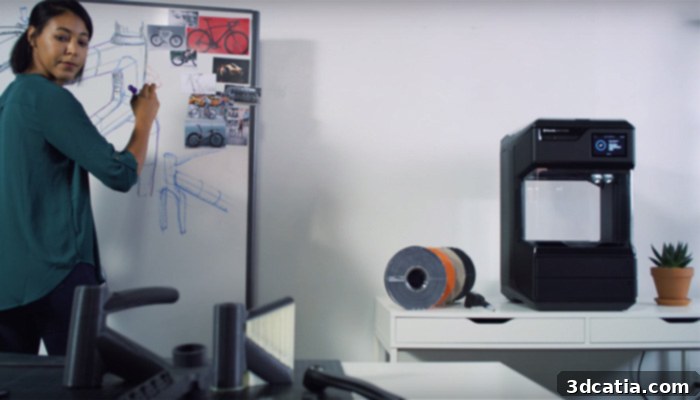
A wide range of materials should be compatible with the 3D printer
Intelligent Sensors and Smart Features for Unmatched Reliability
A hallmark of the MakerBot Method’s professional orientation is its integration of a comprehensive suite of built-in sensors, designed to ensure highly reliable and successful prints. The manufacturer emphasizes that each extruder is equipped with advanced sensors capable of accurately detecting when the machine is running low on filament, proactively alerting the user before a print fails. More critically, these sensors can also identify the potential risk of jamming, a common issue that can derail lengthy prints and waste valuable material. MakerBot proudly describes this as “It’s like autonomous protection for your print—and your printer,” highlighting the machine’s ability to self-monitor and prevent common printing mishaps. This proactive approach significantly reduces the need for constant supervision, allowing professionals to focus on other tasks with confidence.
Beyond printing mechanics, the Method also addresses a crucial aspect of FDM reliability: material storage. Below the printing plate, two specialized trays are designed to keep filament spools in an optimal, dry environment. A separate series of additional built-in sensors continuously monitors the humidity levels within these trays, ensuring that the printing material is stored perfectly. This feature is incredibly important, as many FDM filaments are hygroscopic, meaning they absorb moisture from the air, which can lead to print quality degradation, poor layer adhesion, bubbling, and even clogged nozzles. By actively managing filament humidity, the Method ensures consistent material quality from start to finish, leading to higher print success rates and improved part integrity. This meticulous attention to detail underscores MakerBot’s commitment to delivering a truly professional and reliable 3D printing experience.
Intuitive User Experience and Seamless Connectivity
Further enhancing the user experience, the MakerBot Method is equipped with a full-color 5-inch touch screen. This intuitive interface provides easy access to print settings, material management, and monitoring tools, simplifying the entire printing process. The integrated WiFi connectivity further streamlines workflow, allowing users to send print jobs wirelessly from their computer, monitor print progress remotely, and receive notifications. These connectivity features are essential for modern professional environments, promoting efficiency and flexibility in managing multiple print tasks and collaborating across teams. The combination of smart sensors, controlled material storage, and user-friendly connectivity positions the Method as an intelligent, reliable, and convenient tool for demanding additive manufacturing applications.
Availability, Cost Calculation, and Market Impact
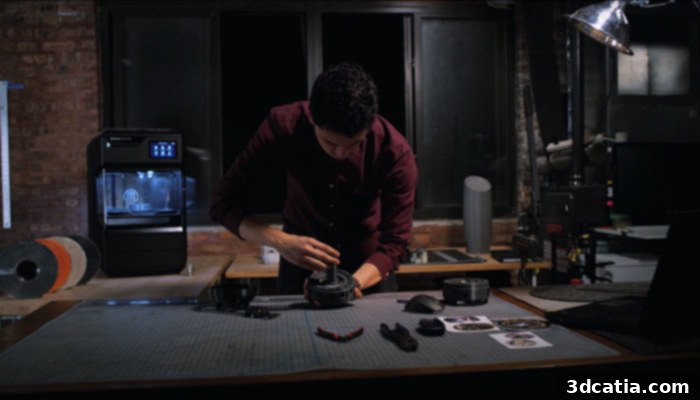
The MakerBot Method is currently available for pre-order, with prices starting at $6,499. Initial deliveries are anticipated in the first quarter of 2019, allowing businesses and professionals to integrate this advanced 3D printer into their workflows soon. To assist potential buyers in evaluating the economic viability of the machine, MakerBot has thoughtfully developed a comprehensive cost calculator. This innovative tool allows users to estimate the potential cost of producing a specific part, factoring in variables such as part size, geometric complexity, and the type of material used. This resource is incredibly valuable for businesses and educational institutions looking to understand the return on investment (ROI) and overall profitability of incorporating the Method into their operations. By providing transparent cost analysis, MakerBot empowers users to make informed decisions and optimize their additive manufacturing strategies.
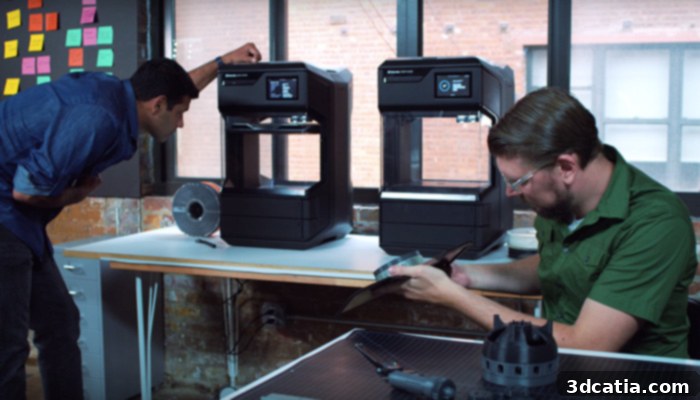
The launch of the MakerBot Method marks a significant chapter for MakerBot and the broader FDM 3D printing market. By focusing on industrial-grade features, enhanced reliability, and a professional user experience, the Method aims to carve out a new niche for accessible performance 3D printing. It promises to deliver the precision and consistency typically associated with larger, more expensive industrial systems, combined with the ease of use and streamlined workflow expected from a modern professional desktop solution. This strategic move by MakerBot underscores its ambition to re-establish itself as a leading innovator, addressing the evolving demands of engineers, designers, and educators who require more than just a basic desktop printer but may not have the budget for full-scale industrial machinery.
For those interested in delving deeper into the capabilities and specifications of this groundbreaking 3D printer, we encourage you to visit the official MakerBot website. Additionally, a comprehensive video overview below provides further insights into the MakerBot Method 3D printer, showcasing its features and potential applications in a dynamic format:
What are your thoughts on the MakerBot Method? Do you believe it successfully bridges the gap between desktop and industrial 3D printing? Share your opinions in a comment below or join the discussion on our Facebook and Twitter pages! Don’t forget to sign up for our free weekly Newsletter to receive all the latest news in 3D printing directly in your inbox!