
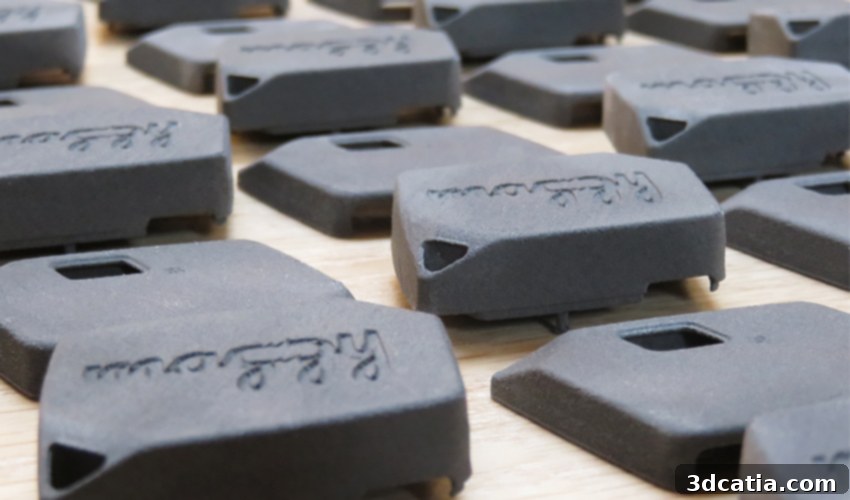
Maggy: Pioneering Social Distancing with Advanced 3D Printing Technology
The recent global health crisis, brought on by Covid-19, undeniably accelerated innovation across numerous industries. Among them, additive manufacturing stood out as a critical enabler, mobilizing rapidly to address urgent medical and personal protective equipment (PPE) shortages. From manufacturing vital ventilator components to producing countless face shields, 3D printing demonstrated its unparalleled agility and capability to pivot quickly in times of extreme need. As the immediate, acute phase of the pandemic has subsided, the focus has intelligently shifted from rapid response to proactive prevention and establishing sustainable safety protocols. This new paradigm has inspired countless companies to develop ingenious devices aimed at fostering safety and encouraging appropriate physical distance between individuals.
The array of innovative solutions that emerged is truly remarkable, showcasing the boundless potential of modern engineering. We’ve seen everything from smart necklaces designed to gently remind users not to touch their faces, a simple yet effective behavioral nudge, to a revolutionary proximity dress that visually and physically expands when someone encroaches upon the wearer’s personal space. Each invention highlights a unique approach to a universal challenge. The latest and particularly impactful innovation in this space is Maggy, a sophisticated yet user-friendly portable device. Created primarily through accessible desktop 3D printing, Maggy serves as an intelligent guardian, helping individuals maintain a safe distance from others. The device works by emitting clear vibrations and distinct sounds whenever another person approaches too closely to the user, providing an immediate, non-intrusive alert.
Maggy’s Ascendance: A Testament to Innovation and Demand
The initial launch of Maggy was met with an overwhelming response, signaling a clear market need for effective and user-friendly social distancing solutions. Within a surprisingly short period, the creators received an astonishing number of orders – soaring past 45,000. This immense demand underscores the device’s immediate relevance and the public’s desire for reliable tools that facilitate a return to normalcy while prioritizing safety. But what exactly propelled Maggy to such phenomenal success, distinguishing it from other similar initiatives?
Maggy’s triumph can be attributed to several meticulously engineered features and thoughtful design choices. At its core, Maggy integrates the latest generation of Bluetooth Low Energy (BLE) chips, offering exceptional precision. This advanced technology allows the device to detect proximity with an accuracy of approximately 10-15 centimeters, far surpassing the capabilities of many conventional solutions. Such precise measurement is crucial for effective social distancing, ensuring that alerts are triggered reliably at appropriate distances. Furthermore, practicality for daily use was a key consideration; Maggy incorporates a highly efficient rechargeable battery that boasts an impressive lifespan of up to 5 consecutive days on a single charge. This extended battery life minimizes the need for frequent recharging, enhancing convenience and ensuring continuous protection for users in various settings, from workplaces to public transport.
The operational framework of Maggy is elegantly simple, relying on the synergy between the compact handheld device and an intuitive mobile application. This combination provides a robust and flexible platform for managing settings and receiving notifications. Beyond its technical prowess, Maggy truly distinguishes itself through its unwavering commitment to user privacy. A significant advantage of this wearable device is its inherent security and privacy-by-design approach. No registration is necessary to use Maggy, and crucially, absolutely no user data is collected or stored. In an era where data privacy is paramount, this feature resonates deeply with consumers and organizations alike, fostering trust and encouraging widespread adoption without concerns over personal information breaches. This privacy-centric design has made Maggy an attractive proposition, leading many multinational corporations and institutions to express considerable interest in deploying the device within their operations to safeguard their employees and clients.

The PrintPlace team, instrumental in Maggy’s development.
The Meticulous Process of Creating Maggy: Engineering Excellence Through Additive Manufacturing
Developing a device as precise and aesthetically pleasing as Maggy presented a unique set of engineering and manufacturing challenges. The core team behind Maggy aimed to deliver a high-quality, reliable device that was not only effective but also affordable and could be brought to market swiftly. These requirements — high accuracy, superior appearance, cost-effectiveness, and rapid production — pointed towards a very specific manufacturing approach. After careful consideration and evaluation of various production methods, the team unequivocally concluded that Selective Laser Sintering (SLS) technology was the optimal solution. While SLS is often perceived as a more premium and potentially expensive production method compared to other 3D printing technologies, its numerous advantages proved indispensable for Maggy’s complex specifications.
SLS technology offers unparalleled design freedom, allowing for the creation of intricate and complex internal geometries that would be impossible or prohibitively expensive with traditional manufacturing techniques. This capability was crucial for Maggy’s compact and functional design, enabling efficient space utilization for its electronic components and robust casing. Furthermore, SLS excels in producing parts with highly detailed and quality finishes, which contributed significantly to Maggy’s sleek appearance and user appeal. The material properties achievable with SLS are also superior, providing durable and functional components suitable for a portable wearable device that endures daily handling. Recognizing these critical benefits, the team set out to find a manufacturing partner who could not only implement SLS technology but also manage pre-production runs efficiently and within budgetary constraints. This critical search led to the pivotal collaboration with PrintPlace, an innovative Belgian startup known for its expertise in additive manufacturing.
The PrintPlace and Sinterit Synergy: Bringing Maggy to Life
The PrintPlace team, deeply committed to leveraging cutting-edge additive manufacturing for innovative solutions, meticulously evaluated available SLS systems. Their choice ultimately fell upon the technology offered by Sinterit, a leading additive manufacturer renowned for its specialization in selective laser sintering, particularly within the desktop and compact industrial segments. To facilitate Maggy’s development and production, PrintPlace strategically invested in Sinterit’s Lisa Pro desktop 3D printer. The Lisa Pro, while a smaller-scale version of Sinterit’s industrial-grade machines, offers remarkable capabilities. For applications requiring specific volumes and intricate designs, like Maggy, this desktop SLS solution delivers truly unparalleled results, combining precision with cost-effectiveness for initial batches and prototyping.
The collaboration extended beyond mere hardware acquisition. In developing Maggy, both PrintPlace and Sinterit meticulously considered every facet of the manufacturing process to ensure optimal outcomes. This comprehensive approach included robust support from Sinterit in preparing PrintPlace’s 3D printer for production, ensuring that all calibration and setup procedures were perfectly executed. Furthermore, extensive work was done to determine and implement optimal machine parameters tailored specifically for Maggy’s components, guaranteeing consistent quality and structural integrity. Critical attention was also paid to the maintenance of the equipment and the necessary post-processing steps for the printed parts, which are vital for achieving the desired aesthetic and functional finishes inherent to SLS technology. This holistic partnership ensured that Maggy could transition smoothly from concept to a tangible, high-quality product, ready for mass distribution.
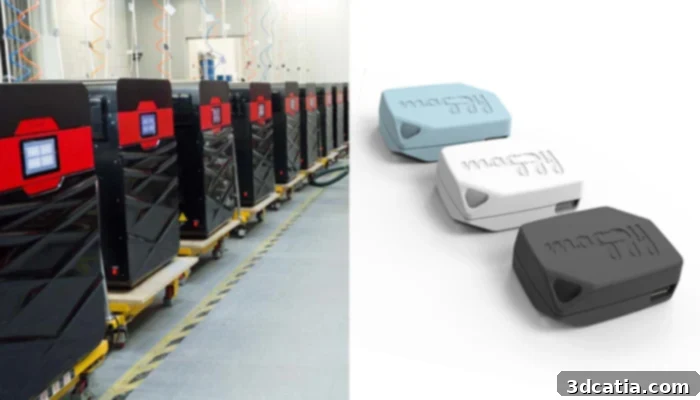
The Maggy device was meticulously developed using advanced SLS 3D printers from the manufacturer Sinterit.
Empowering Public Safety: The Future of Wearable Proximity Devices
One of Maggy’s most appealing attributes is its remarkable ease of use. To get started, users simply receive the device, and it is ready for immediate operation – no complicated setup, no lengthy instructions, just instant peace of mind. This plug-and-play functionality is crucial for widespread adoption, particularly in environments where rapid deployment and minimal training are essential. Today, Maggy stands as a highly cost-effective and innovative solution, not only for navigating the lingering effects of the recent health crisis but also for proactively preventing the future spread of communicable diseases. Its ability to provide real-time, accurate proximity alerts makes it an invaluable tool for various sectors, including workplaces, educational institutions, public events, and even everyday retail environments.
The implications of a device like Maggy extend far beyond the immediate pandemic response. It represents a significant step forward in the field of wearable technology for public health and safety. By integrating advanced 3D printing techniques, Maggy demonstrates how rapid prototyping and agile manufacturing can yield sophisticated, reliable, and privacy-conscious solutions at scale. This device not only helps individuals adhere to social distancing guidelines effortlessly but also fosters a broader culture of awareness and responsibility within communities. Maggy paves the way for a future where personal safety devices are seamlessly integrated into daily life, providing silent, unobtrusive protection that empowers individuals to confidently navigate crowded spaces. As societies continue to adapt and evolve, such innovative applications of additive manufacturing will undoubtedly play an increasingly vital role in shaping healthier, safer public interactions. For those eager to delve deeper into the specifics of this groundbreaking device, more information is available on Maggy’s official website, which you can visit HERE.
What are your thoughts on this innovative 3D printed device? Do you believe Maggy, with its blend of precision, privacy, and ease of use, will significantly contribute to promoting and maintaining social distancing practices in various settings? We invite you to share your valuable opinions and insights in the comments section below, or engage with us on our Facebook and Twitter pages! Don’t miss out on the latest advancements and breaking news in the world of 3D printing; sign up for our free weekly Newsletter to have all the essential updates delivered straight to your inbox!