
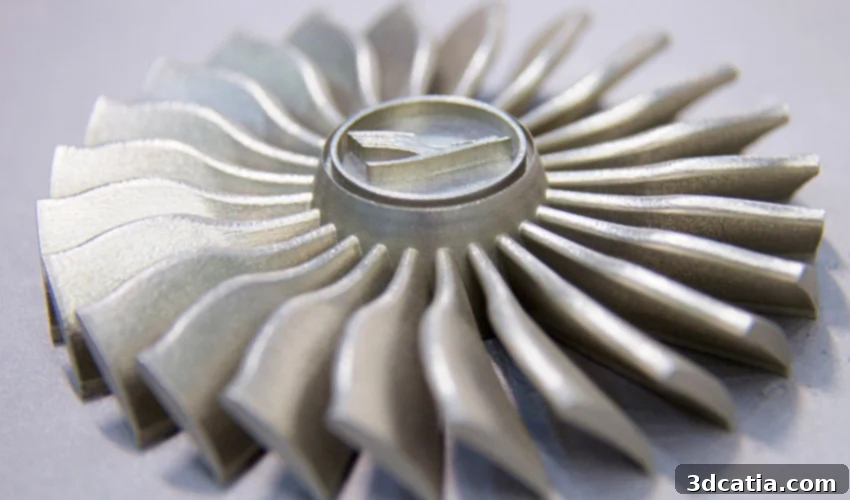
Lufthansa Technik’s Additive Manufacturing Center: Pioneering 3D Printing in Aerospace MRO
The aerospace industry stands as a leading pioneer in the adoption of additive manufacturing (AM) technologies, commonly known as 3D printing. Aerospace companies, renowned for their pursuit of innovation and efficiency, recognize the profound advantages of investing in this transformative technology. From rapid prototyping and creating specialized tooling to the direct production of flight-critical end-use parts, 3D printing offers unparalleled benefits that are reshaping the sector. This early embrace aligns with expert predictions; the Gartner Hype Cycle for 3D printing, for instance, anticipated that additive manufacturing in the aerospace and defense sectors would reach its ‘plateau of productivity’ within 5 to 10 years, underscoring its rapid maturation and widespread integration.
Among the global leaders driving this revolution is Lufthansa, one of Europe’s largest and most reputable airline companies. Lufthansa has strategically integrated additive manufacturing into its operations, particularly for the production and repair of various aircraft components. At the forefront of these efforts is Lufthansa Technik, the company’s dedicated Maintenance, Repair, and Overhaul (MRO) division. Recognizing the immense potential of AM, Lufthansa Technik established a specialized Additive Manufacturing Center (AM Center) in Germany. This state-of-the-art facility is dedicated to the research, development, and production of 3D printed parts, aiming to enhance the efficiency, sustainability, and reliability of aircraft maintenance. To gain deeper insights into the division’s pioneering activities and its strategic vision, we had the privilege of speaking with Dr. Aenne Köster, the Head of Lufthansa Technik’s AM Center.
Driving Innovation: An Interview with Dr. Aenne Köster
Dr. Köster provides valuable perspectives on how Lufthansa Technik is leveraging additive manufacturing to redefine MRO processes and overcome traditional industry challenges.
3DN: Could you briefly introduce yourself and your connection to additive manufacturing?
My name is Aenne Köster. I hold a PhD in materials science, and I have had the distinct honor of leading the Additive Manufacturing Center (AM Center) at Lufthansa Technik since early 2018. My background in materials science is particularly relevant as it provides a foundational understanding of the complex properties and performance characteristics required for aerospace-grade components. This expertise is crucial for pushing the boundaries of what is possible with additive manufacturing in such a safety-critical environment.
3DN: Why did you decide to create the AM Center? What are its goals?
Dr. Aenne Köster
Lufthansa Technik established the cross-divisional AM Center with a clear and ambitious objective: to centralize, enhance, and strategically expand the extensive competence and valuable experience that our MRO (Maintenance, Repair, and Overhaul) company has diligently accumulated with this groundbreaking technology over the years. Our primary aim is to significantly increase the maturity level of additive manufacturing technology within the aerospace domain and, concurrently, to vigorously promote the development and implementation of innovative new products. This move was a proactive response to the undeniable transformative potential of 3D printing for our industry.
The AM Center is built upon a philosophy of adopting a holistic approach to manufacturing technology. This comprehensive strategy is designed to dramatically accelerate the entire lifecycle of additively manufactured products, from initial conceptualization to final application. Our process meticulously covers every critical stage: it begins with advanced design and engineering, progresses through the manufacturing process itself, incorporates rigorous quality control measures, navigates the stringent approval and certification procedures, and culminates in the successful application of the product in its intended operational environment. This end-to-end focus ensures that every component meets the highest standards of safety, reliability, and performance required in aerospace.
Our center strategically focuses its activities across three primary clusters: Prototyping, Tooling, and Flying. In the “Prototyping” cluster, additively manufactured prototypes are extensively utilized for creating mock-ups, conducting precise fit checks, and iterating designs rapidly. This significantly shortens development cycles and reduces costs. For the “Tooling” cluster, the demanding and often unique tasks inherent in the MRO business necessitate tailor-made tools that conventional manufacturing cannot efficiently provide. Here, the AM Center excels by supplying our workshops with highly customized, appropriate tools – ranging from precision-fitting polymer components to high-strength metal pressing tools designed for specific repair tasks. Crucially, one of the main and most impactful tasks remains within the “Flying” cluster: the development of innovative new repair methods, the on-demand production of new spare parts, or the creation of entirely new components specifically for aviation use. This cluster operates under the strictest regulatory scrutiny, meticulously taking into account the complex requirements of approval procedures and the comprehensive qualification of every manufacturing process to ensure airworthiness and operational safety.
3DN: What benefits do you see for the aerospace sector in general and Lufthansa in using this technology?
The inherent advantages of additive manufacturing are truly transformative for the aerospace sector and, by extension, for Lufthansa Technik. These benefits include significantly greater design freedom, enabling the creation of complex geometries and optimized structures that are impossible with traditional methods; substantially faster manufacturing cycles, reducing lead times and improving supply chain responsiveness; and, critically for aviation, significant weight reduction, leading to improved fuel efficiency and reduced environmental impact. These advantages are leveraged for a wide array of new products and applications, whether they are destined for ground support operations or direct use in the air.
Lufthansa Technik specifically harnesses additive manufacturing to dramatically enhance the efficiency of its internal repair and maintenance processes. By creating bespoke tools and fixtures, we can expedite complex repairs and optimize workflows, thereby minimizing aircraft downtime. Beyond internal efficiency, the technology empowers us to develop and produce additively manufactured individual parts and innovative new repair solutions for aircraft components that were previously difficult, expensive, or impossible to source or repair. This includes addressing parts obsolescence, customizing components for specific fleet requirements, and enabling more localized, on-demand production. The ability to design lighter, stronger, and more integrated components also translates directly into operational savings and improved aircraft performance, reinforcing Lufthansa’s commitment to innovation and sustainability.
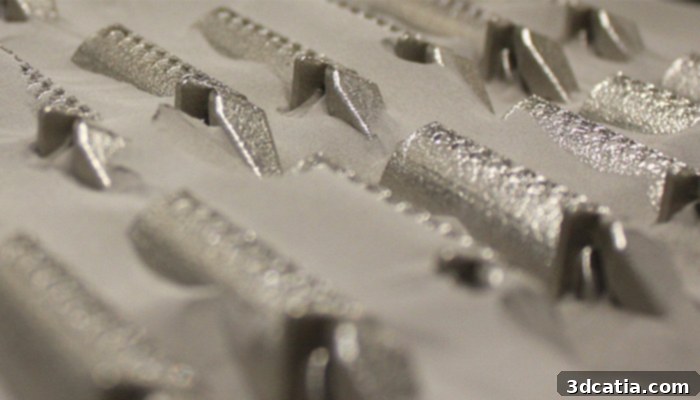
Credits: Lufthansa Technik AG
3DN: What are limitations of AM for aircraft parts?
While the benefits of additive manufacturing are vast, its application for aircraft parts, tools, or repairs must always undergo a rigorous, component-specific evaluation. This detailed assessment is paramount due to the inherently critical nature of aerospace components. During this evaluation, we meticulously examine various parameters, including potential restrictions related to material availability and performance characteristics, the achievable surface quality required for aerodynamic or fatigue-critical parts, and the current limitations concerning component size that can be produced by available AM machines. Each part presents unique challenges, and a thorough understanding of these limitations is essential for safe and effective implementation.
Furthermore, when leveraging additive manufacturing for repairs, the production of spare parts, or tools within the highly regulated MRO business, it is absolutely imperative to meticulously respect the intellectual property rights and other rights of third parties. This principle is applied with the same unwavering strictness as it would be when utilizing conventional manufacturing processes. This includes adhering to OEM specifications, respecting patents, and securing necessary licenses or approvals for modifications or reproductions. Lufthansa Technik operates strictly according to this foundational principle in all its developments, whether for individual parts or for new repair methodologies. Navigating the complex landscape of regulatory approval and certification processes for 3D printed aerospace components also presents a significant challenge. The qualification of new materials and processes, validation of part performance under extreme conditions, and achieving airworthiness certification can be time-consuming and resource-intensive, often requiring extensive data generation and collaboration with regulatory bodies.
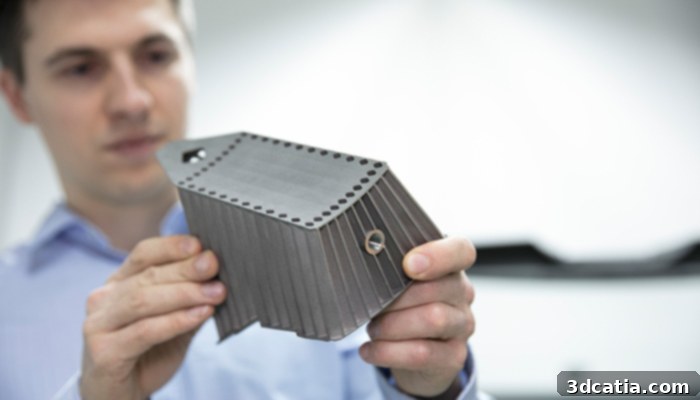
Collin Theiss, engineer at Lufthansa Technik’s AM Center, inspecting a tool for welding repairs produced by 3D printing | Credits: Lufthansa Technik AG ; Photographer: Jan Brandes
3DN: What are Lufthansa Technik’s future projects at the AM Center?
All developments and ongoing work carried out at the AM Center are characterized by an unwavering and strong product focus. Our overarching goal for all activities is to harness and maximize the potential of additive manufacturing technology for Lufthansa Technik, not only for current operational needs but also with a clear vision for the future. This strategic imperative means continuously exploring new applications, refining existing processes, and integrating the latest advancements in 3D printing to deliver tangible value.
This product-centric approach can manifest in several key areas. Firstly, it involves the successful and widespread application of AM technology across various MRO scenarios, demonstrating its reliability and effectiveness in real-world aircraft maintenance. Secondly, it is reflected in the more efficient design and optimization of our internal repair and maintenance processes, leading to reduced turnaround times, lower costs, and enhanced operational resilience. This includes leveraging AM for custom jigs, fixtures, and specialized repair tools that drastically improve efficiency and precision. Finally, a significant part of our future vision includes the successful market launch of a growing portfolio of additively manufactured individual parts and innovative new repairs for a diverse range of aircraft components. This not only strengthens Lufthansa Technik’s position as a leader in MRO but also offers substantial benefits to our customers through improved part availability, customized solutions, and enhanced aircraft performance. Our efforts extend to continuous research and development into new materials suitable for AM in aerospace, exploring advanced post-processing techniques, and integrating digital threads that connect design, manufacturing, and operational data for unprecedented levels of traceability and performance monitoring. We are constantly pushing the boundaries of what is possible with additive manufacturing to ensure Lufthansa Technik remains at the forefront of aerospace innovation.
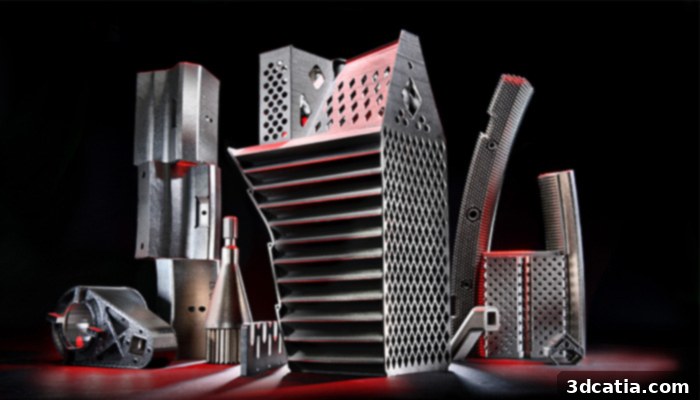
A selection of different 3D printed parts (mostly from the tooling category) designed and manufactured at Lufthansa Technik’s AM Center | Credits: Lufthansa Technik AG ; Photographer: Jürgen Mai
Lufthansa Technik’s commitment to leveraging 3D printing technologies marks a significant stride in the aerospace MRO sector, promising a future of more efficient, sustainable, and innovative aircraft maintenance. Their strategic investment in the AM Center, guided by experts like Dr. Aenne Köster, demonstrates a clear vision for integrating additive manufacturing into the core of their operations, from specialized tooling to critical flight components. This pioneering work is not only enhancing Lufthansa’s own capabilities but also setting new benchmarks for the entire industry, showcasing how advanced manufacturing can tackle obsolescence, improve supply chain resilience, and enable previously unattainable design efficiencies. The challenges remain, particularly in certification and material qualification, but the continuous progress being made highlights a dynamic and exciting future for additive manufacturing in aviation. What are your thoughts on Lufthansa’s innovative use of 3D printing technologies? Share your insights and join the conversation in the comments below or connect with us on our Facebook and Twitter pages! Don’t miss out on the latest advancements and news in the world of 3D printing—sign up for our free weekly Newsletter and get all the essential updates delivered straight to your inbox!