
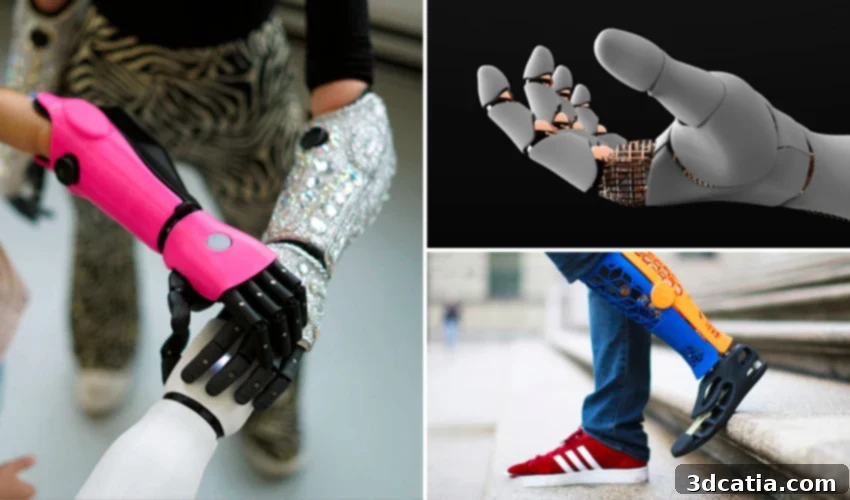
Revolutionizing Lives: The Transformative Power of 3D Printed Prosthetics
The integration of 3D printing, or additive manufacturing (AM), into various industries has been nothing short of revolutionary, but few sectors have embraced its potential as profoundly as healthcare. The medical field stands out as one of the earliest and most enthusiastic adopters of these cutting-edge technologies, primarily due to AM’s inherent ability to create highly customized, complex, and cost-effective solutions. Within healthcare, the application of 3D printing is proving to be a game-changer, especially in the realm of prosthetics. The advantages here are multifaceted and deeply impactful, addressing long-standing challenges in patient care.
Firstly, 3D printing enables unprecedented levels of customization. Traditional prosthetic manufacturing often involves lengthy and labor-intensive processes that can be expensive and offer limited scope for truly personalized fit. With additive manufacturing, however, prostheses can be perfectly tailored to the unique anatomy and specific needs of each patient. This precision fit not only enhances comfort and functionality but also significantly improves a patient’s quality of life and acceptance of the device. From intricate finger prosthetics to full bionic arms, the ability to create bespoke designs ensures optimal integration with the human body.
Secondly, 3D printing facilitates lower-cost, localized production. This aspect is particularly crucial given the global demand for prosthetic devices. The World Health Organization (WHO) estimates that a staggering 30 million people worldwide are in need of prosthetics. Traditional manufacturing chains often make high-quality prosthetics prohibitively expensive and inaccessible, especially in remote regions or developing countries where healthcare infrastructure might be limited. 3D printing dramatically reduces material waste, labor costs, and transportation expenses, making prosthetics more affordable and readily available. This localized production model means that clinics and humanitarian organizations can produce devices on-site, drastically shortening wait times and increasing access for countless individuals who previously had no options. These innovations are not just technological marvels; they are instruments of hope, restoring mobility, independence, and dignity to millions. Below, we delve into some of the most compelling examples of 3D printed prosthetics and the pioneering organizations behind them.
The E-nable Association: Empowering Lives Through Global Collaboration
E-nable, widely recognized as ‘Enabling the Future’, is a remarkable non-profit organization founded in the United States by Jen Owen in 2013. The core mission of E-nable is to foster a global community of makers, designers, and enthusiasts who leverage 3D printing technology to create and provide open-source prosthetic hand and arm models. This innovative project operates on the principle of collective effort, bringing together individuals from diverse backgrounds to contribute their skills and resources. The primary objective is to “give a hand” to those most in need, particularly children and adults in underserved communities, by sidestepping the exorbitant costs associated with traditional prostheses. E-nable’s extensive network allows for the widespread sharing of prosthetic designs, enabling volunteers to download files, print components using desktop 3D printers, and assemble functional devices for recipients worldwide. Since its inception, the association has made an incredible impact, donating hundreds of customizable, functional, and often brightly colored 3D printed prostheses, offering renewed hope and independence to countless individuals across the globe.

Bionico Hand: An Open-Source Vision for Self-Repairing Prosthetics
The Bionico Hand project represents a deeply personal and innovative endeavor conceived by Frenchman Nicolas Huchet. Having worn a bionic hand since the age of 18, Huchet embarked on a journey to design and build his own improved prosthetic device. This personal quest evolved into the Bionicohand project, driven by a desire to create accessible, functional, and even self-repairing myoelectric prosthetics – a term he coined as ‘myoprosthesis’. Huchet’s vision is to develop a prosthetic limb designed by and for amputees, which can be produced using open-source methodologies, thereby empowering anyone to construct or customize their own device. This open-source approach aims to democratize access to advanced prosthetic technology, moving away from proprietary and expensive solutions. The project, while still in active development for several years, achieved a significant milestone in October 2021 with the production of a compelling proof of concept. The ambitious goal is to transform this concept into a fully functional prototype by the end of 2022, paving the way for a new generation of adaptable and patient-centric prosthetic solutions.
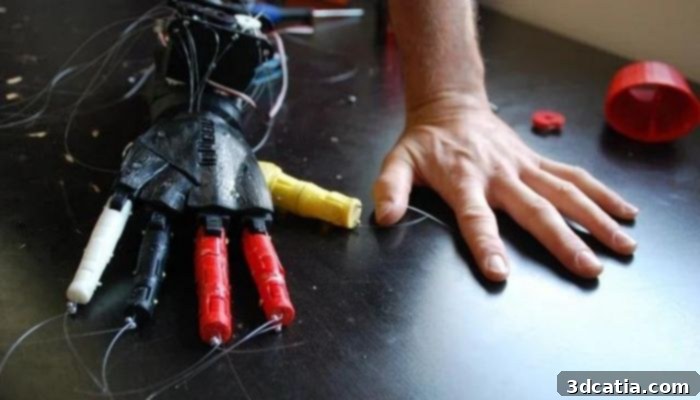
Photo Credits: Bionico Hand
Make Your Own 3D Printed Robotic Arm with Youbionic
Youbionic, founded by Federico Ciccarese, offers a unique proposition that diverges slightly from traditional prosthetic manufacturing, instead focusing on the educational and exploratory aspects of robotics and 3D printing. While not exclusively designed as a direct solution for amputees, Youbionic serves as an exceptional platform for young people and enthusiasts to delve into the fascinating world of robotics. Customers receive comprehensive kits that include all necessary components and, crucially, the 3D printing part files required to fabricate their very own robotic arms. These files are meticulously engineered for ease of printing, with optimal orientations predefined to ensure high-quality results even on standard desktop 3D printers. A significant advantage of Youbionic’s designs, such as the impressive Avatar Full Arm, is their relative simplicity in terms of part count, which translates into less assembly time and complexity for users. The company’s website showcases a diverse range of innovative projects, from functional robotic hands to double hands and full arms, making advanced robotics accessible and engaging for a wider audience, and indirectly contributing to the broader understanding and development of prosthetic technology.
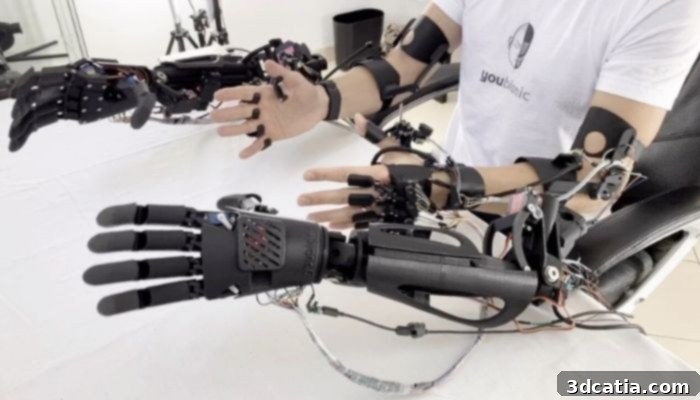
Photo Credits: Youbionic
Unlimited Tomorrow: High-Value, Low-Cost Bionic Solutions
Unlimited Tomorrow, founded in Colorado in 2011 by Easton LaChapelle, embodies a commitment to making advanced prosthetic technology accessible and affordable. LaChapelle’s journey into this field was deeply inspired by a personal encounter with a young girl whose prosthetic limb, despite its limited capabilities, was remarkably expensive. This pivotal experience ignited the vision for Unlimited Tomorrow: to develop and produce high-quality, high-value, yet low-cost bionic prosthetic arms for individuals with upper limb disabilities. The company leverages the full power of additive manufacturing to achieve unparalleled customization and efficiency. The process begins with the user answering a series of questions, after which they are sent a specialized 3D scanner. This device allows for precise scanning of the residual limb, generating highly accurate data crucial for designing a perfectly fitted prosthesis. The digital model can then be personalized with various aesthetic options before being produced using state-of-the-art 3D printing technology. Unlimited Tomorrow’s approach not only delivers functional and aesthetically pleasing prosthetics but also significantly reduces the barriers of cost and fit that have traditionally limited access to such life-changing devices.
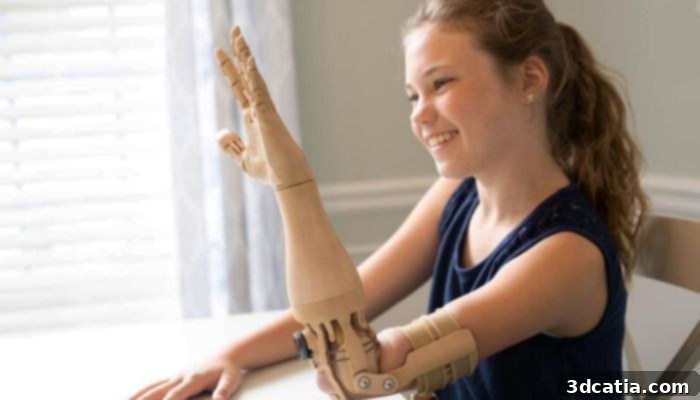
Photo Credits: Unlimited Tomorrow
A Distinctive Aesthetic and Functionality with UNYQ
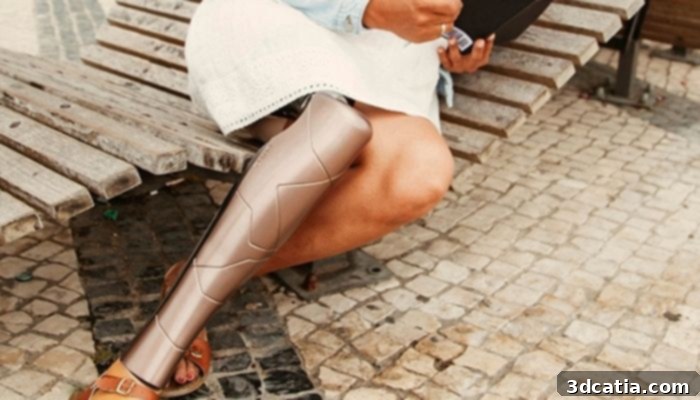
UNYQ, a company at the forefront of combining advanced manufacturing with personalized design, utilizes 3D printing to mass-produce innovative and customized prosthetic solutions. Beyond merely developing next-generation products, UNYQ places a strong emphasis on integrating aesthetically pleasing and highly practical features into its devices. Their range includes prostheses designed for both above and below-knee amputees, offering patients revolutionary personalization options in terms of color, pattern, and design. This focus on aesthetics empowers patients to express their individuality and enhances their confidence, moving beyond purely utilitarian devices. UNYQ is even expanding its ambitions to manufacture entire leg prostheses. The customization process is streamlined and user-friendly: patients use a dedicated app to select their preferred color, design, and surface texture. Following this, precise measurements are taken in a clinic, and the personalized prosthesis is then brought to life through additive manufacturing. UNYQ’s commitment to blending functionality with fashion is transforming how prostheses are perceived and experienced, turning them into unique statements of personal style.
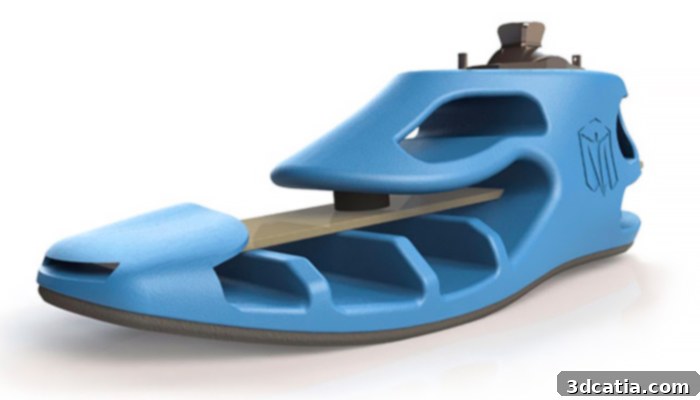
3D Printed Foot Prostheses from Mecuris: Digitalizing Orthotics
Mecuris, a pioneering German company, is dedicated to revolutionizing the field of orthotics and prosthetics through the development of advanced CAD/CAM software solutions. By integrating these digital tools with sophisticated 3D printing technologies, Mecuris makes it possible to create highly customized and functional foot prostheses with unparalleled efficiency. At the heart of their innovation is the Mecuris Solution Platform, a intuitive digital platform that empowers users to design and personalize their individual prosthetic models with remarkable ease and precision. This digital workflow not only significantly saves time but also dramatically reduces production costs—by as much as 75%—compared to traditional manufacturing methods. Mecuris’ overarching goal is to seamlessly transition from conventional craftsmanship to modern, user-friendly digital tools and workflows. They aim to cater to the specific needs of each individual patient, providing comprehensive support and guidance throughout every step of the design and production process. This commitment to digitalization is transforming how foot prostheses are made, offering greater accessibility, affordability, and customization to patients.
LimbForge: High-Quality Prostheses for Remote Regions
LimbForge, a US-based non-profit organization, is at the forefront of making high-quality, affordable custom prosthetics accessible globally, particularly in remote and underserved regions. Their innovative approach combines state-of-the-art software development, advanced design principles, and modern manufacturing techniques, specifically utilizing 3D scanning and 3D printing. LimbForge has engineered and deployed a robust platform that significantly streamlines the customization process for clinicians. This efficiency allows healthcare providers to dedicate less time to device customization and more time to patient treatment, thereby increasing the number of individuals they can serve. The platform delivers more realistic and aesthetically pleasing prosthetic designs, which greatly aids patients in their social integration and overall well-being. Furthermore, LimbForge’s technology dramatically reduces costs and enables the creation of ultralight prosthetics, enhancing user comfort and mobility. The flexibility of the LimbForge platform extends beyond its existing catalog, allowing for the sizing and implementation of various other designs. Once a prosthetic design is integrated into their database, it can be easily configured to fit nearly any human anatomy. Critically, this platform is being actively utilized to provide amputees in developing countries with access to superior quality prosthetic devices, making a profound difference in their lives.
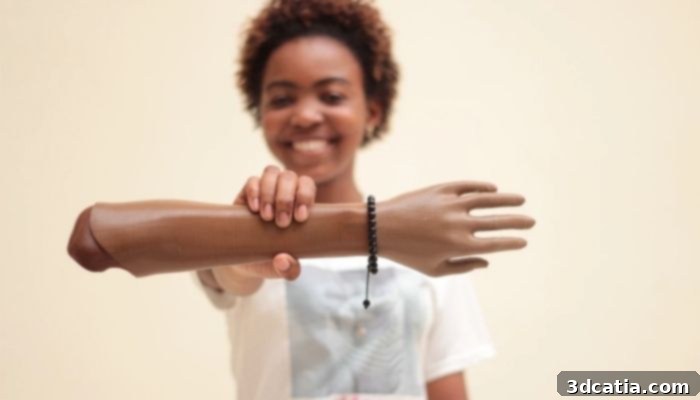
Photo Credits: Limbforge
3D Printing the Prostheses of the Future: Evan Kuester’s Vision
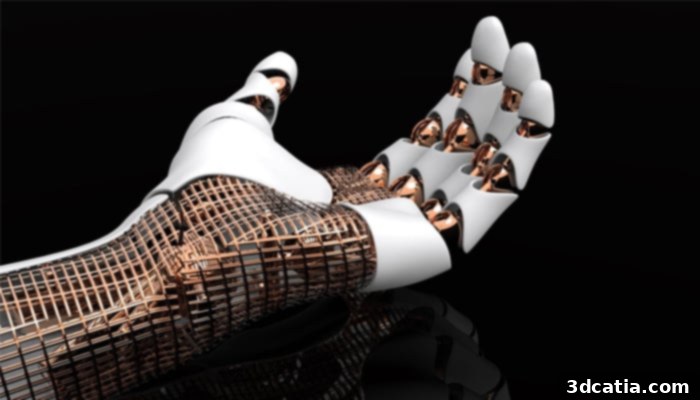
Evan Kuester, an accomplished engineer, artist, and designer currently serving as a Senior Advanced Applications Engineer at 3D Systems, is a visionary pushing the boundaries of prosthetic design through additive manufacturing. Beyond his corporate role, Kuester is actively engaged in a number of captivating personal projects that explore the artistic and functional possibilities of 3D printing. Among these endeavors is the development of prosthetics characterized by their strikingly modern and futuristic designs. His work, exemplified by models like the JD-2 prosthesis, is driven by an intention to fully explore the creative freedom and advanced capabilities offered by SLS (Selective Laser Sintering) 3D printing technology. The JD-2, for instance, features an intricate inner mesh-like structure, a design choice that serves multiple purposes: it significantly reduces the overall weight of the prosthesis, thereby improving user comfort, and simultaneously achieves a more visually appealing and contemporary aesthetic. Kuester’s projects highlight how additive manufacturing not only enables functional improvements but also opens up new avenues for designers to craft prosthetics that are both highly advanced and visually stunning, challenging conventional perceptions of medical devices.
“Hero Arm”: Open Bionics’ Clinically Certified Bionic Solution
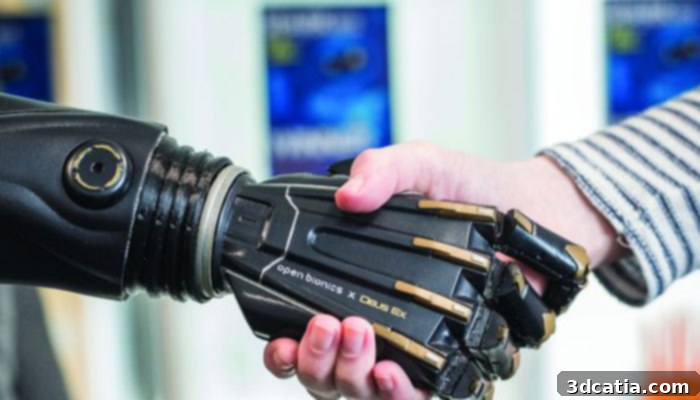
Open Bionics made history as the first company globally to launch a clinically tested and medically certified 3D printed bionic arm, aptly named the “Hero Arm.” This groundbreaking device seamlessly integrates advanced functionality, exceptional comfort, and striking design, offering a comprehensive solution for upper-limb amputees. The Hero Arm is fully customizable, allowing users to personalize its appearance to reflect their individuality. Technologically, it features sophisticated sensors that detect subtle muscle movements, providing intuitive and precise control over the prosthetic hand. This level of responsiveness significantly enhances the user’s ability to perform daily tasks with greater ease and confidence. Remarkably, the Hero Arm boasts an impressive lifting capacity of up to 8 kilograms, a significant feat for a device that can be quickly donned and doffed. Open Bionics champions complete customization, empowering wearers to craft a prosthesis that truly represents their identity. This personalization is particularly appealing to children, who often choose designs inspired by their favorite superheroes, transforming their prosthetic into a source of pride and empowerment rather than a mere medical device. The Hero Arm exemplifies how 3D printing can merge advanced engineering with personal expression to create truly life-changing technology.
3D Prostheses for the Needy: Global Humanitarian Efforts
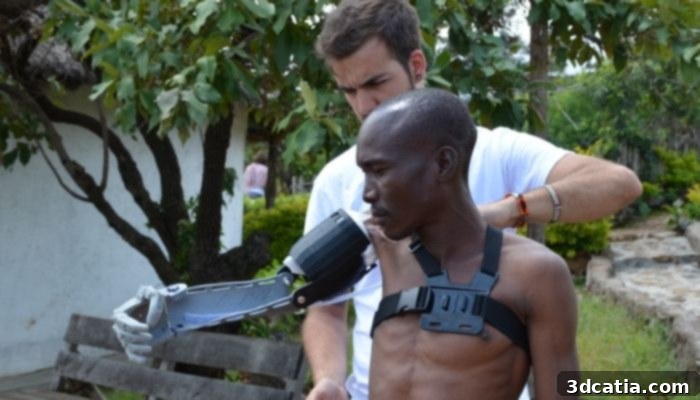
In many parts of Africa and other developing regions, inadequate healthcare systems often struggle to treat severe injuries resulting from traffic accidents, infections, or other debilitating conditions, leading to a high prevalence of amputations. Recognizing this critical need, several non-profit organizations are dedicated to bringing the transformative power of 3D printing technologies to vulnerable populations worldwide. Ayúdame 3D, a Spanish organization, exemplifies this humanitarian spirit by promoting the profound social value of technology through educational and awareness programs. Their mission is to assist vulnerable groups globally by providing essential support. Similarly, organizations like 3D Sierra Leone are actively involved in creating and distributing free 3D printed arms to individuals with disabilities. These initiatives are making an immense impact, significantly improving the quality of life for recipients and their communities. By providing functional prostheses, these organizations not only restore mobility and independence but also help reduce the profound inequalities faced by amputees. This often translates into greater opportunities for schooling, improved social integration, and enhanced employability, offering a pathway to a more inclusive and equitable future for those who need it most.
Naked Prosthetics: Functional Finger and Hand Devices with Resin 3D Printing
Based in the United States, Naked Prosthetics (NP) specializes in the development and manufacturing of highly functional prosthetic devices specifically designed for partial hand and finger amputations. Their innovative approach relies heavily on resin 3D printing technology, particularly stereolithography (SLA), to create customized models that are meticulously adapted to the unique anatomical requirements and functional needs of each user. The precision and detail offered by SLA technology allow NP to produce intricate and lightweight devices that seamlessly integrate with the residual limb, providing enhanced dexterity and grip. A significant advantage of leveraging 3D printing is the accelerated production timeline, enabling Naked Prosthetics to deliver custom prosthetic devices to patients within a matter of weeks, a stark contrast to traditional methods. As articulated on their website, NP’s core mission is to profoundly improve the lives of individuals with partial finger and hand amputations, empowering them through the provision of high-quality, functional prostheses that restore confidence and capability.
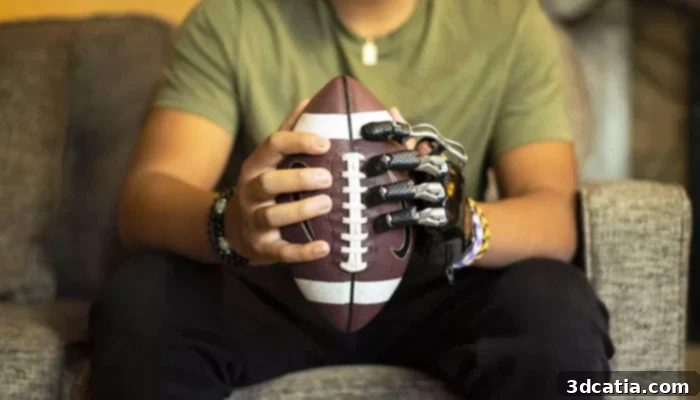
Photo Credits: Naked Prosthetics
A Fully 3D Printed Ocular Prosthesis: A Breakthrough in Realism
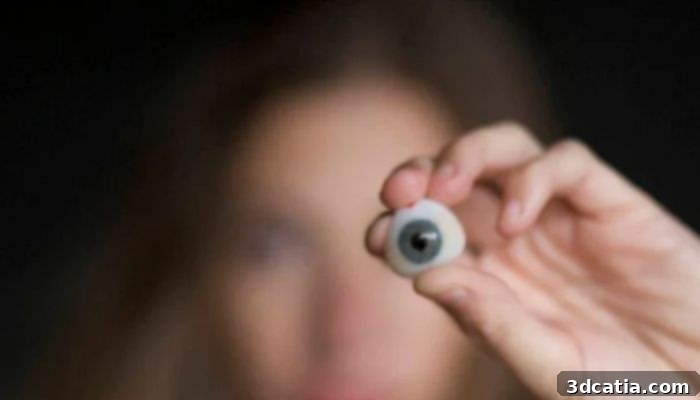
A significant milestone in medical 3D printing was recently achieved with the case of Steve Verze, a London resident who became the world’s first recipient of a fully 3D printed ocular prosthesis. This remarkable achievement stems from a collaborative effort involving several key players across the UK and Europe, spearheaded by dedicated researchers at University College London (UCL) and Moorfields Eye Hospital NHS Foundation Trust. The outcome is a prosthetic eye that sets a new standard for realism, boasting clearer definition and lifelike depth. This impressive verisimilitude was made possible through advanced eye socket scans, which ensured an incredibly precise fit and detailed replication of the natural eye’s contours and iris patterns. The ability to 3D print an entire ocular prosthesis represents a monumental leap forward, promising not only a more aesthetically convincing alternative to traditional hand-painted prosthetics but also a more efficient and potentially cost-effective manufacturing process for the future, profoundly impacting the lives of individuals needing ocular prostheses.
Lattice Medical: Fighting Breast Cancer with Bio-Absorbable 3D Printed Bioprostheses
Lattice Medical, a company founded in Lille, France, in 2017, is making significant strides in the fight against breast cancer with its innovative approach to breast reconstruction. The company has developed a groundbreaking bioprosthesis named MATTISSE, which offers a compelling alternative to the silicone implants traditionally used in breast cancer treatment. A major drawback of conventional silicone prostheses is their limited lifespan, requiring replacement approximately every 10 years for safety reasons. In contrast, the MATTISSE bioprosthesis is crafted from an absorbable material that is designed to be optimally adapted to the patient’s unique morphology, thanks to the precision offered by additive manufacturing. Lattice Medical employs FDM (Fused Deposition Modeling) technology to create these intricate scaffolds. The innovative design of MATTISSE facilitates natural tissue regeneration, encouraging the patient’s own fatty tissue to grow into and replace the absorbable scaffold over time. This process allows for a more natural and permanent breast reconstruction, reducing the need for repeat surgeries and improving long-term outcomes for breast cancer patients.
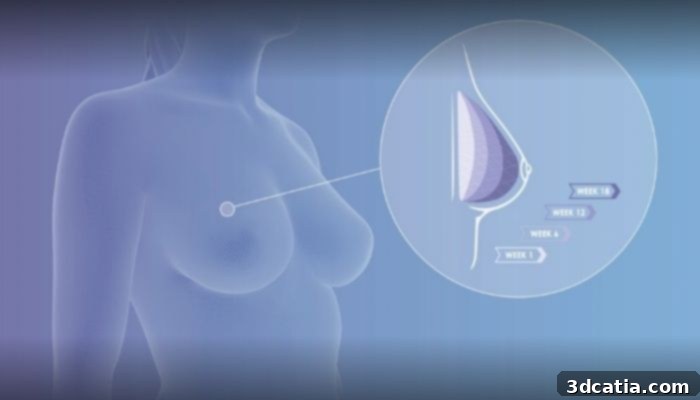
Photo Credits: Lattice Medical
As we’ve explored, the landscape of prosthetic technology is being profoundly reshaped by the capabilities of 3D printing. From enabling global humanitarian efforts and fostering open-source innovation to delivering highly personalized, aesthetically pleasing, and even regenerative medical devices, additive manufacturing is proving to be an indispensable tool in modern healthcare. The ability to precisely customize, significantly reduce costs, and accelerate production cycles is not merely an engineering feat; it’s a social revolution, offering millions of individuals worldwide renewed independence, dignity, and an improved quality of life. The future of prosthetics is undeniably interconnected with the ongoing advancements in 3D printing, promising even more sophisticated, accessible, and life-changing solutions.
What do you think of these incredible 3D printed prostheses? Let us know in a comment below or on our Facebook and Twitter pages! Sign up for our free weekly Newsletter to get all the latest news in 3D printing straight to your inbox!