
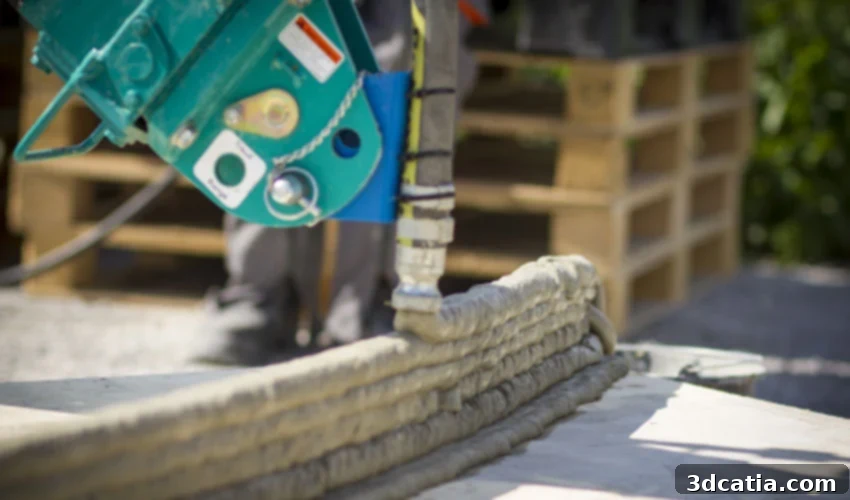
Revolutionizing Construction: The Leading Manufacturers of 3D Printed Houses in 2024
The landscape of the global construction industry is undergoing a profound transformation, with 3D printing emerging as a pivotal technology driving this change. Once a concept confined to science fiction, 3D printing in construction has rapidly accelerated, drawing unprecedented attention from investors, innovators, and governments worldwide. Recent reports from Exactitude Consulting project a colossal market expansion, with figures expected to surge from $503 million in 2020 to an astounding $6.5 billion by 2029. This exponential growth underscores the immense potential and increasing adoption of additive manufacturing processes for building structures, from residential homes to critical infrastructure.
Today, the reality of 3D printed homes being actively lived in is no longer a novelty but a testament to the technology’s maturity and viability. These innovative structures are not merely prototypes but fully functional, code-compliant buildings that offer significant advantages over traditional construction methods. The benefits are multifaceted, encompassing dramatically reduced construction times, substantial cost savings, enhanced design flexibility, and a minimized environmental footprint through optimized material usage and waste reduction. Furthermore, 3D printing provides crucial solutions for addressing global housing shortages, facilitating rapid disaster relief, and enabling construction in remote or challenging environments.
The diversity of construction 3D printers available in 2024 is remarkable, showcasing a range of sophisticated systems tailored for various applications. From highly mobile robotic arms that offer unparalleled flexibility on-site to large-scale gantry-mounted systems capable of building multi-story structures, and even specialized polar machines designed for specific geometries, the technology continues to evolve. These advanced printers are adept at extruding specialized concrete mixes and other construction materials, enabling the creation of structures with varying degrees of complexity – from simple residential units to intricate bridges and expansive office complexes. The rapid advancements mean that these machines are not just faster but also more precise, capable of producing durable and aesthetically pleasing buildings.
As this burgeoning sector continues its upward trajectory, it’s imperative to recognize the key players who are pioneering these innovations. These manufacturers are not only developing groundbreaking hardware and materials but are also implementing novel construction methodologies that are reshaping how we build. In this comprehensive, alphabetical listing, we shine a spotlight on the main manufacturers of construction 3D printers and 3D printed houses who are at the forefront of this revolution, driving the industry towards a more efficient, sustainable, and accessible future.
Apis Cor: Mobile 3D Printing for Rapid Home Construction
Apis Cor, a prominent American manufacturer based in Melbourne, Florida, stands out for its commitment to making 3D printed housing accessible and efficient. The company gained significant recognition for developing a 3D printer capable of constructing a house in as little as 24 hours, even under challenging weather conditions. Their current flagship technology centers around a mobile printer affectionately nicknamed ‘Frank’. Frank is designed for ease of handling and deployment, arriving at a construction site fully ready to operate without requiring extensive assembly. This innovative system is capable of erecting buildings up to three stories high, showcasing its versatility for various residential and commercial applications.
Complementing ‘Frank’ are its ingenious ‘siblings’: ‘Gary’ and ‘Mary’. ‘Gary’ plays a crucial role in ensuring the high quality and consistent flow of the 3D printing material, acting as the quality control specialist for the extrusion process. Meanwhile, ‘Mary’ is responsible for the material supply, streamlining the mixing and delivery process. ‘Mary’ eliminates the need for manual mixing and handling of material bags, operating efficiently regardless of external conditions like rain or snow. With ‘Mary’, operators simply add water, and she’s ready to work, connecting seamlessly with ‘Frank’ and ‘Gary’ to form an integrated, highly efficient team for automated construction. Apis Cor’s holistic approach to mobile 3D printing promises to significantly cut down construction timelines and labor costs, pushing the boundaries of rapid housing development.
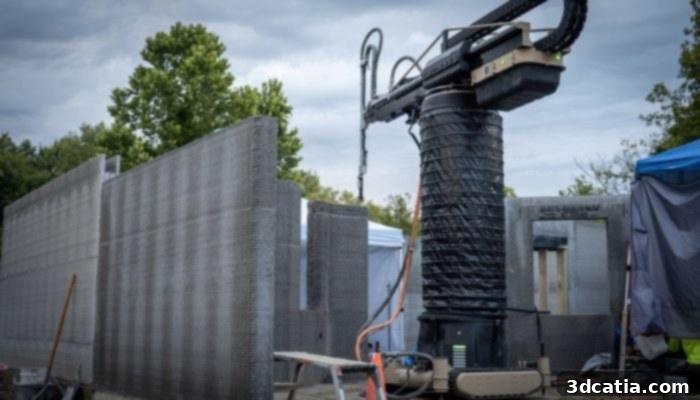
‘Frank’ the printer. (Photo credit: Apis Cor).
Azure Printed Homes: Sustainable and Efficient Modular Construction
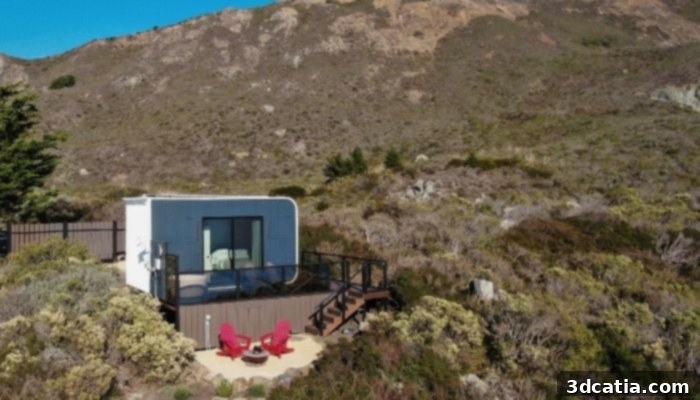
Azure Printed Homes is another leading American manufacturer of 3D printed houses, distinguishing itself through a strong focus on modular construction and sustainable practices. The company has carved out a niche by leveraging 3D printing technology to build high-quality modular homes, garden studios, and office spaces with remarkable speed and efficiency. Their innovative approach prioritizes environmental responsibility, primarily by integrating recycled materials into their construction projects. A standout feature of Azure Printed Homes’ philosophy is their commitment to using recycled plastics and other sustainable aggregates, with the impressive claim that every 11.15 m² (120 sq ft) of their models repurposes the equivalent of 100,000 recycled plastic bottles.
The advanced 3D printing technology employed by Azure Printed Homes enables them to construct building structures with exceptional precision and significantly accelerated timelines, overcoming many of the inherent limitations of conventional construction methods. This technological edge translates into tangible benefits for consumers and the environment: buildings can be completed up to 70% faster, while overall construction costs are reduced by as much as 30%. Each of their products is meticulously designed not only for energy efficiency and sustainability but also for modern aesthetics, offering a compelling combination of eco-consciousness and contemporary living. Azure Printed Homes is thus positioned as a frontrunner in the movement towards greener, faster, and more affordable housing solutions.
BatiPrint: French Innovation in Robotic Construction
BatiPrint, founded by a dedicated team of researchers from the University of Nantes, has rapidly become a significant player among French manufacturers of 3D printed houses. The company is at the vanguard of transforming “Construction 4.0” by integrating cutting-edge robotics and additive manufacturing techniques to achieve highly efficient building and renovation processes. At the core of their technology is an industrial robot that directly applies three distinct layers of material on-site: two layers of expanding foam for insulation and one layer of concrete for structural integrity and finishing. This innovative multi-material approach not only enhances thermal performance but also streamlines the construction workflow.
By expertly combining two unique 3D printing processes, BatiPrint specializes in producing polymer foam insulating formwork, suitable for both individual houses and small apartment blocks. Additionally, they offer advanced external thermal insulation solutions designed specifically for building facades, significantly improving energy efficiency. Based in Sainte-Luce-sur-Loire, near Nantes, this French company boasts impressive capabilities, able to construct walls up to an imposing 7 meters (approximately 23 feet) in height. BatiPrint’s focus on integrating insulation directly into the 3D printing process represents a crucial step towards more energy-efficient and sustainable building practices in the European market and beyond, showcasing the versatility and impact of advanced construction robotics.
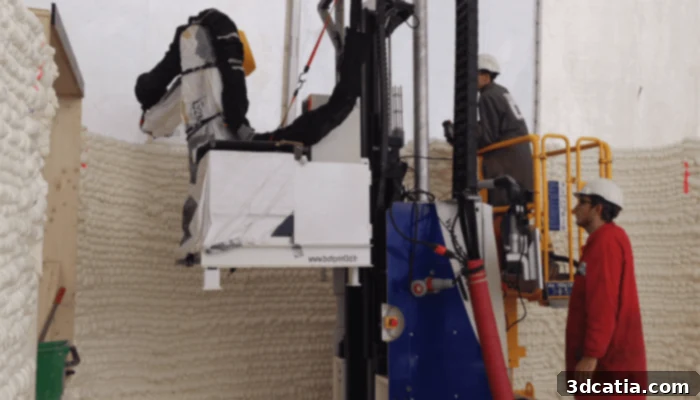
Photo Credits: BatiPrint
Black Buffalo 3D: Sustainable Construction with a Reduced Carbon Footprint
Black Buffalo 3D, a US-based manufacturer, is making significant strides in construction 3D printing by focusing on durability, affordability, and environmental sustainability. The company utilizes a proprietary, highly durable, cement-based ink that is engineered to produce constructions stronger than traditional block walls, ensuring longevity and structural integrity. Black Buffalo 3D’s mission is twofold: to provide innovative solutions for the escalating global housing crisis and to drastically reduce the carbon footprint associated with conventional construction methods. Their advanced technology enables the rapid printing of structures up to four stories high in a matter of weeks, yielding substantial cost savings that can reach around 50% compared to traditional building techniques.
At the heart of their offering are the NEXCON™ construction printers, complemented by a diverse range of raw materials designed to revolutionize the construction process for the benefit of consumers. These systems promise not only speed and efficiency but also contribute to a greener building industry. A recent landmark achievement for Black Buffalo 3D is the commencement of construction on its pilot LoMa 3D-printed home in Fort Worth, Texas. This project is poised to become the region’s first internationally code-compliant 3D-printed home, a monumental step that validates the safety, reliability, and regulatory acceptance of their innovative building solutions. This achievement underscores Black Buffalo 3D’s position as a leader in delivering practical, sustainable, and compliant 3D printing solutions for the modern construction market.
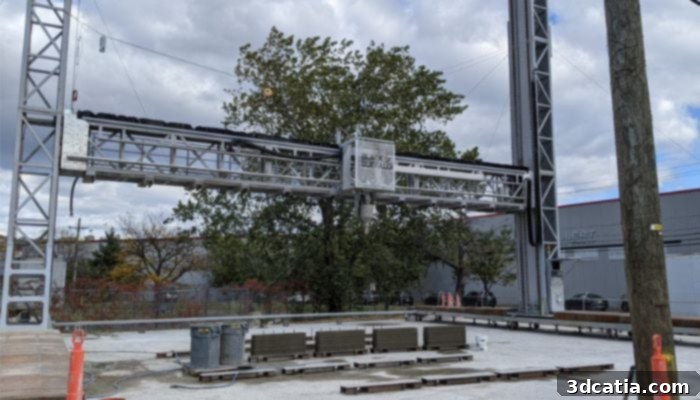
Photo Credits: Black Buffalo 3D
COBOD: The European Leader in Global Construction 3D Printing
The Danish company COBOD International has firmly established itself as a global leader in construction 3D printing, beginning its journey with the groundbreaking construction of Europe’s first 3D-printed building in Copenhagen in 2017. Since its inception, COBOD has dedicated itself to developing advanced concrete 3D printers, driven by the vision of democratizing additive manufacturing for home construction worldwide. Today, COBOD’s innovative solutions are deployed across all inhabited continents, demonstrating their robust and versatile capabilities in a myriad of projects initiated by various companies and organizations.
Key to their success are systems like BOD (Building On Demand) and its enhanced successor, BOD2. These printers offer unparalleled flexibility, scalability, and efficiency for large-scale construction projects. A notable recent achievement highlights COBOD’s commitment to pushing technological boundaries: the construction of the first 3D-printed house in Central Asia. Located in Kazakhstan, this 100-square-meter residence is engineered to withstand earthquakes of magnitude 7.0, a critical requirement in a seismically active region. This project perfectly illustrates the powerful combination of COBOD’s advanced additive manufacturing technology with rigorous seismic engineering standards, marking a significant breakthrough in the global construction industry and proving the resilience and adaptability of 3D-printed structures.
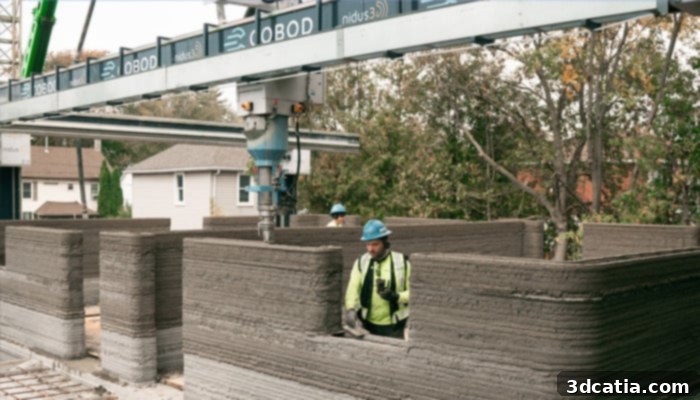
Photo Credits: COBOD
Constructions-3D: The French Solution for Customizable and Sustainable Buildings
The Constructions 3D project, rooted in French innovation, is driven by an ambitious goal: to build customizable homes using recyclable or locally sourced materials directly from the construction site. This eco-conscious vision led to the development of their own sophisticated line of 3D home printers, designed to address many of the challenges facing the modern construction industry. Currently, the company offers three distinct printer models, each tailored to specific needs: the MaxiPrinter, the MiniPrinter Pro, and the MiniPrinter Pro XL.
The MaxiPrinter serves as a powerful, turnkey concrete printer, renowned for its ability to tackle large-scale construction efficiently. Its mobile and foldable chassis allows for easy transportation and rapid setup on various job sites, reaching an impressive printing speed of 250 mm/s. This makes it ideal for complete building structures. In contrast, the MiniPrinter Pro and MiniPrinter Pro XL are specifically engineered for the additive manufacturing of architectural elements and urban furniture rather than entire buildings. The MiniPrinter Pro offers a generous print volume of 1200 x 1200 x 1200 mm, while the larger MiniPrinter Pro XL expands this to 2500 x 1200 x 1200 mm, both operating at a rapid print speed of 400 mm/s. These models are perfect for creating intricate, custom-designed components with high precision.
All three printers boast features meticulously designed to meet the demands of specific construction needs and sectors, emphasizing flexibility and efficiency. A compelling demonstration of their capabilities is evident in the video below, which showcases the MaxiPrinter in action during the construction of “Tour.” This impressive structure, standing 14.21 meters high and encompassing 450 m², is located at the Citadelle du Savoir-Faire. This project not only highlights the MaxiPrinter’s power but also set a world record for the largest 3D-printed building earlier this year, solidifying Constructions-3D’s position as an innovator in large-scale additive construction.
Contour Crafting: Custom Homes in a Day
The prospect of constructing a personalized home in just a single day might seem futuristic, especially when traditional construction in the U.S. typically spans six to nine months. However, Contour Crafting has transformed this vision into a tangible reality. By harnessing the power of advanced robotics and innovative 3D printing technology, Contour Crafting can erect custom homes in mere hours. This groundbreaking capability is particularly impactful for addressing urgent housing needs, such as providing shelter for low-income families or facilitating rapid recovery efforts in disaster-stricken areas. Crucially, this accelerated construction comes at a fraction of the cost, often as little as one-fifth of traditional building expenses, making it an economically viable and socially beneficial solution.
The 3D printer utilized by Contour Crafting employs a specially formulated, fast-setting, concrete-like material. This proprietary material is key to their ability to achieve rapid and efficient building, allowing layers to cure quickly enough to support successive layers without compromising structural integrity. Contour Crafting’s technology represents a significant leap forward in automated construction, offering not just speed but also precision and customization that can adapt to diverse architectural designs and local requirements. Their approach not only redefines construction timelines but also makes significant strides in making housing more affordable and accessible for a wider population, promising a future where homes can be built on demand to meet pressing needs with unprecedented efficiency.
CyBe Construction: Dutch Expertise in High-Speed Concrete 3D Printing
CyBe Construction, a pioneering Dutch company, stands at the forefront of concrete 3D printing technology, offering a comprehensive suite of solutions tailored for modern construction demands. Their product portfolio currently encompasses four advanced systems: the CyBe R, CyBe RC, CyBe RT, and the recently introduced CyBe GR. The CyBe GR represents their latest innovation, a robust four-column, three-beam 3D printer designed to print within a designated zone, offering immense flexibility and precision for various construction projects. This gantry printer is particularly well-suited for construction companies focused on delivering affordable housing solutions, enabling rapid and cost-effective production of residential units.
The gantry system of the CyBe GR features a print head and nozzle meticulously controlled by ABB robotics, ensuring consistent accuracy and smooth operation. Beyond their cutting-edge hardware, CyBe Construction has also developed and patented its own unique material, a specialized concrete mix optimized for 3D printing. This proprietary material, combined with their advanced robotic systems, enables printing speeds of up to 500 mm/second. Such high speeds facilitate the remarkably swift manufacturing of robust concrete structures, significantly reducing project timelines. CyBe’s integrated technology – from their versatile machines with 6 axes to their specialized concrete mix – is widely recognized as one of the most innovative and reliable methods for constructing concrete units, pushing the boundaries of what is achievable in additive construction.
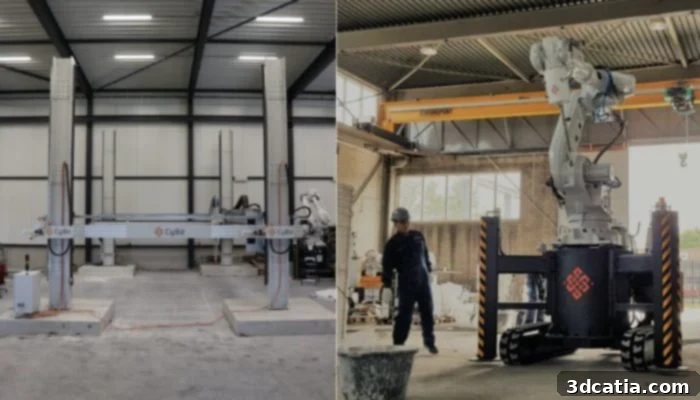
Left, Cybe G; right, Cybe 3C. (Photo Credits: Cybe Construction)
D-Shape: Italian Pioneers in Large-Scale 3D Printing
D-Shape, an innovative Italian company with operations extending across several countries, is widely regarded as a pioneer in the field of 3D printing for construction. The company made a significant impact in 2008 when it unveiled a groundbreaking technology capable of 3D printing large-scale structures, most notably demonstrated with the creation of the Radiolaria pavilion – the world’s first fully 3D-printed structure. This early achievement showcased the immense potential of additive manufacturing beyond small-scale prototyping, laying the groundwork for its application in architectural and structural contexts.
Since its initial breakthrough, D-Shape has strategically expanded its activities, venturing beyond the core construction sector while steadfastly maintaining its foundational ethical objective: “providing new generations of architects with the tools to materialize beauty at an affordable cost.” This mission emphasizes not just technological advancement but also accessibility and artistic expression in architecture. Among its notable projects, D-Shape collaborated with acclaimed architect Marco Ferreri in 2010 to print the first “one-piece” house, a testament to their innovative approach to monolithic construction. D-Shape continues to be a driving force in shaping the future of construction, blending advanced technology with a commitment to architectural beauty and economic viability.
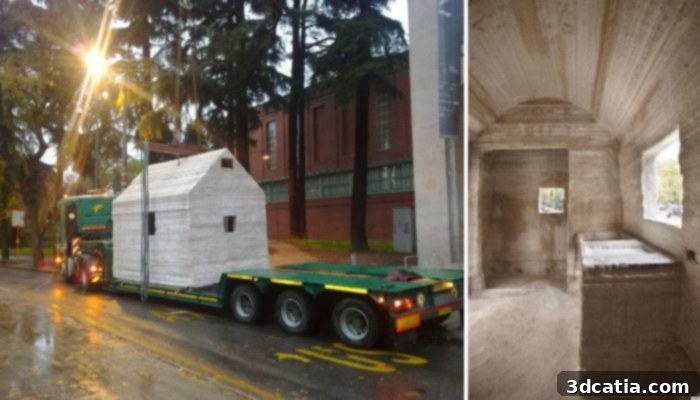
Photo Credits: D-Shape
Guanli: The Chinese Manufacturer Behind Iconic 3D Printed Structures
Guanli Tech, a prominent China-based manufacturer of construction 3D printers, has garnered international attention for its pioneering projects in additive construction. The company recently made headlines for unveiling the world’s first 3D printed mosque in Saudi Arabia, a monumental achievement that demonstrated the technology’s capability for intricate architectural designs and large-scale public buildings. Guanli offers a diverse range of 3D printing systems, including robust gantry-type solutions specifically designed for large-scale building construction, as well as sophisticated robotic additive manufacturing solutions tailored for constructing walls with precision and efficiency.
While their expertise extends to various impressive structures, Guanli has also made significant inroads into the residential sector. The company has commenced work on residential buildings, notably a three-story villa planned for Saudi Arabia. This project further showcases Guanli’s versatility and commitment to applying 3D printing technology across different segments of the construction industry, from religious edifices to multi-level private residences. By combining large-format printing capabilities with robotic precision, Guanli Tech is solidifying its position as a key innovator in the global race to redefine construction methods, offering solutions that promise speed, design flexibility, and material efficiency for a wide array of building types.
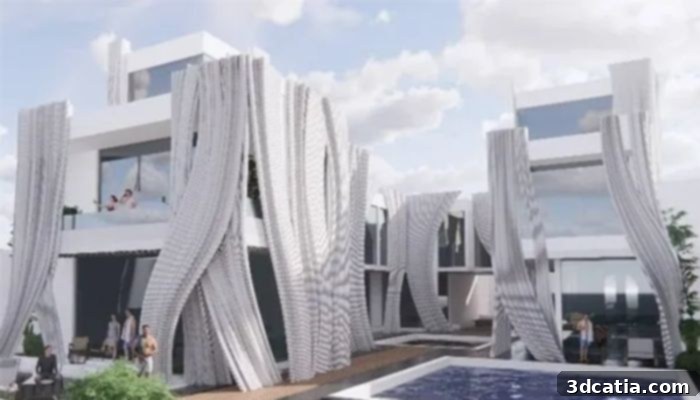
The mock-up for Guanli’s 3D printed villa (photo credits: Guanli Tech)
ICON: Well-Established Solutions for Advanced Construction 3D Printing
Established in 2015, ICON has rapidly ascended to become one of the most prominent and influential manufacturers of 3D printed houses globally. Their significant contributions to the field are evidenced by a series of pioneering projects, including securing the first permit to build a 3D-printed house in the USA in 2018. ICON’s portfolio is diverse and impressive, encompassing everything from printing military barracks to developing entire residential neighborhoods. They have executed a variety of projects, successfully deploying their technology for housing solutions in regions of Australia and, most notably, constructing a groundbreaking 100-home neighborhood in Texas – a testament to their scalability and commitment to addressing housing needs.
ICON recently unveiled its next-generation additive manufacturing machine, Phoenix. This innovative system is a larger, more powerful solution compared to its predecessor, the Vulcan, and is specifically designed to create multi-story structures with enhanced efficiency. The Phoenix is equipped with a sophisticated robotic arm capable of extending upwards, allowing for greater build height and architectural complexity. Beyond its expanded build volume, this 3D concrete printer boasts significantly faster assembly times and an accelerated material extrusion process, leading to quicker project completion. ICON’s continuous innovation, exemplified by the Phoenix, underscores their dedication to advancing construction 3D printing and making high-quality, resilient, and sustainable homes more accessible. The capabilities of this remarkable machine are vividly demonstrated in the video below, showcasing its potential to reshape urban and rural landscapes.
Kelvin6k: Bringing 3D Printing Innovation to Indian Construction
Kelvin6k, founded in India in 2022, is quickly establishing itself as a key innovator in the construction sector by specializing in the manufacture of concrete 3D printer robots designed for efficient on-site home construction. The company’s name, a nod to the surface temperature of the sun, symbolizes its broader interest in leveraging solar energy research for sustainable practices. Kelvin6k has engineered a distinctive series of 3D concrete printers based on the SCARA (Selective Compliance Assembly Robot Arm) system, with the Kelvin6k Pro being a standout model in their lineup.
The Kelvin6k Pro is distinguished by its three uniquely designed moving parts, which not only enhance its operational flexibility but also significantly extend its service life, promising greater durability and reliability on construction sites. Notably, it holds the distinction of being the largest robotic arm printer in India, demonstrating Kelvin6k’s ambition and capability in large-scale additive manufacturing. The overarching aim of this technology is to automate the construction industry, making the building process both faster and more economical, while simultaneously contributing to greater affordability and sustainability in home building. Kelvin6k is actively engaged in various projects, including the creation of innovative office spaces, showcasing their commitment to transforming the Indian construction landscape with advanced robotic 3D printing solutions.
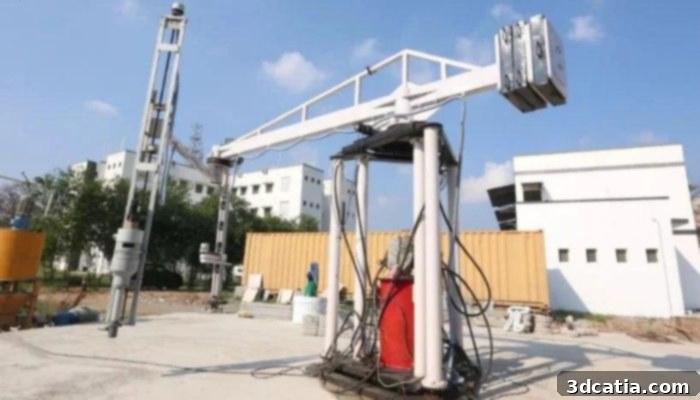
Photo Credits: Kelvin6k
Litehaus: Fast, Eco-Friendly, and Affordable Construction with 3D Printing
Litehaus is rapidly gaining recognition in the real estate sector for its groundbreaking innovations, particularly in the construction of 3D modular homes and its profound commitment to sustainable technologies. With a clear vision to revolutionize the traditional real estate market, Litehaus employs advanced 3D printing methods to deliver housing solutions that are not only ecological and economical but also highly customizable. Their integrated approach focuses on optimizing every aspect of the construction process, from design to material selection, to minimize environmental impact and maximize efficiency.
The quantifiable benefits of Litehaus’s approach are compelling: their constructions are completed up to 70% faster than conventional builds, boast a cost reduction of 20%, and achieve an impressive 90% increase in sustainability. This enhanced sustainability is attributed to a notable reduction in water consumption and significantly lower CO2 emissions throughout the building lifecycle. As a prime example of their pioneering work, Litehaus achieved a significant milestone in Portugal by constructing a house using a synergistic combination of 3D printing and artificial intelligence. This project underscores their commitment to leveraging cutting-edge technology for smarter, greener building. Looking ahead, Litehaus has set an ambitious objective to build up to 100 houses per year in Portugal, solidifying its role as a leader in delivering sustainable, rapid, and affordable housing solutions on a significant scale.
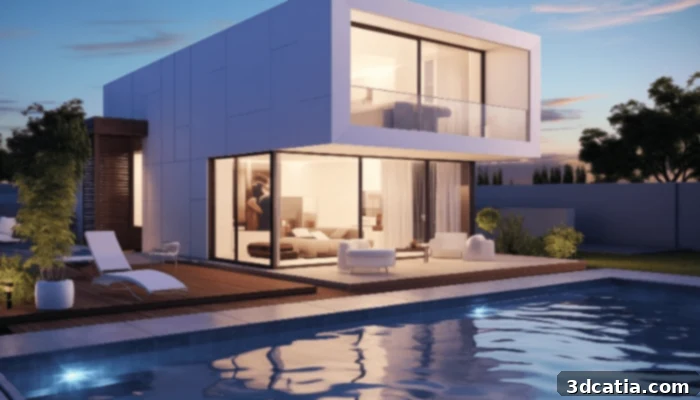
Photo Credits: Litehaus
LUYTEN: Australian Innovation for Energy-Efficient 3D Printed Homes
LUYTEN stands out as one of Australia’s pioneering manufacturers specializing in the large-scale additive manufacturing of concrete structures, including innovative 3D printed houses. The company’s core objective is to deliver low-cost, energy-efficient housing solutions by harnessing the power and precision of 3D printing technology. To achieve this, LUYTEN has developed an impressive range of six printer models under its renowned PLATYPUS series. These advanced printing robots are designed to autonomously deposit LUYTEN’s proprietary material mixes layer by layer, enabling the complete and efficient construction of entire residential units.
A cornerstone of LUYTEN’s technology is its Ultimatecrete concrete mix, which offers up to four times the compressive strength of standard construction materials. This superior material ensures the creation of incredibly durable and resilient homes. Furthermore, LUYTEN’s designs are engineered to withstand diverse weather conditions, while a self-regulating building material facilitates natural heating and cooling, significantly reducing energy consumption. This focus on thermal efficiency translates into lower utility costs for homeowners and a reduced environmental footprint. Demonstrating a bold vision for the future, LUYTEN is actively exploring the potential applications of its advanced 3D printing technology for extraterrestrial construction, specifically on the Moon and Mars, positioning itself at the cutting edge of both terrestrial and off-world building innovation.
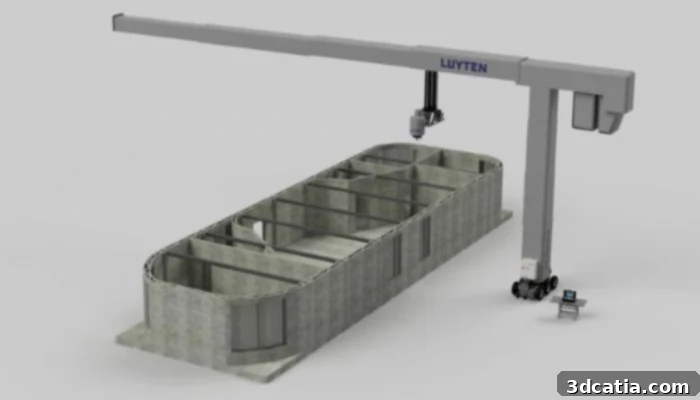
Photo Credits: Luyten
Mighty Buildings: Californian Leader in Zero-Waste 3D Printed Homes
Mighty Buildings, based in Oakland, California, is at the forefront of the construction industry, leveraging innovative materials and advanced 3D printing techniques to create prefabricated homes. The company is strategically addressing two of the most pressing global challenges: the escalating housing shortage and the critical climate crisis. By automating an impressive 80% of its manufacturing operations and incorporating 60% recycled materials into its production process, Mighty Buildings significantly reduces the cost of building its homes by an astonishing 99% compared to traditional construction methods. This radical efficiency makes high-quality housing dramatically more accessible and sustainable.
A central pillar of Mighty Buildings’ philosophy is its unwavering commitment to achieving a zero-waste production process, minimizing environmental impact at every stage of construction. One of their most groundbreaking achievements is the development of the world’s first net-zero energy 3D-printed house. This remarkable dwelling is designed to produce as much energy as it consumes, making it exceptionally sustainable and cost-efficient for homeowners. The house itself features a comfortable layout with two bedrooms and two bathrooms, demonstrating that advanced sustainability doesn’t compromise livability. Mighty Buildings continues to push the boundaries of what is possible in additive construction, offering a compelling vision for a future where housing is not only affordable and abundant but also environmentally regenerative.
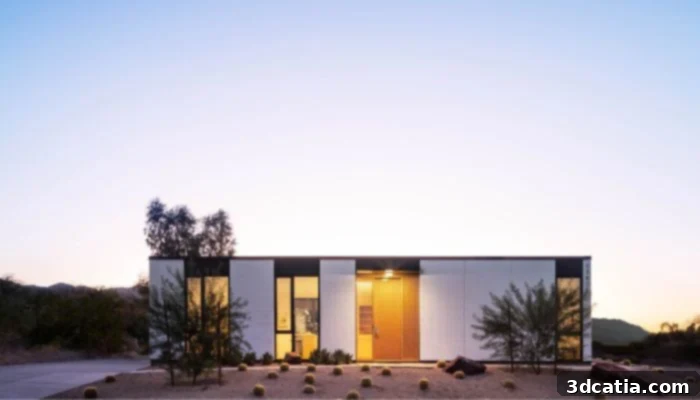
Mighty Buildings’ first net-zero energy home (photo credits: Mighty Buildings)
MudBots: Versatile 3D Printers for Varied Home Sizes
The American company MudBots has made a significant mark in the construction 3D printing sector, renowned for its diverse range of 3D printers capable of building homes of various scales. From compact 15’ x 15’ models perfectly suited for accessory dwelling units or small residences, to expansive 100’ x 100’ models designed for larger family homes or commercial structures, MudBots offers a versatile solution for almost any residential construction need. The company first introduced its innovative line of 3D printers to a global audience at the prestigious World of Concrete 2019 in Las Vegas, where it garnered considerable attention for its potential to revolutionize home building.
Since its impactful debut, MudBots has successfully executed numerous projects worldwide, showcasing the global applicability and demand for its 3D concrete printing technology. Their product series includes models such as the E15-15H10, E25-25H10, E35-35H10, E50-50H10, E75-75H10, and the E100-50H10, each engineered with distinct features and optimized for different construction times and project complexities. This broad spectrum of printers allows MudBots to cater to a wide array of clients, from individual homeowners seeking custom builds to developers looking for efficient ways to construct multiple units. MudBots continues to be a pivotal player in making 3D printed housing a widespread and practical reality, offering scalable solutions for the future of construction.
RENCA: Pioneering Sustainable Geopolymer 3D Printed Houses
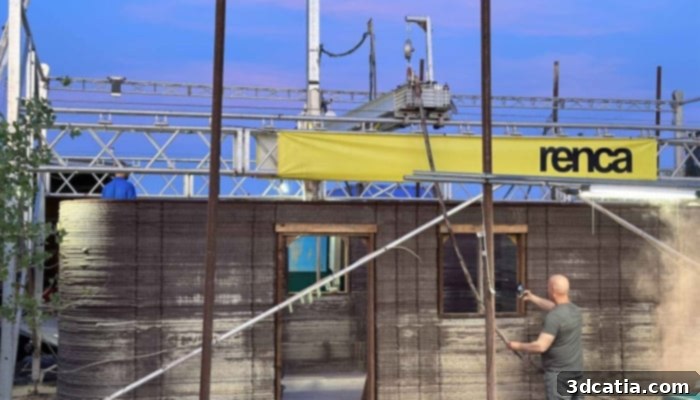
Based in Dubai, RENCA is a distinguished addition to our list of leading manufacturers of 3D printed houses, specializing in the development of highly sustainable geopolymer materials for construction additive manufacturing. Since its establishment in 2015, RENCA has been dedicated to transforming the home building industry into a more sustainable and environmentally friendly sector through innovative material science. At the core of RENCA’s offering are geopolymers, inorganic materials created by combining an aluminosilicate source with an alkaline activator. These advanced materials provide a compelling and viable alternative to traditional Portland cement, which is notoriously carbon-intensive.
RENCA’s geopolymers not only mimic the desirable properties of cement but also boast superior mechanical strength and a significantly reduced carbon footprint, making them ideal for eco-conscious construction. In a monumental achievement in 2023, RENCA marked a global milestone by 3D printing the world’s first house built entirely with geopolymers. This ambitious project, undertaken in collaboration with Strong Print 3D and Geopolymer International, successfully navigated the challenging environmental conditions of the western US desert to print the entire structural framework of the house. This achievement not only demonstrates the remarkable capabilities of geopolymer 3D printing but also solidifies RENCA’s position as a leader in sustainable construction materials, paving the way for a greener future in building.
SQ4D: Setting the Market Standard for 3D Printed Homes
The American company SQ4D is a pioneering force specializing in the design and construction of installations using advanced 3D printing technology. Their innovative ARCS (Automated Robotic Construction System) line of construction 3D printers is characterized by a robotic arm integrated within a gantry system that encapsulates the entire printing area. This setup allows for the precise and continuous creation of structures through a sophisticated concrete extrusion process. SQ4D’s foundational mission is to offer a safer, more affordable, and inherently sustainable successor to conventional building methods, aiming to revolutionize the accessibility and environmental impact of home construction.
Their commitment to this mission has yielded impressive success. A landmark achievement occurred in February 2021 when SQ4D made history by becoming the first company to list a 3D printed house on the open market. This groundbreaking event took place in Long Island, New York, signaling a pivotal moment for the construction industry and demonstrating the commercial viability and regulatory acceptance of 3D printed homes. The listing not only validated the technology but also opened new avenues for potential homeowners seeking innovative, cost-effective, and environmentally friendly housing solutions. SQ4D continues to push boundaries, proving that 3D printing can deliver high-quality, market-ready homes that meet modern demands.
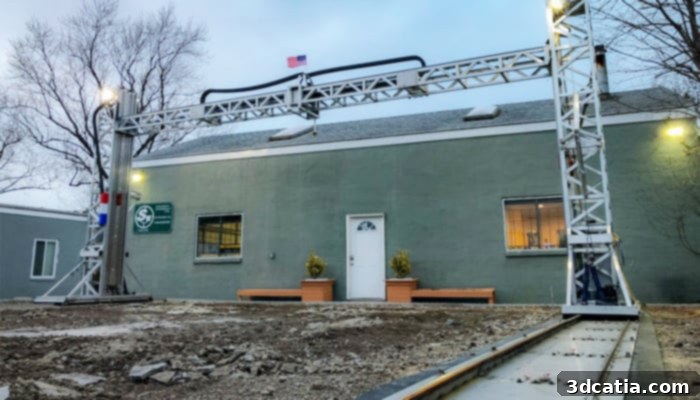
Caption: SQ4D were the first manufacturers to put a 3D printed home on the market. (photo credit: SQ4D).
TAM (Twente Additive Manufacturing): Versatile Concrete 3D Printers
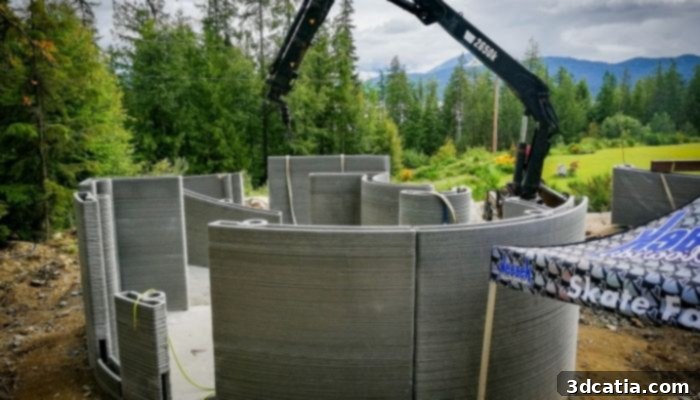
Twente Additive Manufacturing (TAM), a Dutch manufacturer of construction 3D printers, garnered significant attention in 2020 with its innovative project in Canada. The company ingeniously designed the walls of a house based on the renowned Fibonacci sequence, envisioning a unique spiral-shaped structure that allowed for a natural progression of spaces. This creative application showcased TAM’s capability for architectural complexity and pushing the boundaries of traditional design, highlighting the artistic potential of 3D printing in construction.
Since this initial success, TAM has diligently developed multiple projects and expanded its machine offerings, providing diverse models to cater to various construction needs. The company now offers three distinct categories of concrete 3D printers: specialized models designed for research and laboratory applications, highly mobile units optimized for easy transportation to different job sites, and large-format solutions typically installed on gantries for extensive construction projects. TAM’s overarching aim is to foster more sustainable construction practices and to enable the creation of robust structures even in geographically inaccessible and isolated areas. By offering a range of adaptable printing solutions, TAM is contributing significantly to making additive construction a more versatile, efficient, and globally impactful method for building.
WASP: Circular Economy and Sustainable 3D Printed Homes
Since its establishment in 2012, the Italian company WASP (World’s Advanced Saving Project) has been a pivotal force among manufacturers of 3D printed houses, deeply committed to the principles of the circular economy and sustainability. Their innovative approach focuses on utilizing local and often natural materials to construct homes with minimal environmental impact, aiming for self-sufficiency and ecological harmony in building.
In 2021, WASP made a significant entry into the construction market with its proprietary multi-printer system, the Crane WASP. This groundbreaking system is distinguished as the first modular and multi-stage 3D printer ever introduced to the market. Its modular design allows for unparalleled flexibility, enabling it to be assembled in virtually any shape and size in just a few days. Each Crane WASP unit provides an impressive printing area of 50 square meters, making it highly efficient for constructing large structures rapidly. A prime example of WASP’s capabilities is the iconic TECLA project, undertaken in collaboration with Mario Cucinella Architects. TECLA represents a global habitat model for sustainable living, showcasing the potential of WASP’s technology to create resilient, eco-friendly homes from raw earth, thus embodying a true commitment to sustainable development and architectural innovation.
XtreeE: Leading French Manufacturer of High-Precision 3D Printed Concrete Structures
XtreeE stands as another formidable name among French manufacturers of 3D printed houses, having carved out a niche since its founding in 2015. The company specializes in the additive manufacturing of complex concrete structures, distinguishing itself through the sophisticated integration of ABB industrial robots with its proprietary in-house developed software. This powerful combination allows XtreeE to achieve remarkable precision and flexibility in its construction processes, tackling architectural challenges that are often impossible with traditional methods.
Driven by a vision to enhance operational agility, XtreeE is actively pursuing the development of more mobile machines to overcome existing manufacturing constraints and broaden the applicability of its technology. Among its notable achievements, XtreeE successfully delivered the first five fully certified 3D-printed houses in France, located in Reims. These projects ingeniously incorporated hollow walls designed to integrate plumbing and insulating materials directly into the printed structure, showcasing an advanced level of functional integration and efficiency. In April 2024, XtreeE unveiled a new, more powerful print head, boasting an impressive precision of 1 mm, a high speed of 300 mm/s, and a substantial flow rate of up to 10 liters per minute, further enhancing their capabilities. Moreover, XtreeE launched the XtreeE Academy, a dedicated training program for the construction sector, aimed at facilitating and accelerating the widespread adoption of 3D concrete printing through education and skill development.
The rapid advancements in construction 3D printing are truly reshaping the built environment, offering compelling solutions for sustainability, affordability, and design freedom. The manufacturers highlighted in this article represent the vanguard of this transformative technology, pushing boundaries and demonstrating the immense potential of additive manufacturing for a brighter, more efficient future. As these innovations continue to evolve, we can expect to see even more impressive structures and methodologies emerge, further integrating 3D printing into the fabric of global construction.
What are your thoughts on these pioneering 3D printed house manufacturers and the future of additive construction? We’d love to hear your insights! Share your comments below or engage with us on our Facebook and Twitter pages. For the latest news and developments in the world of 3D printing, be sure to sign up for our free weekly Newsletter, delivered straight to your inbox!