

KFC’s “Restaurant of the Future”: Pioneering 3D Printed Chicken for a Sustainable Fast-Food Era
Kentucky Fried Chicken, universally recognized as KFC, stands as a dominant force in the global fast-food landscape, boasting an impressive network of over 24,000 restaurants spread across 145 countries. The brand’s legendary status is primarily built upon its “special recipe” fried chicken, a beloved offering ranging from crispy hot wings to succulent chicken nuggets. However, the world of fast food is undergoing a profound transformation, and KFC is not one to be left behind. A surprising and groundbreaking announcement recently captivated the industry: KFC is embracing the cutting-edge realm of 3D printing. This monumental leap involves a strategic partnership with the innovative 3D Bioprinting Solutions research laboratory, collaborating on an ambitious initiative dubbed the “Restaurant of the Future.” This raises a fascinating question: could we soon see 3D printed food, specifically chicken nuggets, becoming a mainstream reality for consumers worldwide?
The inception of the “Meat of the Future” project at KFC is a direct response to a burgeoning global awareness around healthy nutrition, environmental sustainability, and ethical food production. As an increasing number of consumers actively seek alternatives to traditionally farmed meat, there’s an undeniable and urgent need for more environmentally friendly and humane methods of food production. This societal shift is driving food giants like KFC to innovate at an unprecedented pace. Consequently, the “Restaurant of the Future” initiative is designed to revolutionize the fast-food experience by soon introducing the world’s first laboratory-produced chicken nuggets, offering a glimpse into what the future of our food system might entail.

A cornerstone of this ambitious project is the commitment to deliver a product that closely mirrors the beloved original. The upcoming 3D printed chicken nuggets are meticulously engineered to replicate the authentic taste and texture of KFC’s traditional offerings, ensuring a sensory experience that is almost indistinguishable from its conventional counterpart. Regular patrons of the fast-food chain may find it challenging to discern any difference, a testament to the advanced capabilities of bioprinting technology. Beyond sensory appeal, these re-created chicken nuggets promise significant environmental advantages, boasting a production footprint that is considerably more sustainable than that of ordinary poultry meat. KFC has publicly confirmed that the final product will be ready for initial testing in Moscow, Russia, as early as Fall 2020, marking a pivotal moment in the journey towards sustainable fast food.
The selection of 3D Bioprinting Solutions as KFC’s partner for this pivotal “Restaurant of the Future” project comes as no surprise to those familiar with the cutting-edge field of food innovation. This Russia-based research laboratory has cultivated an exceptionally impressive track record in the arena of 3D printing food, establishing itself as a leader in biofabrication. Their expertise and groundbreaking achievements make them an ideal collaborator for such an ambitious undertaking. Not long ago, 3D Bioprinting Solutions achieved global recognition through their successful collaboration with Aleph Farms, a pioneering company at the forefront of research and production of 3D printed meat. This partnership culminated in a truly historical accomplishment: the successful 3D printing of meat in space, an environment far removed from Earth’s natural resources. This feat demonstrated not only the viability but also the immense potential of bioprinting technology to create food even under extreme conditions, solidifying 3D Bioprinting Solutions’ position as a trailblazer in the field and a natural fit for KFC’s forward-thinking vision.
For KFC’s revolutionary “Meat of the Future” initiative, 3D Bioprinting Solutions is meticulously developing an advanced additive bioprinting technology. This innovative process leverages a combination of chicken cells and carefully selected plant-based materials. The core objective is to precisely reproduce the complex taste, aroma, and fibrous texture of authentic chicken meat, all while significantly reducing the reliance on traditional animal farming. This method allows for the creation of a bio-identical product with a far smaller environmental footprint and without the ethical concerns associated with industrial animal agriculture. Once the bioprinting and cultivation stages are perfected, KFC will play a crucial role by providing its esteemed partner with its legendary blend of essential ingredients. This includes the brand’s proprietary breading and secret blend of spices, which are instrumental in achieving that unmistakable, signature KFC taste that has captivated palates for decades. Both companies have underscored the unique nature of this endeavor, emphasizing that, at present, there are no other commercially viable methods available on the market capable of creating such intricately structured and flavored products from animal cells with this level of precision and authenticity. This collaboration truly represents a confluence of scientific innovation and culinary heritage, aiming to redefine what’s possible in fast food.

The bioprinting method, as employed in the development of KFC’s future chicken products, offers a multitude of compelling advantages over conventional meat production processes. Firstly, these innovative bio-meat products are designed to contain the exact same essential microelements and nutritional profile as their traditionally sourced counterparts. Crucially, however, they achieve this while entirely excluding the various unwanted additives, such as antibiotics and growth hormones, commonly utilized in traditional industrial farming. This results in a significantly cleaner, purer, and potentially healthier final product for the consumer. Secondly, the production of cell-based meat products is inherently more ethical. The process bypasses the need for animal slaughter and largely eliminates the welfare concerns associated with concentrated animal feeding operations (CAFOs), offering a humane alternative for conscious consumers. This aligns perfectly with growing global demands for cruelty-free food options.
Beyond health and ethics, the environmental benefits are profound. A landmark study published in the American Environmental Science & Technology Journal provides compelling evidence of cell-based meat’s minimal negative impact on the planet. The technology of growing meat from cells has the potential to dramatically reduce the ecological footprint associated with our food supply. Specifically, the study indicates that this method allows for “energy consumption to be cut by more than half, greenhouse gas emissions to be reduced 25 fold, and 100 times less land to be used than traditional farm-based meat production.” Furthermore, cell-based meat production also requires significantly less water – a critical resource in a world facing increasing water scarcity – and reduces the widespread issue of agricultural runoff pollution. This holistic approach to sustainability positions 3D bioprinting as a transformative technology, offering a viable pathway towards feeding a growing global population in a manner that is both responsible and environmentally conscious.
Raisa Polyakova, the General Manager of KFC Russia & CIS, articulated the company’s visionary stance on this initiative, stating: “Crafted meat products are the next step in the development of our “restaurant of the future” concept. Our experiment in testing 3D bioprinting technology to create chicken products can also help address several looming global problems. We are glad to contribute to its development and are working to make it available to thousands of people in Russia and, if possible, around the world“. Polyakova’s statement underscores KFC’s commitment to not only culinary innovation but also to leveraging advanced technology as a solution for pressing global challenges, particularly those related to food security and sustainable resource management. This move signifies a clear intent to transcend traditional fast-food offerings and position KFC as a leader in the evolving food landscape.
Echoing this sentiment, Yusef Khesuani, Co-Founder and Managing Partner of 3D Bioprinting Solutions, added crucial insights from the technological perspective: “3D bioprinting technologies, initially widely recognized in medicine, are nowadays gaining popularity in producing foods such as meat. In the future, the rapid development of such technologies will allow us to make 3D-printed meat products more accessible and we are hoping that the technology created as a result of our cooperation with KFC will help accelerate the launch of cell-based meat products on the market“. Khesuani’s perspective highlights the remarkable trajectory of bioprinting, transitioning from a niche medical application to a pivotal technology for food production. His statement reinforces the shared goal of making cell-based meat products commercially viable and widely available, emphasizing the transformative potential of this partnership to accelerate the adoption of sustainable food solutions on a global scale. This collaboration is set to pave the way for a new era of food manufacturing, bringing the future of protein closer to the everyday consumer.
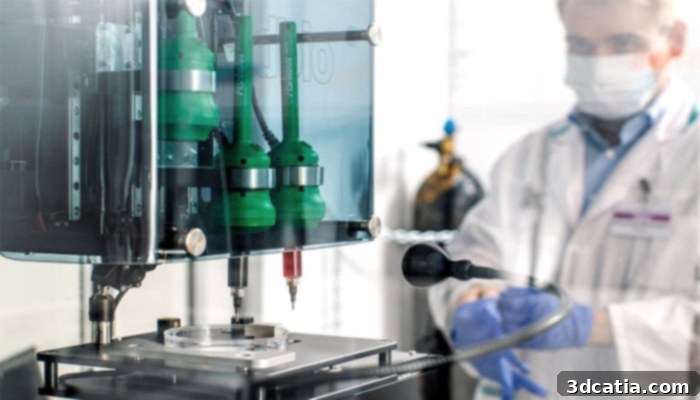
A 3D bioprinter developed by 3D Bioprinting Solutions
The partnership between KFC and 3D Bioprinting Solutions represents more than just a culinary experiment; it signifies a bold step towards a more sustainable, ethical, and innovative future for the fast-food industry and food production at large. By exploring the potential of 3D printed chicken, KFC is actively contributing to solutions for pressing global challenges, from environmental degradation to animal welfare concerns. This initiative could redefine consumer expectations for quick-service restaurants, setting a new standard for responsible food sourcing and advanced manufacturing. As the world eagerly anticipates the initial testing phase in Moscow, the implications of these lab-grown chicken nuggets extend far beyond a single menu item, potentially ushering in an era where delicious, sustainable, and ethically produced food is accessible to everyone. We are witnessing the very early stages of what could become a significant paradigm shift in how we produce and consume meat.
What are your thoughts on KFC’s pioneering venture into 3D printed chicken nuggets? Do you believe this innovative approach will reshape the future of fast food and contribute meaningfully to global sustainability efforts? Share your insights and opinions with us in a comment below or join the conversation on our Facebook and Twitter pages! For all the latest news and developments in the exciting world of 3D printing, remember to sign up for our free weekly Newsletter, delivered straight to your inbox!