
The Transformative 3D Printing Trends of 2020: A Pivotal Year for Additive Manufacturing
The year 2020 will forever be remembered for its unprecedented global challenges, yet for the additive manufacturing (AM) industry, it marked a period of profound transformation and rapid evolution. Despite the widespread disruption caused by the COVID-19 pandemic, the 3D printing sector demonstrated remarkable resilience, adaptability, and accelerated growth, solidifying its position as a critical technology for future production. This retrospective examines the five most impactful 3D printing trends that defined 2020, illustrating how the industry not only navigated adversity but also forged new pathways for innovation and adoption.
COVID-19: A Catalyst for 3D Printing Innovation and Adoption
The COVID-19 pandemic presented an extraordinary test for global supply chains and manufacturing capabilities, profoundly affecting nearly every sector. The medical industry, particularly vulnerable in the early months, faced critical shortages of personal protective equipment (PPE) and essential devices. In this crisis, additive manufacturing technologies emerged as an agile and indispensable solution, quickly reorienting production to meet urgent demands. Within days, the global 3D printing community mobilized, leveraging its distributed network and rapid prototyping capabilities to produce vital healthcare equipment such as face shields, life-saving ventilator components, and later, crucial COVID-19 test swabs. Hospitals established in-house production facilities, universities repurposed their labs, and manufacturers swiftly transitioned into service providers for the overwhelmed healthcare system.
The speed and flexibility of 3D printing proved superior to conventional manufacturing methods, which were hampered by intricate and often disrupted global supply chains, especially those reliant on production hubs in China and Southeast Asia. Additive manufacturing’s decentralized nature allowed for rapid localized production, bypassing these blockages. Sumeet Jain, Managing Director of 3D Printing Solutions by Arkema, articulated the sector’s response to the crisis: “The COVID crisis was an opportunity for 3D printing to demonstrate its value proposition around digital manufacturing and its ability to meet on-demand production needs. Additionally, 3D printing’s ability to iterate hundreds of designs in the short term is a key differentiation to develop viable solutions that can meet unforeseen demand.” This period highlighted not just AM’s capacity for rapid response but also its inherent agility and design iteration advantages.
While the broader market experienced an initial downturn due to the pandemic, it recovered with surprising speed. CONTEXT, a leading market study firm, observed that demand for 3D printers across all price ranges increased significantly, driven by the creation of pandemic-related items. Although this surge couldn’t entirely offset the losses from shuttered markets like consumer products, education, dental, and automotive industries, it unequivocally showcased 3D printing’s inherent flexibility. This period served as a powerful demonstration of how AM can mitigate supply chain disruptions and act as a strategic investment for strengthening future manufacturing resilience across diverse industries. The crisis effectively elevated 3D printing from a specialized tool to a recognized solution for robust and adaptable manufacturing.
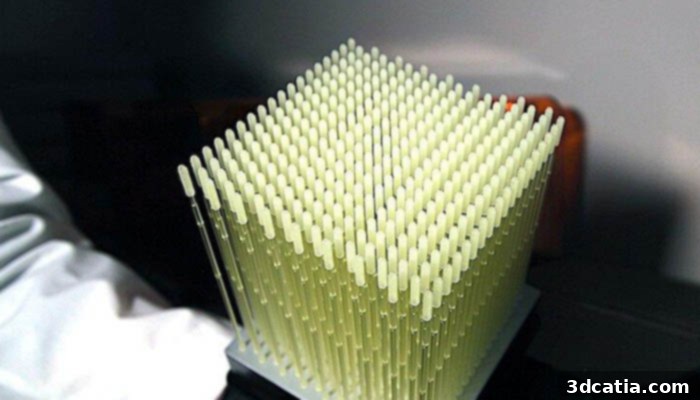
3D printed swabs to test for COVID-19 | Image via Formlabs
For the additive manufacturing community, 2020 also necessitated a fundamental shift in how professionals connected and collaborated. The widespread cancellation of physical events led to an explosion in the popularity of digital events. Major industry gatherings, such as Formnext, successfully pivoted to virtual formats. This digital transition, in many instances, allowed companies to reach a broader, global audience at a fraction of the cost associated with traditional physical participation, demonstrating new models for industry engagement and knowledge sharing.
3D Printing Solidifies Its Role as a Production Technology
Beyond its well-established role in rapid prototyping, 2020 further cemented 3D printing’s capabilities as a viable and increasingly essential technology for high-volume and end-use part production. This paradigm shift has been consistently observed over recent years, and data from Sculpteo’s latest State of 3D Printing report underscored this trend, revealing that 50% of surveyed professionals now utilize the technology for producing final parts. Concurrently, the proportion of rapid prototyping applications experienced its first decline in five years, signaling a significant evolution in industry perception and application.
Achieving high-volume production with additive manufacturing hinges on two critical factors: scalability and repeatability. To meet these industrial demands, the entire AM workflow has undergone a rigorous industrialization process. While substantial progress has been made in hardware innovation, the year 2020 notably highlighted accelerated advancements in software and post-processing hardware. For instance, PostProcess Technologies secured $20 million in late 2019 to advance its automated post-processing solutions. Similarly, DyeMansion, renowned for its integrated finishing systems that streamline the “print-to-product” process, raised $14 million in 2020. Dutch company AM-Flow also raised $4 million for its post-processing and automation solutions. These investments underscore the industry’s commitment to automating and industrializing every stage of the AM workflow, moving beyond manual, labor-intensive post-processing to ensure consistent quality and efficiency for mass production. However, post-processing is just one piece of the puzzle, with significant developmental efforts also concentrating on the software that orchestrates the entire production ecosystem.
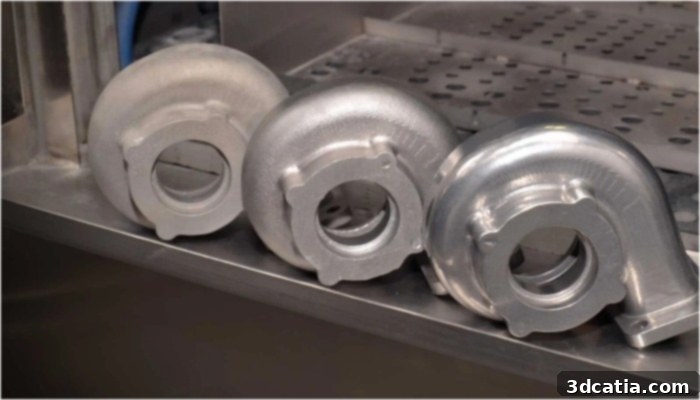
Image via PostProcess Technologies
The Ascendance of 3D Printing Software as an Imperative
As Greg Kress, CEO of Shapeways, aptly puts it: “Scaling doesn’t mean just doing more, it means doing 3D printing efficiently and consistently.” This efficiency and consistency are increasingly driven by sophisticated software solutions. Software is now indispensable across numerous stages of the 3D printing workflow, encompassing critical functions such as nesting, build plate preparation, file repair, and, crucially, comprehensive production planning. In 2020, companies like AMFG, MakerOS, and 3YOURMIND cemented their positions as leading providers of Manufacturing Execution System (MES) solutions tailored for additive manufacturing. MakerOS, for example, offers a cloud-based platform designed to centralize all necessary tools for scaling 3D printing or general fabrication services. Similarly, 3YOURMIND develops software to optimize smart factory operations, serving both service bureaus and companies that have integrated AM technology in-house. Automating the tracking of the AM process – from initial order placement to production and final delivery – has become a pivotal factor in industrializing production. Reflecting this growing importance, 3YOURMIND successfully raised $5.5 million in a Series A+ funding round in September 2020.
Alongside the burgeoning ecosystem of workflow management solutions, integrated CAD (Computer-Aided Design) tools are also experiencing significant advancements. An excellent example is Netfabb, a CAM (Computer-Aided Manufacturing) software that plays a crucial role in optimizing production processes, reducing manufacturing times, and minimizing costs for 3D printing. It provides essential tools for streamlining workflows and preemptively identifying and correcting build errors before fabrication begins. Autodesk continued to enhance these capabilities with new functionalities introduced in the late November 2020 release of Netfabb. Furthermore, innovative software startups like Shapeshift 3D and PrintSyst.ai are pushing the boundaries of optimization within the AM workflow. Shapeshift 3D, for instance, is driving customization through its automated custom-fit process, enabling truly personalized products with unprecedented ease.
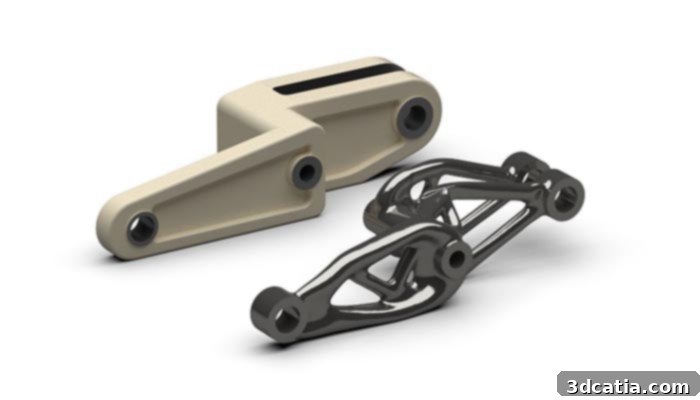
Finally, DfAM (Design for Additive Manufacturing) continued its robust growth. As highlighted in previous years, an increasing number of applications demonstrate the power of generative design and topology optimization to significantly enhance the functional performance, reduce costs, and improve the reliability of parts produced with additive manufacturing. A notable newcomer to this specialized market in 2020 was TOffeeAM, which successfully secured over $1 million in funding during the summer. Their software offers an intelligent design solution for additive manufacturing, leveraging advanced generative design principles. The TOffeeAM team emphasized a critical point: “When there is a new manufacturing technology, people tend to use old design methods with the new manufacturing process. In addition to optimising 3D printed parts, TOffee can optimise whole systems by reducing the total number of parts and increasing resilience. Using AM with standard design methods is limiting the flexibility of this technology. Our goal is to enable the full potential of AM.” This perspective underscores the necessity of rethinking design paradigms to fully unlock the unique capabilities and advantages of additive manufacturing.
Innovative Materials: The Key to Unlocking New 3D Printing Applications
Materials continued to be a central pillar of innovation in 2020, with the market seeing twice as many suppliers compared to just two years prior, a testament to the ongoing demand for diverse and specialized options. In the thermoplastics market, the adoption of high-performance polymers such as PEEK, PEKK, and ULTEM surged due to their exceptional thermal, chemical, and mechanical properties, making them ideal for demanding industrial applications. Moreover, polypropylene, one of the world’s most ubiquitous plastics, saw expanded compatibility with powder-based 3D printing technologies this year. Valued for its fatigue resistance, semi-flexible nature, and lightweight characteristics, polypropylene is excellent for high-cycle, low-strength applications. A significant development in this area was BASF Forward AM’s introduction of an industrial-grade polypropylene specifically engineered for HP’s Jet Fusion 5200 series.
The composites segment also experienced substantial growth and investment. AREVO, a company focused on digitizing and automating composites production, raised an additional $25 million in funding during the summer. Concurrently, the startup Arris Composites continued to develop its innovative technology for mass-producing high-strength, lightweight composite parts using additive manufacturing, securing an impressive $48.5 million in funding by the end of August 2020. While many composites rely on carbon-fiber reinforced thermoplastics, companies like Fortify explored alternative formulations, integrating other additives into photopolymers. Furthermore, collaborations between Additive Composite and Add North led to the development of nylon filaments reinforced with boron carbide, a material known as one of the hardest after diamond. These diverse developments highlight a dynamic and expanding landscape for advanced composite materials in 3D printing.
Last but certainly not least, metal AM continued its trajectory as a rapidly expanding market, estimated at $1 billion in 2020 and projected to grow at over 27% per year for the foreseeable future. The specialized marketplace for AM metal powders and their intricate supply chains is concurrently evolving to meet the unique requirements of additive processes. The production of these high-quality powders remains a niche and often expensive aspect of AM, yet it is absolutely essential for the industrialization of metal 3D printing and the manufacturing of certified, high-performance parts. AM powders must adhere to stringent specifications regarding morphology, purity, and particle size distribution to ensure optimal print quality and mechanical properties. Moreover, the environmental impact of metal additive manufacturing, particularly concerning powder production and energy consumption, is generally considered greater than conventional methods. This necessitates that organizations and manufacturers proactively develop responsible, sustainable strategies in the coming years to ensure a green future for this transformative material technology.
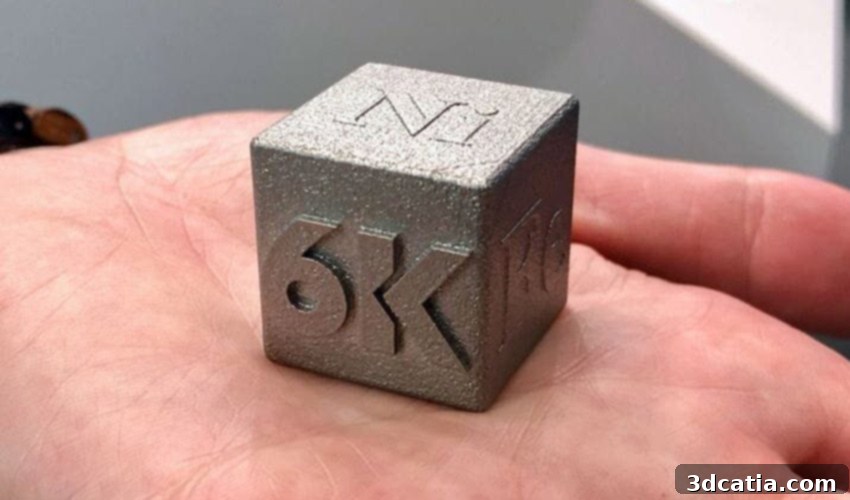
In this critical materials space, the startup 6K, originating as an MIT research project, is dedicated to developing high-performance metal powders. Their innovative approach focuses on creating truly spherical alloy powders, free from porosity and satellites, which offer superior flowability and performance. These advanced powders are poised to find widespread applications across demanding industrial sectors, including aerospace, Oil & Gas, and turbine blade manufacturing. Additionally, Sandvik’s titanium powders received certification for use in medical devices, further expanding AM’s reach in critical applications. The demand for aluminium powder in the AM market is also experiencing significant growth, with a report sponsored by Equispheres forecasting this demand to exceed $695 million by 2023, representing an impressive CAGR of 36.5%. A particularly intriguing development was Aerosint’s multimaterial process, which enables the printing of complex parts with two distinct metals. They showcased this capability by creating a highly intricate part combining stainless steel and a copper alloy, hinting at a future of functionally graded and multi-material components.
Evolving Sector Adoption: New Industries Embrace Additive Manufacturing
The patterns of technology adoption within various sectors proved particularly exciting in 2020, revealing a broadening appeal for additive manufacturing. While sectors like Medical, Aerospace, and Automotive have embraced AM applications for years, with extensive coverage on platforms like 3Dnatives, industries such as Oil & Gas, Construction, and Electronics have historically shown slower integration. However, 2020 marked a pivotal year for these latter three, witnessing a significant flourishing of new and innovative applications.
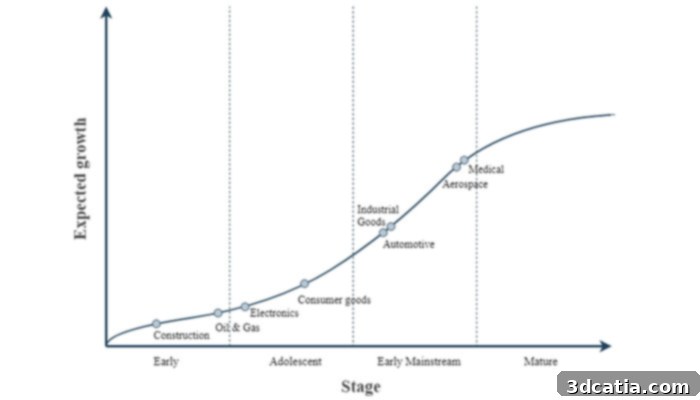
The maturity chart illustrating the adoption rates of 3D printing across different industries | Image via AMFG
The construction industry experienced accelerated activity, largely driven by advancements in robotic 3D printers. Danish manufacturer COBOD made headlines by presenting a three-story residential building project with 3D printed walls in Wallhausen, Germany. This impressive 380-square-meter structure is set to become the world’s first commercial apartment building constructed using 3D printing, showcasing the technology’s potential for large-scale, automated construction. Meanwhile, ICON developed a specialized gantry-style construction 3D printer designed to work with its proprietary Lavacrete material. In an ambitious recent project with NASA, ICON posited its solution as exceptionally well-suited for Moon and off-world construction, an endeavor that secured the company $35 million in funding this year. Speaking of space exploration, Relativity Space, which is developing an entirely 3D printed rocket engine, secured a staggering $500 million in funding. This substantial investment not only validates the efficacy of 3D printing for complex aerospace components but also underscores its critical future in humanity’s quest to conquer space. Relativity’s long-term vision extends to upgrading Earth’s industrial base and establishing manufacturing capabilities on Mars, with plans to launch its first rocket into orbit in early 2021.
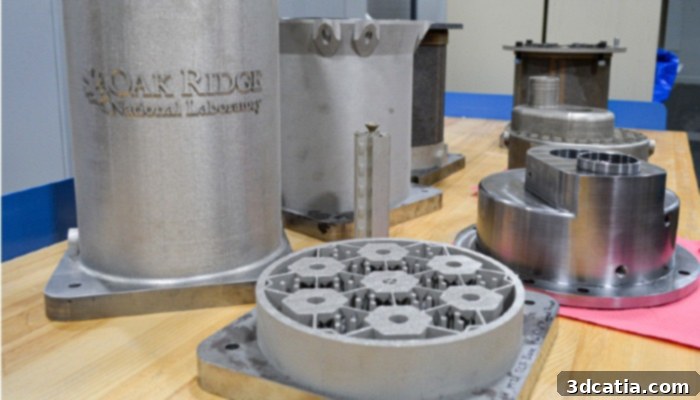
The Oil & Gas sector also saw a growing number of emerging applications. Notably, researchers at the Oak Ridge National Laboratory are pioneering the development of the first 3D printed nuclear reactor. The laboratory anticipates commissioning this groundbreaking reactor by 2023, a development that could revolutionize the nuclear sector by enabling the production of more advanced and sustainable energy systems. Finally, the electronics industry is undergoing a significant transformation thanks to micro and nanoscale additive manufacturing methods. Innovative startups such as Voltera are demonstrating how 3D printing can design and produce smaller, finer, and more precise electronic components than conventional manufacturing techniques, pushing the boundaries of miniaturization and functionality.
The year 2020 irrevocably demonstrated that 3D printing is not just a niche technology but a robust, adaptable, and increasingly industrialized manufacturing solution capable of addressing urgent global crises and driving future innovation across diverse sectors. The acceleration in production capabilities, the sophistication of software, the expansion of material options, and the broader industrial adoption all point to additive manufacturing’s growing prominence. Which 3D printing trends most captivated your attention in 2020, and what are your predictions for 2021? Share your thoughts in the comments below or connect with us on our Facebook and Twitter pages! Don’t forget to sign up for our free weekly Newsletter to receive all the latest news in 3D printing directly to your inbox!
*Thumbnail Image Credits: Michal Kamaryt / CTK / Alamy