News
Volkswagen Integrates Binder Jetting into its Production Line
In December 2018, carmaker Volkswagen announced the opening of a dedicated additive manufacturing center at its main production site in Wolfsburg specifically to test HP’s technology. The German company is now integrating the metal binder jetting process, with the goal&hell
- 3 min read
- News
- Six more stories
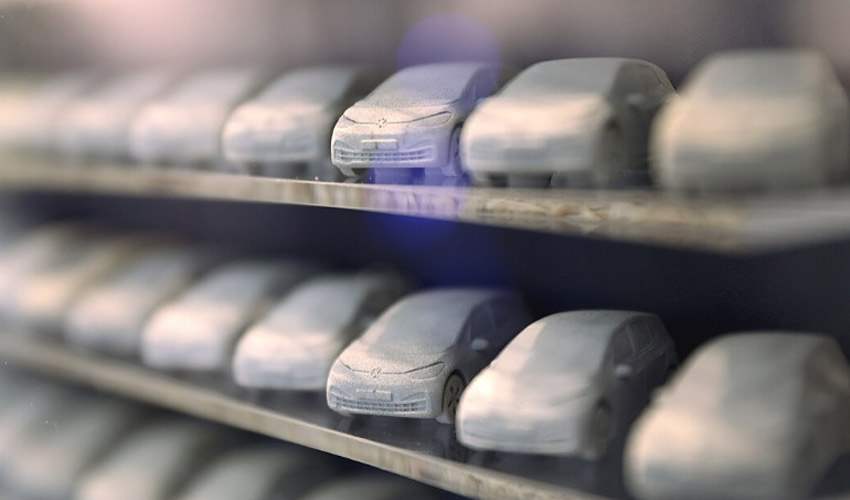
In December 2018, carmaker Volkswagen announced the opening of a dedicated additive manufacturing center at its main production site in Wolfsburg specifically to test HP’s technology. The German company is now integrating the metal binder jetting process, with the goal of producing 100,000 finished parts per year by 2025. This makes the company the first automotive manufacturer to use this technology in its production process, as its competitors are more likely to use laser powder bed fusion. By integrating this new process, the company will be able to produce components that are up to 50% lighter than those made from sheet steel. The company is also taking advantage of the opportunity to sign a software partnership with Siemens.
Volkswagen has been using additive manufacturing for about 25 years. Initially used for rapid prototyping purposes, it quickly evolved into the production of finished parts and various components, from dashboards and bumpers to door skins. Its Wolfsburg plant now consists of 13 units that leverage the advantages of plastic and metal 3D printing. On the metal side, the automobile manufacturer makes brackets, radiators and intake manifolds. So far, more than one million parts have been 3D printed, a figure that is expected to continue to grow over the next few years.
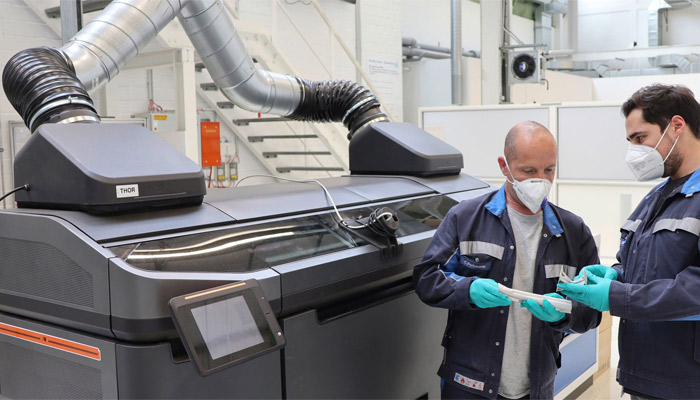
Two Volkswagen employees check the quality of 3D printed structural parts at the Wolfsburg center (photo credit: Volkswagen)
Volkswagen and binder jetting, a winning duo?
By using HP’s binder jetting technology and machines, Volkswagen intends to produce lighter, cheaper parts and increase productivity. An investment of several million euros has been made over the past five years to support this objective. Christian Vollmer, member of the Volkswagen management board and responsible for production and logistics, adds: “Despite the ongoing challenges of the coronavirus pandemic, we’re continuing to work on innovation. Together with our partners, we aim to make 3D printing even more efficient in the years ahead and suitable for production-line use.”
More from the desk
Six other notes from the rest of the bench.
 NewsTop 5 Videos: 3D Printing With Neil Patrick HarrisThis week, tag along with actor Neil Patrick Harris and 3D printing YouTuber 3D Printing Nerd, on the 87-day 3D-printing adventure. Next, discover amorphous metals. 3D printer manufacturer Trumpf has notably developed a printer compatible with these metals, which are…
 NewsIn Scotland, The LACRIMA Foundation is Making 3D Printed Wooden BeehivesThere have already been attempts in the past to counteract bee mortality with the help of 3D-printed beehives. The company HIIVE, for example, uses recycled materials to create a habitat for honey bees that is as close to nature and…
 NewsMIT researchers create 3D printed soft brain implantsAt MIT, a team of researchers is currently working on 3D printing neural implants as soft and flexible as rubber. Traditionally, brain implants are made of metal – this new method would allow for the brain implant to better adapt…
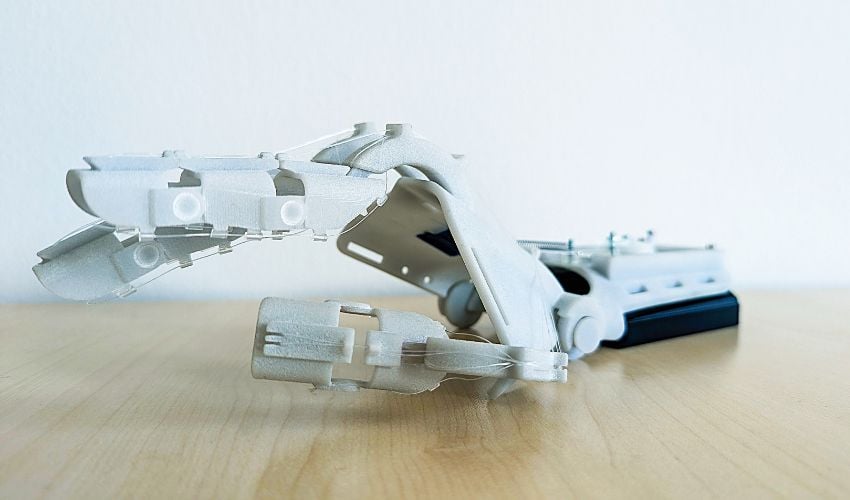 ApplicationsFraunhofer 3D Printed Exoskeleton Helps Patients Return to Daily LifeAfter accidents that damage tendons, a patient’s mobility is often severely limited. Hand injuries, in particular, can take a long time to heal and usually only recover fully through physiotherapy. For therapy, experts are increasingly using so-called exoskeletons, which are&hell
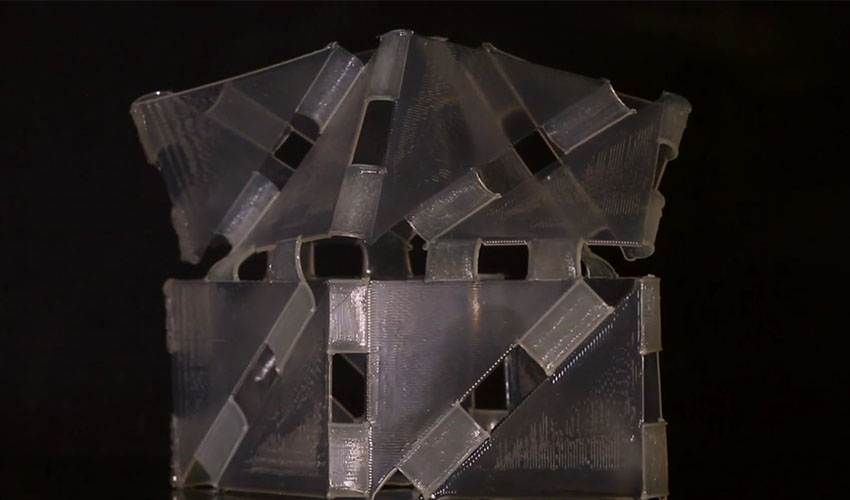 Materials3D printed soft robots can fold like origamiSoft robotics is one of the subfields of robotics dealing with constructing robots from highly compliant materials, similar to those found in living organisms. This field looks at the way in which living organisms move and adapt to their surroundings…
 PrintersTime to think composite: How can you benefit from switching to continuous fiber 3D printing?It’s no secret that additive manufacturing has been changing and will continue to change our creation and manufacturing processes. In opposition to subtractive manufacturing, objects are conceptualised, designed and then created layer by layer. Such an approach has meant that&hel