Printers
Time to think composite: How can you benefit from switching to continuous fiber 3D printing?
It’s no secret that additive manufacturing has been changing and will continue to change our creation and manufacturing processes. In opposition to subtractive manufacturing, objects are conceptualised, designed and then created layer by layer. Such an approach has meant that&hel
- 3 min read
- Printers
- Six more stories
It’s no secret that additive manufacturing has been changing and will continue to change our creation and manufacturing processes. In opposition to subtractive manufacturing, objects are conceptualised, designed and then created layer by layer. Such an approach has meant that objects can be optimized: their weight, lead times and cost is considerably reduced. In terms of design, complex shapes can be created, which not only increases their mechanical properties but also saves material. All in all, 3D printing technologies offer benefits that most industries have understood will change the entire manufacturing supply chain. However, limitations to this process still exist. One of the main limitations relates to the availability of materials. There are plastics, there are metals, but is that it?
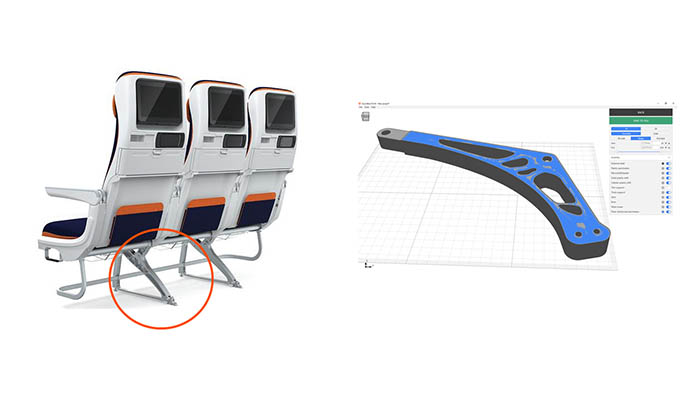
An aircraft seat support piece has been optimized thanks to topology optimization
Plastic or Metal – is there more?
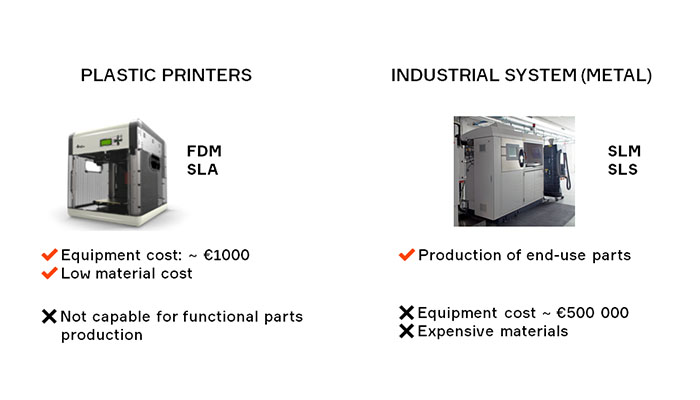
A company that wishes to take on additive manufacturing is faced with two choices: plastic or metal. However, both have their limitations. Plastic 3D printing is typical for prototyping, it’s easy, cheap, and many companies are familiar with the technology. In most cases, end-use parts that require higher mechanical properties are made out of metal. Machines and materials for metal 3D printing are expensive and the process is not so easy itself.
Are composites the solution?
Composite materials can produce functional, load-bearing parts that are easy to produce and affordable at the same time. When people hear about composites, they imagine polymers filled with short/chopped fibers. These are indeed composites too but they will not solve the issues mentioned above. In fact, composites with short fibers are about 2 times stronger than plastic so they shouldn’t be used for end-use parts. However, composites reinforced with continuous fibers are up to 20 times stronger than pure plastic and comparable or even stronger than metals. They are also several times lighter and cheaper than the latter.
More from the desk
Six other notes from the rest of the bench.
 NewsAdvanced metal AM enables microturbines to be 40X more efficientA microturbine has historically been a simplified version of a gas turbine, suitable for a variety of applications: they are used in unmanned aerial vehicles (UAVs), to charge the batteries that drive motors, as range extenders, or in hybrid UAVs…
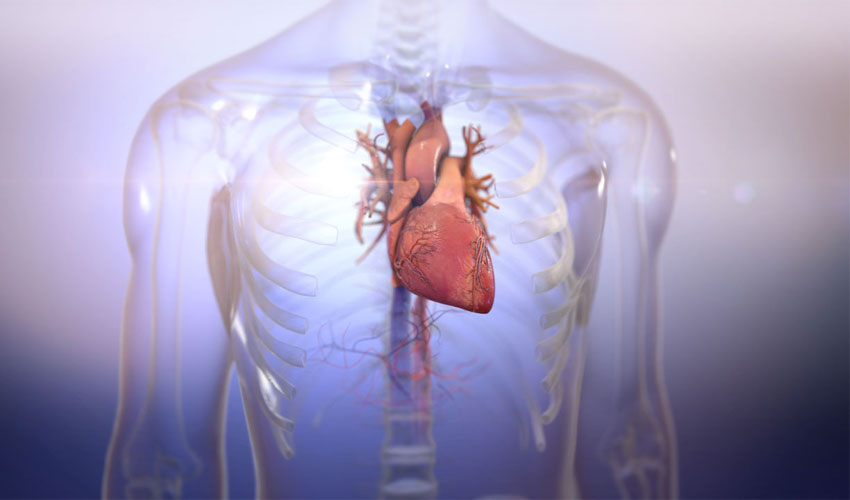 ApplicationsBIOLIFE4D successfully bio-prints human heart tissueBIOLIFE4D, a Chicago-based company that specializes in bio-printing and tissue engineering, recently announced that they have successfully bio-printed 3D human heart tissue. This is the first conclusive results since the $50 million fundraiser by the company last September. Bio-p
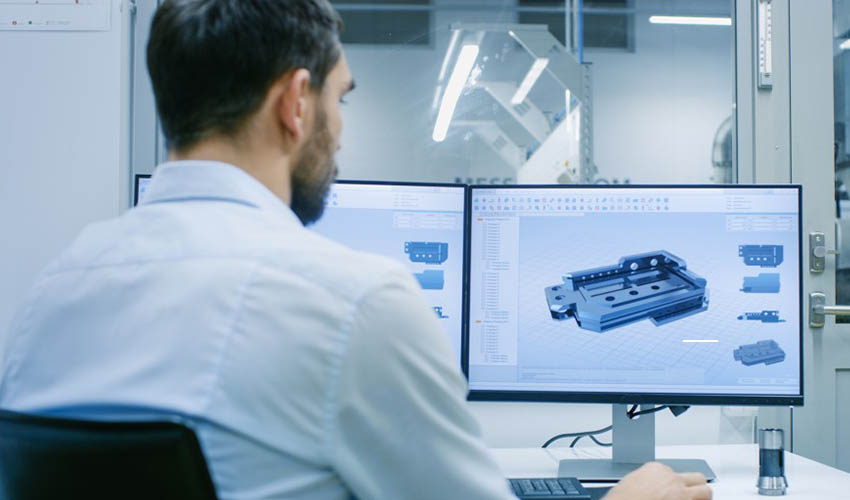 SoftwareThe Top Free 3D Modeling Software ProgramsNowadays, if you want to get started with the critical step of 3D modeling, there is no longer a need to invest significant money in software! Free solutions exist on the market to get started with modeling your objects or…
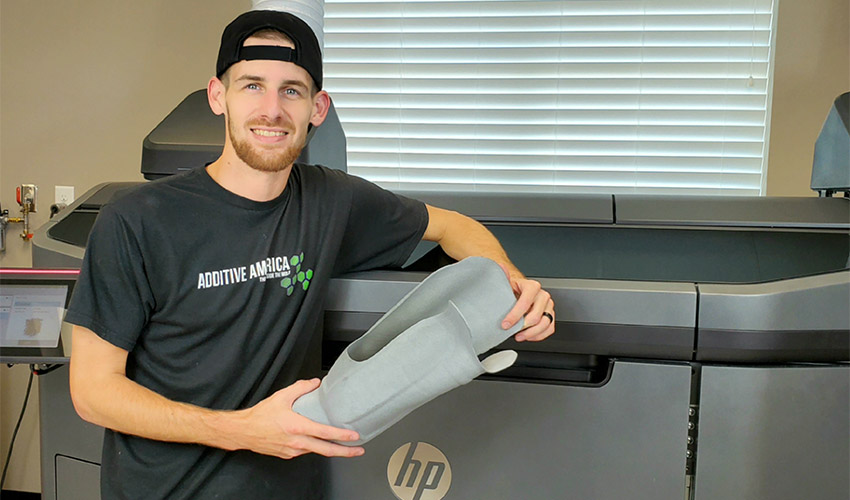 GuidesInterview with Zac Holcomb about his startup, Additive AmericaAfter noting a skills gap in the additive manufacturing industry, Zac Holcomb decided to launch a company with two partners: Additive America. The aim of the startup is to advance the prosthetics industry deep into the digital manufacturing age. We…
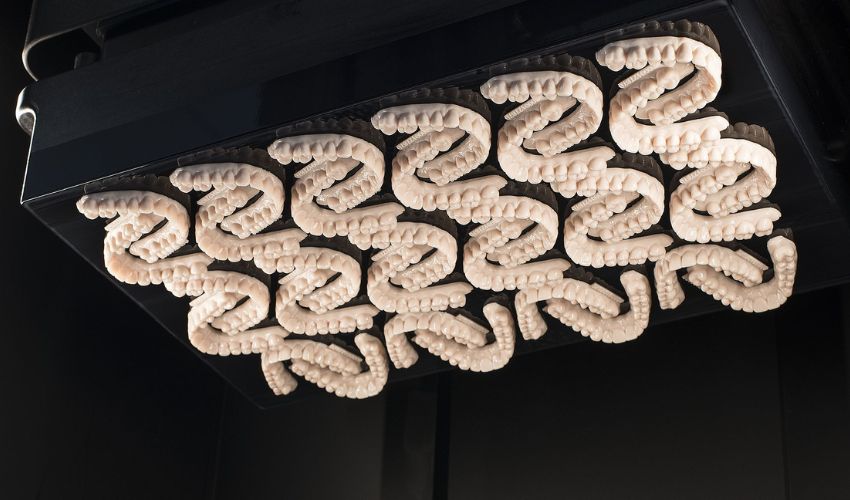 ApplicationsDental Labs are Overcoming Challenges Thanks to Additive ManufacturingFor some time now, it has been clear that the dental laboratory business has experienced a notable shift, with even more change yet to come. Valued at $31.13B according to a report from Future Market Insights, it is expected to…
 MaterialsWhich Innovative Materials Were Unveiled at Formnext 2021?Materials are the cornerstone of additive manufacturing as they can truly make the difference when it comes to applications. Having materials with superior physical properties is what has allowed additive manufacturing to be increasingly used for end-use applications, whether the