Applications
Fraunhofer 3D Printed Exoskeleton Helps Patients Return to Daily Life
After accidents that damage tendons, a patient’s mobility is often severely limited. Hand injuries, in particular, can take a long time to heal and usually only recover fully through physiotherapy. For therapy, experts are increasingly using so-called exoskeletons, which are&hell
- 3 min read
- Applications
- Six more stories
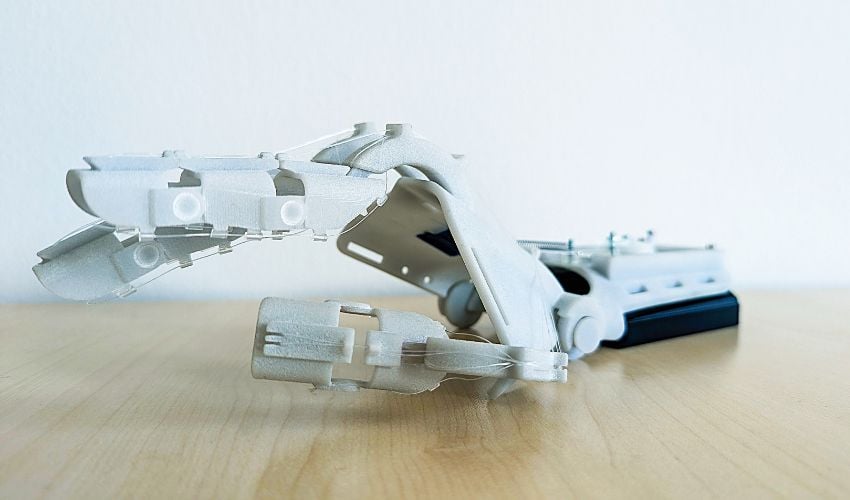
After accidents that damage tendons, a patient’s mobility is often severely limited. Hand injuries, in particular, can take a long time to heal and usually only recover fully through physiotherapy. For therapy, experts are increasingly using so-called exoskeletons, which are worn over the hand and specifically support hand and finger movements. Fraunhofer IWU has now developed an exoskeleton that can be tailored to each patient using 3D printing technologies.
More specifically, it uses innovative shape-memory alloys, stepper motors, and 3D printing technologies. The team emphasized that the exoskeleton must fit the patient’s hand perfectly. This is easier said than done, as every hand is different, and an exoskeleton that is not comfortable to wear can even negatively affect rehabilitation. This is where the unique properties of additive manufacturing come into play. Producing the exoskeleton with 3D printing technologies allows almost limitless customization of its structure.
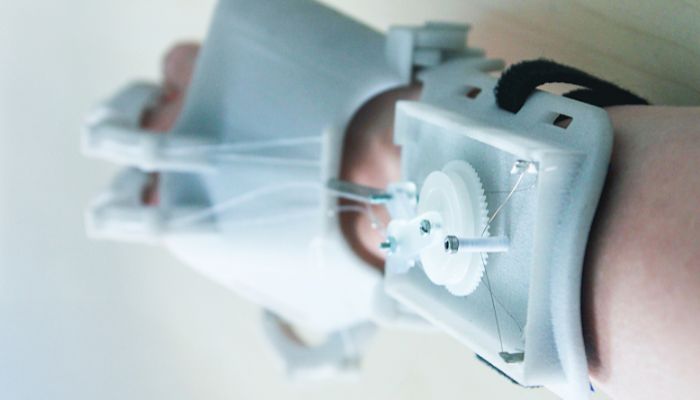
A stepper motor and wires assist the hand’s movements.
The Technology Behind the 3D-printed Exoskeleton
The team chose SLS for this purpose, a technology in which a component is built layer by layer from powder, in this case, plastic powder. For optimal customization, a digital scan of the patient’s hand is created in advance. A parametric CAD model of the exoskeleton is then overlaid on this scan so that every parameter can be precisely adapted to the individual dimensions of the 3D scan.
More from the desk
Six other notes from the rest of the bench.
 NewsTop 5 Videos: Using FDM to Print Ceramic and Metal FilamentsIn this week’s top 5, check out the latest webinar from 3Dnatives, “How Can You Use FDM to Print Ceramics and Metals?” Though ceramic and metal filaments are becoming increasingly common, especially for those using FDM for industrial purposes, there…
 PrintersKappa, the first 3D printer to use a straight line mechanismThis very affordable new 3D printer, Kappa, uses a linear mechanism and is currently pre-orderable for just $245. Ionic3DP, the company behind Kappa, have just launched their Kickstarter campaign to raise $50,000 to market the first 3D printer to feature…
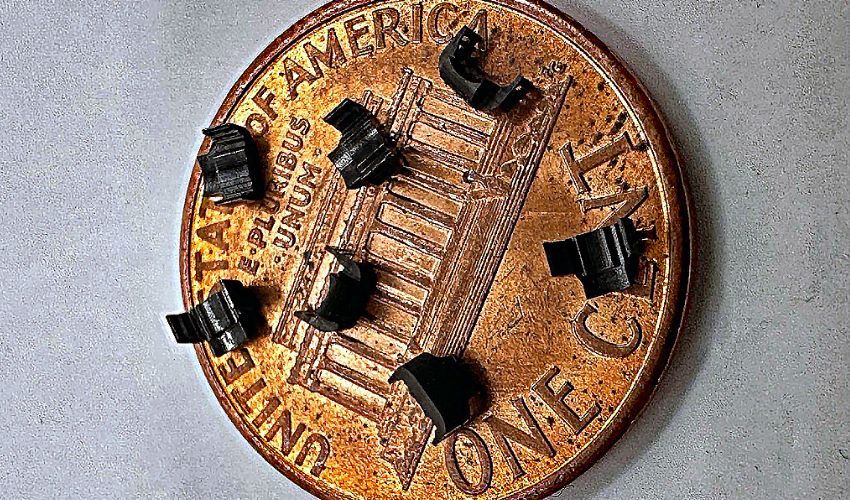 ApplicationsNano Dimension Advances Neural Research with Micro 3D PrintingManufacturing medical devices poses significant challenges due to their small size, precise dimensions, and intricate functionalities. Nano Dimension, a prominent manufacturer of 3D printers for electronics, recently undertook a biomedical project in collaboration with three prom
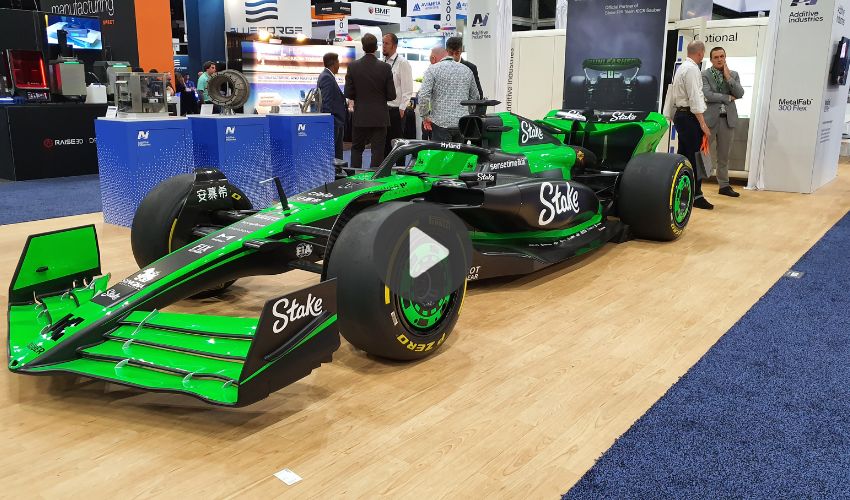 NewsThe Best Innovations at RAPID + TCT 2024Have you been keeping up with all the news from RAPID + TCT? With a rapidly changing additive manufacturing landscaping, it can be hard to know what some of the most interesting technologies shown at the event were. That is…
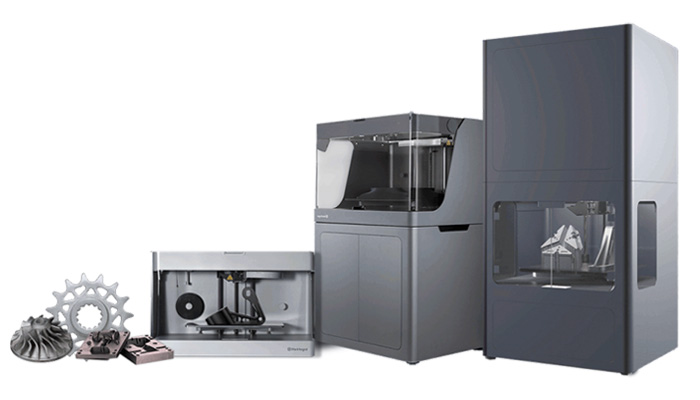 PrintersMarkforged launches two new industrial printers: the X3 and X5In less than 3 years, American 3D printing company, Markforged, has managed to position itself as one of the leaders in the 3D printing industry, with their main mission being to make additive manufacturing more accessible to people and industries. Today,…
 NewsParticipate in the Forward AM Innovation Award’s Grand FinaleOn June 30th, BASF Forward AM will hold the final of the Forward AM Innovation Award contest, awarding one of the startups using Additive Manufacturing to develop sustainable and innovative products. During a 100% virtual event, the four finalists will…