News
MIT researchers create 3D printed soft brain implants
At MIT, a team of researchers is currently working on 3D printing neural implants as soft and flexible as rubber. Traditionally, brain implants are made of metal – this new method would allow for the brain implant to better adapt…
- 3 min read
- News
- Six more stories
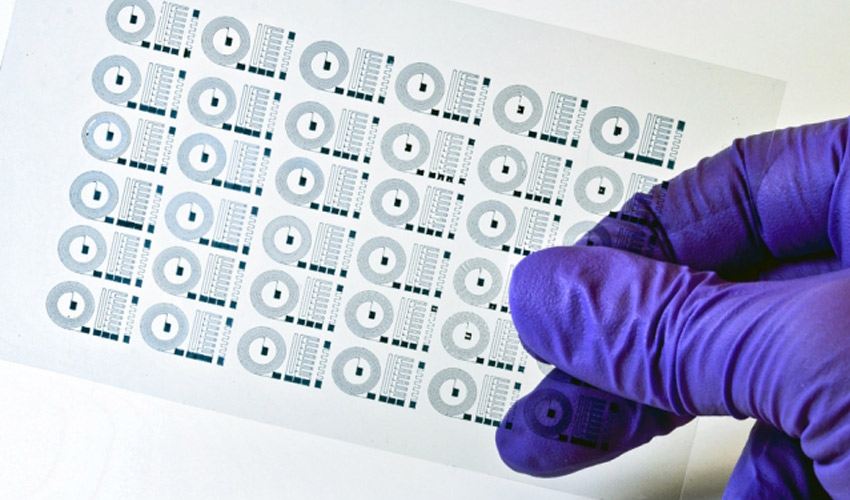
At MIT, a team of researchers is currently working on 3D printing neural implants as soft and flexible as rubber. Traditionally, brain implants are made of metal – this new method would allow for the brain implant to better adapt to the contours of our brain, thus avoiding inflammation and the accumulation of scar tissue. At the moment, the team is still in the testing phase. It has already implanted the 3D printed neural device made from a conductive polymer in a mouse, and has been able to obtain a precise image of the brain’s activity.
More generally, in the medical sector, and more particularly in dentistry, additive manufacturing is helping to design tailor-made implants that are better adapted to the morphology of each patient. But it can also be used throughout the research and development phase, to understand complex structures and facilitate the deployment of solutions. When it comes to the study of the brain, for example, one of the most complex vital organs, 3D printing can help design devices for study, testing, monitoring, etc. The team of Xuanhe Zhao, a professor of mechanical engineering and of civil and environmental engineering at MIT, has therefore used 3D printing technologies to develop flexible brain implants capable of monitoring the organ’s activity over long periods of time without aggravating the surrounding tissue.
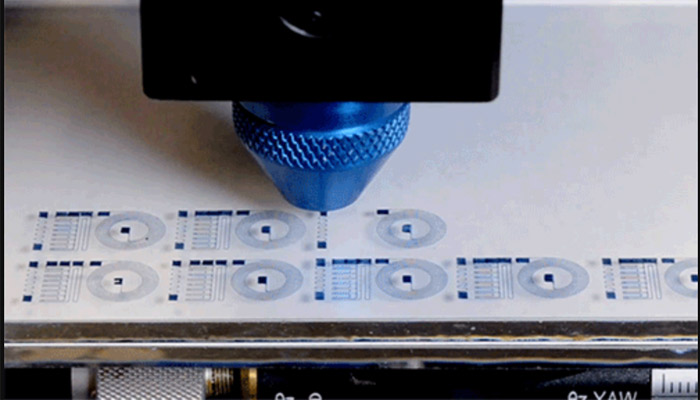
3D printing of the electrode | Credits: MIT
The use of polymer 3D printing
Based on the finding that metal electrodes and implants were not suitable in the long run, the researchers opted for a polymer that had to be conductive. Today, most of the conductive polymer solutions available on the market are used as antistatic coatings, i.e. in liquid form. Hyunwoo Yuk, a graduate student in the Zhao group at MIT, adds: “The liquid form is mostly for homogenous coatings, and it’s difficult to use this for any two-dimensional, high-resolution patterning. In 3D, it’s impossible.” Researchers therefore had to develop another form, a kind of hydrogel.
More from the desk
Six other notes from the rest of the bench.
 NewsMarkforged provides 3D Printers for Project DIAMOnDThroughout the Covid-19 pandemic, additive manufacturing has played a critical role in filling gaps in the medical supply chain, notably in creating PPE and other medical equipment for those on the frontlines to use to save lives. Markforged is continuing…
 SoftwareThe Best Photogrammetry Software For All LevelsWhen it comes to 3D printing, one of the most critical steps is obviously having a 3D model to print. There are a number of different ways these can be obtained including CAD and other modeling software and scanners, but…
 NewsThe Personalities Who Shaped the Additive Manufacturing Market in 2024As we approach the end of the year, it’s time to highlight the personalities who have shaped the 3D printing industry over the course of 2024. Whether leaders of major companies, innovators or researchers, these figures have helped transform the…
 NewsA recap of the TCT show 2018 highlightsThis year’s TCT show 2018 went down in September bringing together 10.000 professionals, from 60 different countries across 20 key industries from the automotive to healthcare etc. Over the 3 day event in Birmingham the visitors got to experience various…
 NewsHemp 3D printed housesThere continues to be implemented more and more green building solutions and 3D printing in construction. These developments appear in various ways and often require an innovative side to come up with something new. There are always a lot to…
 NewsMarkforged Expands Offerings Through Acquisition of Teton SimulationWith the guiding principle of steadily wanting to reinvent manufacturing, American company Markforged has specialized in the continuous expansion of additive manufacturing, notably when it comes to composites. Most recently, 3D printing company announced that it has acquired soft