Materials
3D printed soft robots can fold like origami
Soft robotics is one of the subfields of robotics dealing with constructing robots from highly compliant materials, similar to those found in living organisms. This field looks at the way in which living organisms move and adapt to their surroundings…
- 3 min read
- Materials
- Six more stories
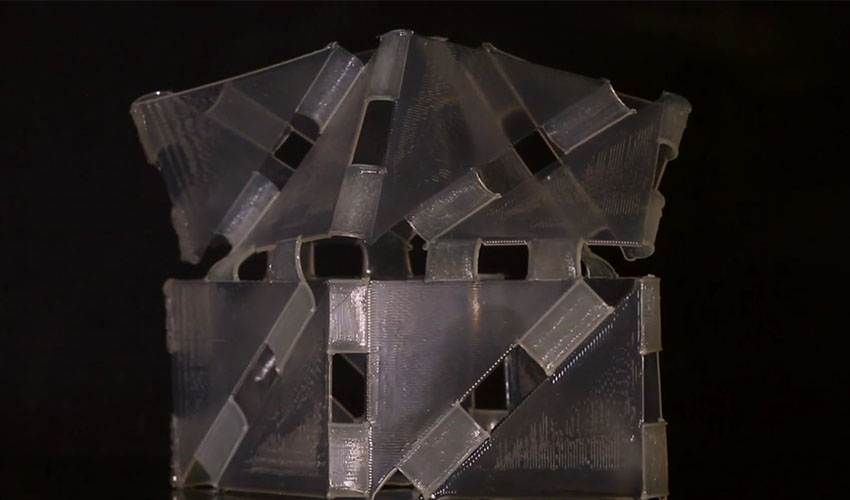
Soft robotics is one of the subfields of robotics dealing with constructing robots from highly compliant materials, similar to those found in living organisms. This field looks at the way in which living organisms move and adapt to their surroundings in order for robots to do the same. The majority of soft robots today rely on external power and control which limits their applications. Researchers from Harvard University and the California Institute of Technology have created origami-inspired soft-robotic systems, using additive manufacturing. These 3D printed soft robots can move and change shape by responding to external stimuli without relying on external power or control.
What is the role of 3D printing technologies in this field?
Jennifer A. Lewis, the Hansjorg Wyss Professor of Biologically Inspired Engineering at SEAS and co-lead author of the study, explains: “The ability to integrate active materials within 3D printed objects enables the design and fabrication of entirely new classes of soft robotic matter.” The researchers found that turning to origami allowed them to create multifunctional soft robots.
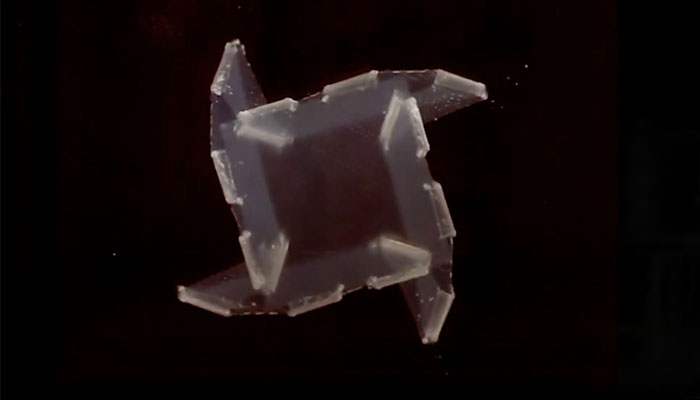
The 3D printed soft robot is folding
Under the same single structure, origami can create multiple shapes and functionalities. The materials used were liquid crystal elastomers that change shape when exposed to heat. By 3D printing two types of liquid crystal elastomers that respond to different temperatures, the researchers were able to program the structure to fold in a specific order. “Using hinges makes it easier to program robotic functions and control how a robot will change shape. Instead of having the entire body of a soft robot deform in ways that can be difficult to predict, you only need to program how a few small regions of your structure will respond to changes in temperature,” said Connor McMahan, a graduate student at Caltech and co-first author of the paper.
More from the desk
Six other notes from the rest of the bench.
 NewsAleph Objects and FluidForm announce exciting bioprinting collaborationAleph Objects Inc., based in Colorado and manufacturer of LulzBot 3D printers, known for being free to be copied, modified and converted by all users had an exciting announcement. Recently, they announced a new bioprinting hardware coming this summer with…
 ApplicationsWill the 3D printed bone bricks facilitate the healing of complex fractures?The treatment of an orthopaedic bone fracture can be very complex, and usually requires a metal rod or plate to be placed in the body to stabilize the bone. Scaffolding materials encapsulated in powders or paste are then injected into…
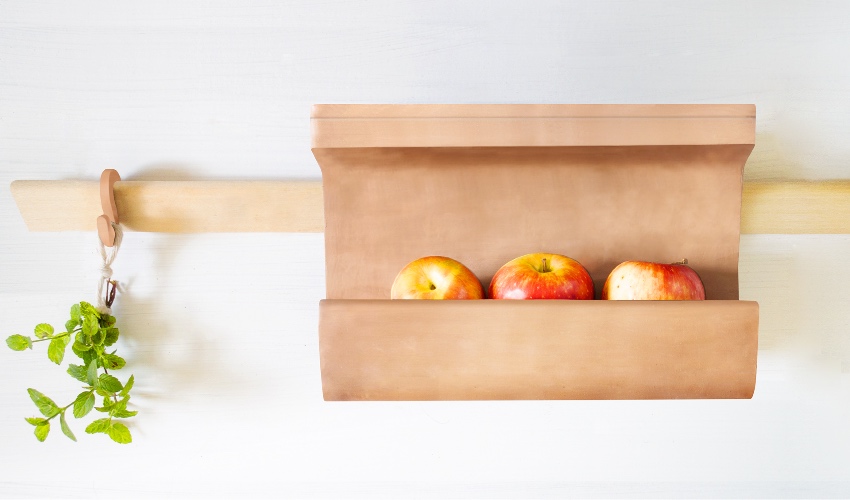 NewsAddressing the problem of food waste with 3D printed clay containersDuring the lockdown caused by the global COVID-19 pandemic, Lea Randebrock did not waste time on despair but was busy making her contribution to a more sustainable way of life. The young designer wanted to address the problem of food…
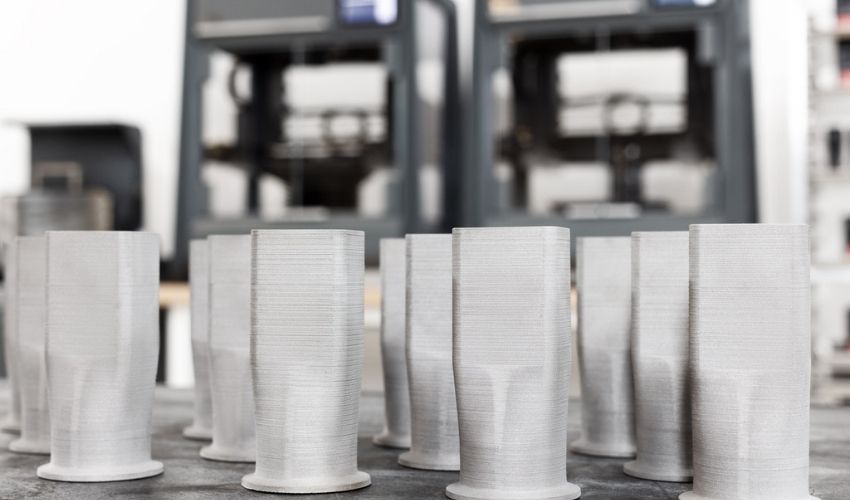 NewsDesktop Metal Moves to Acquire ExOne in $575 Million DealDesktop Metal (DM) and ExOne announced yesterday that they have entered a definitive agreement for Desktop Metal to acquire all issued and outstanding shares of ExOne common stock. The expected value of the transaction will be $575 million, consisting of…
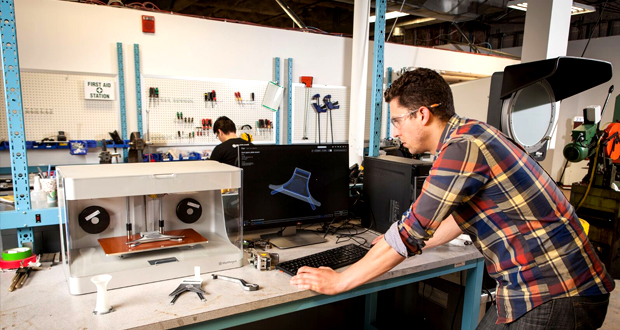 Guides3D startup of the month: MarkForged, making waves in additive metal manufacturingEach month we present the 3D startup of the month, choosing startups that are revolutionizing the 3D printing industry in their own way. For this month’s startup of the month, we met with MarkForged’s CEO Greg Mark to learn more…
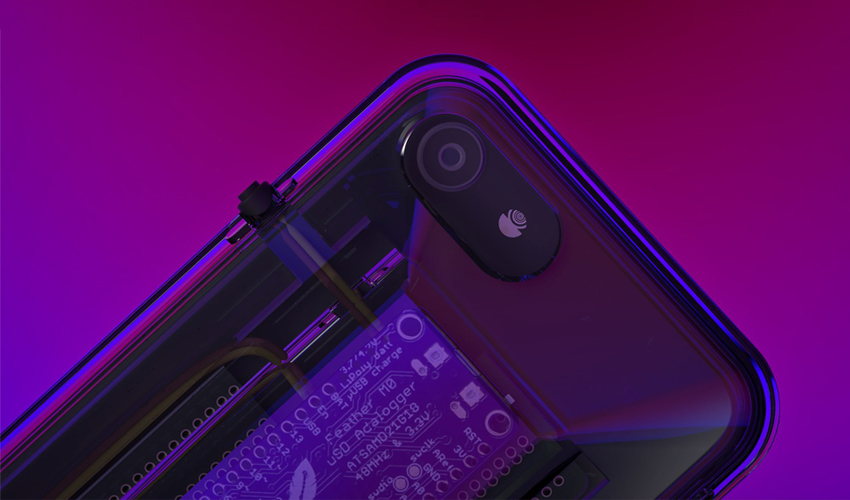 NewsTypeCase, the 3D printed mobile keyboard for blind people3D printing applications for disabled people are giving hope to thousands of people, and one such application is TypeCase, a keyboard integrated into the mobile phone case for blind people. The creator and designer, Dougie Mann, is a recent university…