Materials
What Technical Ceramics Are Compatible With Additive Manufacturing?
Though the first thing that comes to mind for many when you mention ceramics is pottery or porcelain, technical ceramics are actually some of the strongest and toughest materials on Earth. Broken into two categories, oxides and non-oxides, the main…
- 3 min read
- Materials
- Six more stories
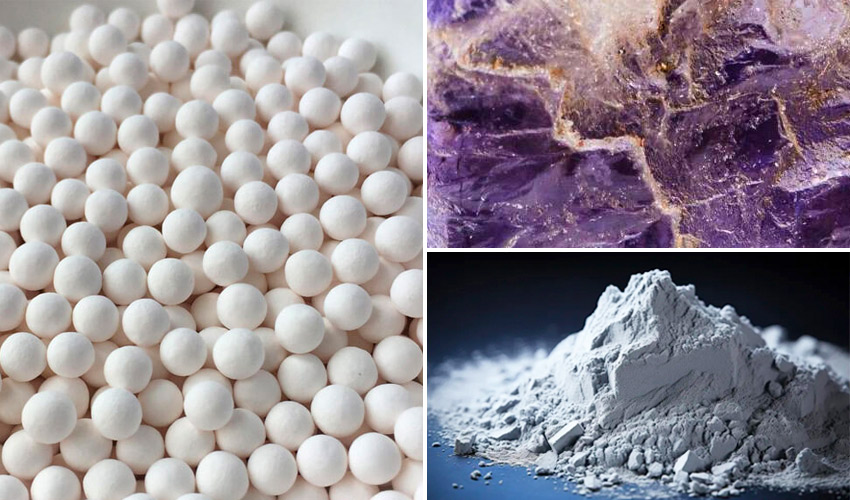
Though the first thing that comes to mind for many when you mention ceramics is pottery or porcelain, technical ceramics are actually some of the strongest and toughest materials on Earth. Broken into two categories, oxides and non-oxides, the main difference between them is that an oxide contains at least one oxygen atom along with another element, giving it different properties. Notably, non-oxide ceramics often have better electrical conductivity and a higher degree of hardness while oxide ceramics are easier to melt and sinter, making it easier to use in manufacturing. And it should come as no surprise that it is possible to use these technical ceramics in additive manufacturing in several forms including filaments, powder and resin. In the following listing, we take a closer look at which technical ceramics are compatible with 3D printing, excluding other commonly used ceramic materials like clay, as the materials in conjunction with 3D technologies are increasingly used for applications in everything from aerospace and defense to automotive and even the biomedical field.
Oxide Ceramics
Alumina
Alumina, which is one of the technical ceramics compatible with additive manufacturing, is suitable for a wide range of applications. With a melting temperature above 2000°C, it is highly resistant to high temperatures and thermal shock. Alumina is also often chosen for its remarkable hardness, placing it just behind diamond as the hardest natural material. It is also appreciated for its resistance to corrosion, high temperatures, electrical insulation, thermal conduction and biocompatibility. It is used in major applications such as electronics (insulators), biomedical prostheses, cutting tools and aerospace.
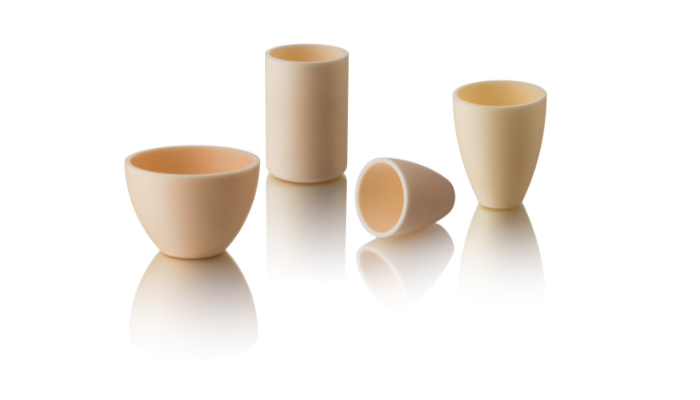
Photo Credits: Umicore
Zirconia
Zirconium oxide, also known as zirconia, boasts outstanding mechanical properties at both low and high temperatures. With its relatively low thermal conductivity at room temperature, this material displays remarkable qualities when exposed to extreme conditions. At temperatures in excess of 1000°C, zirconia becomes an excellent electrical conductor. Its high hardness, wear resistance, chemical inertness and ability to resist attack by metals make it a material of choice for a wide range of applications, including jewelry, biomedical devices, biomedical implants (especially dental implants) and electronic equipment.
More from the desk
Six other notes from the rest of the bench.
 Materials3D Printing Revolutionizes Refractory Alloys for Hypersonic ApplicationsIn high-stakes industries like aerospace and defense, the demand for advanced materials that can endure extreme environments is relentless. Refractory alloys, known for their exceptional resistance to heat and wear, are becoming indispensable in these fields. Among them, Niobium
  PrintersTop 3D Scanner Apps for Android and iOSObtaining a 3D file for printing can be done in many ways: free or paid download from a dedicated platform, modeling from an adapted CAD software or 3D scanning via a 3D scanner. Today there are a multitude of solutions…
 GuidesServati Modernizes Italian Footwear with 3D PrintingFor several years, 3D printing has made a full entry into the footwear industry, allowing designers to create their own artistic pieces without aesthetic limits. With the goal of bringing not only innovation but also sustainability to the sector, the…
 ApplicationsGeneral Atomics Opens Additive Manufacturing CenterGeneral Atomics Aeronautical Systems (GA-ASI), a subsidiary of General Atomics, is an American designer and manufacturer of Unmanned Aircraft Systems (UAS). Over the past decade, the company has invested in integrating new technologies into their services. In an exciting developm
 NewsTop 5: Adding Text to Your 3D Printed Part With MarkforgedHello everybody, and welcome to our selection of the top 5 3D printing videos of the week! As ever, we have selected the best 3D printing content from all across the industry, so whatever your speciality, you’ll find something for…
 NewsAMAZEA, an underwater scooter designed thanks to large format 3D printingThe company JAMADE Germany recently presented a brand new concept for underwater riding: AMAZEA is an underwater scooter where 75% of parts have been 3D printed. Designed on a BigRep large format 3D printer, the device allows you to explore…