Materials
3D Printing Revolutionizes Refractory Alloys for Hypersonic Applications
In high-stakes industries like aerospace and defense, the demand for advanced materials that can endure extreme environments is relentless. Refractory alloys, known for their exceptional resistance to heat and wear, are becoming indispensable in these fields. Among them, Niobium
- 3 min read
- Materials
- Six more stories
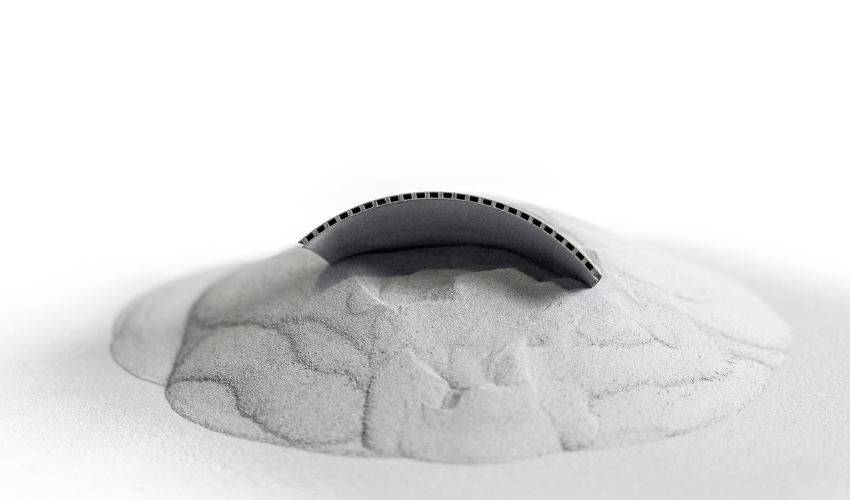
In high-stakes industries like aerospace and defense, the demand for advanced materials that can endure extreme environments is relentless. Refractory alloys, known for their exceptional resistance to heat and wear, are becoming indispensable in these fields. Among them, Niobium C103 stands out due to its unique properties and transformative potential when processed through additive manufacturing (AM).
Niobium C103 is primarily composed of niobium (Nb), with additions of hafnium (Hf) and titanium (Ti) to enhance its high-temperature strength and oxidation resistance. This alloy is highly corrosion-resistant and stable in extreme heat, making it ideal for rocket engines and advanced weaponry. Traditionally, C103 is classified as a low-strength refractory alloy in its wrought form, which has restricted its use. Relying on round bar stock, conventional methods yield simple shapes, often wasting 95% of the material, leading to a 20:1 buy-to-fly ratio—an inefficient, costly, and inflexible process.
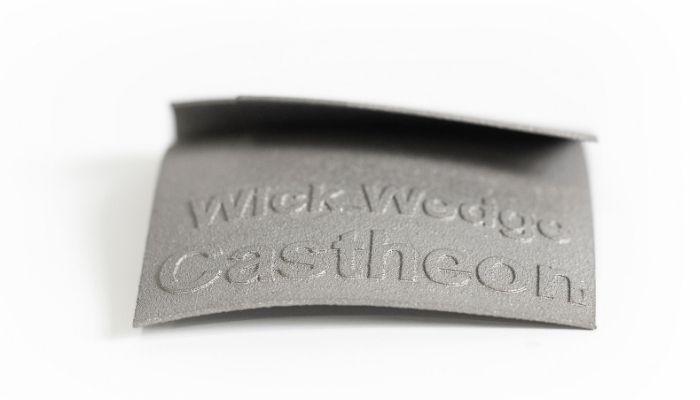
Addressing these challenges, Castheon, a division of ADDMAN Group, led by Dr. Youping Gao, has revolutionized the use of Nb C103 through metal AM. Dr. Gao, with over 20 years of experience at Aerojet Rocketdyne as a Tech Fellow and Discipline Chief in Manufacturing Engineering, played a pivotal role in advancing critical rocket engine manufacturing processes, including AM, which earned NASA production certification for mission-critical human spaceflight components.
More from the desk
Six other notes from the rest of the bench.
 NewsTop 5 Videos: Formlabs’ Fuse 1, DMLS explained, 3D printed schools and more!We’ve selected the top 5 videos on additive manufacturing and how the industry has influenced our society. This week’s selection covers the latest innovations and applications across many sectors including Formlab’s latest product launch, the first ever 3D print
 NewsHuisman Manufactures 3D Printed Crane Hooks With 350-Ton Lifting CapacityFor quite some time now, additive manufacturing has been advancing far beyond FDM 3D printing. This relatively new technology can be found in numerous industrial applications today. Such is the case in the construction industry, where demands on components are…
 NewsTop 5 Videos of the Week: Farmshelf, MakeX & More!This week’s Top 5 Videos of the Week includes videos from brands such as Ultimaker, MakeX, and Farmshelf. These videos encompass agriculture, backpacks, and the music industries. A new Top 5 Videos is uploaded every Sunday, so don’t forget to…
 MaterialsCould Flame-Retardant Bioplastics Soon Be Used in AM?Materials used in electrical engineering or electronics must conform to high demands. This is especially the case since these materials must have properties such as flame resistance. It is well known that in this case plastics meet the necessary flame…
 ApplicationsAustralia’s First Ever Multi-Metal 3D Printer Will Be Used to Boost the Aerospace SectorThe aerospace industry is constantly pushing boundaries, demanding ever lighter and stronger materials for its components, crucial for improving fuel efficiency, range, and overall performance of aircraft and spacecraft. Recently, Australia has made significant strides in this pu
 ApplicationsHRE3D+, the second-generation of the world’s first 3D printed titanium wheelLast week Rapid + TCT 2019, one of the most important events in additive manufacturing, came to an end. The second-generation of the first 3D printed wheel made of titanium – the HRE3D+ on a 2019 Ford GT – was…