News
AMAZEA, an underwater scooter designed thanks to large format 3D printing
The company JAMADE Germany recently presented a brand new concept for underwater riding: AMAZEA is an underwater scooter where 75% of parts have been 3D printed. Designed on a BigRep large format 3D printer, the device allows you to explore…
- 3 min read
- News
- Six more stories
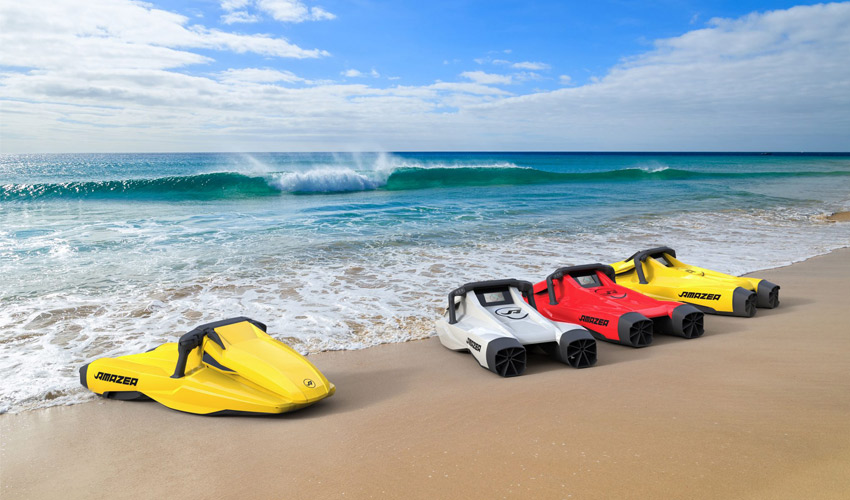
The company JAMADE Germany recently presented a brand new concept for underwater riding: AMAZEA is an underwater scooter where 75% of parts have been 3D printed. Designed on a BigRep large format 3D printer, the device allows you to explore the marine ecosystem without too much effort since you just have to grab the handles of AMAZEA and let yourself be guided. One more gadget, but one that shows that large format 3D printing has a bright future ahead.
It must be said that there aren’t many large format 3D printed products on the market today. The Olli minibus comes to mind: 80% of its parts are 3D printed, which allows unlimited customization of the vehicle. It is currently on the road in several campuses and health institutions. Other projects are worth mentioning, such as the University of Maine’s boat, even though it is not for sale. The underwater scooter joins the party, presented for the first time at Boot Düsseldorf, the world’s largest boat show!
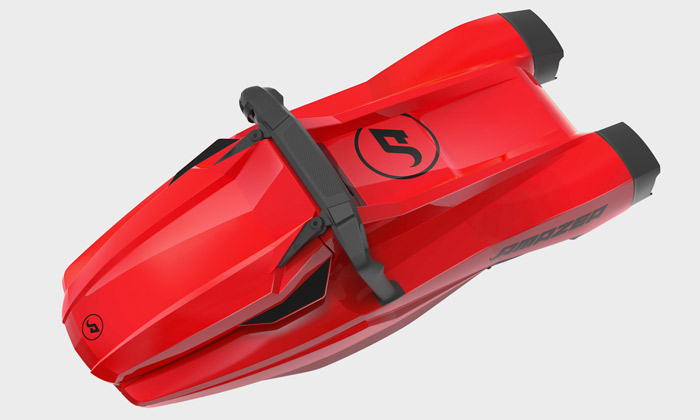
75% of AMAZEA’s pieces were 3D printed | Credits: JAMADE
AMAZEA’s manufacturing process
The body and front parts of the jet ski were produced on three BigRep ONE large format 3D printers – remember that the manufacturing volume is one cubic meter. The technical material Pro HT was preferred, especially due to its temperature resistance and low shrinkage. Developed by BigRep, it is a material derived from organic compounds, biodegradable under the right conditions and therefore more environmentally friendly compared to other thermoplastics on the market. Janko Duch, Managing Partner of JAMADE, adds: “We opted for BigRep ONE because of its profitability, precision and quality compared to the extremely high investment required for traditional tools, especially in the first year when the quantity is lower“. In addition to the cost advantages and reduced lead times, 3D printing allows the German manufacturer to offer a product that can be customised in terms of colour and size.
More from the desk
Six other notes from the rest of the bench.
 NewsSketchfab: The Platform To Visualize And Download 3D ModelsSTL files are a key part of the 3D printing process, and today Many websites exist today to download them for free. The Sketchfab platform is one of the best known, mainly because of its wide variety of content and…
 NewsResearchers Are Making Microstructures Using Ice 3D PrintingAt Carnegie Mellon University, located in Pennsylvania, engineering researchers claim to have succeeded in 3D printing microstructures of ice. They plan to use these structures as sacrificial templates, allowing them to create internal channels or conduits with the highest finess
 Applications3D Printing Is Being Used to Make a Safer Mosquito RepellentMosquitoes are transmitters of many serious diseases including malaria and dengue fever and as such are responsible for about one million deaths per year according to the WHO (World Health Organization). Not to mention how annoying the bites caused by…
 SoftwareThangs, the new most powerful search engine for 3D models?Physna has just announced the launch of Thangs, the world’s first geometric search engine for 3D models. Just a couple of days after its release, the platform is already deemed the most powerful online community for 3D model creators. Physna,…
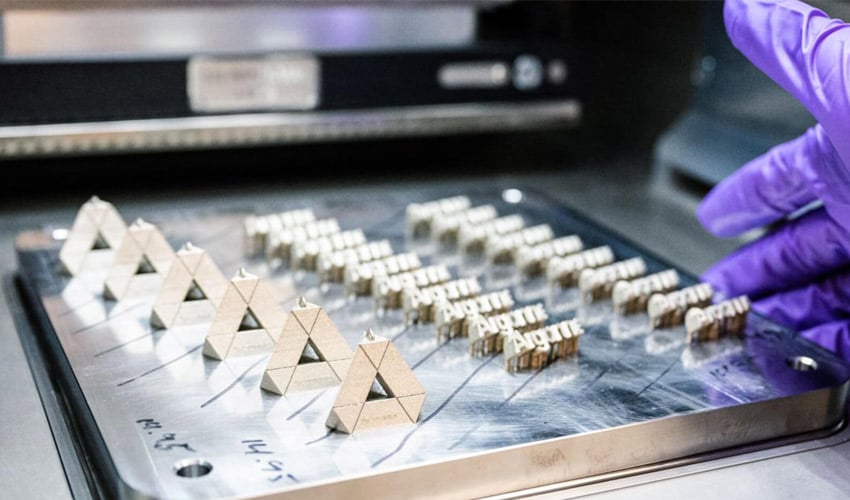 MaterialsPhase3D Detects Metal 3D Printing ErrorsPhase3D, a startup previously known as Additive Monitoring Systems, has developed optical monitoring software specifically for metal additive manufacturing. In practical terms, this innovative solution can rapidly identify printing defects as they happen, helping to prevent any d
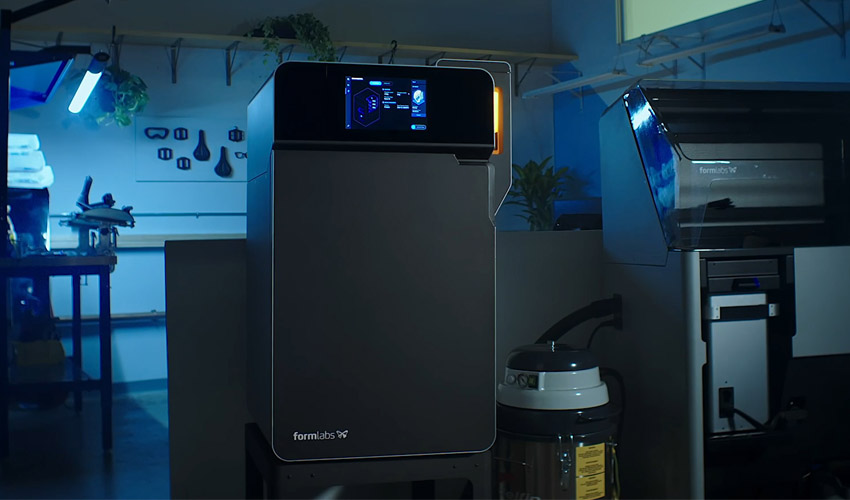 Printers3Dnatives Lab: Testing the Formlabs’ Fuse 1 SLS 3D PrinterRecognized as a leading player in the field of resin 3D printers, Formlabs announced a few months ago that it was taking its first steps into the industrial world of SLS 3D printing with the Fuse 1. This machine represents…