Freshfiber: Pioneering 3D Printed Lifestyle Products and Redefining Design with Additive Manufacturing
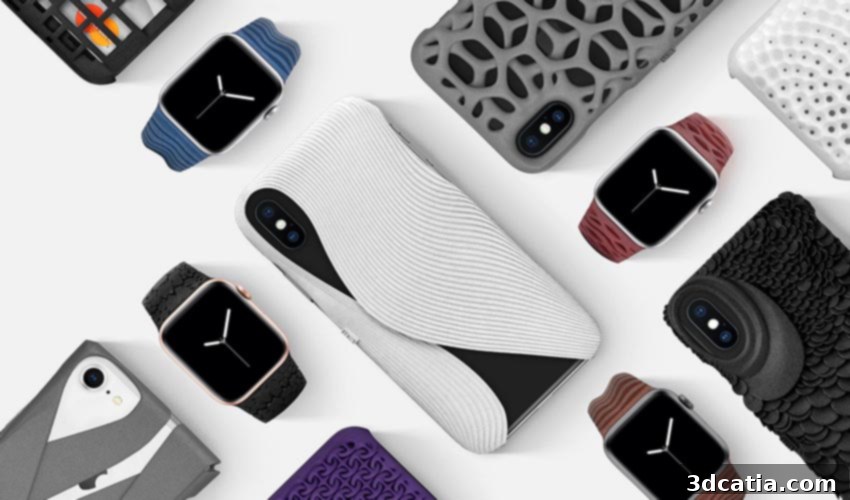
In an exclusive interview, we had the distinct pleasure of speaking with Matthijs Kok, the visionary head designer behind Freshfiber. This innovative European lifestyle brand, based in the vibrant design hub of Amsterdam, the Netherlands, has been at the forefront of integrating cutting-edge technology with sophisticated design. While the profound benefits of 3D printing for various sectors, particularly art and design, are becoming increasingly evident with each passing year, Freshfiber embarked on this revolutionary journey much earlier. Back in 2009, at a time when additive manufacturing was largely an unknown frontier for most consumer brands, Freshfiber boldly introduced a pioneering range of fully 3D printed consumer goods, making them available in retail stores across the globe. What truly sets Freshfiber apart is its unwavering commitment to uniqueness and personalization; every design is crafted to be one-of-a-kind, meticulously custom-made for each individual customer. Our insightful discussion with Matthijs Kok delved deep into Freshfiber’s distinctive product design process, the transformative advantages that 3D printing technologies bring to both design and manufacturing, and an exciting glimpse into Freshfiber’s ambitious future projects. This conversation illuminated not just their past achievements but also their forward-thinking approach to shaping the future of personalized lifestyle products through technological innovation.
Meet Matthijs Kok: A Journey into 3D Printed Design

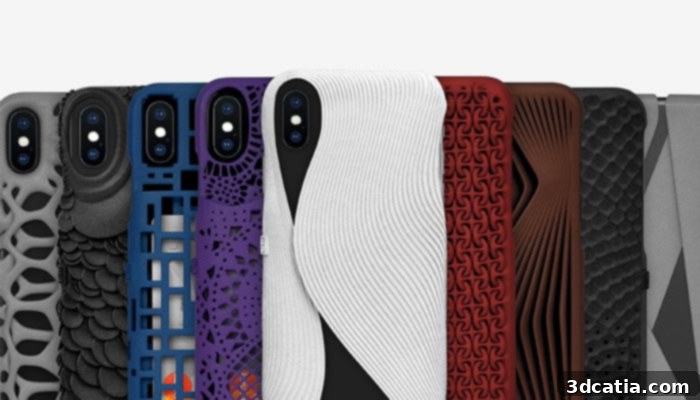
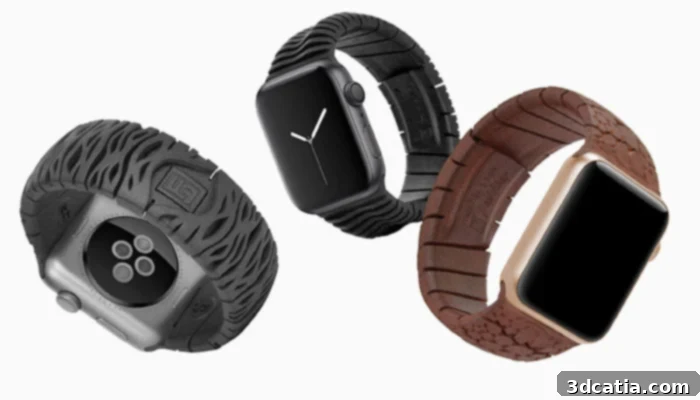
“My name is Matthijs Kok, and I am a dedicated product designer based in the bustling city of Amsterdam, the Netherlands,” Matthijs began. “My professional journey in the world of three-dimensional design commenced in 2013 when I joined the innovative 3D Systems Cubify design team. During my tenure there, I gained invaluable experience designing and modeling FDM-printable consumer products for 3D Systems’ consumer platform, Cubify. This foundational experience provided a deep understanding of consumer-centric 3D printing applications and the intricacies involved in preparing designs for additive manufacturing. In 2017, an exciting new chapter began with the re-launch of Freshfiber. Here, our focus is squarely on developing a diverse range of exquisite consumer products, including stylish phone cases, ergonomic watch bands, and sophisticated lighting solutions. What unites all these offerings is their fundamental origin: every single item is meticulously crafted using advanced 3D printing technologies. Our aim is to push the boundaries of what is possible, bringing truly unique and personalized items to the market.”
The Genesis of Freshfiber: A Visionary Approach to Additive Manufacturing
Freshfiber’s inception traces back to 2009, a pivotal year when the visionary founders, Jurjen Rolf and Christian Dijkhof, identified an untapped potential in 3D printing. At this time, the concept of additive manufacturing was far from mainstream and largely unfamiliar to the general public. Despite this, they established Freshfiber with a clear and ambitious objective: to specialize in creating fashionable, 3D printed protective designs specifically tailored for personal electronics, such as smartphones and tablets. This marked Freshfiber as a true pioneer in the industry. The brand holds the distinguished title of being the very first to successfully market and sell fully 3D printed products directly in retail stores worldwide. This bold move demonstrated an early conviction in the technology’s potential for mass consumer adoption and set a precedent for combining intricate design with functional utility through additive manufacturing. Their initial success proved that there was a significant market demand for unique, customized, and technologically advanced accessories.
The Freshfiber Design Philosophy: Sculpting the Digital Realm
At Freshfiber, the design process is a collaborative and deeply artistic endeavor, driven by an international network of talented designers. Every single product begins its life as a handcrafted concept; “all our products are designed by hand,” Matthijs emphasizes. The initial spark of an idea or concept is first captured traditionally, drawn onto a piece of paper. This foundational sketch then undergoes a transformative journey, as the designer manually converts it into a detailed 3D model using industry-leading software such as 3DS Max, Solidworks, and Rhino. This deliberate choice to avoid modeling algorithms or generative design tools is central to Freshfiber’s philosophy. Instead, they prefer to approach “every product as a sculpture,” meticulously hand-designing down to the smallest, most intricate detail. This ensures that each piece possesses a unique aesthetic and a sense of artisanal craftsmanship that sets it apart.
Beyond the initial design, an exhaustive process of testing and material selection follows. We “thoroughly test and carefully select the best 3D printing technology, material, and finishing for each product,” Matthijs explains. Currently, Freshfiber leverages several advanced additive manufacturing technologies, including Selective Laser Sintering (SLS) and Multi Jet Fusion (MJF). These technologies are chosen for their ability to produce highly detailed, durable, and functional components, perfectly suited for consumer goods. The primary materials utilized are robust nylon variants such as PA11 and PA12, selected for their excellent mechanical properties, flexibility, and superior surface finish. Despite their current sophisticated setup, Freshfiber maintains a proactive stance on innovation, continuously monitoring new technologies, material advancements, and finishing techniques to integrate into future product lines. This commitment ensures they remain at the cutting edge of design and manufacturing. Furthermore, a strong emphasis is placed on ethical and quality-controlled production, as “all our products are designed and manufactured in Europe,” reinforcing their dedication to excellence and local craftsmanship.
Credits: Freshfiber
This meticulous approach to design and manufacturing allows Freshfiber to create products that are not only aesthetically pleasing but also exceptionally functional and durable. The ability to iterate quickly and precisely through 3D printing means that every design flaw can be identified and corrected efficiently, leading to a superior end product. This iterative process, combined with their choice of advanced materials, ensures that Freshfiber products stand out in a competitive market.
The Transformative Power of 3D Printing: Advantages and Opportunities
From optimizing operational expenditures to significantly boosting efficiency across the board, 3D printing exerts an undeniably profound impact on Freshfiber’s entire design and manufacturing ecosystem. “The technology enables fast prototyping, so we can design something today and have a prototype in our hands tomorrow,” Matthijs elucidates. This rapid turnaround capability dramatically accelerates their design cycle, allowing for quicker iteration, testing, and refinement of products, which is crucial for staying ahead in the fast-paced consumer market. Beyond speed, the financial benefits are equally compelling: “There is no need for expensive tooling and no need for vast quantities of goods stocked in warehouses.” This eliminates substantial upfront investment costs associated with traditional manufacturing methods like injection molding, and significantly reduces inventory risks and storage expenses. The ability to produce on-demand also aligns perfectly with sustainable practices, minimizing waste and resource consumption.
Freshfiber is also a staunch advocate for personalization, believing that products should resonate deeply with their owners. “We are also a big believer of personalization, therefore we offer our customers the possibility to elegantly personalize their Freshfiber product with a name, text or logo, without disrupting the original design,” Matthijs explains. This level of customization is a significant differentiator, allowing customers to imbue their accessories with personal meaning while maintaining the aesthetic integrity of the original design. This not only enhances customer satisfaction but also fosters a stronger connection between the user and the brand.
Naturally, like any production technique, 3D printing inherently comes with its own set of limitations. However, Matthijs emphasizes that “as a designer, it’s the art of translating these possibilities, innovations, and limitations into design opportunities.” This philosophy transforms potential drawbacks into creative challenges, pushing the boundaries of what is achievable. While traditional manufacturing methods might impose constraints on design complexity, material choices, or minimum order quantities, 3D printing often liberates designers from these restrictions. This freedom allows Freshfiber to create truly novel forms and intricate details that would be impossible or prohibitively expensive to produce using conventional techniques.
The market today is increasingly seeking products that are distinctive and perfectly tailored. “People are looking for unique pieces and truly fitted products,” Matthijs notes. Freshfiber’s offerings distinguish themselves through a contemporary aesthetic that skillfully blurs the lines between fine sculpture and industrial design. The unique textural finishes, complex geometries, and custom-fit nature made possible by 3D printing contribute to this distinct identity. Ultimately, 3D printing ushers in “a new creative approach and new design complexities” that redefine what is possible in product development. It empowers designers to explore novel forms, create functional intricacies, and deliver a level of personalization that traditional methods simply cannot match, thus transforming perceived limitations into boundless opportunities for innovation and artistic expression.
Credits: Freshfiber
This creative freedom, combined with advanced material science, positions Freshfiber at the vanguard of product innovation. Their ability to deliver customized, high-quality items with an artistic touch demonstrates the profound potential of additive manufacturing when guided by a clear design philosophy.
Freshfiber’s Latest Innovation: The Lighting Collection
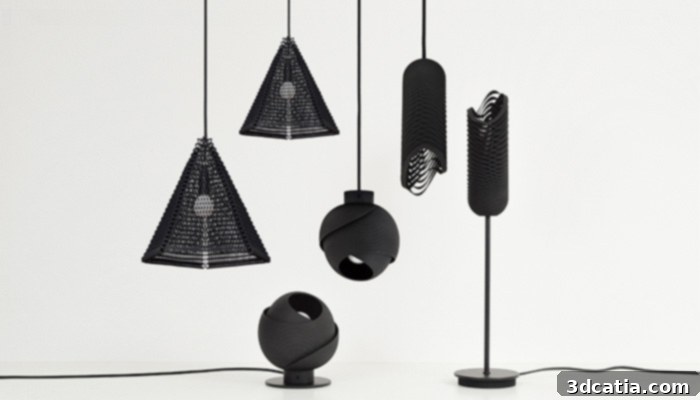
Expanding on their diverse product portfolio, Freshfiber recently unveiled a captivating new lighting collection, marking a significant milestone for the brand. This beautiful series comprises three distinct and meticulously crafted lamp designs: Fold, Flux, and ZooM. Each lamp in the collection is a testament to Freshfiber’s commitment to local talent and innovative design, having been created by a skilled local designer. The collection brilliantly fuses delicate and intricate design elements with the unique capabilities of 3D printing. This synergy is further enhanced by the careful selection of high-quality materials and the incorporation of traditional hand finishing techniques, resulting in pieces that are both technologically advanced andartisanal.
The new lighting collection is thoughtfully designed to cater to a variety of aesthetic preferences and spatial requirements, coming in various models and sizes. This versatility makes the lamps ideally suited for a wide range of environments, from enhancing the ambiance of residential homes to adding a touch of contemporary elegance in sophisticated restaurants and luxurious hotels. Each design, be it the architectural ‘Fold,’ the flowing ‘Flux,’ or the dynamic ‘ZooM,’ showcases how 3D printing can create complex geometric forms and diffuse light in novel ways, offering a unique visual experience that transcends conventional lighting solutions. This expansion into lighting underscores Freshfiber’s continuous evolution and its dedication to bringing innovative, design-led 3D printed products to new market segments.
Credits: Freshfiber
The introduction of the lighting series represents Freshfiber’s versatility and their ability to apply their core principles of customized, high-quality 3D printed design to new product categories. It solidifies their position as a lifestyle brand, offering comprehensive design solutions for modern living spaces.
The Future of 3D Printing: Art, Design, Fashion, and Sustainability
Looking ahead, Matthijs Kok harbors optimistic expectations regarding the broader adoption of 3D printing, forecasting its widespread integration across numerous companies in the coming years. “We expect 3D printing will be adopted by many more companies in the future,” he states, citing compelling examples of major brands already embracing the technology. “We’ve seen interesting projects by Nike, Adidas & BMW over the past few years.” These high-profile adoptions underscore the growing recognition of additive manufacturing’s potential to revolutionize product development, supply chains, and consumer offerings in diverse industries.
A key aspect of this future vision revolves around sustainability and localized production. With an increasing proliferation of advanced 3D printing facilities globally, there is a burgeoning opportunity to reshape traditional manufacturing paradigms. “With a growing number of printing facilities around the world, we hope 3D printing will continue to encourage brands to produce parts locally and in this way contribute to the economic development of reducing greenhouse gas emissions linked to transport,” Matthijs explains. This shift towards localized manufacturing significantly minimizes the environmental footprint associated with global shipping and logistics, fostering more resilient and eco-conscious supply chains.
Furthermore, the continuous evolution of materials and their properties is poised to unlock unprecedented design possibilities. “This, combined with the introduction of new materials and properties over the next years, can truly transform the economics of manufacturing,” he adds. Imagine materials with integrated electronic functionalities, enhanced biodegradability, or superior strength-to-weight ratios—each capable of inspiring entirely new product categories and applications. This dynamic landscape presents an unparalleled “opportunity for us designers to explore the possibilities of this fascinating technology.” Freshfiber, through its continuous innovation, aims to play a crucial role in this evolving narrative, committed to “keep raising awareness of the innovations and benefits of 3D printing by developing well-executed products and ideas.” Their ongoing dedication not only drives their own brand forward but also serves as a beacon, illustrating the vast, untapped potential of additive manufacturing for a more sustainable, creative, and personalized future across art, design, and fashion.
Credits: Freshfiber
This forward-looking perspective underscores Freshfiber’s commitment not only to product excellence but also to responsible and innovative manufacturing practices. They are not just creating objects; they are helping to define a new era of production and consumption.
Connect with Freshfiber: Explore and Collaborate
For those intrigued by the fusion of design and 3D printing, Matthijs extends a warm invitation: “Readers can visit our online shop via www.freshfiber.com to explore our exquisite collections of phone cases, innovative watch bands, and the newly launched, captivating lighting range.” Beyond just products, Freshfiber is also a hub for creative talent. “We are also always looking for new designers to submit their designs, feel free to get in touch!” This open call emphasizes their collaborative spirit and continuous quest for fresh perspectives in the realm of 3D printed design, reinforcing their position as a dynamic and evolving lifestyle brand at the cutting edge of innovation.
What are your thoughts on Freshfiber’s pioneering approach to 3D printed design and their vision for the future? We encourage you to share your insights in a comment below, or engage with us on our Facebook and Twitter pages! For all the latest news, trends, and innovations in the exciting world of 3D printing, be sure to sign up for our free weekly Newsletter, delivered straight to your inbox. Stay informed and inspired by the forefront of additive manufacturing.