
Unleash Vivid Visuals: Mastering Multi-Color 3D Art with HueForge and Filament Painting
The world of 3D printing constantly pushes the boundaries of creation, enabling artists and hobbyists alike to craft breathtaking three-dimensional objects, from intricate sculptures to functional prototypes. However, the true artistic potential of 3D printers extends beyond purely volumetric pieces. Imagine harnessing the power of a 3D printer to produce stunning, visually rich art that appears almost two-dimensional, yet possesses an undeniable tactile depth and vibrant color palette. This innovative approach to digital art creation is not only possible but beautifully perfected through the revolutionary software known as HueForge, transforming flat images into mesmerizing, multi-layered masterpieces.
At first glance, the concept of using a 3D printer to create seemingly flat artwork might appear counterintuitive. After all, isn’t the essence of 3D printing about adding a third dimension? Yet, the distinction lies in the unparalleled crispness and tangible quality that a 3D printer imparts to these unique pieces. Unlike traditional two-dimensional prints, HueForge creations exhibit a distinct texture and depth due to their multi-layered construction, giving each artwork a character that leaps off the surface. Furthermore, by strategically leveraging the inherent transparent and translucent properties of various plastic filaments, users can infuse their art with incredible visual depth, nuance, and an optical illusion of complex color blending that is simply unattainable through conventional printing methods. The colors don’t just sit on the surface; they interact with light, filtering through layers to create dynamic and living imagery.
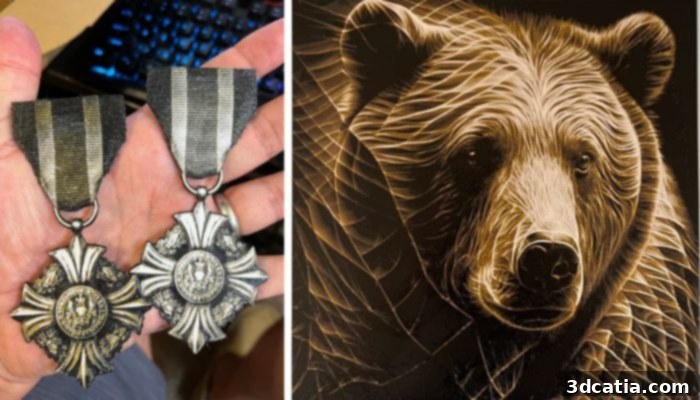
The genius behind this novel artistic medium is the HueForge software itself. It empowers users to produce remarkably detailed, multi-color 3D prints in an entirely new fashion, meticulously controlling and capitalizing on the transparency of 3D printing filaments. HueForge proudly labels its sophisticated process as “Filament Painting,” a term that perfectly encapsulates the artistic endeavor of crafting stunning 3D art prints by orchestrating precise “Swap-by-Layer” filament changes. The foundational innovation and key aspect of the software lies in its sophisticated ability to accurately recognize and account for filament transparency, a critical property that HueForge uniquely quantifies and refers to as the “Transmission Distance” (TD). This precise calculation is what unlocks the vibrant and predictable artistic outcomes, allowing creators to move beyond guesswork and into a realm of controlled, high-fidelity color reproduction.
For those new to this specialized terminology, understanding “Transmission Distance” (TD) is paramount to grasping the magic of HueForge. Simply put, TD is a precise measurement of how much light a specific filament allows to pass through its material. According to the creators of HueForge, TD essentially represents the effective thickness of a solid filament layer through which light can effectively penetrate and be perceived. It’s a vital characteristic, as different filaments inherently possess varying levels of opacity and transparency. For instance, filaments characterized by a low TD, such as most black or very dark opaque filaments, permit very little light to pass through, resulting in deep, rich colors that appear largely independent of underlying layers. Conversely, filaments with a high TD are notably transparent or translucent, allowing a significant amount of light to pass through and interact with the layers beneath, producing luminous and ethereal effects. This scientific approach to material properties is what enables unprecedented control over the final visual output.
This profound understanding of Transmission Distance means that the thickness of each individual layer, combined with the specific order in which different colored filaments are stacked, dramatically influences how light is filtered and refracted through the material. Consequently, the perceived colors in the final print can diverge significantly from the true, unlayered filament color. Without sophisticated software like HueForge, predicting these complex optical interactions and the resulting color shifts would be incredibly challenging, if not impossible, for the average user. Traditional slicers lack the algorithmic intelligence to account for light transmission through layered, translucent plastics. By meticulously accounting for the TD of each chosen filament, HueForge accurately predicts and simulates how layering colors will affect the ultimate visual product, offering a clear, real-time preview of the intricate interplay of light and pigment within the printed layers. This innovative capability transforms the artistic process from one of trial and error into a precise, predictive science.
The user experience with HueForge is designed to be intuitive and powerfully creative. Once the software has performed its complex calculations, estimating precisely how much light will travel through each layer and presenting a detailed preview, users are given unparalleled control. They can then effortlessly adjust various parameters, including the specific color of each layer, its individual thickness, and the strategic order in which these layers are arranged. This iterative process allows for precise tinkering and fine-tuning, empowering artists to achieve their exact desired outcome. What truly sets HueForge apart, making it an incredible tool for digital artists, is its revolutionary approach to “mixing” colors. While the filaments themselves are not physically blended in a traditional sense, HueForge enables users to create an astonishingly wide range of perceived color values and gradients through strategic layering. This means that with just a handful of primary or secondary filament colors, creators can produce complex, rich, and varied palettes, effectively bypassing the need for an expensive, multi-material or multi-extruder printer. The perceived color blending is an optical marvel, transforming simple filament swaps into sophisticated artistic techniques.
This extraordinary ability to accurately predict the final appearance of a multi-layered 3D print is the defining attribute that elevates HueForge far above conventional slicer programs. Standard slicers, while excellent for preparing models for printing, are fundamentally incapable of determining or simulating the final colors of a part when factoring in the complex transparency properties of various filaments. They typically show a simplistic representation of the top layer color. HueForge, however, bridges this critical gap in the 3D printing workflow. Its sophisticated platform even features a convenient toggle function, allowing users to instantly compare what a standard slicer preview would misleadingly show versus the highly accurate, true-to-life HueForge version. This direct comparison vividly demonstrates HueForge’s indispensable value in achieving consistent, high-quality multi-color 3D prints, instilling confidence and precision into the creative process for artists and designers.
HueForge: Innovation, Community, and Remarkable Growth in the 3D Printing World
One of the many strengths of HueForge lies in its extensive and ever-growing support for various filament brands. The software’s website hosts comprehensive filament libraries from numerous prominent manufacturers, including industry leaders such as Polymaker, Bambu Lab, IIID Max, Protopasta, Prusament, and SUNLU. The precise material properties, crucially including their Transmission Distance values, for these popular filaments are already meticulously cataloged and known to the HueForge software. This invaluable feature means that users can effortlessly integrate their preferred filaments into their “Filament Painting” projects, confident that the software will accurately predict color interactions. This seamless integration significantly streamlines the creative workflow, reducing the need for manual calibration and allowing artists to focus more on their design and less on technical guesswork.
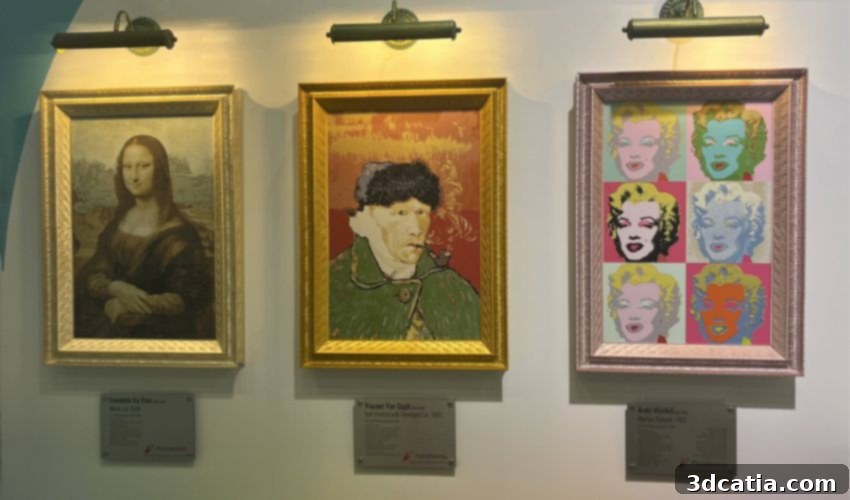
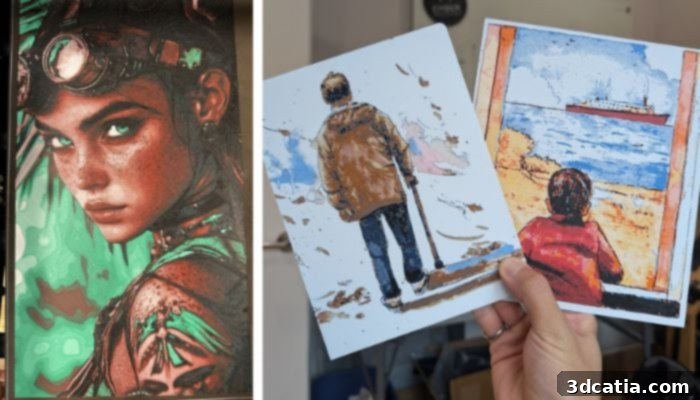
The innovative HueForge software was conceptualized and launched in 2023 by talented software developer Steve Lavadas. Despite its relatively recent introduction, HueForge has already made a significant impact on the 3D printing community and gained considerable recognition. Notably, the software company had a prominent, albeit indirect, presence at the prestigious Formnext 2024 exhibition, one of the world’s leading additive manufacturing trade shows. While not occupying its own booth, HueForge was proudly featured within Polymaker’s impressive gallery of artworks. This gallery showcased breathtaking pieces expertly crafted by none other than Ian Smalley, a dedicated HueForge tester and influential figure within the community. Smalley, affectionately known as the “Original HueForger” as per his Twitter bio, extensively uses and promotes the software, with his online accounts serving as a vibrant portfolio of his many stunning artworks created using HueForge. This early recognition at a major industry event, coupled with strong community endorsement, underscores the software’s immediate relevance and promising future.
Accessibility is a key priority for HueForge, ensuring that a broad range of users can tap into its creative potential. The software is currently available across multiple popular operating systems, including Windows 10/11, Mac OS 11+, and various Linux distributions, making it versatile for diverse user setups. To facilitate learning and adoption, HueForge provides extensive and highly effective tutorials, primarily distributed through its dedicated YouTube channel. These video guides offer practical demonstrations, allowing users to witness the program’s powerful capabilities in action and master its nuanced features step by step. It’s worth noting that, as with many rapidly evolving software solutions, there are still some known bugs that the development team is actively addressing. In the spirit of transparency and commitment to its user base, the company offers its service at a more accessible, lower introductory price point during this developmental phase. HueForge provides flexible licensing options, catering to both personal and professional commercial use. A lifetime personal use license is currently available for an affordable price of $24, representing exceptional value for the innovative capabilities it unlocks. The company has transparently stated on its website that these prices are anticipated to rise over time as the product matures and its quality and feature set continue to improve. Therefore, for aspiring 3D printing artists and enthusiasts interested in exploring the incredible world of “Filament Painting,” now presents an opportune moment to invest in this groundbreaking program and embark on a new dimension of digital art creation. To delve deeper into the features, possibilities, and community surrounding HueForge, we highly recommend visiting its official website here.
Are you intrigued by the prospect of creating captivating, multi-layered art with your 3D printer using HueForge? We’d love to hear your thoughts and experiences! Let us know in a comment below, or engage with our vibrant community on our LinkedIn, Facebook, and Twitter pages! Don’t forget to sign up for our free weekly newsletter here to receive the latest 3D printing news, insights, and innovations directly to your inbox. You can also discover a wealth of insightful videos and tutorials on our dedicated YouTube channel, enhancing your journey into the exciting realm of additive manufacturing.
*Cover Photo: Ian Smalley’s artwork at the Polymaker Booth at Formnext 2024. Credits: Ian Smalley on Twitter (@Ian_Smalley)