
HP’s Bold Leap: Pioneering the Future of Metal and Full-Color 3D Printing for Industrial Scale
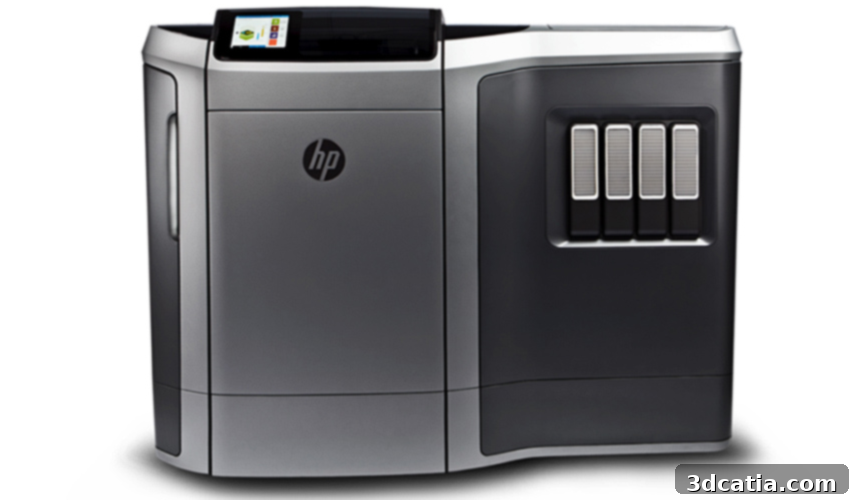
HP Inc., a global technology giant renowned for its leadership in the PC, notebook, and printing industries, has consistently demonstrated its innovative spirit. With annual revenues soaring past $48 billion, the company holds a formidable position in the tech landscape. In recent years, HP made a significant strategic move into the burgeoning 3D printing market with its acclaimed Multi Jet Fusion range, initially focusing on plastic-based models. Now, HP is set to redefine its commitment to additive manufacturing, having announced an ambitious expansion into the realm of metal 3D printers, with sales slated to begin in 2018. This move signifies a pivotal moment, not just for HP, but for the entire industrial 3D printing sector, promising to accelerate the adoption of advanced manufacturing techniques across diverse industries.
A Strategic Pivot: Unlocking the Potential of Metal 3D Printing
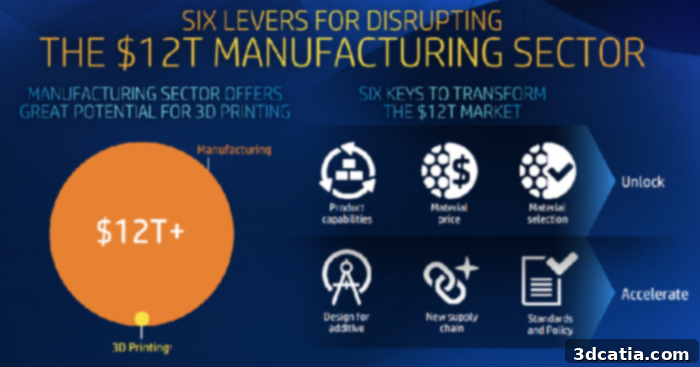
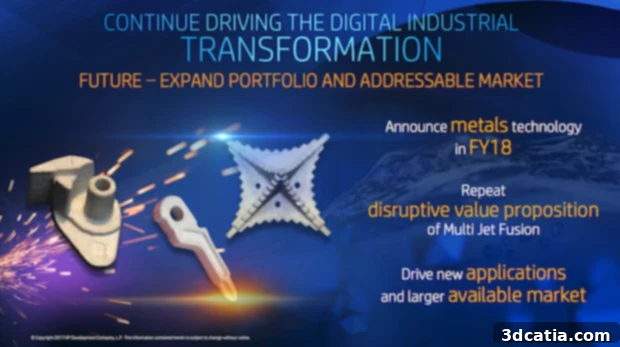
While HP Inc. has already established a strong foothold in the 3D printing market with its plastic-focused Multi Jet Fusion technology, the recent announcement marks a profound evolution in its strategy. HP CEO Dion Weisler unveiled the company’s plans to produce metal objects using its proprietary 3D printing solutions. This isn’t merely an incremental step; it’s a bold declaration of intent to capture a significant share of the immense $12 trillion global manufacturing market. By entering the metal 3D printing arena, HP aims to tap into high-value applications across aerospace, automotive, medical, and industrial tooling sectors, where precision, strength, and customizable geometries are paramount.
The decision to embrace metal 3D printing positions HP as a direct challenger to established players, and a catalyst for broader industry transformation. The company has previously highlighted its success in selling more 3D printers than any other competitor in certain segments, and has forged critical alliances with key suppliers and partners across Europe to bolster its supply chain and market reach. Stephen Nigro, HP’s President of 3D printing, articulated the company’s vision clearly: HP will “transform the 3D metal industry into more mainstream high volume production.” This statement directly addresses one of the most significant challenges currently facing additive manufacturing – the need for increased speed and efficiency to move beyond prototyping and low-volume production into full-scale industrial applications. If HP’s technology can indeed significantly improve the speed and cost-effectiveness of metal 3D printing, it could instantly become a far more viable and compelling option for mass production and complex parts manufacturing, potentially ushering in a new era of digital manufacturing.
Beyond Metals: The Evolution of Full-Color 3D Printing
The announcements from HP weren’t exclusively focused on metal; the company also revealed its intention to make full-color 3D printing more accessible by offering it at a significantly lower price point. This strategic move aims to democratize access to advanced color 3D printing technology, allowing smaller businesses, design studios, educational institutions, and even individual creators to leverage its capabilities. Traditionally, high-fidelity full-color 3D printing has been prohibitively expensive, limiting its use to specialized applications or large corporations. By lowering this barrier to entry, HP is fostering innovation and expanding the creative possibilities for product development, visual prototyping, and custom manufacturing.
Stephen Nigro further emphasized the distinct advantage of HP’s approach, stating, “Multi Jet Fusion will be the one and only 3D printing technology that can make mechanically robust and functional full-color parts.” This assertion highlights a crucial differentiator. Many existing color 3D printing solutions prioritize aesthetics over mechanical properties, often producing models that are fragile or unsuitable for functional testing. HP’s Multi Jet Fusion, known for its ability to create parts with isotropic mechanical properties, aims to deliver both vibrant color and structural integrity. This combination opens up a vast array of applications, from medical models that precisely mimic human anatomy in color, to consumer products with integrated branding, or highly realistic architectural models used for client presentations. The ability to produce functional parts with integrated color removes an additional step in the manufacturing process (painting or post-processing), saving time and cost, and significantly streamlining workflows in various industries.
The Investment: Anticipating the Cost of Advanced Manufacturing
While HP made grand pronouncements regarding its technological advancements, the company remained notably less vocal about the specific retail price points for its forthcoming metal 3D printers. Given the current landscape of industrial additive manufacturing, it is reasonable to assume these machines will command a substantial investment. For context, HP’s existing plastic-based Multi Jet Fusion printers, such as the HP Jet Fusion 3D 3200, start at upwards of $130,000. While HP asserts that its offerings are often more cost-effective than rival solutions in the plastic 3D printing market, the entry into metal printing places them in a category of even higher capital expenditure.
Metal 3D printing, by its very nature, involves complex machinery, specialized materials (metal powders), and often sophisticated post-processing equipment, all of which contribute to a higher price tag. Consequently, these advanced metal 3D printing solutions will initially remain largely inaccessible to the general public or even smaller enterprises until significant technological advancements and economies of scale drive prices down. HP’s immediate target market, therefore, is clearly established: large manufacturers, industrial powerhouses, and enterprises deeply invested in advanced R&D and serial production. These organizations possess the financial resources and the operational scale to justify such substantial investments, seeking returns through unparalleled design freedom, optimized part performance, reduced lead times, and the ability to produce highly customized components on demand. HP’s strategy is to position itself as a key partner for these industrial titans, enabling them to transition towards digital manufacturing workflows and leverage the full potential of metal additive manufacturing for their most demanding applications.
HP’s Ambitious Vision: Reshaping the Future of Production
The critical question that remains is whether this ambitious expansion into metal and enhanced full-color 3D printing will effectively revive HP’s sales trajectory and significantly bolster its market position. The success of this venture will undoubtedly hinge on HP’s ability to deliver on its bold promises of high-volume, mainstream production for metal parts, and to effectively differentiate its full-color offerings. If HP can indeed achieve the promised breakthroughs in speed, cost-efficiency, and material versatility, it will mark an monumental stride in the evolution of 3D printing technology.
The implications of such success are far-reaching. Imagine a scenario where a 3D printing solution can genuinely rival traditional mass production methods in terms of both speed and unit cost. This would not merely represent an improvement; it would signal the dawn of a new age of production, profoundly impacting global supply chains, product design, and manufacturing economics. Digital manufacturing, fueled by accessible and efficient additive technologies, could lead to more localized production, reduced waste, greater customization at scale, and enhanced agility in responding to market demands. HP’s investment in a comprehensive ecosystem, encompassing not just hardware but also materials, software, and services, underscores its commitment to driving this paradigm shift. By fostering an open platform and collaborating with industry partners, HP is positioning itself not just as a printer manufacturer, but as an architect of the future manufacturing landscape. This strategic vision, combined with HP’s proven track record of innovation and global reach, makes its journey into metal 3D printing one of the most anticipated developments in the additive manufacturing space.
For those interested in delving deeper, HP’s CEO provides further insights in this interview: Watch the Interview Here.
What are your thoughts on the significance of metal 3D printing for the broader additive manufacturing industry? How do you envision HP’s role in shaping this future? Share your perspectives in the comments section below or join the conversation on our social media platforms: Facebook and Twitter. Don’t miss out on the latest advancements in 3D printing – sign up for our free weekly Newsletter here and get exclusive news delivered straight to your inbox!