
HP Accelerates 3D Printing Revolution: Multi Jet Fusion Innovation & Global Expansion
At the recent RAPID + TCT fair in the US, a pivotal event in the additive manufacturing calendar, Hewlett-Packard (HP) underscored its commitment to transforming industrial production. The tech giant announced a significant reinforcement of its 3D printing division, prominently featuring its advanced Multi Jet Fusion (MJF) technology. This strategic move was accompanied by a series of key initiatives, including a robust program aimed at broadening the accessibility of its innovative solutions. These announcements collectively signal HP’s intent to elevate its standing in the rapidly evolving 3D printing landscape to an unprecedented level, solidifying its position as a frontrunner in industrial-grade additive manufacturing.
HP’s journey into the forefront of 3D printing began in 2014 with the groundbreaking revelation of its “Multi Jet Fusion” process. This proprietary technology operates on a sophisticated powder binding principle, utilizing a precise energy source to create parts layer by layer. From its inception, MJF was designed to overcome the limitations of existing 3D printing methods, particularly in terms of speed and efficiency. HP proudly highlights that this innovative technology is an astonishing 25 times faster than traditional Fused Deposition Modeling (FDM), a common extrusion-based method, and boasts a speed advantage of 10 times over powder sintering processes. This dramatic increase in speed translates directly into faster prototyping cycles and more agile production capabilities for businesses. Today, HP’s cutting-edge MJF printers are engineered to deposit an astounding 350 million drops of ink per minute, enabling a production process that is not only significantly faster but also more cost-effective than many contemporary systems. This unparalleled precision and speed allow for the creation of intricate parts with superior mechanical properties, making HP’s Multi Jet Fusion a game-changer for industrial applications seeking rapid, high-quality, and scalable manufacturing solutions.
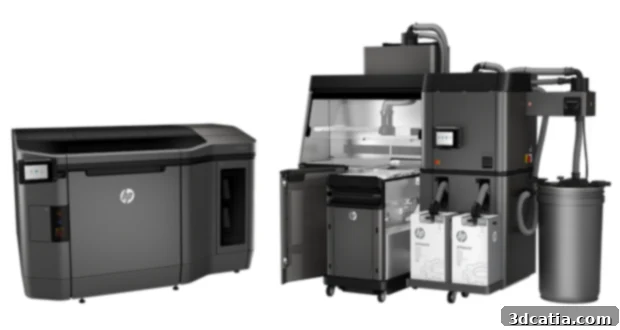
The Jet Fusion 3D Series Printers by HP
Stephen Nigro, President of 3D Printing at HP Inc., articulated the company’s ambitious vision, stating, “Building on our experience of more than 500,000 Multi Jet Fusion-produced parts, we are now scaling our 3D printing business to the next level. Today we are expanding our solutions availability through new resellers and service bureau partners, opening new experiential facilities for customers and partners, and widening our open 3D printing materials ecosystem.” This statement encapsulates HP’s multi-pronged approach to accelerating the adoption of industrial 3D printing. The impressive milestone of half a million MJF-produced parts is not merely a number; it represents a wealth of invaluable data, expertise, and real-world validation that underpins HP’s confidence in its technology. This extensive experience provides a robust foundation for the next phase of growth, focusing on greater market penetration, enhanced customer support, and fostering an innovative environment for material development. By broadening its network of partners and establishing dedicated facilities, HP aims to make its advanced 3D printing capabilities more accessible to a wider range of industries and enterprises globally.
Looking ahead, HP is unequivocally committed to its development strategy in additive manufacturing, signalling its intent to become an indispensable partner for businesses seeking to leverage 3D printing for true production. This strategic commitment was further highlighted by the recent announcement of new services tailored for the international market, with an initial focus on bolstering presence and support in the European and US markets. These regions, known for their advanced manufacturing sectors and high demand for innovative production technologies, represent critical battlegrounds for establishing leadership in industrial 3D printing. HP’s focused expansion into these key markets demonstrates a calculated effort to not only meet existing demand but also to cultivate new opportunities for additive manufacturing across various industries, from automotive and aerospace to healthcare and consumer goods. The goal is to provide comprehensive support, from initial consultation to full-scale production implementation, ensuring that businesses can seamlessly integrate HP’s 3D printing solutions into their workflows and realize the full potential of digital manufacturing.
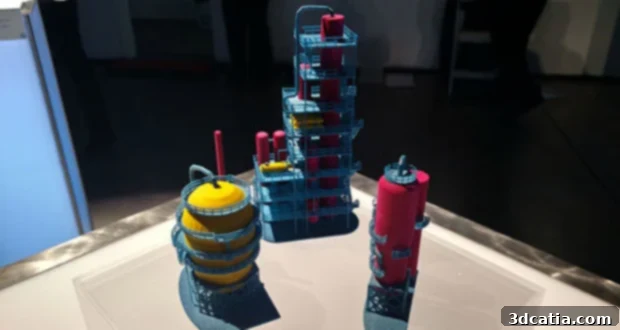
The printed parts have a very high precision
A cornerstone of HP’s global expansion strategy is the introduction of its “HP Partner First 3D Printing Specialization Program.” This meticulously designed global reseller plan is already making significant strides, having onboarded 30 carefully selected, highly trained, and certified partners. This robust program is engineered to serve multiple critical functions: firstly, to dramatically accelerate the global resale and distribution of HP’s sophisticated 3D printing machines; and secondly, to ensure that professionals across various industries can rapidly access expert solutions tailored to their specific additive manufacturing needs. By empowering a network of highly skilled partners, HP guarantees an industry-leading response time and unparalleled customer service, enabling businesses to overcome challenges swiftly and maximize their return on investment in HP’s technologies. This structured approach to partnership not only expands HP’s market reach but also builds a strong ecosystem of specialized support, fostering confidence and driving wider adoption of Multi Jet Fusion technology in production environments.
In a further move to educate and enable businesses, the US technology giant is also investing in the development of dedicated demonstration centers and reference sites focused explicitly on additive manufacturing. These state-of-the-art facilities will serve as vital hubs for companies to immerse themselves in HP’s 3D printing ecosystem, offering invaluable hands-on experience and insights into the capabilities of their machines. The core objective is to educate potential customers on the transformative power of HP 3D printing machines through engaging and realistic “production scenarios.” This experiential approach is designed to demystify the transition from traditional manufacturing to additive manufacturing, showcasing how HP’s technology can seamlessly integrate into existing workflows. According to their press release, these centers will provide customers with “a simpler path to advance from prototyping to full-scale 3D production.” By offering tangible examples of how companies can transition from initial design and rapid prototyping to producing functional, end-use parts at scale, HP aims to significantly lower the barrier to entry for businesses looking to adopt advanced additive manufacturing processes and unlock new levels of innovation and efficiency.
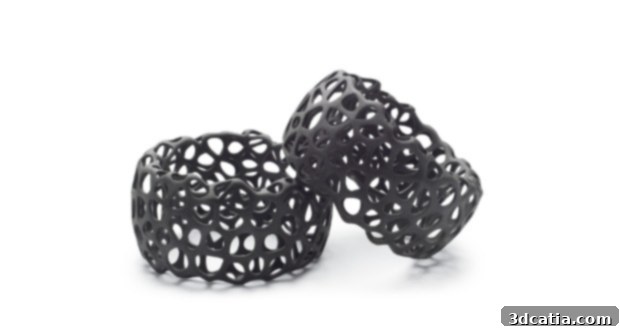
3D printed metal parts by HP
To fully realize the potential of its Multi Jet Fusion technology, HP recognizes that an open and vibrant materials ecosystem is paramount. Consequently, the company is actively expanding its network of partners dedicated to developing and supplying innovative 3D printing materials. This collaborative approach fosters greater versatility, enabling MJF printers to address a broader spectrum of industrial applications with diverse material requirements. A key partnership in this endeavor is with Henkel AG & Co, a globally renowned supplier of high-performance adhesives and advanced materials. Henkel plans to collaborate closely with HP to significantly expand the product range of materials available for Multi Jet Fusion. Their primary focus will be on delivering new, high-performance powder materials specifically formulated for use with HP’s Jet Fusion 3D printers. This collaboration is crucial because material science often dictates the ultimate functionality and performance of 3D printed parts. By working with leaders like Henkel, HP can ensure a continuous pipeline of innovative materials, opening up new possibilities for engineers and designers to create parts with enhanced mechanical, thermal, and chemical properties, further cementing MJF’s position in demanding industrial sectors.
These strategic announcements from HP at the RAPID + TCT fair collectively paint a clear picture of a company aggressively pursuing leadership in the industrial 3D printing sector. Through continuous innovation in its Multi Jet Fusion technology, a robust global expansion strategy, dedicated customer education initiatives, and a commitment to an open materials ecosystem, HP is not merely participating in the additive manufacturing revolution; it is actively shaping its future. The company’s comprehensive approach, spanning technology, sales, support, and materials, positions it as a formidable force, offering end-to-end solutions that promise to transform how businesses design, prototype, and produce parts across the globe. HP’s vision extends beyond simply selling printers; it aims to provide a complete, integrated ecosystem that empowers industries to fully embrace the efficiencies and capabilities of advanced digital manufacturing, driving innovation and sustainable growth for years to come.
To delve deeper into the specifics of these exciting developments, you can access the full press release directly here, offering detailed insights into HP’s strategic direction and commitments within the additive manufacturing landscape.
Considering these significant advancements and strategic initiatives, do you believe HP has firmly established itself as the uncontested leader in the dynamic field of additive manufacturing? We invite you to share your thoughts and perspectives by leaving a comment below or engaging with us on our vibrant Facebook and Twitter pages. Stay informed and ahead of the curve in the world of 3D printing by subscribing to our free weekly newsletter, which delivers all the latest news, analyses, and breakthroughs directly to your inbox!