
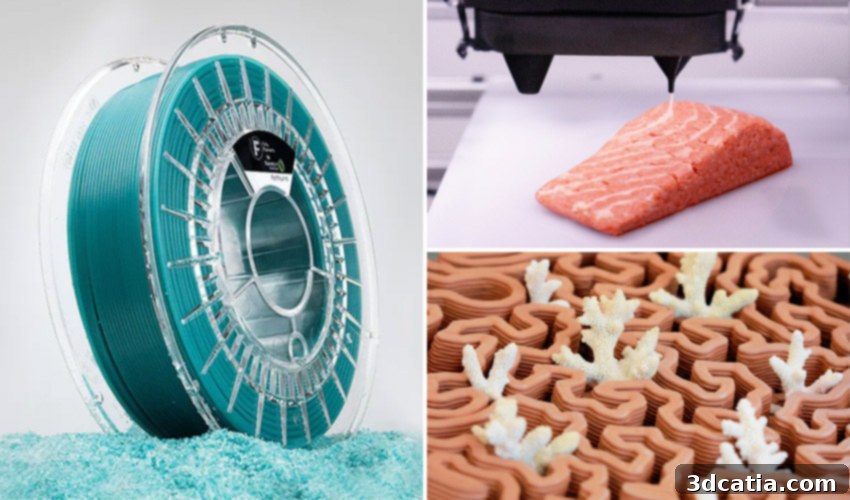
3D Printing for Ocean Conservation: Innovative Solutions to Protect Marine Life and Combat Pollution
Our oceans, vital ecosystems supporting countless species and regulating global climate, face an unprecedented crisis. A staggering amount of plastic, estimated between 4.8 and 12.7 million tonnes, infiltrates our oceans annually, according to a study by the European Parliament. This alarming influx poses a dire threat to marine biodiversity and the health of our planet. The Ellen Macarthur Foundation paints a stark picture, warning that by 2050, the weight of plastic in the oceans could surpass that of fish. This urgent environmental challenge necessitates innovative and scalable solutions.
In response to this global imperative, a multitude of groundbreaking initiatives are emerging worldwide, dedicated to safeguarding our seas and oceans. Many of these efforts are now harnessing the transformative power of 3D printing, or additive manufacturing. 3D printing offers distinct advantages in waste recycling, enabling the repurposing of discarded materials like fishing nets into valuable printing filaments. Crucially, it also plays a pivotal role in preserving marine biodiversity through the creation of artificial coral reefs and other habitat structures. A diverse array of projects utilizing additive manufacturing techniques are actively underway to protect and restore our ocean environments, and in this article, we will delve into some of the most impactful examples.
Sustainable Food Solutions: 3D Printed Fish Alternatives
The escalating global demand for seafood products has driven widespread overexploitation and degradation of marine ecosystems. Overfishing, in particular, is depleting ocean wildlife at an unsustainable rate, far exceeding the capacity of fish stocks to replenish naturally. This critical global challenge has prompted the search for sustainable alternatives. Innovative companies are now leveraging 3D printing technology to offer plant-based, fish-substituted foods that aim to mitigate the environmental impact of traditional fishing practices.
Revo Foods and Its 3D Printed Fish Substitutes
Revo Foods is at the forefront of this movement, proposing a revolutionary solution in the form of plant-based seafood alternatives produced with advanced 3D printing technology. Their mission addresses the urgent need to reduce pressure on marine life. Recently, the company unveiled its cutting-edge 3D printing system, the Food Fabricator X2. This innovative system is designed to industrialize their production process, enabling a significant increase in output. A key feature of the Food Fabricator X2 is its high extrusion precision, which allows for the creation of incredibly realistic textures in the printed food, closely mimicking the mouthfeel of conventional fish. Furthermore, the system facilitates the seamless combination of various ingredients, opening up possibilities for diverse flavors and nutritional profiles. In a significant milestone, Revo Foods introduced their products to select supermarkets in Austria in September 2023, where they were met with enthusiastic reception from consumers, signaling a promising future for sustainable, plant-based seafood.
Plant-based Fish Alternatives From Steakholder Foods
Steakholder Foods has rapidly established itself as a leading innovator in the creation of meat and fish alternatives, utilizing advanced 3D printing technology. The company’s core mission revolves around offering sustainable, nutritious, and undeniably delicious food solutions that address both consumer demand and environmental concerns. In the realm of fish alternatives, Steakholder Foods currently boasts the most comprehensive range of products available on the market. Their proprietary 3D printing technology allows for unprecedented precision in replicating the complex structures of natural seafood. Through this innovative approach, they have successfully developed a plant-based white fish fillet that remarkably reproduces the authentic appearance and fibrous texture of real fish, providing a truly satisfying culinary experience. But their ambitions don’t stop there: Steakholder Foods has also announced the imminent launch of new 3D printed plant-based alternatives for eel, shrimp, and salmon, further expanding their diverse portfolio. These products are carefully formulated primarily from water, various plant proteins (such as soy and yeast), essential oils, natural flavors, vitamins, and minerals, ensuring a wholesome and appealing option for consumers looking to make sustainable dietary choices.
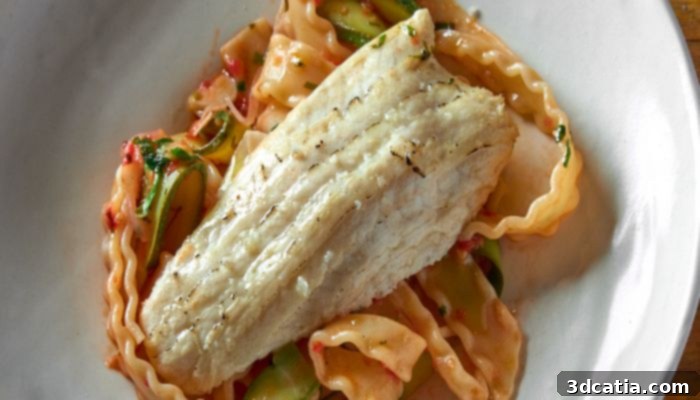
“White fish” from Steakholder Foods (Photo Credits: Steakholder Foods)
Rebuilding Marine Habitats: Seawalls and Coral Reefs with 3D Printing
Coral reefs and natural seawalls are indispensable components of healthy marine ecosystems, providing habitat for a quarter of all marine species and protecting coastlines from erosion. However, these vital structures are under severe threat from climate change, ocean acidification, pollution, and human activities. The decline of these natural defenses necessitates urgent intervention. Fortunately, 3D printing technology is emerging as a powerful tool for creating artificial structures that can help restore these delicate environments and foster renewed biodiversity.
D-Shape and the Hong Kong Bay Conservation Project
The Italian firm D-Shape has garnered significant recognition for its pioneering work in marine conservation, notably receiving the prestigious 2022 Design for Asia Award. This accolade honored their custom reef design specifically tailored for Hong Kong Bay, a crucial initiative by the Hong Kong Airport Authority aimed at safeguarding the local marine environment. As part of this project, a total of one hundred artificial reef units were strategically deployed. These units were designed to foster the growth of a diverse community of marine organisms, including various species of clams, sponges, and algae, thereby enriching the local ecosystem. The reefs themselves were ingeniously crafted in ring-shaped formations, featuring holes of varying sizes to maximize surface area and provide diverse niches for marine life. Utilizing advanced 3D printing technology, these structures were fabricated from a durable blend of quarry aggregate and specialized cement binders, ensuring their longevity and stability in the marine environment. For added security, the reefs were then affixed to robust bamboo structures underwater. The result is a network of 3D printed artificial reefs poised to provide essential habitats, promote ecological restoration, and contribute significantly to the recovery of Hong Kong Bay’s marine biodiversity.
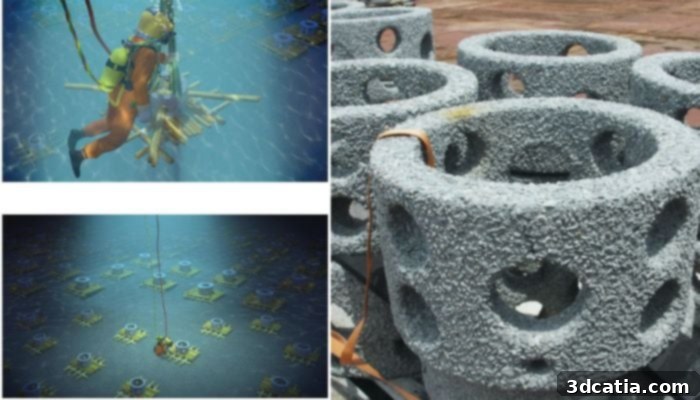
(Photo credit: DFA Design for Asia Awards/D-Shape)
3D Printed Living Seawalls by Kind Designs
Miami-based Kind Designs is transforming coastal sustainability through its innovative application of 3D printing to create artificial seawalls and reefs. These intricately designed structures serve a dual purpose: they function as highly effective bulwarks against the ongoing degradation of natural coral reefs, mitigate flood risks, and combat the alarming impacts of rising water levels. Beyond their protective capabilities, these 3D printed seawalls are engineered to act as active marine ecosystems, specifically promoting biological diversity and actively contributing to the restoration of crucial marine habitats. By meticulously reproducing the complex structures found in natural habitats, such as the intricate patterns of coral reefs and the dense root systems of mangroves, these seawalls provide essential refuge and abundant food sources for a myriad of marine species. This biomimicry significantly strengthens ecological resilience in the face of escalating environmental challenges. Furthermore, their carefully crafted micro-design and textured surfaces are specifically optimized to encourage the natural adherence and growth of corals and other small marine organisms, accelerating the process of habitat regeneration. Constructed from a proprietary, metal- and chloride-free material mix, these structures are entirely safe for the ocean, ensuring no harmful chemicals are introduced into the delicate marine environment. The effectiveness and safety of their materials have already been rigorously tested and proven in various artificial reef creation projects, as well as in the construction of drinking water reservoirs, underscoring their versatility and environmental credentials.
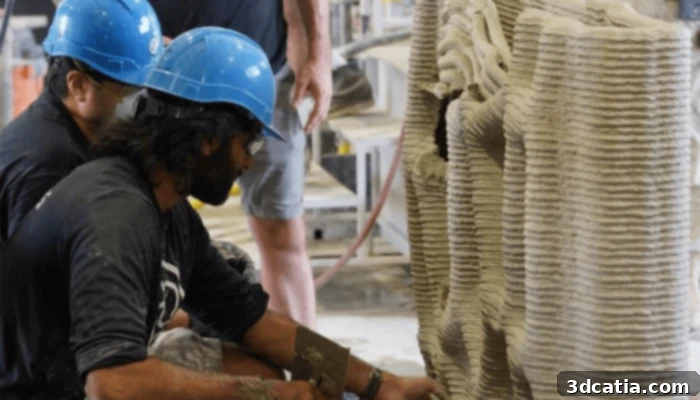
(Photo Credits: Kind Designs)
The Largest 3D Printed Coral Reef in the World
The global decline of coral reefs is a stark reality, with a staggering 50% of these vital ecosystems perishing over the last three decades. This necessitates immediate and impactful actions to counter severe threats such as climate change, destructive overfishing practices, and human-caused damage. Leveraging the precision and versatility of 3D printing technology, Australia’s Reef Design Lab has achieved an extraordinary milestone by producing the world’s largest 3D printed artificial coral reef in the pristine waters of the Maldives. This ambitious project involved the intricate creation of detailed 3D molds that meticulously mimicked the complex structures and textures of natural reef environments. These molds were then cast using a specialized ceramic material, carefully formulated to possess properties akin to calcium carbonate, the primary component of actual coral reefs. Once fabricated, these robust structures were submerged and carefully populated with live coral fragments, with the earnest anticipation that they will attract and foster new marine life, ultimately flourishing and expanding as vibrant, living reefs. This remarkable intersection of cutting-edge technology and dedicated conservation efforts holds immense promise for safeguarding our oceans and nurturing marine biodiversity. As these vital ecosystems continue to face unprecedented challenges, such innovative approaches are crucial in replenishing and preserving them for the benefit of future generations.
Artec’s 3D Spider Scanner for Coral Reef Monitoring
The expanding applications of 3D technology now extend beyond creation to crucial monitoring efforts, particularly for coral reefs. Accurate and non-invasive monitoring is essential for assessing the long-term impacts of climate change and documenting coral growth. Traditionally, such detailed studies often involved methods that imposed significant stress on fragile corals, frequently leading to their demise. However, Dr. Jessica Reichert and her pioneering team from the University of Giessen have revolutionized this approach. At the university’s state-of-the-art Ocean2100 facility, they utilize the Artec 3D Spider, a sophisticated, non-invasive handheld scanner. This device allows them to investigate the long-term effects of global change stressors on various coral species without causing harm. The Artec 3D Spider offers unparalleled precision in capturing color data and is uniquely capable of scanning wet surfaces, a critical feature for marine environments. Its customizable settings further optimize scan quality, ensuring highly detailed and accurate representations of coral structures. With this groundbreaking method, Dr. Reichert can safely and efficiently scan between 50 to 100 corals daily, significantly accelerating research. The process involves gently placing the coral on a rotating plate under appropriate lighting conditions and scanning it from multiple angles to create a comprehensive 3D model. This innovative research not only paves the way for vastly improved coral reef monitoring but also enhances our capacity for effective coral protection and conservation strategies globally.
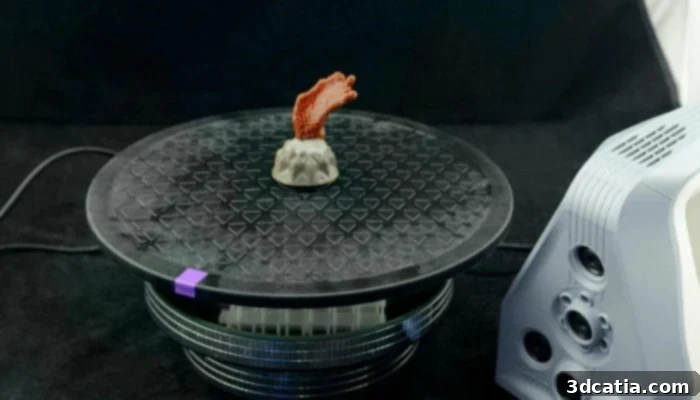
(Photo Credits: Dr. Jessica Reichert)
How SECORE Grows Corals
In a powerful collaborative initiative focused on advancing coral conservation, Boston Ceramics and Emerging Objects have partnered with the renowned conservation organization SECORE (Sexual Coral Reproduction). This project centers on a deep understanding and application of coral reproductive behaviors to aid in reef restoration. SECORE’s innovative approach involves carefully collecting naturally released coral eggs and sperm from healthy reefs. These precious gametes are then meticulously nurtured in controlled laboratory environments, allowing them to develop into buoyant larvae. Once the larvae reach a suitable developmental stage, they are strategically placed within specialized 3D-printed constructions. These intricate structures are ingeniously designed to both attract the coral larvae and facilitate their firm attachment, mimicking the natural microhabitats that encourage settlement. After the larvae have successfully affixed themselves, these 3D-printed structures, now serving as nurseries, are strategically positioned in degraded reef zones with the explicit purpose of restoration. Throughout this undertaking, the robust and ecologically safe structures are crafted using a specialized ceramic material, expertly sourced from Boston Ceramics, ensuring compatibility with the marine environment. The precise and complex 3D printing process is facilitated by the expertise of Emerging Objects, highlighting how advanced manufacturing can be a powerful ally in the intricate science of coral reproduction and reef rebuilding.
WWF: 3D Printed Reefs For Cod and Oyster Stock Restoration
The World Wide Fund for Nature (WWF) is a global leader in upholding biodiversity, spearheading numerous initiatives to protect natural environments and their inhabitants. A notable example of their innovative conservation efforts occurred in 2018 when a strategic partnership was forged between the Danish energy company Ørsted and WWF Denmark. This collaboration led to the deployment of a groundbreaking 3D-printed coral reef in the Kattegat region of the North Sea, an ecologically sensitive area situated between Denmark and Sweden. The principal objective of this ambitious project was to rigorously assess the contribution of these artificial 3D-printed structures to marine biodiversity, specifically focusing on the restoration of local ecosystems. At the time, the severe depletion of cod populations was causing significant disruptions in the natural food chain and overall ecological balance of the region. The carefully designed 3D-printed reef was intended to provide a much-needed habitat and nursery ground, thereby facilitating the restoration of the ecological equilibrium for cod and other species. For Denmark, this marked the inaugural project of its kind, demonstrating a bold step into advanced conservation techniques. However, WWF already possessed valuable prior experience with 3D-printed reefs, having initiated similar endeavors. For instance, WWF Netherlands had previously collaborated with the Australian firm Reef Design Lab and the Italian enterprise D-Shape on comparable projects. In the North Sea, the 3D-printed reef units were also strategically positioned to rejuvenate oyster reefs, which are crucial for water filtration and habitat creation. These bespoke units, meticulously crafted in Rotterdam, consist of a sustainable blend of 70% sand and 30% puzzolan cement, chosen for its durability and environmental compatibility. Approximately 50 reef units, each measuring 50×120 cm, were deployed, and comprehensive ongoing monitoring efforts continue as research advances, promising valuable insights into the long-term effectiveness of 3D printing in marine restoration.
Transforming Ocean Waste: Recycled Materials for 3D Printing
The pervasive issue of ocean plastic pollution demands creative and effective solutions for waste management. Millions of tonnes of plastic debris accumulate in marine environments, threatening wildlife and ecosystems. 3D printing technology offers a powerful avenue for addressing this challenge by enabling the transformation of collected ocean waste into valuable, usable materials. This circular economy approach not only cleans up our oceans but also creates sustainable products, demonstrating the potential for innovation to turn a global problem into an opportunity for environmental good.
Fishy Filaments, Materials Made From Recycled Fishing Nets
The problem of “ghost fishing gear” is a silent killer in our oceans; around 1-2% of monofilament nylon fishing nets are lost or abandoned, continuing to entangle and threaten marine life for centuries. Fishy Filaments, an organization based in Cornwall, England, is deeply committed to mitigating this ongoing threat and preserving our planet. Their core mission is to reduce carbon emissions and plastic pollution by ingeniously combining waste recycling with advanced additive manufacturing techniques. In a successful partnership with Fillamentum, Fishy Filaments has pioneered an innovative method for transforming discarded fishing nets, recovered from the oceans and seas, into high-quality filaments suitable for 3D printing. These sustainable filaments and pellets are crafted from 100% recycled nylon 6, exclusively sourced from used fishing nets. This process not only diverts harmful plastic from marine environments but also yields high-quality materials that are ideal for a diverse range of technical and industrial applications. By giving new life to ocean waste, Fishy Filaments exemplifies how a circular economy approach can significantly reduce the environmental impact of plastic pollution in our precious oceans.
LightArt’s 3D Printed Lighting Fixtures from Recycled Ocean Plastic
Since its inception in 2005, Seattle-based LightArt has carved a niche for itself by specializing in the creation of unique and innovative lighting fixtures, consciously utilizing recycled materials through the power of additive manufacturing. Their commitment to sustainability took a significant leap forward in 2023 when the company initiated a pivotal collaboration with OceanWorks. This partnership focuses on utilizing plastic waste collected directly from coastal areas, thereby making a tangible contribution to mitigating the eight million tons of plastic that tragically enter our oceans annually. LightArt’s process involves meticulously breaking down and transforming these collected waste materials into a specific blend of pellets, perfectly suited for their 3D printing operations. Through this ingenious method, LightArt has successfully produced several distinctive collections, with its “Coil Collection” standing out as a prime example. This collection features striking pendant lights meticulously crafted from 100% recycled polypropylene, entirely sourced from ocean debris. The remarkable result is a series of lighting fixtures that embody a harmonious fusion of art, sustainable design, and environmental responsibility. Their designs are not only functional but also aesthetically inspired by the captivating elements of the ocean, such as the flowing forms of kelp and the ephemeral beauty of sea foam, bringing a piece of the conserved ocean into indoor spaces.
Parley – Leveraging Ocean Waste for 3D Printed Face Shields
Since its establishment in 2012, the prominent environmental organization Parley for the Oceans has been at the forefront of tackling the pervasive issue of plastic pollution. They achieve this by collaborating with industry leaders to develop innovative 3D printing applications that harness “Parley Ocean Plastic,” a revolutionary material meticulously derived from intercepted and collected ocean waste. Beyond their well-known Parley AIR stations project, which empowers coastal communities to 3D print furniture and other useful objects from locally gathered waste, the organization gained significant international attention for its crucial efforts in combating the COVID-19 pandemic. At the height of the global health crisis, Parley swiftly pivoted its operations and formed a strategic partnership with Spanish startup Nagami. Together, they leveraged the capabilities of 3D printing to rapidly produce essential protective gear. Utilizing recyclable ocean waste, this impactful project managed to manufacture more than 500 face shields daily – an astonishing rate of one shield every five minutes – providing critical support and vital protective equipment for healthcare workers globally. This initiative beautifully demonstrates how a commitment to environmental sustainability can seamlessly integrate with humanitarian aid, showcasing the multifaceted potential of repurposing ocean plastic for urgent societal needs.
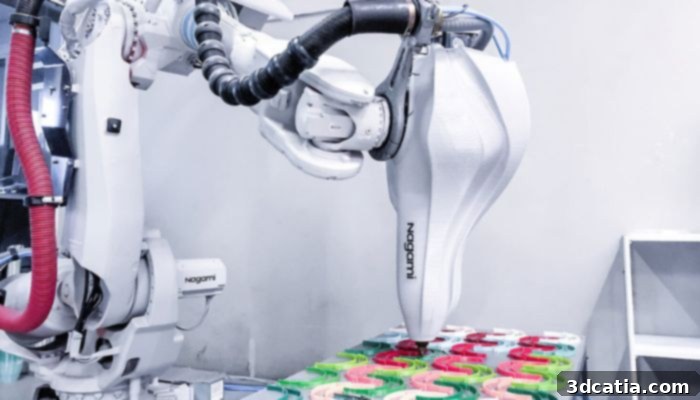
(Photo Credits: Parley for the Oceans)
The examples highlighted above paint a compelling picture of how 3D printing technology is becoming an indispensable tool in the fight for ocean conservation. From pioneering sustainable food alternatives to rebuilding critical marine habitats and transforming plastic waste into valuable products, additive manufacturing offers a versatile and scalable approach to some of our most pressing environmental challenges. These innovative projects demonstrate not only the potential of technology to solve complex problems but also the power of human ingenuity and collaboration in safeguarding our planet’s most vital resource – its oceans.
What are your thoughts on these revolutionary projects utilizing 3D printing for ocean conservation? We invite you to share your perspectives in a comment below or join the conversation on our LinkedIn, Facebook, and Twitter pages! Don’t forget to sign up for our free weekly Newsletter here to receive the latest 3D printing news straight to your inbox! You can also find all our engaging videos on our YouTube channel.