
Mastering Modern Challenges: How 3D Printing Offers a Strategic Advantage Against Supply Chain and Labor Crises
In an era defined by unprecedented global challenges, businesses worldwide are grappling with persistent supply chain disruptions and critical labor shortages. These intertwined issues, exacerbated by geopolitical shifts, economic volatility, and the lingering effects of global events, have fundamentally reshaped the operational landscape. For many organizations, the pressing question isn’t merely about survival, but how to sustain and even accelerate growth amidst such formidable headwinds. The answer lies in embracing agile and transformative manufacturing technologies. Our recent webinar, titled “How to Overcome the Supply Chain and Labor Crisis With 3D Printing?” provided invaluable insights into carving out a distinct competitive advantage through innovative digital manufacturing tools. Held on September 29th at 4pm CEST, the event featured esteemed experts Pierre-Victor Sabatier from Desktop Metal and Valeria Tirelli from Aidro, who demonstrated how additive manufacturing is not just a technology of the future, but a practical, turnkey solution for today’s most pressing industrial challenges.
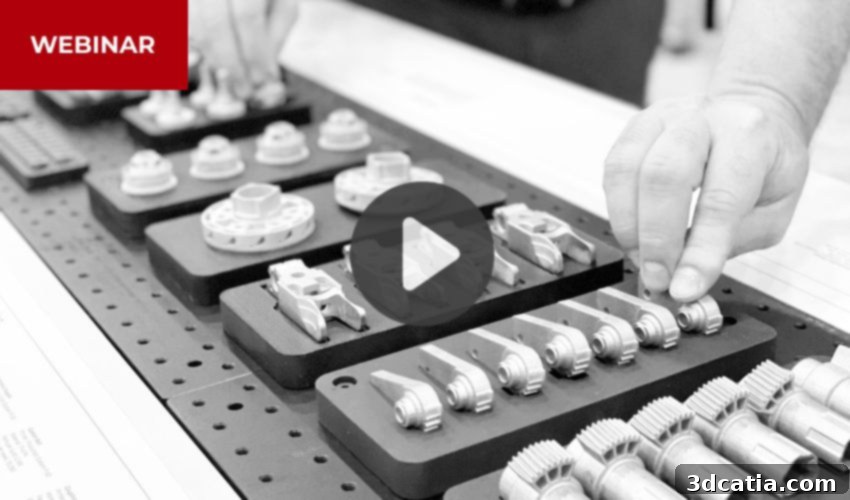
The webinar served as a crucial platform, showcasing real-world examples of manufacturers successfully deploying additive manufacturing tools to transcend the crisis. Our distinguished guests illustrated how the strategic application of 3D printing for both metal and sand components has enabled companies to regain control, mitigate risks, and accelerate innovation. Attendees gained actionable knowledge on leveraging additive manufacturing to significantly ease supply chain disruptions, optimize the production and seamless integration of 3D printed replacement parts, and identify the most suitable printers and materials for rapid, plug-and-play adoption. Furthermore, the discussion offered guidance on how to effectively analyze existing inventories to pinpoint parts that stand to benefit most from on-demand 3D printing production. For those who missed this enlightening session, we encourage you to explore the full replay embedded below.
The current global environment presents a complex tapestry of operational hurdles. Supply chain fragility, characterized by bottlenecks, material scarcity, and escalating logistics costs, continues to impact delivery timelines and profitability. Manufacturers frequently contend with unpredictable lead times for critical components, leading to production delays, increased inventory holding costs, and missed market opportunities. Simultaneously, the manufacturing sector faces an acute labor crisis, marked by a shortage of skilled workers, an aging workforce, and challenges in attracting new talent. This deficit impacts everything from daily operations and quality control to the ability to scale production and innovate. These dual pressures demand more than just reactive measures; they call for a fundamental rethinking of manufacturing strategies, prioritizing resilience, agility, and efficiency.
Additive Manufacturing: A Strategic Pillar for Resilience and Growth
In this challenging landscape, additive manufacturing, commonly known as 3D printing, emerges as a powerful antidote. It fundamentally transforms traditional production paradigms by enabling a localized, on-demand, and highly flexible manufacturing ecosystem. One of its most significant benefits is the ability to produce parts closer to the point of need, effectively decoupling production from lengthy international supply chains. This decentralization dramatically reduces reliance on overseas suppliers, mitigates shipping delays, and insulates businesses from geopolitical instabilities or natural disasters that could disrupt traditional logistics. For instance, instead of waiting months for a specialized part from a distant factory, companies can print it locally within days, or even hours, significantly reducing downtime and improving operational continuity.
Beyond localization, 3D printing addresses the labor crisis by automating complex production processes. Advanced 3D printers can operate with minimal human intervention, effectively augmenting existing workforces and allowing skilled personnel to focus on higher-value tasks such as design, engineering, and quality assurance. This automation helps bridge the skills gap, reduces labor-related costs, and enhances overall productivity. Furthermore, 3D printing’s ability to produce highly complex geometries in a single step, often impossible or prohibitively expensive with conventional methods, opens new avenues for product innovation and performance optimization. From lightweighting components to consolidating assemblies, additive manufacturing allows for designs that are not only more efficient but also reduce material consumption and waste, contributing to significant sustainability benefits.
Key Takeaways from the Webinar: Practical Applications of 3D Printing
The webinar meticulously explored the practicalities of integrating 3D printing into existing manufacturing workflows. A critical learning point was how to identify and transition suitable parts from traditional manufacturing to additive manufacturing. This involves a strategic assessment of factors such as part complexity, production volume, material requirements, and economic viability. Participants learned about the criteria for selecting parts that could benefit most from 3D printing, whether for rapid prototyping, functional end-use parts, or on-demand tooling and jigs. The discussion highlighted how shifting specific parts to 3D printing can lead to substantial cost savings, faster time-to-market, and enhanced design freedom.
Another core focus was the production and integration of 3D printed replacement parts. For industries reliant on legacy machinery or facing long lead times for spare parts, additive manufacturing provides an invaluable solution. Companies can digitally store designs for critical components and print them on demand, eliminating the need for vast physical inventories and reducing equipment downtime. This capability is particularly vital for sectors like oil & gas, aerospace, and defense, where proprietary or obsolete parts can halt operations. The webinar also delved into the array of printers and materials available for “plug-and-play” adoption, emphasizing user-friendly systems that allow businesses to quickly integrate additive manufacturing without extensive capital expenditure or specialized training. This accessibility lowers the barrier to entry, making advanced manufacturing more attainable for small and medium-sized enterprises seeking to enhance their resilience.
Meet Our Expert Speakers
Our webinar was greatly enriched by the insights of leading figures in the additive manufacturing industry:
- Pierre-Victor Sabatier
- Valeria Tirelli
- Madeleine Prior
Pierre-Victor Sabatier holds a pivotal role as the Head of Strategic Projects at Desktop Metal for the Europe and MEA region. His extensive responsibilities include fostering key partnerships with leading R&D centers and contract manufacturers, spearheading industrialization projects for additive manufacturing, and diving deep into specific vertical markets poised for significant AM adoption. With a career dedicated to sales and business development, particularly in emerging markets, Pierre-Victor brings a wealth of experience, initially from the private equity sector and, since 2012, within the dynamic field of 3D printing. He was instrumental in Desktop Metal’s early growth stages, actively contributing to the rapid and widespread adoption of its cutting-edge solutions across Europe. His expertise lies in understanding market needs and strategically deploying AM technologies to meet complex industrial demands.
Valeria Tirelli serves as the President and CEO of Aidro, a Desktop Metal company, renowned for its pioneering integration of additive manufacturing into the hydraulics sector. With infectious enthusiasm, Valeria leads the company founded by her father four decades ago, maintaining its specialization in the design and production of advanced mechanical components, including high-performance valves, manifolds, and hydraulic systems. Since 2021, Aidro’s strategic integration into the Desktop Metal Group has been pivotal in advancing the mass production capabilities of 3D metal printing for diverse and demanding applications such as Oil & Gas, Energy, Aerospace, and Fluid Power. Valeria is a passionate advocate for the widespread adoption of additive manufacturing and championing its inherent sustainability benefits, actively supporting initiatives aimed at reducing the carbon footprint across various industries. Her commitment extends to her active membership in international groups dedicated to defining robust guidelines and standards for additive manufacturing, ensuring its responsible and effective deployment. Furthermore, she plays a vital role in organizing events and fostering networking opportunities within the additive community, notably as a leader in the Italian Association of Women in 3D Printing.
Madeleine Prior is the dedicated English Content Specialist for 3Dnatives, recognized globally as the leading international online magazine covering the vast and evolving landscape of 3D Printing and Additive Manufacturing. As an integral member of the 3Dnatives editorial team, Madeleine is responsible for meticulously defining and curating the content tailored for its expansive English-speaking audience. Her role involves diligently tracking the latest developments, innovations, and critical news within the additive manufacturing sector and expertly distilling these insights for readers. Through her contributions, Madeleine ensures that 3Dnatives remains at the forefront of providing timely, accurate, and impactful information about the technological advancements and strategic implications of 3D printing, helping professionals and enthusiasts alike stay informed and make educated decisions in this rapidly advancing field.
Join the Conversation and Stay Informed
The future of manufacturing is being forged through innovation and adaptability. As global economies continue to navigate complex challenges, the insights shared in this webinar underscore the critical role of additive manufacturing in building more resilient, efficient, and sustainable industrial operations. We encourage you to watch the full webinar replay to gain a comprehensive understanding of how 3D printing can be your strategic tool in overcoming supply chain and labor crises. Don’t miss out on this opportunity to learn from industry leaders and gain actionable strategies for your business.
While this particular webinar has concluded, the journey of learning and discovery in additive manufacturing is continuous. We invite you to engage with our community and stay updated on the latest trends and events. Let us know your thoughts on the webinar in a comment below or connect with us on our LinkedIn, Facebook, and Twitter pages! For a consistent stream of the freshest 3D printing news delivered straight to your inbox, don’t forget to sign up for our free weekly Newsletter here. You can also explore a wealth of video content and past webinars on our YouTube channel. Empower your business with knowledge and innovation in additive manufacturing!