
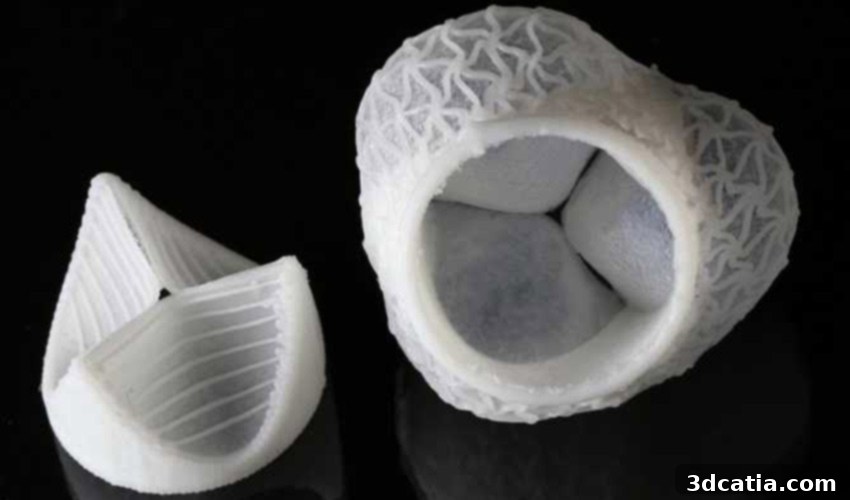
Revolutionizing Cardiac Care: ETH Zurich’s 3D Printed Silicone Heart Valves
A groundbreaking collaboration between researchers at ETH Zurich and the South African company Strait Access Technologies is set to transform the landscape of cardiac surgery. This innovative partnership has successfully developed artificial 3D printed heart valves made from silicone, offering a promising solution for the millions worldwide suffering from heart valve disease. These novel valves address critical limitations of existing prosthetics, boasting simpler manufacturing processes, increased accessibility, and the potential for greater patient customization compared to the conventional options currently available on the market.
The global burden of heart valve disease is rapidly expanding. Projections indicate a significant rise in the demand for artificial heart valves, with a study by Sewell-Loftin MK estimating that approximately 850,000 individuals worldwide will require these vital implants by 2050. This surge is primarily attributed to an aging global population, coupled with lifestyle factors such as inadequate physical activity and poor nutrition. Addressing this escalating need requires innovative approaches, and additive manufacturing, commonly known as 3D printing, has emerged as a beacon of hope in the medical sector. Its inherent ability to produce highly personalized devices tailored to individual patient anatomies makes it an ideal technology for crafting bespoke medical implants, including heart valves. ETH Zurich and Strait Access Technologies are proactively anticipating this critical demand, laying the groundwork through initial, highly encouraging silicone tests.
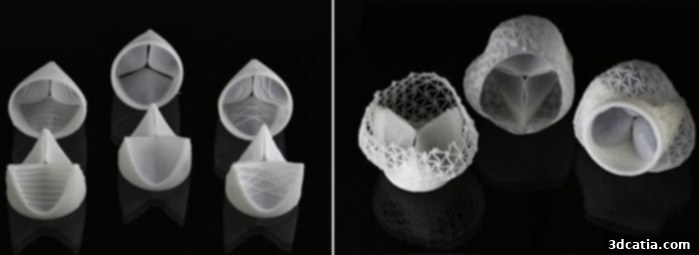
Credits: Fergal Coulter / ETH Zurich
Understanding Heart Valve Function and the Need for Replacement
Before delving into the intricate process of creating these revolutionary 3D printed valves, it is essential to grasp the fundamental role of heart valves within our cardiovascular system. The human heart, a remarkable four-chambered organ, relies on four distinct valves—the tricuspid, pulmonary, mitral, and aortic valves—to ensure the unidirectional flow of blood. Each valve acts as a sophisticated gate, opening to allow blood to pass from one chamber to the next or out of the heart, and then closing tightly to prevent any backflow. This precise coordination is vital for maintaining efficient blood circulation throughout the body, delivering oxygen and nutrients to tissues and organs.
When one or more of these crucial valves malfunctions, a range of severe cardiac issues can arise. Common problems include stenosis (narrowing of the valve, restricting blood flow), regurgitation (leakage, allowing blood to flow backward), or prolapse (distension, where the valve leaflets bulge improperly). If a valve does not operate correctly, blood can improperly return to the atria or ventricles, forcing the heart to work harder and diminishing its overall pumping efficiency. This strain can lead to serious conditions such as arrhythmias (irregular heartbeats), heart failure, and other life-threatening complications. In such scenarios, artificial heart valves become indispensable, providing a vital intervention to restore proper blood flow dynamics and preserve cardiac health.
The Promise of Additive Manufacturing in Personalized Medicine
The advent of additive manufacturing has ushered in a new era for medical device development, particularly in the realm of personalized medicine. Unlike traditional manufacturing methods that rely on molds and mass production, 3D printing allows for the creation of highly complex geometries directly from digital designs. This capability is profoundly impactful in medicine, where every patient’s anatomy is unique. The ability to tailor each device precisely to an individual’s specific physiological requirements—whether it’s an orthopedic implant, a dental crown, or a heart valve—significantly improves fit, function, and ultimately, patient outcomes. This personalization minimizes the risk of complications, enhances comfort, and can lead to faster recovery times, marking a substantial leap forward from the “one-size-fits-all” approach that has long characterized many medical interventions.
For heart valves, the implications of personalization are particularly profound. A valve designed to perfectly match the size and shape of a patient’s failing native valve can ensure optimal blood flow characteristics, reducing turbulence and stress on the heart. Moreover, additive manufacturing techniques can achieve intricate internal structures and material gradients that are challenging or impossible with conventional methods, opening doors for advanced functionalities such as mimicking the biomechanical properties of natural tissues more closely. The speed and efficiency with which these personalized implants can be produced are also critical advantages, potentially shortening waiting times for life-saving surgeries and making advanced treatments more accessible to a broader population.
ETH Zurich’s Breakthrough: Rapid 3D Printing of Silicone Heart Valves
The innovative process developed by ETH Zurich and Strait Access Technologies begins with a crucial diagnostic step: a computed tomography (CT) scan of the patient’s aorta. This scan provides highly precise, three-dimensional data detailing the exact shape, size, and anatomical context of the patient’s failing heart valve. This detailed information is then converted into a sophisticated digital model, which serves as the blueprint for the new prosthetic valve. On this digital model, researchers can perform advanced simulations, calculating the forces and stresses that the heart valve will experience within the pulsating environment of the heart, and predict its potential deformation under various physiological conditions. This computational analysis ensures the design is robust and optimized for performance.
One of the most remarkable aspects of this new approach is the speed of production. While traditionally designed artificial valves can take several days to manufacture, the 3D printing process developed by the team allows for the creation of an artificial valve in an astonishingly short timeframe—just 1.5 hours. The researchers strategically chose silicone as the primary material for these valves due to its excellent biocompatibility with the human body, its flexibility, and its proven durability. To further enhance the strength and resilience of the 3D printed valve, it can then be reinforced with collagen fibers, which add essential thickness and structural integrity, mimicking the natural composition of heart tissue. Initial tests have demonstrated that the blood flow dynamics through these 3D printed artificial heart valves are comparable to those achieved by traditionally manufactured valves, signaling a significant step towards clinical viability.
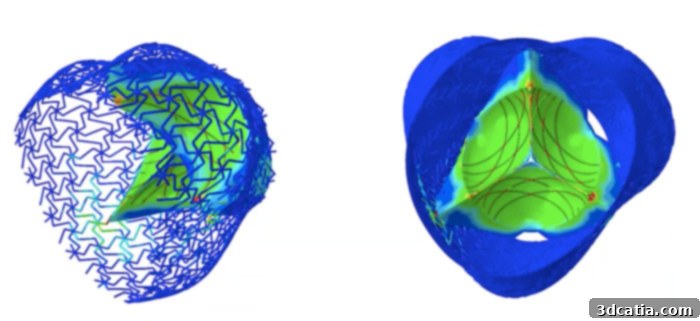
The 3D scan of the patient’s aorta | Photo Credit: Fergal Coulter / ETH Zurich
Addressing the Limitations of Current Prosthetic Valves
Existing artificial heart valves, while life-saving, come with significant limitations that impact patients’ long-term quality of life and healthcare costs. The most common types are mechanical valves and bioprosthetic (tissue) valves. Mechanical valves are highly durable but require patients to take lifelong anticoagulant medication to prevent blood clots, which carry risks of bleeding and other complications. Bioprosthetic valves, made from animal tissue, do not typically require anticoagulants but have a limited lifespan, typically 10 to 15 years, due to calcification and structural deterioration. This means many patients, especially younger ones, face the prospect of multiple open-heart surgeries throughout their lives for valve replacements, each procedure carrying its own risks and recovery period.
The innovative 3D printed silicone valves aim to overcome these critical drawbacks. The ultimate objective is to extend the functional lifespan of these replacement valves beyond the current 10-15 year benchmark. Manuel Schaffner, one of the study’s key participants, articulates an ambitious yet inspiring vision: “It would be wonderful if we could one day produce heart valves that would last a lifetime and could even grow with the patient, so that they could also be implanted in young people.” This concept of a “growing” valve is particularly revolutionary for pediatric patients, who currently face numerous re-operations as they grow. Furthermore, a significant challenge with existing artificial valves is the body’s immune response, often necessitating lifelong immunosuppressants or anticoagulants to prevent rejection or clot formation, leading to a myriad of adverse side effects and reduced quality of life for patients. Additive manufacturing offers a path to create valves that are not only biocompatible but potentially bio-integrated, thereby completely eliminating the need for such critical post-operative medication and its associated risks.
The Future Vision: Lifelong, Patient-Specific Implants
The long-term vision for these 3D printed heart valves extends beyond simply matching current lifespan metrics. The ability to create valves that could last a lifetime and adapt with the patient’s growth would be a monumental achievement in medical science. For children born with congenital heart defects, who often require multiple valve replacements as they grow, a “growing” valve would dramatically reduce the number of invasive surgeries they endure, profoundly improving their developmental trajectory and overall quality of life. The material properties of silicone, combined with the precision of 3D printing, open possibilities for valves that possess biomechanical characteristics closer to natural tissue, minimizing wear and tear over decades.
Moreover, the personalized nature of additive manufacturing implies that each valve can be optimized not just for fit but also for material composition and structural nuances to suit individual patient needs. This could mean tailoring the stiffness, flexibility, and even specific growth factors within the valve material. Eliminating the need for lifelong immunosuppressants or anticoagulants is a game-changer. These medications come with serious risks, from increased susceptibility to infections to higher chances of bleeding complications. A bio-integrated 3D printed valve could mean a future where patients recover from heart valve surgery without the burden of daily medication, leading to significantly enhanced health, freedom, and overall well-being.
Clinical Trials and Anticipating Market Availability
While the initial results from ETH Zurich and Strait Access Technologies are incredibly promising and represent a significant leap forward, it is important to acknowledge that the journey from laboratory innovation to widespread clinical application is often lengthy and rigorous. Researchers estimate that it will take approximately another 10 years before these artificial 3D printed heart valves are readily available on the market. This extended timeline is necessary to facilitate extensive and stringent clinical trials, which are critical for ensuring the safety, efficacy, and long-term durability of these novel implants in human patients. These trials will involve meticulous observation and data collection across various patient cohorts, adhering to the highest ethical and scientific standards.
A substantial part of this ongoing research involves performing numerous material tests. Scientists are continuously experimenting with and refining the composition of the silicone and collagen reinforcement, seeking to identify the optimal blend of materials that will maximize the lifespan of the artificial valve while maintaining its biocompatibility and functional integrity. This iterative process of testing, analysis, and refinement is fundamental to developing a product that can withstand the demanding physiological environment of the human heart for decades. Further detailed information regarding this pioneering research can be found on the official website of ETH Zurich, accessible through the following link: HERE.
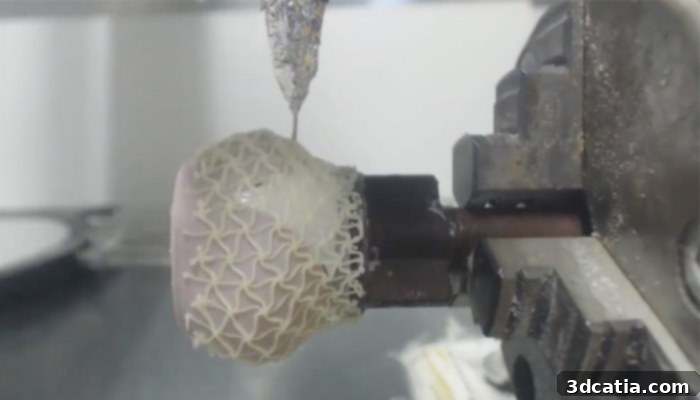
The silicone 3D printing process | Credits: Fergal Coulter / ETH Zurich)
The Transformative Impact on Global Healthcare
The successful development and eventual widespread adoption of 3D printed silicone heart valves could have a transformative impact on global healthcare. Beyond the immediate benefits of personalization and improved patient outcomes, these valves hold the potential to significantly reduce healthcare costs associated with repeated surgeries and lifelong medication. The simplified and rapid manufacturing process could also make advanced cardiac care more accessible in regions with limited medical infrastructure, democratizing access to life-saving treatments. This innovation represents a paradigm shift from traditional repair and replacement strategies to a future where heart valve disease can be managed with highly effective, patient-centric, and sustainable solutions, ultimately enhancing the quality of life for millions of individuals worldwide.
Conclusion: A New Era for Cardiac Implants
The pioneering work by ETH Zurich and Strait Access Technologies in developing 3D printed silicone heart valves marks a pivotal moment in medical technology. By harnessing the power of additive manufacturing and biocompatible materials, they are paving the way for a future where heart valve replacements are not only more durable and efficient but also precisely tailored to each patient’s unique needs, eliminating the debilitating side effects often associated with current solutions. While a decade of rigorous testing lies ahead, the promise of lifelong, personalized, and even “growing” heart valves offers immense hope, signaling a new era of personalized cardiac care that could profoundly enhance the health and well-being of an aging global population.
What are your thoughts on these revolutionary 3D printed heart valves and their potential to redefine cardiac surgery? Share your insights and comments below or engage with us on our Facebook and Twitter pages! For all the latest news and innovations in 3D printing delivered directly to your inbox, don’t forget to sign up for our free weekly Newsletter.