

High-Performance Polymers vs. Metals in 3D Printing: A Comprehensive Guide to Properties, Processes, and Applications
In the rapidly advancing field of additive manufacturing, the selection of materials is a foundational decision that profoundly shapes the performance, durability, and ultimate viability of any printed part. Each material family—whether metals, plastics, or ceramics—comes with its own unique set of properties and characteristics. A deep understanding of these attributes is crucial, as the material choice can influence every aspect of the design and manufacturing process, from the necessity of support structures and concerns about shrinkage to the critical properties of the final component. This becomes particularly relevant when considering advanced end-use parts, where two distinct material groups, high-performance polymers (HPP) and metals, frequently compete as viable options.
While the inherent differences between metals and traditional polymers are evident, a select class of high-performance polymers boasts properties and characteristics that rival, and in some cases even surpass, those of many metals. This remarkable convergence makes them a compelling alternative for demanding applications. However, choosing between these two advanced material categories requires careful consideration. Why opt for one over the other? What are the key distinctions in their fundamental properties? What specific challenges and opportunities arise during their 3D printing? This comprehensive article delves into these questions, offering a detailed comparison to guide informed decisions in your additive manufacturing endeavors.

A large part made with HPP (photo credits: AON3D)
Properties & Characteristics: High-Performance Polymers vs. Metals
The fundamental differences between metals and high-performance polymers begin at their very origins. Most metals are naturally occurring elements, extracted from the Earth’s crust as ores and then refined through various metallurgical processes. These elemental metals can also be combined with other elements to form alloys, which are designed to achieve enhanced properties like greater strength, corrosion resistance, or specific thermal behaviors. Polymers, on the other hand, are entirely man-made. They are synthetic organic compounds composed of large molecules (macromolecules) formed by chemically linking together many smaller monomer units. The specific polymers utilized in 3D printing, especially high-performance variants, are engineered with complex, chemically distinct polymer chains intricately tangled to bestow them with their superior attributes.
Despite their contrasting origins, the functional characteristics and properties of what we categorize as high-performance polymers (HPPs) often parallel those of many metals. It is important to clarify that “high-performance” is not a precise technical term but rather a descriptive label for engineering-grade technical polymers. These materials are distinguished by their markedly higher strength, exceptional purity, superior stiffness, and remarkable resistance to wear, chemicals, and elevated temperatures. Within this elite group, we find advanced thermoplastics such as ULTEM (Polyetherimide or PEI), PEKK (Polyetherketoneketone), and PEEK (Polyetheretherketone). While other polymers like TPE/TPU (Thermoplastic Elastomers/Polyurethanes), PC (Polycarbonate), and Nylon (Polyamide) are often grouped as “engineering thermoplastics,” high-performance thermoplastics occupy their own distinct, higher-tier category due to their exceptional properties. While engineering materials can often meet the requirements of many applications and are generally more cost-effective, their properties do not typically match the advanced capabilities of metals or HPPs. Users must meticulously assess their specific application needs to select the most appropriate material.

Different polymers are classed differently as can be seen in the pyramid designed to show compatibility with SLS (image credits: Chiara Morano and Leonardo Pagnotta)
On the other side of the spectrum, additive manufacturing employs a vast array of metals. These include naturally occurring elements as well as meticulously formulated alloys, created by combining two or more metallic (or non-metallic) elements to impart superior strength, enhanced corrosion resistance, or specific thermal and electrical properties. Commonly utilized metals in 3D printing encompass aluminum and its numerous alloys, various grades of steel (including stainless steel and high-strength tool steel), copper alloys known for their conductivity, gallium, titanium and its highly versatile alloys (such as Ti6Al4V), cobalt-chrome alloys, nickel-based superalloys, and for specialized high-value applications, even precious metals like gold or silver. The optimal metal for a given application is determined by the intended function and environmental conditions of the final part, as each metal and alloy offers a distinct blend of properties.
Furthermore, the form in which the metal is supplied profoundly impacts its processing and application within additive manufacturing. While high-performance polymers are primarily available as filaments for extrusion and fine powders for powder bed fusion, metals offer a much broader range of choices. Metal materials are available as fine powders (for laser or electron beam powder bed fusion and binder jetting), composite filaments (where metal particles are embedded within a polymer matrix for extrusion), wires (for Directed Energy Deposition processes), and even nanoparticles for emerging deposition techniques. This extensive variety in material forms directly translates to a wider selection of compatible 3D printing technologies and greater design freedom, a topic we will explore in more detail in the following sections.
Key Material Properties: Delving Deeper
The primary reason for the widespread adoption of both HPPs and metals in advanced 3D printing is their remarkable mechanical, thermal, and chemical properties. Indeed, high-performance thermoplastics are frequently cited as capable of rivalling most metals, especially the “super” polymers such as those belonging to the PAEK (Poly Aryl Ether Ketone) family, which encompasses materials like PEEK and PEKK, and PEI (Polyetherimide), famously marketed under the brand name Ultem. These materials are engineered to perform under extreme conditions where conventional plastics would fail.
For instance, PAEK materials are renowned for their outstanding resistance to a wide array of chemicals, aggressive fluids, and abrasive wear. They also exhibit exceptional temperature and fire resistance, making them ideal for high-heat environments. Beyond their resistance, PAEKs possess superior thermal stability and robust mechanical properties, including high impact strength that is maintained even at extreme temperatures, whether significantly hot or sub-zero. A major compelling advantage of high-performance polymers, particularly in applications sensitive to weight, is their incredibly high strength-to-weight ratio. They can be 60-70% lighter than aluminum while delivering comparable or even superior mechanical strength, allowing for the creation of exceptionally strong yet ultralight parts. Their glass transition temperatures tend to be very high, indicating excellent thermal stability, and their elongation at break can also be significant, though these specific values vary between different HPPs like PEI, PEKK, and PEEK. Crucially, a significant benefit inherent to almost all polymers, especially when contrasted with metals, is their intrinsic corrosion resistance, which makes them invaluable in harsh or chemical-laden environments.
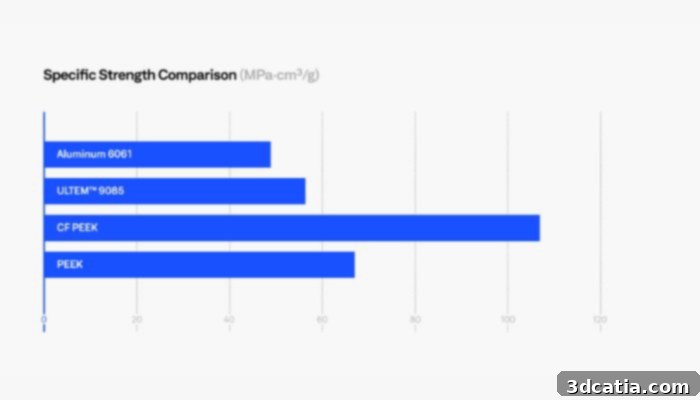
The difference in tensile strength comparing aluminum with common HPP materials (image credits: AON3D)
Metals, conversely, offer a vast spectrum of specialized properties that differ significantly based on the specific element or alloy employed. Aluminum, for example, while generally possessing lower absolute strength than some heavier metals like steel, is celebrated for its exceptional lightness and thus its outstanding strength-to-weight ratio, making it a staple in aerospace and high-performance automotive industries. Copper is prized for its superior electrical and thermal conductivity, combined with excellent malleability, which is essential for electrical components, heat sinks, and various conductive applications. Titanium and its alloys are perhaps best known for their remarkable biocompatibility, making them ideal for medical implants, alongside their high strength-to-weight ratio and excellent corrosion resistance. Cobalt-chrome alloys are also favored for their strength, wear resistance, and biocompatibility, particularly in demanding biomedical and industrial wear applications. This inherent variability and broad range of available metals constitute a significant strength: engineers can precisely select the qualities that best suit their specific application requirements, customizing material performance to an unparalleled degree.
Overall, while metals are traditionally revered for their ultimate strength and stiffness, particularly when compared to standard polymers, high-performance polymers have achieved comparable mechanical properties in many aspects and are often significantly less dense, allowing for the production of much lighter parts. However, due to the substantially wider range of metals and alloys available for additive manufacturing, it can be easier to identify and select materials with extremely specific and finely tuned properties compared to the current HPP selection. Metals also tend to be capable of handling a broader and often higher range of operating temperatures depending on the specific alloy used, exhibiting greater thermal stability in extreme heat. Despite these advantages, it’s important to acknowledge that metal parts, especially those produced via laser-based processes, typically require considerably more energy and longer processing times to manufacture due to the high melting temperatures and complex process controls involved, contributing to higher production costs and longer lead times.
3D Printing Processes: High-Performance Polymers and Metals
The true operational distinction between high-performance polymers and metals becomes most apparent when examining the 3D printing processes compatible with each material. Due to the inherent physical and chemical natures of these materials, the additive manufacturing technologies employed are fundamentally different. Indeed, there is a significantly broader array of additive manufacturing technologies compatible with metals than with high-performance polymers, reflecting the diverse forms and processing requirements of metallic materials.
For metals, additive manufacturing offers a comprehensive suite of technologies utilizing various material forms. For metal powders, laser powder bed fusion processes such as Direct Metal Laser Sintering (DMLS) and Electron Beam Melting (EBM) are highly prevalent. These technologies are celebrated for producing strong, geometrically complex, and highly detailed parts, often optimized for maximum lightweighting through intricate internal structures, which is critical for industries like aerospace and medical devices. Similarly, Directed Energy Deposition (DED) processes—which include Wire Arc Additive Manufacturing (WAAM), Electron Beam Additive Manufacturing (EBAM), and Wire-feed Additive Manufacturing (WAM), among others—utilize either metal wire or powder feedstock to create extremely large metal parts or, uniquely, to repair damaged components, offering unparalleled capabilities for maintenance and refurbishment. Another notable process is binder jetting, which employs a liquid binder to selectively join metal powder particles, followed by a post-sintering step to consolidate the part.
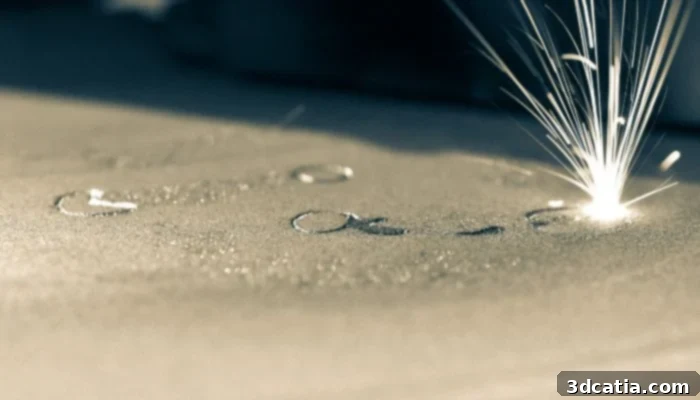
Many metal 3D printing processes involve lasers
Beyond laser-based methods, other metal printing processes include metal extrusion and binder jetting. As previously noted, in binder jetting, a liquid binding agent is selectively jetted onto a powder bed, consolidating the particles. However, parts produced by this technology require substantial post-processing, primarily sintering, to achieve full density and mechanical strength after the initial printing. Then there’s metal extrusion, which is offered by a select group of companies. This process typically involves printing a filament where fine metal particles are encapsulated within a polymer matrix. Before these “green” parts can be used, they must undergo two critical post-processing steps: debinding, to remove the polymer binder, and subsequent sintering, to densify the metal particles into a robust metallic component. Both binder jetting and metal extrusion generally offer higher throughput and lower equipment costs compared to laser-based metal systems, but they introduce additional complexity and potential for shrinkage during the mandatory post-processing stages.
In contrast, while standard commodity polymers are compatible with a broad range of additive manufacturing processes, high-performance polymers are far more restrictive. The predominant 3D printing production process for these advanced materials is material extrusion, which includes both filament-based (FDM/FFF) and pellet-based (FGF/FDM) systems, with filament extrusion currently being more widely adopted. Selective Laser Sintering (SLS) is also technically feasible for certain HPPs; however, the available solutions are considerably fewer and highly specialized, with notable examples like the EOS P810 machine. SLS offers the significant advantage of eliminating the need for support structures, which can greatly simplify post-processing for complex geometries, but its application for HPPs is still a niche due to demanding material and machine compatibility requirements.
A crucial consideration for high-performance polymers is the inherent difficulty in successfully printing them. Even within the seemingly accessible extrusion category, not just any FDM or FGF 3D printer will suffice. Instead, it is imperative to utilize specialized printers meticulously designed for working with high-performance thermoplastics. These advanced machines invariably feature fully enclosed, highly insulated build chambers capable of reaching and maintaining significantly higher temperatures than standard models. Additionally, they are equipped with heated print beds and nozzles that can achieve the extremely elevated temperatures necessary for processing these thermoplastics, whose melting points are substantially higher than conventional polymers. Without these precise thermal controls, issues such as severe warping, poor layer adhesion, and compromised mechanical properties are almost unavoidable, particularly with semi-crystalline HPPs.
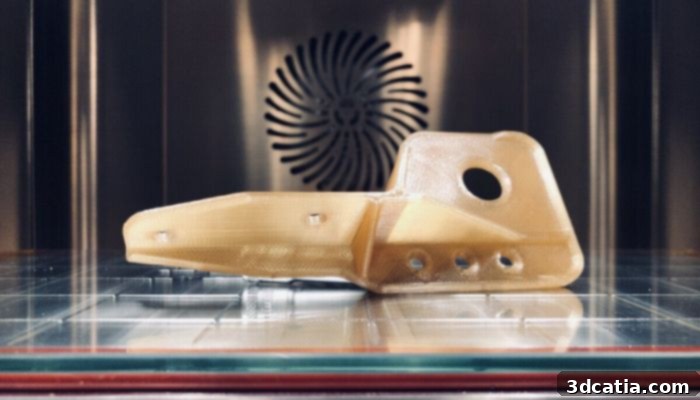
Parts made with high-performance polymers are most often made with extrusion processes (photo credits: miniFactory)
Furthermore, the semi-crystalline nature of polymers like PEEK and PEKK can render them inherently unstable during the melting and solidification phases, posing significant challenges even for expert users operating advanced machines. This intrinsic instability, coupled with the general propensity for all high-performance polymers to warp, necessitates stringent control over the printing environment. The strategic inclusion of reinforcing fibers—such as carbon fiber, glass fiber, or Kevlar—can effectively mitigate these difficulties. These fibers increase the material’s stiffness, enhance dimensional stability, and can even help stabilize the material during melting by influencing its effective melting point and slowing down the crystallization process, thereby easing printability and improving part quality.
Interestingly, the considerable difficulties encountered during printing can be viewed as a point of similarity between metals and high-performance polymers. Both material families demand substantial expertise, specialized equipment, and stringent environmental controls for successful fabrication, typically requiring closed chambers and very high processing temperatures. However, metal printing often presents an even greater degree of complexity. Many metal additive manufacturing machines necessitate operating within a sealed, oxygen-free chamber, which must be purged and filled with an inert gas like argon to prevent undesirable chemical reactions (e.g., oxidation) with the metal during the high-temperature melting or sintering process. This requirement adds another layer of complexity, cost, and operational overhead.
Moreover, considering the powerful lasers involved and the reactive nature of many metal powders, some experts contend that high-performance polymers are marginally easier to print, primarily due to often fewer post-processing steps and less severe safety protocols. For instance, metal powder bed fusion processes mandate rigorous additional safety measures and specialized personal protective equipment, including respirators and protective clothing, to prevent inhalation of fine metal dust particles and direct skin contact, underscoring the higher occupational health risks associated with metal additive manufacturing compared to HPP printing.
Post-Processing Considerations: Refining the Final Part
Post-processing represents another crucial area where the distinctions between HPPs and metals in additive manufacturing are pronounced, often highlighting certain advantages for high-performance polymers. Virtually all metal additive manufacturing processes necessitate significant, and often obligatory, post-processing steps before a functional final part can be achieved. With Directed Energy Deposition (DED), while additional densification might not always be required, heat treatments are frequently employed to relieve residual stresses that inevitably accumulate in the material during the rapid heating and cooling cycles of the melting process. Furthermore, machining is a common practice to refine the surface roughness and achieve precise dimensional tolerances, as DED parts often exhibit rougher as-printed surfaces.
The removal of support structures is often a mandatory and complex step for both material types. For metals, because supports are typically printed from the exact same material as the part, their removal often requires arduous milling, machining, or grinding operations. This process can be time-consuming, expensive, and sometimes challenging without damaging the finished part. However, with HPPs, while initial support solutions also involved the same material, there is a growing trend towards specialized, easier-to-remove support materials. These often require a dual-extruder machine to print both the part material and a dissolvable or breakaway support material, significantly streamlining the post-processing workflow for polymers.
Generally speaking, metal additive manufacturing involves a comprehensive suite of additional steps after initial printing, including debinding (for processes like binder jetting and metal extrusion) and rigorous sintering to “densify” the part and achieve its desired mechanical properties. Due to the high temperatures involved in these heat-based processes, metal parts are highly susceptible to significant shrinkage and potential warpage. This necessitates careful consideration and compensation during the initial design phase to prevent dimensional inaccuracies and ensure the final part meets specifications. Designers must account for predicted material contraction to achieve accurate geometry.
Indeed, the scope of post-processing for metals can range from simple depowdering for powder-based processes to complex multi-stage debinding and sintering cycles essential for consolidating “green” parts produced by binder jetting or metal extrusion into fully dense components. Further steps aimed at improving the part’s integrity and performance include various heat treatments such as Hot Isostatic Pressing (HIP) and annealing. These processes are critical for relieving internal residual stresses, refining the microstructure, and optimizing specific mechanical properties like ductility and fatigue resistance. Additionally, surface finishing techniques, including machining, grinding, or polishing, are commonly applied to eliminate surface roughness and achieve a desired aesthetic or functional finish on the final piece. While these advanced post-processing stages, particularly annealing, can also be beneficial for high-performance polymers—often used with materials like PEKK to maximize their mechanical, thermal, and chemical resistance properties—the overall number and complexity of mandatory post-processing steps tend to be far less extensive for HPPs compared to metals, offering potential advantages in terms of throughput and cost.
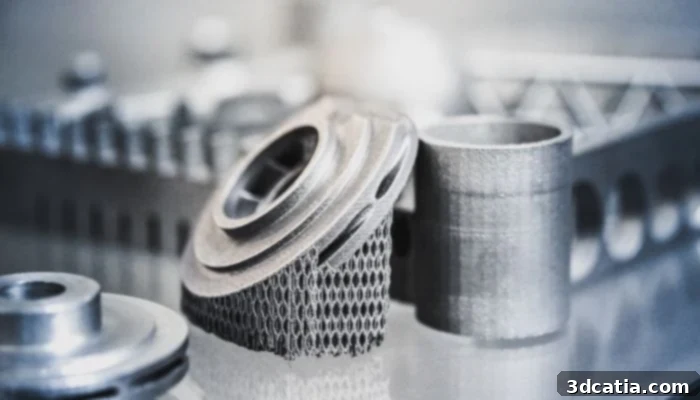
Supports must be cut from metals and often require post-machining
Applications: Where HPPs and Metals Excel
Owing to their exceptional properties, there is considerable overlap in the high-demand applications for both high-performance polymers (HPPs) and metals across various industries. For instance, both material categories are extensively utilized in the aerospace sector, where parts must exhibit high strength, extreme temperature resistance, and conform to stringent regulations for safety-critical components. In this context, HPPs are increasingly demonstrating their profound value, largely due to their impressive strength-to-weight ratio and inherent lightness compared to metals. This characteristic is paramount in aeronautics, where every gram saved contributes to improved fuel efficiency, increased payload capacity, and reduced operational costs, making HPPs highly attractive for structural components, interior parts, and even engine elements.
These same superior properties also make both materials highly favored for a wide array of industrial applications, such as the production of durable bearing cages, robust pipe fittings, and specialized components within the demanding automotive and transportation sectors. Traditionally, aluminum has been a preferred material for manufacturing parts across the automotive spectrum, from luxury vehicles to high-performance racecars, prized for its excellent balance of strength and low weight. However, high-performance polymers are experiencing a surge in adoption in these industries, driven by their ability to achieve even greater weight reductions without compromising structural integrity, thereby enhancing vehicle performance, agility, and fuel economy.
Medical applications also represent a significant and expanding area for both HPPs and metals. It is crucial to emphasize that not all types of HPPs or metals are suitable for medical use; selection is strictly limited to biocompatible materials—those that can safely interact with the human body without causing adverse reactions. Among metals, titanium stands out as a prime example, highly popular for its exceptional biocompatibility, remarkable resistance to corrosion from bodily fluids, inherent capacity for osseointegration (direct integration with bone), and high fatigue limit. For polymers, PEEK and PEKK are leading choices for medical devices. PEEK is particularly compelling due to its unique combination of biocompatibility and mechanical properties that closely mimic human bone. This makes PEEK an ideal material for 3D printing custom medical implants, such as spinal cages, cranial implants, and prosthetic components, as its bone-like density can minimize stress shielding effects common with denser metal implants, potentially leading to better long-term patient outcomes.
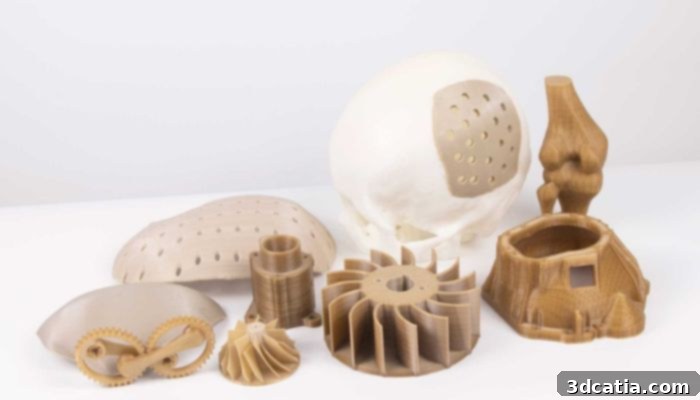
PEEK is popular for many different applications. Also, thanks to its similarities to bone, making it ideal for implants (photo credits: IEMAI)
Despite the extensive overlap in applications driven by their incredible properties, the ultimate choice between HPPs and metals often comes down to the specific advantages of individual materials and the precise demands of the application. For example, while both are used in medical fields, titanium’s exceptional strength and osseointegration capabilities make it a go-to for load-bearing implants, whereas PEEK’s bone-mimicking properties and radiolucency (transparency to X-rays) offer distinct benefits for certain spinal or cranial implants. Similarly, in automotive, while aluminum offers an excellent strength-to-weight ratio, HPPs can push the boundaries of lightweighting further. However, a couple of distinct characteristics consistently differentiate these material families and guide selection.
Polymers, particularly HPPs, will invariably be the superior choice for applications where part lightness is a paramount design criterion. They also outperform metals in environments where corrosion would be a significant factor, offering excellent resistance to aggressive chemicals and moisture. Additionally, HPPs are effective insulators against both heat and electricity, making them indispensable for electrical applications, electronic housings, and thermal management components where isolation is required. Conversely, when ultimate strength, stiffness, and structural integrity are the primary concerns and weight is a secondary consideration, many metals will typically offer superior performance. Furthermore, the significantly greater range of metal alloys available for additive manufacturing often provides designers with a broader palette of specific properties, potentially simplifying material selection for highly specialized needs. Crucially, metals are inherently conductive, a property that, while unsuitable for insulation, is an invaluable advantage for electrical components, wiring systems, sensors, and many biomedical devices, offering functionalities that polymers cannot replicate.
Manufacturers & Price Considerations
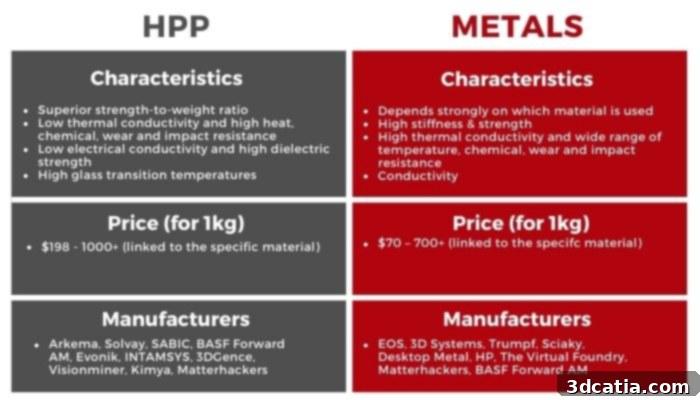
When evaluating both high-performance polymers and metals for 3D printing, it is crucial to recognize that their cost significantly exceeds that of standard, commodity polymers such as PLA, ABS, and PETG. The pricing for metals varies widely based on the specific type of metal or alloy being used, as well as its form (powder, wire, or filament). For instance, a kilogram of metal powder can range from approximately $70 to $700, with highly specialized alloys or precious metals commanding prices at the higher end of this spectrum (e.g., cobalt-chrome alloys will be considerably more expensive than common steel powders). Meanwhile, a 1kg spool of PEEK filament typically starts above $500, with prices increasing further depending on the material’s purity, specific grade, and the inclusion of reinforcing additives like carbon fiber.
Within the high-performance polymer category itself, price points are not uniform. For example, a kilogram of PEI filament might be available starting from around $200, making it significantly more affordable than PEEK, with PEKK pricing being somewhat comparable to PEI but often slightly higher. However, it is undeniable that despite the relatively similar price ranges at the high end, many common metal materials, particularly when purchased in bulk quantities for certain alloys, can be more cost-effective than some of the most advanced high-performance polymers. This pricing complexity underscores the importance of conducting a thorough cost-benefit analysis for each specific application, considering not only raw material costs but also processing time, energy consumption, equipment investments, and post-processing requirements.
Regarding manufacturers, the ecosystem for high-performance polymers is primarily driven by major chemical companies renowned for their deep material science expertise, such as Arkema, Solvay, SABIC, BASF, and Evonik. These companies develop and supply the base polymer resins and often offer them in various forms suitable for 3D printing. Additionally, specialized 3D printer manufacturers like INTAMSYS focus on developing advanced machines specifically engineered to handle the unique high-temperature and process control demands of high-performance polymers. It is also worth highlighting that some chemical companies, such as Lehmann&Voss, offer integrated 3D printing solutions alongside their material offerings. In contrast, metal 3D printing materials are predominantly supplied by leading additive manufacturing solution providers, including industry giants like EOS, 3D Systems, Trumpf, Sciaky, Desktop Metal, and HP. These companies typically provide not only the metal powders or wires but also often offer complete end-to-end printing systems, encompassing hardware, software, and optimized process parameters tailored for their specific metallic materials.
Conclusion
The decision between high-performance polymers and metals for additive manufacturing is a nuanced one, dictated by a complex interplay of factors including mechanical properties, processing requirements, specific application demands, and overall cost considerations. Both material families have established indispensable roles within the 3D printing landscape, offering advanced solutions for industries that demand exceptional performance and reliability. High-performance polymers excel in applications requiring extreme lightness, outstanding corrosion resistance, and excellent electrical or thermal insulation, making them ideal for aerospace components, chemical processing equipment, and advanced electronic housings. Metals, with their vast array of alloys, provide unparalleled strength, stiffness, thermal conductivity, and electrical conductivity, serving critical functions in structural components, tooling, and specialized medical devices.
Ultimately, the optimal choice to utilize either high-performance polymers or metals hinges on a thorough and precise understanding of the specific project requirements. Designers and engineers must carefully weigh the distinct advantages offered by HPPs, such as their superior strength-to-weight ratios and inherent resistance to corrosive environments, against the robust strength, diverse property palette, and reliable electrical conductivity provided by metals. While HPPs can often simplify post-processing and offer compelling cost efficiencies for certain applications compared to high-end metals, the broader material selection, established performance benchmarks, and specific functional attributes (like conductivity) of metals remain a powerful draw. As additive manufacturing technologies continue to evolve and mature, the capabilities of both HPPs and metals will undoubtedly expand further, providing an even more sophisticated arsenal of solutions for future innovations across every industry.
What are your thoughts on the distinctions between high-performance polymers and metals in 3D printing? Do you have a preferred material family for your projects, and what factors drive your choice? Share your insights and experiences with us in a comment below or connect with our community on our LinkedIn, Facebook, and Twitter pages! Don’t forget to subscribe to our free weekly Newsletter here to receive the latest 3D printing news directly in your inbox! You can also explore all our informative videos on our YouTube channel for more insights into additive manufacturing.