
Henkel’s Vision for Additive Manufacturing: Pioneering Innovation in 3D Printing Materials and Industrial Solutions
Founded in 1876, Henkel stands as a formidable multinational corporation with a rich history, operating strategically across both consumer and industrial sectors. Headquartered in Düsseldorf, Germany, the company boasts a truly global footprint, with over 80 percent of its dedicated workforce employed outside its home country. In a significant move in 2016, Henkel strategically entered the burgeoning additive manufacturing (AM) field. Since then, it has rapidly positioned itself as a key innovator, primarily focusing its efforts on the development of advanced 3D printing materials. Today, Henkel is widely recognized as one of the leading global suppliers of high-impact additive materials, critical for a diverse range of industrial applications. Demonstrating its commitment to cutting-edge advancements, the company recently collaborated with Nexa3D, a prominent manufacturer of ultrafast stereolithography (SLA) 3D printers, to launch a new polymer known as xMED412. This significant development prompted us to delve deeper into Henkel’s extensive activities within the additive manufacturing arena. To gain further insights, we had the privilege of speaking with Cindy Deekitwong, the conglomerate’s Global Head of Marketing for Incubator Businesses, including their burgeoning 3D Printing division.
Leading the Charge: Cindy Deekitwong’s Role and Passion for 3D Printing

“My name is Cindy Deekitwong, and I proudly serve as the Global Head of Marketing for Incubator Businesses at Henkel, a portfolio that notably includes our dynamic 3D Printing division,” she begins, outlining her critical responsibilities. Her primary objective is clear and ambitious: to spearhead growth in new revenue streams and significantly expand market share for both the company’s 3D printing ventures and its other strategic incubators. Ms. Deekitwong’s career journey is marked by a diverse array of leadership roles spanning various countries and industries, encompassing electronics markets, intricate supply chain management, operational excellence, key account leadership, supplier innovation, and strategic program management. Since 2018, she has passionately directed the Global Marketing efforts for 3D Printing and has also been instrumental in establishing an expert platform designed to foster knowledge sharing and collaborative experiences within the additive manufacturing community. Her enthusiasm for 3D printing is palpable, driven by its immense potential to revolutionize industries. “I am deeply passionate about 3D printing because it unlocks colossal opportunities,” she explains, highlighting key benefits such as drastically shortened supply chains, substantial cost reductions, unparalleled design freedom, and many other transformative advantages. She emphasizes the dynamic nature of the sector: “Working within this field means constantly experiencing significant change and a remarkable degree of freedom. These two characteristics are not just industry traits; they are also deeply reflected in my own personal career trajectory and professional philosophy.”
Henkel’s Transformative Journey: Four Years of Advancements in Additive Manufacturing
Henkel’s foray into the additive manufacturing market in 2016 commenced, like many innovative ventures, with a visionary idea. During a comprehensive new business development screening, 3D printing emerged as a compelling new search field, offering immense potential to expand and leverage the company’s profound material science capabilities. What began as a single individual scouting a novel market opportunity quickly blossomed into a full-fledged business incubator, entrusted with both technological and business development responsibilities for additive manufacturing. Over the past four years, Henkel has made remarkable strides, culminating in a robust and diverse material portfolio comprising high-performance photopolymers. The company has strategically forged over 20 distinct partnerships with leading companies across the global 3D printing landscape, solidifying its position within the ecosystem. Furthermore, Henkel has significantly expanded its in-house capabilities for parts production, establishing a state-of-the-art AM facility in Richmond, USA. This facility is crucial for providing advanced 3D printed parts to demanding automotive and industrial customers, enabling Henkel to offer comprehensive support to its clients, whether they require bespoke 3D printed components or seek to integrate manufactured parts into their operations.
A pivotal moment in this journey was the strategic acquisition of Molecule Corp. This acquisition brought with it robust 3D printing resin technology and cutting-edge digital development capabilities, perfectly complementing and significantly strengthening Henkel’s existing materials portfolio. As a result, Henkel is now uniquely positioned to offer an even more comprehensive and customized range of additive manufacturing solutions tailored to the specific needs of its diverse industrial clientele.
Another truly impressive achievement lies in Henkel’s expansive array of qualified high-performance materials. While 3D printing, as a technology, has been around for some time, its industrial adoption was historically hampered by limited material options and print results that frequently fell short of rigorous industrial expectations. At Henkel, this challenge was met head-on. The company has meticulously built a diverse portfolio of materials, specifically engineered for critical properties such as high-temperature resistance, superior impact resistance, and elastomeric capabilities. Crucially, these materials have undergone extensive validation across numerous different printer platforms within meticulously defined production workflows. This rigorous validation process ensures a high level of reliability and accuracy, guaranteeing that the performance requirements published in their technical data sheets are consistently met in real-world applications. Ms. Deekitwong underscores the importance of this, stating, “I see this extensive validation as a key factor for achieving success in industrial applications. We are committed to working closely with our customers, hand-in-hand, to facilitate and accelerate the widespread adoption of additive manufacturing across various industries.”
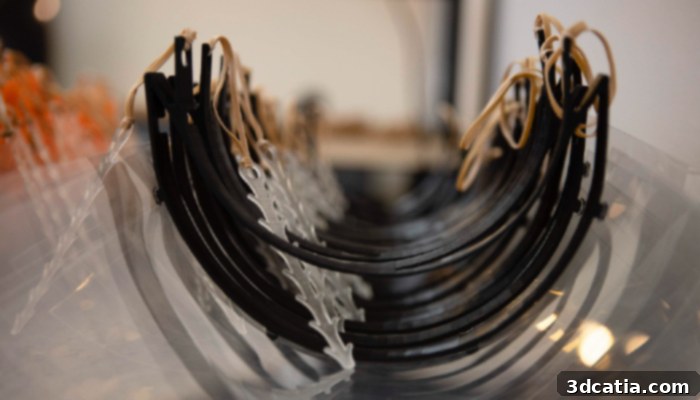
3D printed parts manufactured on an NXE400 printer using 3843-xABS Black material powered by LOCTITE.
Henkel’s Strategic Focus: Leading Technologies in 3D Printing
Henkel’s core strength in 3D printing technologies lies inherently within photochemistry, which naturally dictates its primary focus. “We are dedicated to providing advanced photopolymers specifically engineered for Digital Light Processing (DLP) and Stereolithography (SLA) machines,” Ms. Deekitwong explains. To ensure optimal performance and widespread compatibility, Henkel has established numerous strategic partnerships with a roster of leading equipment manufacturers in the additive manufacturing space. These esteemed partners include Rapid Shape, EnvisionTEC, Nexa3D, NewPro3D, Origin, and many others. These collaborations are vital for rigorously validating Henkel’s materials on the market’s most advanced 3D printers. This meticulous validation process is a direct benefit to their customers, empowering them to confidently select the most suitable material for their specific application, seamlessly paired with the ideal printer for their unique operational requirements.
Beyond its core focus on photopolymers, Henkel’s involvement extends significantly into other critical areas of additive manufacturing. The company actively engages with various 3D printing technologies, particularly in the crucial stages of post-processing and finishing parts. Here, Henkel leverages its extensive and robust portfolio of industrial solutions, which includes high-performance sealants, adhesives, coatings, advanced cleaning agents, and innovative surface treatment solutions. This comprehensive approach ensures that the integrity and functionality of 3D printed parts are optimized from initial design to final application. This broader engagement also encompasses materials and processes relevant to thermoplastic and metal-based 3D printing technologies, demonstrating Henkel’s commitment to providing end-to-end solutions across the diverse additive manufacturing landscape.
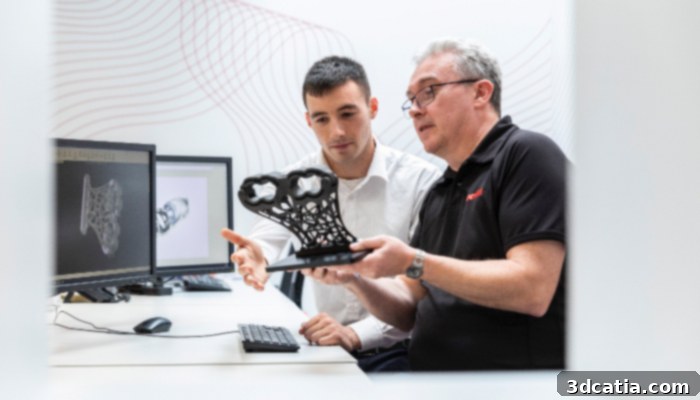
From a digital file to the printed part – Henkel offers a broad material portfolio and service to guide clients through their Additive Manufacturing journey. (All image credits: Henkel)
A Deep Dive into the Strategic Partnership with Nexa3D
“Nexa3D, our esteemed partner, is a leading 3D printer manufacturer, prominently headquartered in the United States,” Ms. Deekitwong elaborates, highlighting the synergy between the two companies. She recounts a particularly poignant example of their collaboration during a period of immense global challenge. “During the acute phases of the COVID-19 crisis, alongside the urgent demand for critical items like NP swabs, there was an equally pressing need for personal protective equipment (PPE), specifically face shields, to safeguard our frontline workers.” Additive manufacturing proved to be the ideal solution for this crisis. Its inherent capabilities allowed for the rapid and efficient production of face shields in unprecedentedly short timeframes, demonstrating the agility and responsiveness of 3D printing technology.
The challenge lay in integrating the optimal design with materials possessing precise properties, such as a high-strength engineering plastic that could also offer excellent impact resistance. “Our partner Nexa3D proactively reached out to us, inquiring if Henkel could supply such a critical material,” Ms. Deekitwong recalls. This collaborative inquiry led directly to the pivotal utilization of Henkel’s 3843-xABS Black material by Nexa3D for this vital application and several others. The results were truly impactful: “Tens of thousands of parts were produced each week, playing a crucial role in overcoming the severe shortage of face shields during a global emergency.” This success story is a testament to the power of strategic partnerships and rapid innovation. Building on this solid foundation, Ms. Deekitwong affirms, “Just as we successfully collaborated to bring 3843-xABS Black and xMED412 to market, we are steadfastly continuing our work. Our plan is to aggressively expand the portfolio of materials, specifically tailored for the high-throughput capabilities of the NXE400 printer, to effectively serve a wider range of industrial applications and further drive the adoption of advanced additive manufacturing.”

Technician wearing a 3D printed face shield.
Henkel’s Long-Term Vision: Revolutionizing Industrial Additive Manufacturing
Henkel harbors an ambitious and clear long-term vision regarding the pervasive adoption of additive manufacturing technology. “We firmly believe that photopolymers offer the broadest range of mechanical properties currently achievable, making them central to our strategy,” Ms. Deekitwong asserts. Henkel’s aspiration is to be recognized as the foremost leading supplier of light-cure materials for additive manufacturing globally. The company envisions a future where it empowers its customers to produce high-quality, functional final components using Henkel’s high-performance materials, meticulously tailored to fit their highly specific and demanding needs. Furthermore, Henkel aims to solidify its position as the partner of choice for industrial applications requiring 3D printed parts. This vision is deeply rooted in Henkel’s unparalleled industrial heritage. “We are leveraging decades of industrial experience – a legacy built on solving real-world manufacturing challenges with tangible, effective production solutions,” she explains. This profound expertise will continue to be a cornerstone of their strategy, ensuring that Henkel remains at the forefront of innovation in the transformative era of additive manufacturing, delivering reliable and scalable solutions for future industrial demands.
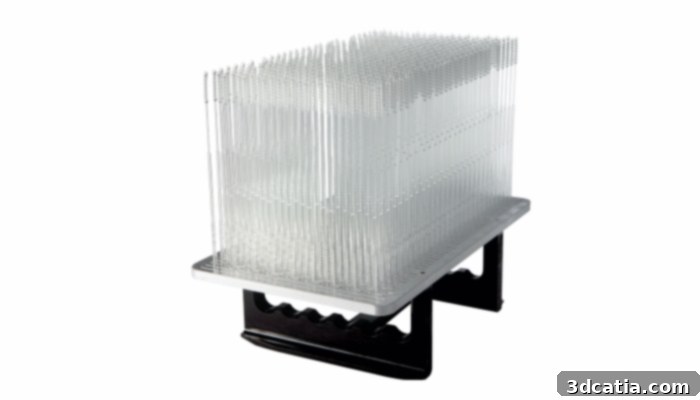
3D printed Nasal Swabs on NXE400 with xMED412
Navigating the Evolving Landscape of the Additive Manufacturing Market
Reflecting on the current state of the additive manufacturing market, Ms. Deekitwong observes, “The additive manufacturing market has experienced remarkable growth in recent years, with an increasing number of companies recognizing and embracing the profound advantages this technology offers for their specific business needs.” There is a discernible global trend and escalating demand for high-performance, lightweight, and rapidly produced end-use parts, a need that 3D printing is uniquely positioned to address effectively. This surge in demand signals a maturing market moving beyond prototyping to full-scale production applications.
In parallel with this market expansion, Ms. Deekitwong notes significant innovation emanating from printer manufacturers. These advancements are focused on enabling more reliable and increasingly automated processes, which are crucial for achieving the consistent level of quality expected from truly industrialized manufacturing. “The cooperation among printer manufacturers, engineering service providers, and materials companies is absolutely fundamental,” she emphasizes, highlighting that this collaborative ecosystem is essential to ensure the delivery of rigorously validated processes at an industrial scale. Henkel is actively engaged with multiple companies within this ecosystem, working collaboratively to ensure that 3D printing is not just adopted, but firmly implemented as a foundational pillar for the comprehensive digitalization of industrial processes across various sectors. This strategic collaboration is key to unlocking the full potential of additive manufacturing and integrating it seamlessly into the future of manufacturing.
Embracing the Future: A Call to Innovation
Henkel has a long-standing legacy of transforming numerous industries through relentless innovation and unparalleled application expertise. “We understand implicitly that 3D printing represents not just a new technology, but a significant journey and a profound transformation for many customers and entire industries,” Ms. Deekitwong concludes. She offers an encouraging message to the broader community: “I would like to sincerely encourage engineers and creators to embrace their creativity, to explore uncharted territories, and to actively seek out new production possibilities as they embark on their own journey towards additive manufacturing.” For those eager to learn more about Henkel’s extensive range of high-performance materials, its strategic partnerships, compelling case studies, and upcoming events, all relevant information is readily available on LoctiteAM.com. “We are genuinely curious to learn more about your individual challenges and explore how Henkel’s innovative solutions can help you achieve your goals!”
What are your thoughts on Henkel’s dynamic and active participation in the evolving additive manufacturing field? We invite you to share your insights in a comment below or engage with us on our Facebook and Twitter pages! Don’t miss out on the latest advancements and news in 3D printing – sign up for our free weekly Newsletter to receive all the crucial updates directly in your inbox!