
Weekly 3D Printing Innovations: From Wildlife Conservation to Space Technology
The world of 3D printing is constantly evolving, bringing groundbreaking advancements across diverse industries. Each week, we witness remarkable applications, from safeguarding endangered species to pioneering new frontiers in space and sustainable food production. In this edition of #3DExpress, we delve into some of the most compelling stories: the innovative use of 3D printed eggs to protect New Zealand’s vulnerable Fairy Terns, Sidus Space’s significant achievement in establishing two-way communications with its 3D printed satellite, and the latest releases from industry leaders like EOS and AMT. We’ll also explore Revo Foods’ exciting new plant-based 3D printed octopus. Prepare to be inspired by the versatility and impact of additive manufacturing!
Protecting Endangered Fairy Terns with 3D Printed Eggs in New Zealand
Across the globe, scientists and conservationists are intensifying their efforts to save endangered species, a challenge made more urgent by accelerating climate change and its impact on traditional habitats. In New Zealand, a critical initiative is underway to protect the native Fairy Tern, known as tara iti in Māori, one of the country’s rarest birds. The Department of Conservation (DOC) has embraced 3D printing technology to create highly realistic replica eggs, offering a vital lifeline for this critically endangered species.
The Fairy Tern population, once widespread, is now confined to just five main nesting sites in north Auckland. These coastal breeding grounds are highly susceptible to environmental threats, particularly high tides and severe storms, which can easily wash away delicate eggs and imperil an entire breeding season. Traditional methods of protection, such as using hand-painted wooden eggs or real eggs filled with wax, often proved inadequate due to their fragility and lack of realism, failing to fool the discerning parent birds or withstand the harsh coastal conditions.
The breakthrough came with 3D printing. Working collaboratively, conservationists leveraged this advanced manufacturing technique to produce eggs that meticulously mimic the real thing. Artist and marine biologist Carina Sim-Smith meticulously painted these 3D printed replicas, ensuring they matched the precise shape, weight, UV resistance, size, color, and texture of natural Fairy Tern eggs. This level of accuracy was paramount, as noted by Natalie Jessup, General Manager of the Endangered Species Foundation: “We were happy to see the replacement eggs were successful at holding nesting sites during risky periods when the real eggs were safely cared for at Auckland Zoo – they were so realistic parent birds had no idea they were not sitting on the real thing.” This innovative approach allowed conservationists to temporarily replace real eggs with their 3D printed counterparts during periods of high risk, giving the genuine eggs a chance to develop in the safety of Auckland Zoo.
The program’s success has been nothing short of remarkable. This past year marked a record-breaking breeding season for the Fairy Terns, with an impressive 22 eggs laid and 14 chicks successfully hatched. This achievement underscores the immense potential of 3D printing as a tool for wildlife conservation, offering durable, precise, and highly customizable solutions for protecting vulnerable species. This innovative application in New Zealand demonstrates how additive manufacturing can play a pivotal role in conservation efforts worldwide, helping to mitigate threats and bolster populations of at-risk animals by providing practical and effective interventions.
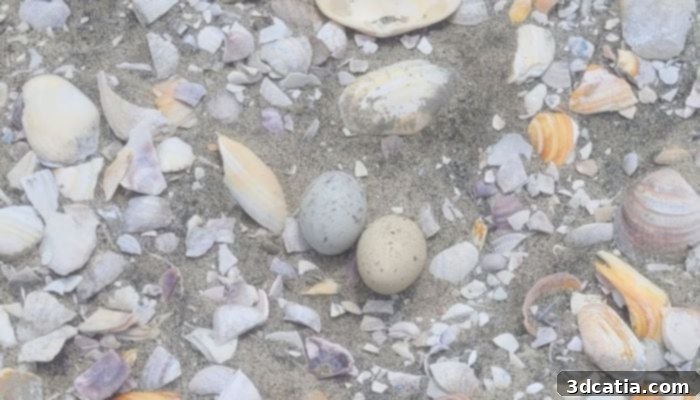
The real (left) and 3D printed (right) eggs are indistinguishable for the Fairy Terns (photo credits: DOC)
EOS Unveils New High-Powered Metal 3D Printing Solution for Copper
EOS, a global leader in high-end additive manufacturing solutions, has once again pushed the boundaries of industrial 3D printing with the launch of its new metal additive manufacturing system, the M 290 1kW. This latest innovation is designed to meet the rigorous demands of advanced industrial applications, particularly those requiring components made from challenging materials like copper.
The M 290 1kW operates using laser powder bed fusion (LPBF) technology, a highly precise method where a high-power laser selectively melts metallic powder layer by layer to build complex geometries. As its name suggests, the printer is equipped with a powerful 1-kilowatt laser. This significantly higher laser power, compared to standard systems, enables faster processing speeds and allows for the creation of denser, more robust parts, which is especially critical when working with materials known for their high thermal conductivity.
What truly sets the M 290 1kW apart is its specialized design for producing high-quality copper parts. Copper has long been a notoriously difficult material to 3D print due to its high reflectivity to common laser wavelengths and excellent thermal conductivity, which can lead to inconsistencies in the melting process. EOS has engineered this machine to overcome these challenges, opening up new possibilities for industries reliant on copper’s unique properties. Currently, two materials are qualified and offered for the system: CuCp, a highly pure copper (99.95%), and EOS Copper CuCrZr, an alloy combining copper with chromium and zirconium for enhanced strength and performance.
This development is particularly relevant for the aerospace and defense sectors, where copper is indispensable. Its exceptional electrical and thermal conductivity makes it ideal for applications such as heat exchangers, electrical connectors, rocket nozzles, and intricate cooling channels in high-performance engines. The ability to 3D print complex copper components with such precision and efficiency allows for innovative designs that are lighter, more thermally efficient, and more integrated than traditionally manufactured parts. This new solution from EOS is set to accelerate innovation in these critical industries, providing engineers with the tools to create next-generation components that were previously impossible to produce.
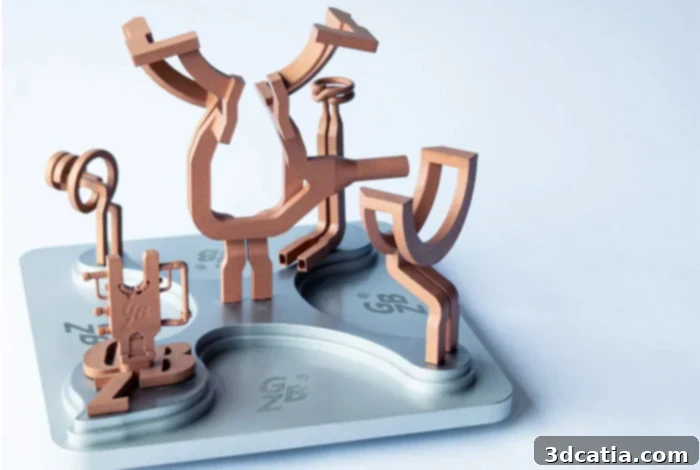
Photo Credits: EOS
Sidus Space Achieves Two-Way Communication with its 3D Printed LizzieSat Satellite
Sidus Space, a prominent innovator in the burgeoning space industry, has announced a significant milestone: the successful establishment of two-way communications with its groundbreaking hybrid, 3D printed LizzieSat. This achievement is a testament to the transformative power of additive manufacturing in satellite design and deployment, offering unprecedented agility and efficiency in space exploration and data collection.
The LizzieSat, a sophisticated data-gathering satellite, represents the cutting edge of satellite technology. By integrating 3D printing into its manufacturing process, Sidus Space has been able to create a satellite that is not only lighter and more cost-effective but also features custom geometries and optimized internal structures that would be challenging or impossible to achieve with traditional manufacturing methods. The “hybrid” nature of LizzieSat likely refers to its combination of advanced 3D printed components with conventional electronics and systems, leveraging the best of both worlds for optimal performance.
Establishing two-way communication is a critical step for any operational satellite. It allows ground control to send commands, update software, and most importantly, receive the valuable data collected by the satellite. With this capability firmly established, LizzieSat is now fully poised to commence its mission: gathering crucial data to support a wide array of industries. This includes precision agriculture, where satellite imagery can optimize crop yields; maritime operations, providing vital information for shipping and oceanic monitoring; and the oil and gas sector, assisting with infrastructure inspection and environmental monitoring. The versatility of LizzieSat’s data collection capabilities extends to numerous other applications, making it a powerful asset for global intelligence.
Carol Craig, Sidus’ CEO and Founder, highlighted the strategic importance of this achievement: “Sidus’ cutting edge, state-of-the-art LizzieSats are at the core of our high-margin Data-as-a-Service business model. The combination of our rapid, 3D-printing production process, our multi-sensor coincident data collection, and the integration of on-orbit AI gives Sidus an edge as we build our satellite constellation to collect and sell data to our customers.” This statement emphasizes Sidus Space’s vision for a rapidly scalable constellation of 3D printed satellites, enabling efficient data acquisition and analysis. The incorporation of on-orbit AI is particularly noteworthy, allowing for real-time processing and intelligent filtering of data directly from space, thereby enhancing efficiency and the value of the information delivered to clients. This approach positions Sidus Space at the forefront of the commercial space industry, offering an innovative and agile solution for critical data services.

Photo Credits: Sidus Space
AMT Introduces PostPro DPX: A New Standard in Automated Depowdering
Post-processing remains a critical, yet often labor-intensive, bottleneck in the additive manufacturing workflow, particularly for powder bed fusion technologies. The removal of residual powder from printed parts, known as depowdering, is essential for functionality, aesthetics, and subsequent finishing steps. Recognizing this challenge, AMT, a specialist in developing advanced post-processing solutions, has unveiled its latest innovation: the PostPro DPX machine.
The PostPro DPX is a state-of-the-art depowdering system designed to make this crucial step more accessible, efficient, and user-friendly. Its primary objective is to significantly reduce the need for manual labor, which is not only time-consuming and costly but can also expose operators to fine powders, posing potential health risks. By automating the depowdering process, the PostPro DPX guarantees a safe, clean, and consistent manufacturing environment, elevating both operational efficiency and product quality.
This new machine is engineered for versatility, capable of handling various part volumes thanks to its generous 10-liter basket. With dimensions of 985 x 1135 x 1890 mm, it is compactly designed to integrate seamlessly into diverse production facilities. A standout feature of the PostPro DPX is its ATEX certification. This certification confirms that the machine complies with stringent European safety standards for equipment operating in potentially explosive atmospheres, a common concern when dealing with fine, combustible powders used in additive manufacturing. This ensures a secure working environment and provides peace of mind for operators and manufacturers alike.
By offering an automated, safe, and efficient solution for depowdering, AMT’s PostPro DPX is poised to streamline post-processing operations, reduce overall production costs, and enhance the scalability of additive manufacturing. It represents a significant step forward in making industrial 3D printing a more fully automated and integrated production method, enabling manufacturers to unlock the full potential of their printed parts with minimal human intervention and maximum safety.
Revo Foods Launches Kraken: The First 3D Printed Vegetable Octopus
The sustainable food movement continues to gain momentum, and pioneering companies like Revo Foods are at the forefront, leveraging advanced technologies like 3D printing to create innovative plant-based alternatives. After captivating the market with its various 3D printed seafood products, including its highly popular salmon, now available in European supermarkets, the startup Revo Foods has once again demonstrated its commitment to food innovation with its latest creation.
Revo Foods has proudly announced the launch of “Kraken,” the world’s first 3D printed vegetable octopus. This groundbreaking product is designed to offer a delicious and sustainable alternative to traditional calamari and octopus dishes, catering to the growing consumer demand for plant-based options that do not compromise on taste or texture. The development of Kraken showcases the incredible potential of food 3D printing to replicate complex food structures and sensory experiences.
Similar to their successful salmon product, Kraken aims to perfectly mimic the appearance and, crucially, the flavor of real octopus. Achieving the unique texture and visual characteristics of seafood through plant-based ingredients and 3D printing requires sophisticated multi-material extrusion technology, allowing for precise layering and shaping of different plant proteins and fibers. This meticulous process ensures that Kraken not only looks like octopus but also provides a satisfying mouthfeel and authentic taste profile, making it an attractive option for both vegans and flexitarians.
The introduction of Kraken is a significant stride towards more sustainable food systems. The seafood industry faces numerous challenges, including overfishing, habitat destruction, and significant carbon footprints. Plant-based alternatives like Revo Foods’ 3D printed octopus offer a viable solution to these environmental concerns, reducing pressure on marine ecosystems and providing consumers with ethical, eco-friendly choices. This innovative development not only expands the culinary possibilities of plant-based dining but also reinforces the role of 3D printing as a powerful tool for addressing global food sustainability challenges, paving the way for a future where delicious, ethical, and environmentally friendly food is accessible to all.
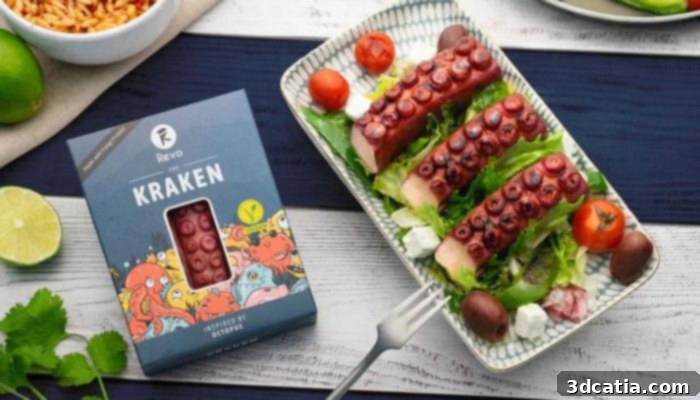
Photo Credits: Revo Foods
This week’s roundup truly highlights the incredible versatility and impact of additive manufacturing across various sectors, from vital conservation efforts for endangered species to advanced space technology and groundbreaking sustainable food innovations. The continued evolution of 3D printing promises a future where complex challenges are met with ingenious, customized, and efficient solutions.
What are your thoughts on these innovative 3D printing applications, especially the Fairy Tern eggs for conservation? How else do you envision 3D printing being utilized to address pressing global issues? Share your insights and comments below, or connect with us on our LinkedIn, Facebook, and Twitter pages! Don’t forget to subscribe to our free weekly newsletter here to get the latest 3D printing news delivered straight to your inbox. You can also explore all our compelling videos on our YouTube channel for more in-depth content.
*Cover Photo Credits: