
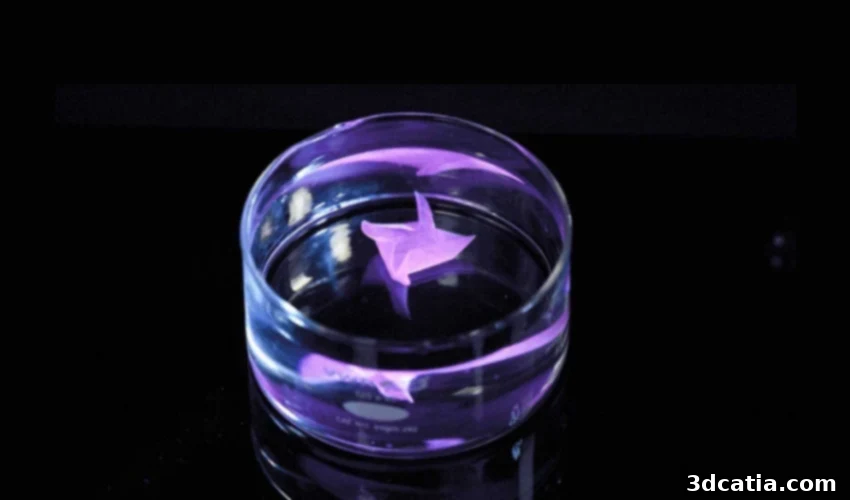
Harvard Engineers Unveil Revolutionary 3D Printed Shape-Shifting Keratin Material
A groundbreaking innovation emerging from the Harvard John A. Paulson School of Engineering and Applied Sciences (SEAS) is set to redefine the future of advanced materials. A dedicated team of researchers has successfully developed a pioneering material that can be precisely 3D printed into virtually any desired shape and, remarkably, comes pre-programmed with reversible shape memory capabilities. This means that upon exposure to a specific environmental stimulus – such as water, heat, or light – the material can dynamically transform back to its original, predetermined form. What makes this discovery even more compelling is its origin: the Harvard researchers harnessed the natural power of keratin, a protein readily available from wool, to engineer this advanced material. This development not only holds immense promise for revolutionizing the textile industry but also offers transformative potential within the medical sector, largely due to its inherent biocompatibility.
The Science of Shape Memory: Unlocking Keratin’s Potential
The remarkable ability of this new material to dynamically shift and revert its shape is primarily attributed to the unique molecular architecture of keratin. Keratin, a fibrous protein, is ubiquitous in nature, forming the structural basis of hair, nails, shells, and, crucially, wool. For this pioneering project, the Harvard team specifically extracted keratin from Angora wool, a common and sustainable resource widely utilized in textile manufacturing. But how does this intricate biological mechanism translate into a controllable engineering feat?
At a fundamental level, keratin proteins possess a complex secondary structure, notably alpha-helices, which are spring-like coiled structures. When a keratin fiber is subjected to a stretching force or exposed to a particular stimulus, these helical structures undergo a conformational change. They uncoil and their molecular bonds realign, facilitating the formation of stable beta-sheets. This new configuration locks the fiber into its deformed, temporary shape. The material then retains this secondary shape until it encounters a specific trigger – often the same stimulus that initiated the initial deformation, or a different one – prompting the beta-sheets to revert, allowing the spring-like alpha-helices to coil back and restore the fiber to its original, pre-programmed shape. This reversible transition between alpha-helices and beta-sheets is the ingenious molecular engine driving the shape memory effect, offering an unprecedented level of control over material morphology.
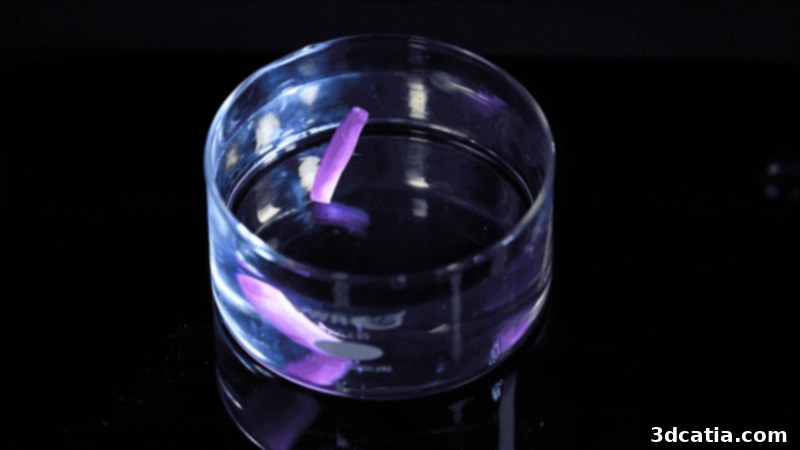
Credits: Harvard SEAS researchers demonstrate their innovative 3D printed keratin material.
Demonstrating Reversible Transformation: The Origami Experiment
To vividly illustrate the efficacy of their 3D printable shape-shifting technology, the Harvard team conducted a series of compelling demonstrations. One particularly illustrative experiment involved 3D printing thin sheets of the keratin material into various complex geometries, including an intricate origami star. This origami star was meticulously designed to be the material’s permanent, pre-programmed shape – the configuration to which it would consistently return upon receiving the appropriate trigger. The researchers’ methodology involved a precise sequence of steps:
- **Programming the Shape:** The keratin sheet was initially 3D printed in the form of an origami star, setting its “memory” state. This step ensures the material understands its ultimate desired configuration.
- **Deformation:** Once this permanent shape was programmed, the team immersed the origami star in water. The water acted as a plasticizer, permeating the keratin structure and causing the material to become ductile and highly flexible, losing its inherent rigidity and allowing it to be easily manipulated and reshaped.
- **Setting a Temporary Shape:** While the material remained pliable in its wetted state, the researchers carefully rolled the flexible sheet into a tight, compact tube. This new, temporary configuration was then held in place until the material dried completely. Upon drying, the keratin fibers reformed their internal bonds, effectively locking the sheet firmly into its new tubular position. This represented the material’s temporary, “deformed” state, stable until triggered.
- **Reversal:** To reverse this process and trigger the shape memory effect, the dried, tubular structure was once again immersed in water. What happened next was a testament to the material’s incredible properties: the 3D printed fabric began to unroll and gracefully fold itself back into the original origami star shape, entirely on its own, without any external mechanical assistance. This captivating self-reconfiguration provided undeniable proof of the Harvard researchers’ successful development of a fully reversible 3D printable shape-shifting technology, powered by the natural properties of keratin.
A Vision for the Future: Transforming Industries with Bio-Inspired Materials
The implications of this innovative research extend far beyond the laboratory, promising a significant impact across multiple sectors. Kit Parker, Professor of Bioengineering and Applied Physics at SEAS and the senior author of the pivotal paper detailing this discovery, emphasized the profound potential. “We have shown that not only can we recycle wool but we can build things out of the recycled wool that have never been imagined before,” Parker stated. This highlights a dual benefit: not only is the research pushing the boundaries of material science, but it’s doing so through a deeply sustainable lens. “With recycled keratin protein, we can do just as much, or more, than what has been done by shearing animals and, in doing so, reduce the environmental impact of the textile and fashion industry.” This statement underscores the commitment to developing eco-conscious solutions that can lessen the carbon footprint associated with traditional material production and resource depletion.
Revolutionizing Textiles: Smart Fabrics and Sustainable Fashion
The potential impact on the textile industry is particularly compelling, heralding a new era of “smart textiles.” Imagine garments that can dynamically adapt to environmental conditions, such as temperature fluctuations, or high-performance sportswear that adjusts its fit, compression, and breathability based on the wearer’s activity level and physiological state. This keratin-based material could fundamentally change how we interact with clothing, transforming static fabric into an interactive, adaptive second skin. Parker alluded to such possibilities, noting: “Whether you are using fibers like this to make brassieres whose cup size and shape can be customized every day, or you are trying to make actuating textiles for medical therapeutics, the possibilities of our work are broad and exciting.” This vision points to a future where textiles are not only personalized but also functional and dynamically responsive, addressing issues from comfort and optimal fit to even therapeutic applications. Moreover, by utilizing recycled wool, this technology offers a robust pathway towards a truly circular economy in fashion, significantly reducing waste, pollution, and reliance on virgin petroleum-based materials.
Advancing Medicine: Biocompatible Solutions for Healthcare
Beyond fashion and consumer goods, the inherent biocompatibility of keratin opens up vast and promising avenues for innovation in the medical sector. Shape-shifting materials could be engineered for advanced drug delivery systems, where a device changes shape in response to specific internal body stimuli (like pH or temperature) to precisely release medication at a targeted location and time, minimizing side effects. They could also form the basis for next-generation tissue engineering scaffolds, guiding cell growth and regeneration with predefined structures that can adapt their porosity or stiffness over time to match the healing process. The concept of soft robotics for rehabilitation, where gentle, adaptive devices assist in movement and therapy, also becomes more tangible and safer with such natural materials. Furthermore, adaptive prosthetics that can conform to the changing contours of a healing limb, or even self-adjusting surgical tools that can navigate complex anatomical spaces, represent just a fraction of the transformative applications possible. The natural origin of keratin minimizes the risk of adverse reactions within the human body, making it an ideal candidate for implantable devices and other sensitive medical applications, paving the way for more personalized and effective treatments.
Pushing the Boundaries of Bioengineering
Parker concluded by emphasizing the foundational shift his team is spearheading in material science: “We are continuing to reimagine textiles by using biological molecules as engineering substrates like they have never been used before.” This statement encapsulates the essence of bio-inspired engineering – leveraging nature’s elegant design principles to create materials with unprecedented functionalities and performance characteristics. The ability to precisely 3D print these keratin-based structures adds another critical layer of versatility, allowing for the creation of intricate, custom-designed components that would be impossible or prohibitively expensive with traditional manufacturing methods. This research not only paves the way for a new generation of materials that are high-performing but also inherently sustainable, renewable, and environmentally responsible, moving us closer to a future where advanced technology works in harmony with natural cycles and resources.
Challenges and the Road Ahead
While the potential of 3D printable keratin-based shape-memory materials is immense, like all cutting-edge research, there are practical challenges that researchers and engineers will need to address to bring these innovations to widespread commercialization. Scaling up the production of purified keratin for industrial applications, ensuring consistency and quality, will require efficient and cost-effective methods. Further research will also focus on finely tuning the material’s properties, such as optimizing its response time to various stimuli, expanding the range of triggers it can react to (e.g., light, electricity), and rigorously testing its long-term durability and fatigue resistance under repeated shape changes. Exploring different keratin sources beyond Angora wool and optimizing the 3D printing parameters for a diverse array of applications – from delicate medical implants to robust industrial components – will also be crucial steps. However, the fundamental breakthrough achieved by the Harvard team lays a robust foundation for overcoming these hurdles, promising a future filled with adaptive, intelligent materials that have the potential to profoundly transform our daily lives and industries.
What are your thoughts on this revolutionary 3D printable shape-shifting material developed by Harvard researchers? Share your insights and predictions for its future applications in a comment below, or join the conversation on our Facebook and Twitter pages! Don’t miss out on the latest advancements in additive manufacturing and smart materials – sign up for our free weekly newsletter and get all the essential news in 3D printing delivered straight to your inbox!