
Handddle: Revolutionizing Additive Manufacturing with SmartFarm Microfactories and Intelligent Software
Handddle, an innovative French startup based in Bordeaux, is at the forefront of transforming the additive manufacturing landscape. They’ve developed a comprehensive solution comprising advanced software and a 100% configurable manufacturing microfactory. This powerful combination empowers users of additive manufacturing to systematically structure and industrialize their 3D printing processes and operations. By focusing on automation and repeatability, Handddle supports professionals in seamlessly integrating in-house 3D printing into their existing workflows.
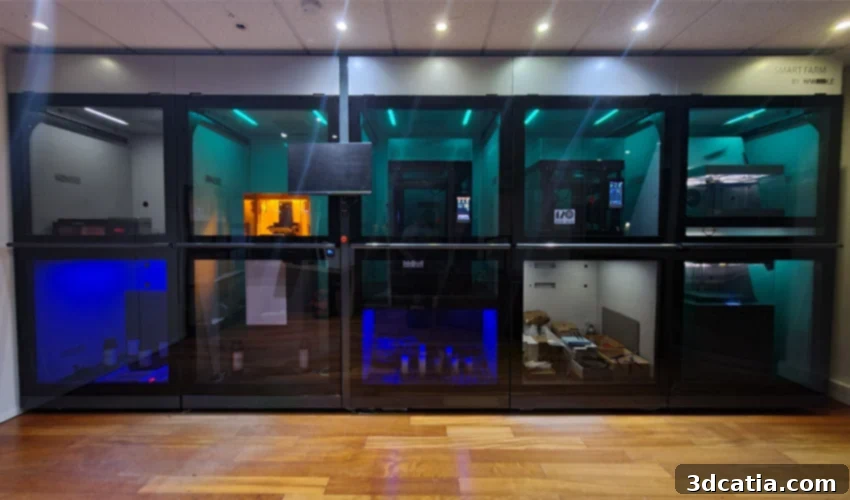
The cornerstone of Handddle’s hardware offering is the SmartFarm microfactory. This compact yet powerful unit boasts a volumetric capacity of 70.63 cubic feet (2 m³) and requires a minimal floor space of just 10.8 square feet (1 m²). Its intelligent design allows businesses to centralize their entire machine park, alongside essential post-processing solutions. Beyond just housing equipment, SmartFarm ensures that valuable materials are stored under optimal conditions, meticulously controlling factors like humidity and temperature to preserve material integrity and extend shelf life. To gain deeper insights into this groundbreaking solution and Handddle’s vision for the future, we sat down with Thomas Bourgoin, one of the three visionary founders of Handddle.
3DN: Can you introduce yourself and elaborate on your connection to 3D printing?
Thomas Bourgoin
Hello, I’m Thomas Bourgoin, and my professional journey began with a strong technical foundation in mechanical engineering. From the very outset of my career, I was captivated by emerging manufacturing methods. This early fascination naturally led me to additive manufacturing, a field where I’ve had the privilege of collaborating with prominent market players such as Prodways and BCN3D. These invaluable experiences, combined with my profound passion for 3D technologies, allowed me to cultivate a specialized expertise. This deep understanding of the industry, its challenges, and its immense potential is what drives our innovation at Handddle, enabling us to contribute meaningfully to this continuously evolving market.
3DN: What inspired the creation of Handddle?
Handddle was born from a crucial observation that many in the industry share: while numerous small-scale applications for 3D printing have emerged or are beginning to surface in recent years, far too few of them ever manage to scale beyond a rudimentary, “gadget-like” utility within companies. We noticed a significant gap between the ease of acquiring a 3D printer and the much greater complexity of integrating it as a truly established, daily-use production tool. This difficulty stems from several core issues.
Firstly, many organizations find themselves with a scattered collection of manufacturing machines on one side and raw materials on the other, lacking any cohesive organization or operational framework. This disjointed approach hinders efficiency and consistency. The second major challenge, a direct consequence of the first, is the absence of appropriate tools necessary to elevate additive manufacturing from a novelty to a reliable and integral production asset. These collective hurdles underscored the urgent need for a solution like Handddle. Our approach is unique: instead of offering machines or materials, we focus on providing the essential infrastructure to structure and industrialize the diverse applications of this transformative technology, thereby unlocking its full potential for businesses.
3DN: Could you elaborate further on your comprehensive solution?
Our solution is elegantly divided into two synergistic components, beginning with our robust software platform. This dedicated platform is meticulously designed for managing and optimizing additive processes within corporate environments. It serves as a central hub where users can initiate work related to 3D printing and subsequently manage and exploit their production data. The platform’s functionality is structured around two primary phases. The first involves the precise creation of a manufacturing range, which considers crucial factors such as the type of machine being used, specific customer constraints, qualification requirements, and the choice of an operating scheme, whether in-house or through a licensed format. This detailed planning ensures that every print job is meticulously prepared. The second phase is the execution of this process, managed through an intuitive production management interface. The overarching objective of this platform is to provide users with clear visibility and foresight into the production capacity of their entire fleet of machines, enabling them to effectively operate their additive manufacturing assets and maximize their profitability. Developing the digital process is merely the initial step; our true goal is to bring it to life and put it into motion.
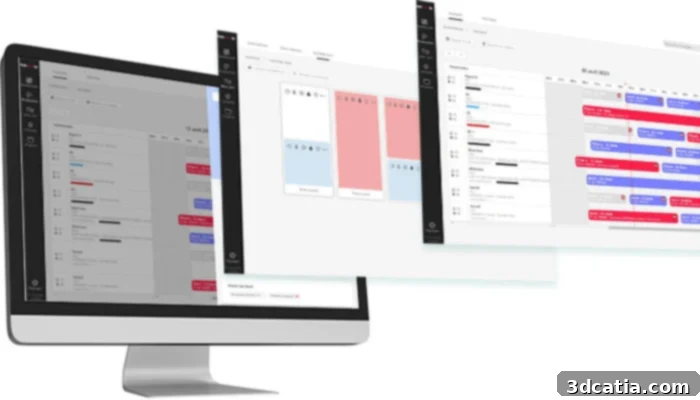
The Handddle software platform offers comprehensive production management. (Photo credits: Handddle)
To bridge the gap between digital planning and physical production, we developed SmartFarm: a standardized installation of production means specifically tailored for integrating 3D printing into business operations. SmartFarm is designed to be compatible with a vast majority of 3D machines available on the market, creating a “micro” ecosystem that elevates manufacturing conditions and user ergonomics to industry-leading standards. The product is infinitely configurable by the customer and highly modular, adapting seamlessly to diverse production needs. It allows our customers to securely store their raw materials under ideal environmental controls—managing temperature, humidity, and UV exposure—and to install their machines while creating dedicated post-processing areas within the unit. Furthermore, SmartFarm incorporates advanced on-board technology that processes data from the integrated machines, providing real-time production control and invaluable operational insights. This integrated approach ensures precision and efficiency from start to finish.
Currently, SmartFarm is ideally suited for installations utilizing desktop or desktop+ machines, accommodating a useful volume ranging from 0.5 m³ to 2 m³ within its compact 1 m² floor space. However, we are actively exploring possibilities for scaling our solution to accommodate larger industrial machines, ensuring that size will not be a constraint for future applications. With this complete, integrated solution, companies gain the assurance that their additive manufacturing production will not only be feasible but will also consistently adhere to established industry standards, particularly concerning crucial health and safety regulations. This holistic approach provides peace of mind and operational excellence, ensuring a secure and efficient 3D printing environment.
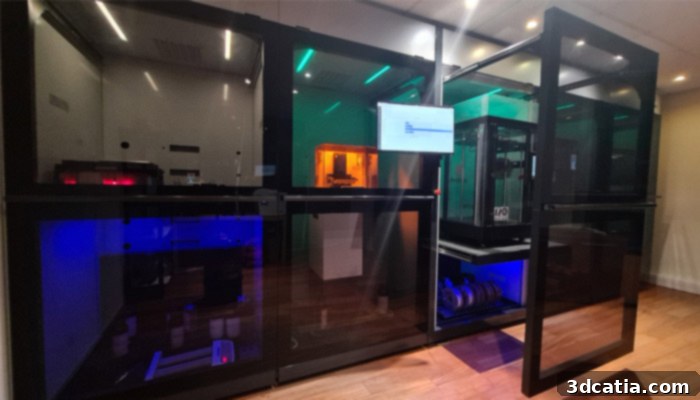
SmartFarm is highly configurable to meet diverse production requirements. (Photo credits: Handddle)
3DN: What are the primary advantages of Handddle’s solution?
Our solution delivers unparalleled control over the entire manufacturing process, guaranteeing consistent repeatability in virtually any environment, precisely tailored to user needs. The Handddle APP acts as a central nervous system, consolidating the entire 3D printing ecosystem into a single, collaborative interface. This platform allows users to define and create a customized process for each specific requirement, adapting to the technologies used and ensuring that every manufacturing operation rigorously adheres to the established protocol. The production management interface offers a comprehensive suite of functionalities to monitor, control, and meticulously trace the production of all components. Being cloud-based and directly linked to SmartFarm, this interface also grants users the flexibility to manage and oversee their microfactory from any location, at any time.
These robust features translate into significant daily productivity gains, enabling the automation of low value-added tasks and freeing up valuable human resources for more complex activities. The hardware component, SmartFarm, standardizes the installation of all tools necessary for production. It includes an advanced filtration system, developed in collaboration with a leading company in this specialized market, designed to enhance user safety by effectively managing emissions. This filtration block is intelligently adapted to the specific process installed, ensuring optimal efficiency and air quality. Crucially, the machines themselves operate within a meticulously controlled and monitored manufacturing environment, ensuring the best possible operational conditions for consistent, high-quality output. Furthermore, the system’s superior soundproofing and its plug & play design facilitate rapid deployment across a variety of settings, from quiet design offices to bustling workshops and dynamic collaborative spaces, making Handddle a versatile and indispensable asset for modern manufacturing.
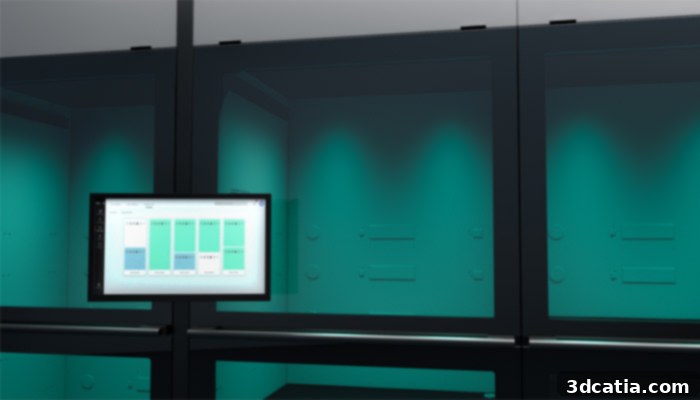
A glimpse into the Handddle microfactory setup. (Photo Credits: Handddle)
3DN: What are Handddle’s primary target markets?
Handddle targets several key sectors with distinct needs for additive manufacturing integration and optimization. Our core focus is on companies requiring in-house manufacturing capabilities, whether for creating specialized tooling, ergonomic parts to improve workplace safety and efficiency, or for producing critical spare parts and supporting maintenance operations. For these businesses, we offer two pathways: for those who already possess a machine park, we provide the framework and structure to industrialize and optimize their existing assets. For new adopters, we collaborate closely to define and create the ideal manufacturing means to precisely meet their unique requirements and objectives.
Beyond the industrial sector, the education sector represents another significant target for us. We aim to equip campuses with accessible 3D printing hubs, empowering students with hands-on experience and preparing the next generation for an industrialized additive manufacturing landscape. Finally, we are keen to partner with companies that aspire to seamlessly integrate 3D printing into their value chain, leveraging the technology to produce components of their finished products, thus gaining a competitive edge through agile manufacturing. A key advantage of our solution is its inherent flexibility: customers can initially engage with just the digital platform, exploring its functionalities and optimizing their workflows. Then, as their confidence grows and they decide to take a further step into industrialized additive manufacturing, they can integrate our production standard, SmartFarm. SmartFarm connects effortlessly to the platform, unlocking the full suite of advanced functionalities and capabilities, ensuring a scalable and future-proof investment.
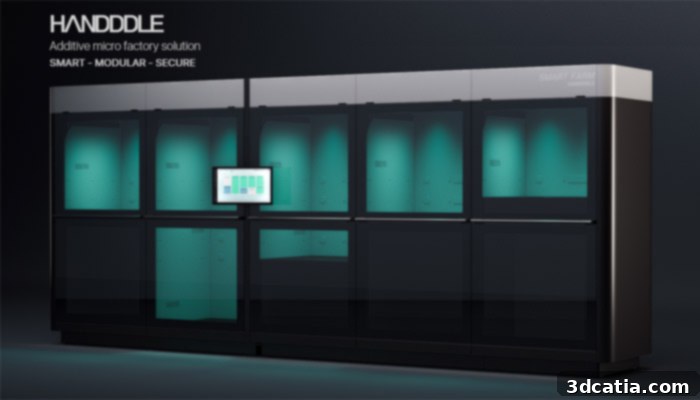
Inside the efficient and organized Handddle microfactory. (Photo Credits: Handddle)
3DN: How do you envision additive manufacturing process automation transforming the manufacturing industry?
The ability to reliably deploy a distributed manufacturing process will be absolutely essential if we are to fundamentally challenge and redefine how we currently utilize additive manufacturing technology. To achieve this, it is paramount that we can ensure a consistent standard is maintained, irrespective of the specific production site. Historically, traditional manufacturing has often relied on highly centralized, delocalized schemes designed to meet vast mass demand. These established paradigms are now facing significant disruption, and additive manufacturing possesses the inherent capability to completely rethink and revolutionize them. The shift towards localized, on-demand production holds immense promise for resilience and customization.
Regarding the automation of these processes, it is undeniable that the autonomy of these sophisticated systems will be one of the pivotal keys to advancing further and significantly reducing the operational costs associated with distributed production units. While these are subjects we are actively researching and developing, we recognize there is still considerable ground to cover before achieving full autonomy. However, Handddle is already offering a crucial first layer of automation and embedded intelligence. This initial advancement allows companies to take a significant stride forward in their utilization of, and perception of, additive manufacturing technology. It moves 3D printing beyond mere prototyping into a reliable, integrated, and cost-effective production method. We invite you to visit our website to discover more about our solutions and our vision for the future of manufacturing!
What are your thoughts on Handddle’s innovative solution and its potential impact on the industry? We’d love to hear your perspective! Please share your comments below or engage with us on our Facebook and Twitter pages. Don’t forget to sign up for our free weekly newsletter to receive all the latest news and insights in 3D printing delivered directly to your inbox!