
Revolutionizing Copper 3D Printing: Graphene Unlocks Denser, High-Performance Parts
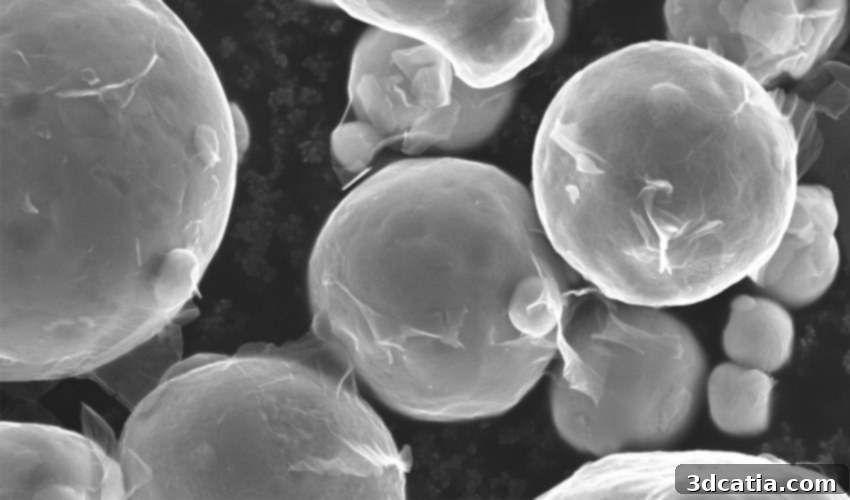
The world of additive manufacturing is constantly seeking innovations to push the boundaries of material capabilities. A significant breakthrough has emerged from a collaboration between Sweden’s Uppsala University and the advanced materials company Graphmatech. Together, they have pioneered a groundbreaking method to create a specialized copper powder, specifically engineered to produce substantially denser 3D printed parts. This innovation leverages a sophisticated laser fusion process, where researchers have ingeniously modified the surface of the metal powder with graphene. Graphene, renowned for its exceptional properties including immense strength, superior electrical and thermal conductivity, and remarkable lightness, has been instrumental in this development. By incorporating this wonder material, the teams claim to have dramatically reduced the inherent reflectivity of copper, thereby making it significantly more amenable to laser-based additive manufacturing processes and unlocking its full potential.
The Persistent Challenge of 3D Printing Pure Copper
While pure copper is an indispensable material in numerous high-tech applications due to its unparalleled electrical and thermal conductivity, its integration into additive manufacturing has historically been fraught with challenges. In recent years, several solutions have surfaced, primarily focusing on extrusion-based techniques. Industry leaders such as Markforged and Desktop Metal have successfully introduced pure copper filaments, which have indeed improved the accessibility of copper for certain 3D printing applications, particularly those benefiting from enhanced electrical and thermal properties. However, these methods, while valuable, often have limitations concerning part complexity, resolution, and the mechanical properties achievable through laser powder bed fusion (LPBF).
The core difficulty in 3D printing pure copper, especially with laser-based techniques like LPBF, lies in its exceptionally high reflectivity. When a powerful laser beam, crucial for melting and fusing metal powder layers, strikes a copper surface, a significant portion of its energy is reflected rather than absorbed. This reflection drastically diminishes the energy density transferred to the powder bed. Consequently, the copper powder fails to melt efficiently and uniformly. The material retains only a minimal fraction of the laser’s energy, leading to insufficient fusion between layers and particles. This phenomenon results in 3D printed parts that are highly porous, structurally weak, and have considerably lower densities than desired. Such imperfections severely compromise the mechanical integrity, thermal performance, and electrical conductivity of the final components, thereby limiting copper’s widespread adoption in critical additive manufacturing applications where high performance is paramount.
Graphene: The Miracle Solution for Enhanced Copper AM
The quest for a material that could overcome copper’s reflectivity barrier has been a long-standing challenge in the additive manufacturing sector. Graphene, a single layer of carbon atoms arranged in a two-dimensional honeycomb lattice, has emerged as a groundbreaking solution. Its unique atomic structure bestows upon it an extraordinary combination of properties: it is the strongest material known to man, incredibly lightweight, and boasts exceptional electrical and thermal conductivity. Crucially, graphene also exhibits unique optical properties, including a high absorption rate for certain wavelengths, making it an ideal candidate to address the reflectivity issue of copper.
The innovative research conducted at Uppsala University’s Angström laboratory, led by Professor Ulf Jansson, demonstrated the profound impact of incorporating graphene onto the surface of copper powder particles. Their pioneering work successfully proved that by applying a thin, uniform coating of graphene, the reflectivity of the metal could be drastically reduced. This reduction in reflectivity directly translates into a much more efficient absorption of laser energy during the 3D printing process. With more energy effectively absorbed, the copper powder melts more thoroughly and solidifies into denser, more homogenous parts, significantly enhancing the structural integrity and functional performance of the final product.
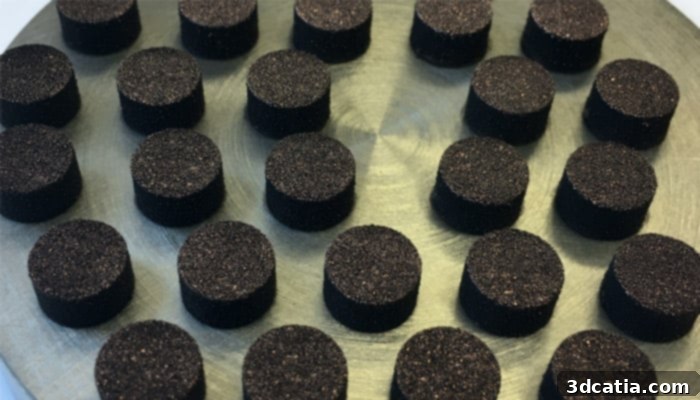
By coating copper powder with graphene, researchers have lowered its reflectivity, enabling denser 3D printed parts (Photo Credit: Uppsala University).
Unprecedented Reflectivity Reduction: A Scientific Triumph
The partnership between Uppsala University and Graphmatech has yielded tangible and impressive results. Mamoum Taher, CEO of Graphmatech, highlighted the quantitative success of their patented graphene technology, stating: “By modifying the surface of the copper powder using Graphmatech’s patented graphene technology, we successfully reduced the reflectance by up to 67%”. This staggering reduction in reflectivity is a game-changer for laser-based additive manufacturing of copper. It means that significantly more of the laser’s energy is absorbed by the material, promoting better melting, improved fusion, and ultimately, higher-quality parts.
Beyond merely reducing reflectivity, the research team emphasized the robustness of the graphene coating itself. They confirmed that the graphene layer applied to the copper powder resists degradation and remains stable throughout the intense laser melting process. This durability is critical, as a compromised coating would negate the benefits. The resilience of the graphene coating ensures that its properties are maintained, consistently leading to a substantial reduction in the porosity of the final 3D printed copper part. Lower porosity directly correlates with improved mechanical strength, enhanced thermal dissipation capabilities, and superior electrical conductivity, making these graphene-infused copper parts ideal for demanding applications where reliability and performance are paramount.
Opening New Horizons: Applications of Graphene-Coated Copper
The development of this novel hybrid material, combining the unparalleled conductivity of copper with the reflectivity-reducing properties of graphene, is set to unlock a myriad of advanced applications across various critical sectors. Professor Jansson articulated the vast potential, remarking: “The new process developed to coat metal powder with graphene opens up very interesting perspectives for the design of new materials in various applications”. This sentiment underscores the transformative impact this innovation is expected to have.
Defense Sector
In the defense industry, the ability to 3D print complex copper components with superior thermal and electrical properties is invaluable. Applications could include advanced heat sinks for high-power electronic systems in avionics and radar, efficient electromagnetic shielding components, and lightweight, high-performance connectors. The improved density and reduced porosity of these parts would ensure greater reliability and performance in extreme operational environments, giving a significant advantage in mission-critical scenarios.
Electronics Industry
The electronics sector stands to benefit immensely from this breakthrough. The demand for compact, efficient, and high-performance electronic devices continues to surge. Graphene-coated copper could be used to manufacture intricate circuit boards with embedded cooling channels, highly efficient heat exchangers for microprocessors, high-frequency antennas, and custom electrical connectors. The enhanced thermal management capabilities would allow for the design of smaller, more powerful electronic components, pushing the boundaries of miniaturization and operational efficiency in everything from consumer electronics to industrial computing.
Beyond Defense and Electronics
The potential extends far beyond these primary sectors. In the automotive industry, graphene-copper composites could lead to more efficient electric vehicle components, including lighter and more effective battery cooling systems or advanced motor windings. In the aerospace industry, the combination of lightness, strength, and thermal conductivity could enable innovative designs for satellite components or engine parts requiring precise thermal management. Even in the medical field, custom implants or surgical tools requiring specific electrical or thermal properties could emerge. This versatile material paves the way for a new generation of functional prototypes and end-use parts that were previously unattainable with traditional copper additive manufacturing.
The Future of Additive Manufacturing with Graphene
Graphmatech is at the forefront of expanding the utility of graphene in additive manufacturing, firmly convinced of the immense potential this material holds for revolutionizing the industry. Their commitment to innovation in material science, particularly with graphene, positions them as a key player in enabling previously impossible applications. The success of this collaboration with Uppsala University not only validates their patented technology but also serves as a beacon for future research and development in hybrid materials for advanced manufacturing. This Swedish innovation exemplifies how targeted material modifications can overcome long-standing barriers in cutting-edge technologies.
The development of graphene-coated copper powder is more than just an incremental improvement; it represents a significant leap forward for copper 3D printing. By tackling the fundamental challenge of laser reflectivity, researchers have unlocked a pathway to creating high-density, high-performance copper parts that can truly leverage the material’s inherent superior electrical and thermal conductivity. This breakthrough will undoubtedly accelerate the adoption of copper in critical additive manufacturing applications, fostering innovation across a wide range of industries and pushing the boundaries of what’s possible with 3D printing. We eagerly anticipate the future Swedish innovations that will undoubtedly build upon this remarkable achievement!
*Photo Credits : Simon Tidén / Uppsala University
What do you think about this graphene and copper hybrid material and its implications for additive manufacturing? Let us know in a comment below or connect with us on our Facebook, Twitter and LinkedIn pages! Don’t miss out on the latest 3D printing news and innovations – sign up for our free weekly Newsletter here, delivered straight to your inbox!