
How 3D Printing is Revolutionizing the Gaming World: Customization, Performance, and Endless Innovation
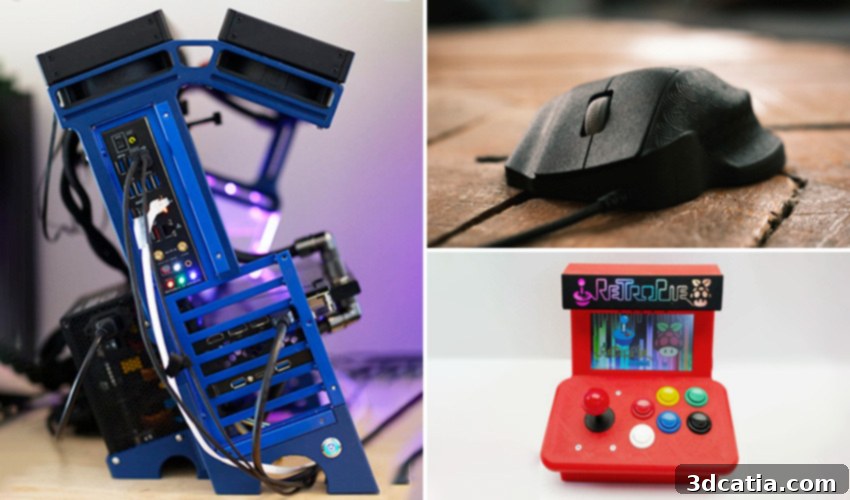
The world of video gaming has never been more vibrant and expansive, captivating audiences across diverse platforms like PCs, PlayStation, Xbox, Nintendo Switch, and mobile devices. This dynamic industry continues to grow at an astonishing pace, with Statista projecting the global video game market size to reach an impressive $334 billion by the end of this year. This phenomenal growth underscores the industry’s health and its pervasive influence on modern entertainment. Within this massive ecosystem, 3D printing technology is rapidly gaining traction, offering unparalleled opportunities for customization, innovation, and enhanced user experiences. From the professional studios developing AAA titles to individual gamers seeking to personalize their setups, additive manufacturing is proving to be a game-changer. Whether it’s designing intricate in-game costumes for popular titles like Just Dance 2023, crafting ergonomic keyboards tailored for specific users, or developing entirely new peripherals, 3D printing is expanding the boundaries of what’s possible in the gaming realm. To illustrate this transformative power, we’ve curated a comprehensive list of some of the most exciting and innovative 3D printing projects currently shaping the future of gaming, showcasing the immense potential and versatility this technology brings to players and developers alike.
Official 3D Printing Projects Pioneering Gaming Innovation
Open Source 3D Printed VR Visor: The Somnium VR1
A groundbreaking initiative poised to redefine virtual reality (VR) hardware accessibility for gamers is the Somnium VR1 virtual reality visor. Somnium Space, a prominent leader in the virtual reality sector, has forged a strategic partnership with Vrgineers, Inc., and Prusa Research, a renowned Czech 3D printer manufacturer. Their collaborative goal is to develop an advanced, open-source virtual reality visor that empowers users like never before. Designed to function as either a wired or a standalone device, the Somnium VR1 aims to disrupt the often restrictive supply chains and limited customization options prevalent in the current VR market. The core innovation lies in making the 3D models of the visor’s various components freely available and infinitely usable. This means that any user with access to a 3D printer can download these models and print the parts themselves, fostering an unprecedented level of user engagement and control. This open-source approach not only allows for limitless customization, enabling gamers to personalize their visors to their exact preferences, but also facilitates easy repairs and ongoing improvements. Users will no longer be dependent on manufacturers for spare parts or upgrades; instead, they can modify, enhance, and maintain their purchased visor independently, truly democratizing the ownership and evolution of VR hardware through the power of 3D printing.
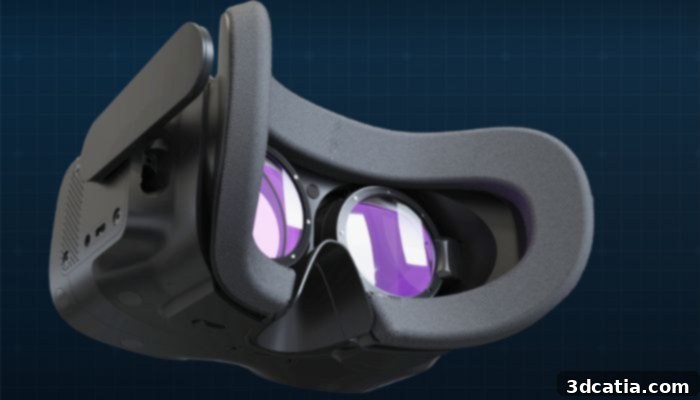
Photo credits: Somnium Space
A Customized 3D Printed Gaming Mouse for Optimal Ergonomics
In the competitive world of gaming, precision and comfort are paramount. Recognizing this, Canadian startup Formify has innovated a customized ergonomic mouse, developed in close collaboration with the leading printing company Hubs. This cutting-edge peripheral leverages Multi Jet Fusion (MJF) technology to deliver an unparalleled level of personalization. What sets the Formify mouse apart is its unique customization process: gamers simply capture an image of their hand, which Formify then uses to generate a tailor-made mouse design. This design is meticulously optimized for the individual’s specific morphology, ensuring a perfect fit that significantly enhances comfort and reduces strain during extended gaming sessions. Sophisticated software analyzes the hand geometry to determine the most ergonomic position for the player’s hand, subsequently preparing the precise 3D model for additive manufacturing by Hubs. Through this collaboration, the companies selected an ultra-light nylon material, a choice that dramatically reduced the mouse’s weight by half compared to conventional models, dropping from a typical 100 grams to an astonishingly light 55 grams. This reduction in weight allows for faster, more fluid movements, offering a distinct competitive advantage. Furthermore, the 3D-printed texture of the mouse provides an improved grip and a unique aesthetic appeal. Equipped with the PixArt Sensor 3389, widely recognized as one of the most powerful and accurate sensors on the market, the Formify mouse combines personalized ergonomics with high-performance technology, setting a new standard for gaming peripherals.
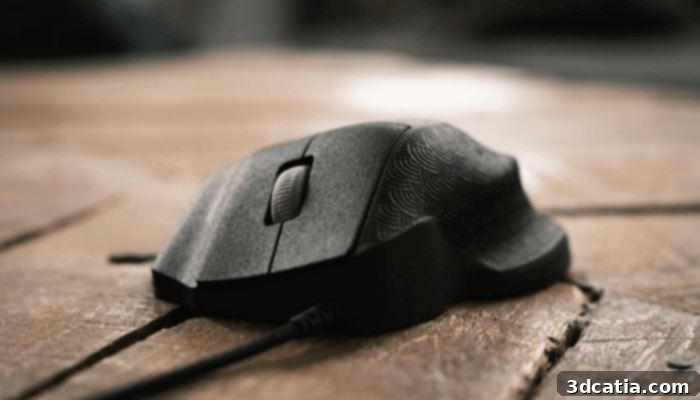
Photo credits: Formify
Custom 3D Printed Controllers for Elite Gaming Performance
The market for custom console controllers has experienced significant growth over the past decade, evolving from niche modifications to sophisticated, high-performance peripherals essential for competitive play. Initially, these custom controllers often featured additional levers to simulate simultaneous button presses, providing a tactical edge. Today, the landscape has transformed dramatically, offering professional-grade controllers equipped with interchangeable buttons, ultra-sensitive triggers, and up to six additional levers on the back, all designed to optimize a gamer’s input and reaction time. Battle Beaver Customs stands out in this specialized market, pushing the boundaries of customization and efficiency. This innovative company empowers its engineers with in-house 3D printing capabilities, utilizing advanced systems like Formlabs’ SLA Form 2 and SLS Fuse 1 printers. The primary motivation for this investment is to rapidly print custom controller housings and buttons, significantly reducing both development time and production costs. Thanks to the speed and precision of their Fuse 1 SLS printer, Battle Beaver Customs can manufacture complex internal parts for their controllers in record time. This capability allows them to efficiently meet the high demand from their clientele, delivering highly customized end products that offer a tangible advantage in competitive gaming. The ability to quickly iterate designs and produce bespoke components ensures that Battle Beaver Customs remains at the forefront of providing elite gamers with the tools they need to perform at their peak, all enabled by the flexibility and power of additive manufacturing.
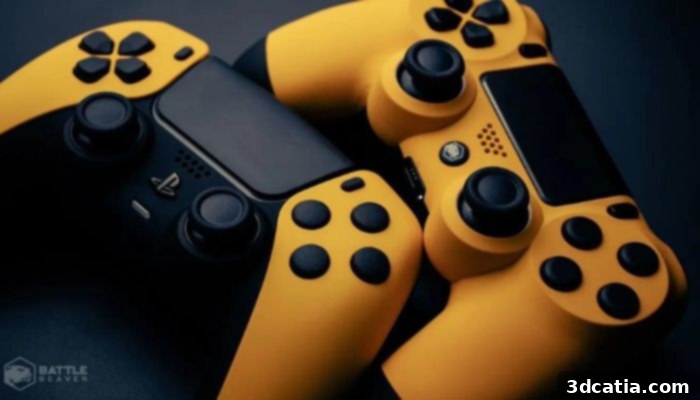
Photo credits: Battle Beaver
In-Game Costumes Brought to Life with 3D Printing in Just Dance 2023
Ubisoft, a global titan in the video game industry, boasts an extensive portfolio of beloved sagas, including the immensely popular Just Dance series. Since its debut in 2008, Just Dance has sold millions of copies worldwide, inviting players to mimic dance steps displayed on screen. Contrary to what modern advancements might suggest, the characters seen dancing in the game are not entirely computer-generated; rather, they are real performers recorded in a studio against a greenscreen. A hallmark of the Just Dance aesthetic is the incredibly intricate and often futuristic designs of the dancers’ costumes, and this is precisely where 3D printing has made a significant impact. For the latest edition of this vibrant video game, Just Dance 2023, the villain’s elaborate costume was ingeniously created using 3D printing technology. The materials chosen for this complex garment were specifically selected for their malleability and comfort, and the costume was assembled in pieces to ensure it would not hinder or injure the dancer during their rigorous performances. Had this costume been crafted using traditional fabrication methods, its complexity might have posed risks to the performer’s movement and safety. The ability of 3D printing to create lightweight, flexible, and intricately detailed components proved invaluable. While the exact technology used hasn’t been officially confirmed, experts suspect that Stereolithography (SLA) or material jetting were employed, given their capacity for producing high-resolution, complex forms with diverse material properties. This application highlights 3D printing’s crucial role in blending digital creativity with physical performance, enhancing visual fidelity and dancer safety within the gaming industry.
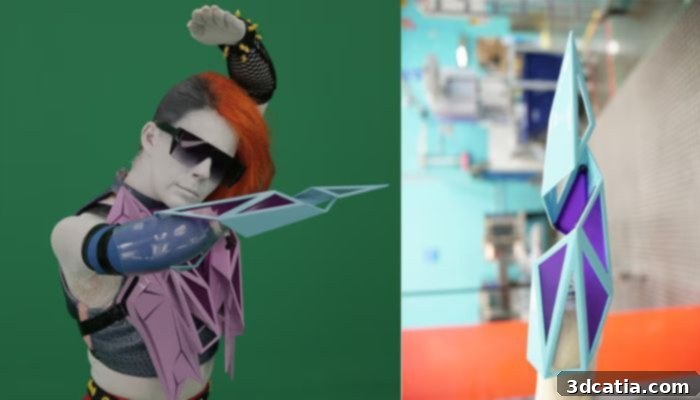
Photo credits: Ubisoft
Valve’s 3D Printed Steam Deck: Empowering the Modding Community
In a move that significantly empowers its community of users, Valve, the creator of the immensely popular portable gaming system, the Steam Deck, has released the Computer-Aided Design (CAD) files for its device. To be precise, these files specifically pertain to the facade or the outer casing of the Steam Deck; the complex internal electronic components are, understandably, not included. While this doesn’t yet mean gamers can print a fully functional Steam Deck straight from a home 3D printer, this initiative marks a pivotal moment for the gaming giant and the broader modding community. By openly sharing these design files, Valve explicitly targets makers, hobbyists, and enthusiasts who are keen on creating their own customized accessories, unique replacement cases, or even entirely new form factors for their Steam Deck hardware. This progressive approach fosters a culture of innovation and personalization, allowing users to extend the device’s functionality and aesthetics far beyond its original design. Valve further supports this community by offering technical assistance and detailed instructions for the printing process, lowering the barrier to entry for creative modifications. The CAD files are conveniently available in widely used formats such as STL, STP, and PDF, ensuring broad compatibility. For those aiming to produce a true-to-the-original 3D printed version, either an FDM (Fused Deposition Modeling) or a resin printer would be suitable. The exact dimensions for a 1:1 replica are 298.3 x 118.11 x 49.8 mm, although the model’s size can be flexibly scaled to fit the printing platform of various 3D printers. It’s important to note that while the dimensions can be matched, achieving the exact authentic look and finish of Valve’s original product, especially with complex color schemes, would necessitate a high-precision multicolor 3D printer, which are less common among hobbyists. Nevertheless, this release represents a powerful gesture towards open hardware, inviting creative minds to explore new possibilities for one of the most popular handheld gaming devices.
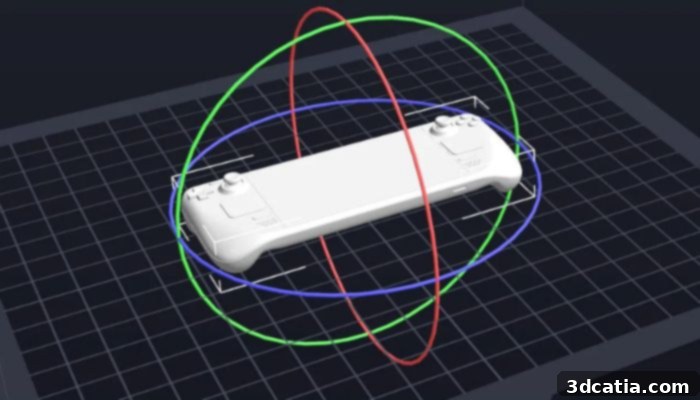
Photo credits: Tom’s Hardware
Do-It-Yourself 3D Printing Projects for Gamers
A Gaming Keyboard Designed for Left-Handed Users
Accessibility and ergonomics are critical for all gamers, and 3D printing empowers individuals to create solutions tailored to specific needs. A prime example is the gaming keyboard meticulously designed for left-handed users, shared by maker ivanricci on Thingiverse. This innovative peripheral is constructed from a combination of expertly 3D-printed parts and a repurposed control board salvaged from an older, standard keyboard. The designer ingeniously customized the keyboard base to perfectly accommodate his existing control board. However, ivanricci thoughtfully highlights the modularity of his design, noting that by making minor adjustments and removing certain sections of the model, it can be adapted to integrate various other types of control boards, offering flexibility to users with different components. He also provides valuable insights into switch preferences, mentioning his use of Cherry Blue key switches, while acknowledging that Cherry Black switches are often preferred by competitive gamers for their linear feel and responsiveness. The readily available models for this project include the essential keyboard base, a connector piece, a robust key frame, and specialized wrist and hand supports designed to maximize comfort during intense gaming sessions. This project perfectly encapsulates how DIY 3D printing can address niche market demands and create highly personalized, ergonomic gaming gear that simply isn’t available off-the-shelf, truly democratizing the creation of custom peripherals.
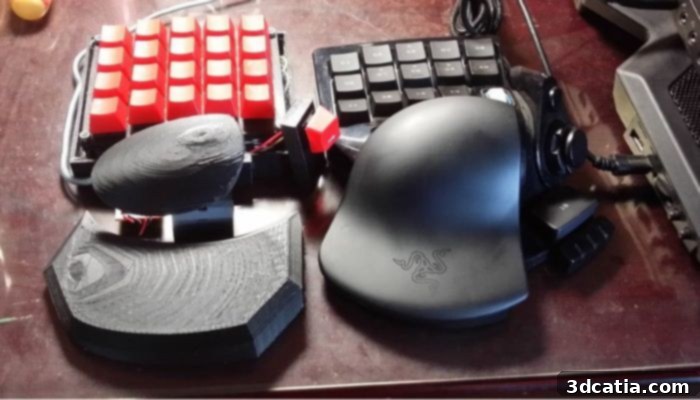
Photo credits: ivanricci on Thingiverse
Custom Homemade Computer Cases: Beyond the Rectangle
For many enthusiasts in the world of PC gaming, building and customizing a desktop computer transcends a mere hobby; it’s a passion, an art form, and for some, even a rite of passage. From meticulously selecting powerful hardware components and optimizing complex cooling systems to integrating intricate lighting setups, every detail contributes to a unique gaming rig. Now, thanks to the versatility of 3D printing, PC gaming setups are poised to reach unprecedented heights of creative personalization. With a 3D-printed computer case, as exemplified by the innovative design from user Empiricus on Thingiverse, PC gamers gain complete control over their system’s physical presentation and internal layout. This revolutionary approach allows for the creation of perfectly sized compartments for specific graphics cards, custom liquid cooling units, and multiple hard drives, optimizing both performance and airflow in ways traditional cases cannot. Moreover, a 3D-printed case is not bound by the conventional confines of four rectangular sides. It can manifest in abstract, open designs that showcase internal components, or even take on the exact shape of iconic fictional objects and characters from beloved video games. This freedom from conventional manufacturing constraints means that gamers can truly imbue their setups with a personal flair that reflects their individual style and gaming identity, transforming their computer case from a utilitarian box into a unique piece of functional art.
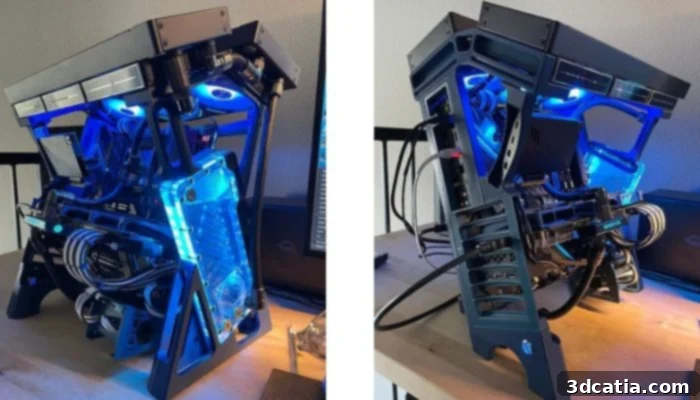
Photo credits: Empiricus on Thingiverse
3D Printing Retro Video Game Consoles: A Blast from the Past
While modern gaming continually pushes technological boundaries, the nostalgic allure of older, “retro” games and consoles remains incredibly potent for a dedicated community of players. The challenge, however, often lies in finding these classic machines in good working condition or at reasonable prices in the real world. Fortunately, 3D printing offers an ingenious solution, allowing enthusiasts to recreate their very own mini arcade video game consoles and revisit cherished gaming memories. The STL file for such a project, courtesy of GabrieleDaghetta, is freely available on Thingiverse, complete with comprehensive instructions on how to assemble this charming miniature arcade. It’s important to understand that while the plastic cabinet parts are fabricated using a 3D printer, bringing the console to life requires integrating some essential electronics. Specifically, a Raspberry Pi 2 board, a 7-inch display, and an appropriate shield for managing buttons and controls are necessary to power the system, illuminate its features, and enable actual gameplay. This combination of 3D-printed aesthetics and modern microcomputing provides a perfect blend of old-school charm and new-school convenience. By embarking on this DIY project, gamers can soon be enjoying timeless classics like Pac-Man, Space Invaders, or Donkey Kong, experiencing the joy of arcade gaming right in the comfort of their own home, all thanks to accessible 3D printing technology and open-source electronics.
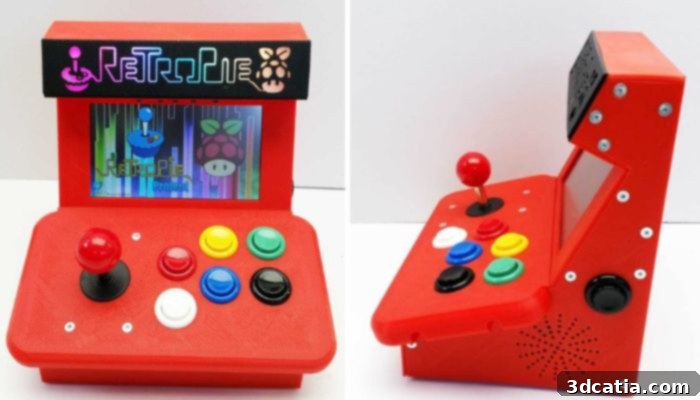
Photo Credits: GabrieleDaghetta on Thingiverse
3D Printed Gaming Accessories: Enhancing Immersion and Performance
For many gamers, interacting with a game solely through a standard controller or a keyboard and mouse is perfectly acceptable. However, the pursuit of enhanced immersion and new challenges often drives players to seek out specialized accessories. Game-specific controllers have been a part of the video gaming landscape almost since its inception, ranging from the iconic gun-shaped peripherals for classics like Duck Hunt to sophisticated steering wheels and flight sticks designed for realistic simulator games. What has transformed this niche market is the advent of 3D printing, making it easier than ever for anyone to find, design, and print helpful, game-changing tools right from the comfort of their own home. Imagine effortlessly snapping a miniature 3D-printed steering wheel onto your existing controller, instantly transforming your driving game experience. Or perhaps a custom-grip attachment that perfectly conforms to your hand, improving accuracy in first-person shooters. Whether you’re aiming to shave precious seconds off your best racing time, achieve pixel-perfect precision in aiming, or refine your virtual golf swing, the possibilities are vast. With just a few pieces of extruded filament and a home 3D printer, gamers can craft unique accessories that not only elevate their gameplay and provide a deeper level of immersion but also open up new avenues for competitive advantage and pure enjoyment. This accessibility allows for endless innovation in personalizing the gaming experience, moving beyond mass-produced items to truly bespoke solutions.
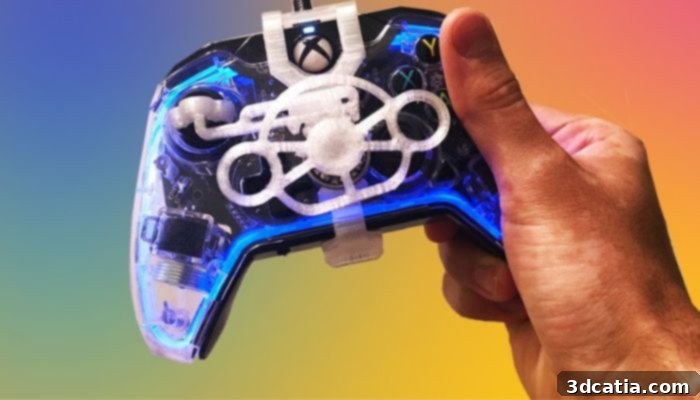
Photo credits: Gonzalor on Cults
From official collaborations that push the boundaries of VR and ergonomic design to empowering DIY projects that cater to specific needs and spark creative expression, 3D printing is undeniably a transformative force in the gaming industry. It enables unprecedented levels of customization, enhances performance through tailored peripherals, and fosters a vibrant community of innovation, proving that the future of gaming is truly three-dimensional. Which of these exciting 3D printed peripherals or projects are you most interested in trying out or learning more about? Let us know in a comment below or connect with us on our LinkedIn, Facebook, and Twitter pages! Don’t forget to sign up for our free weekly Newsletter here to receive the latest 3D printing news straight to your inbox! You can also find all our engaging videos on our YouTube channel for more insights into additive manufacturing.