
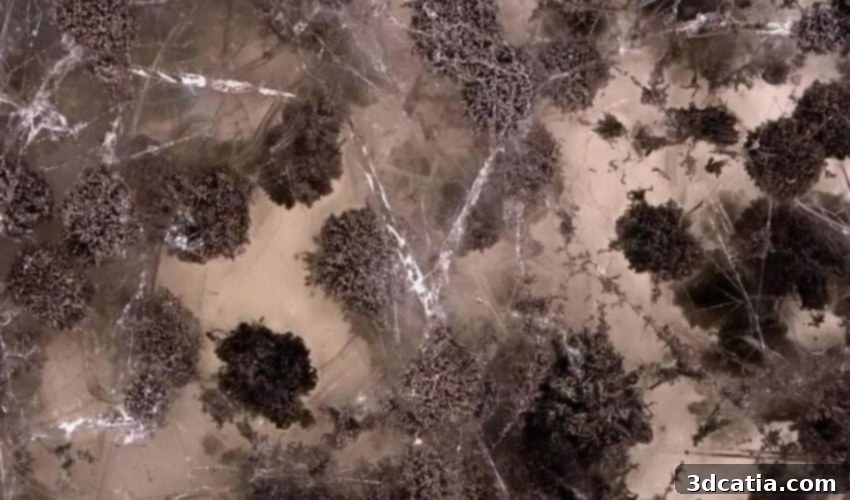
Revolutionizing Space Construction: Self-Healing Living Materials and Fungi-Based Technologies
The audacious dream of constructing resilient habitats on the Moon, Mars, and other distant celestial bodies is steadily transitioning from science fiction to tangible scientific pursuit. While spectacular projects hinting at this future have already captured public imagination, the foundational research necessary to turn these visions into reality is now vigorously underway. A prime example of this pioneering work is the five-year AM-IMATE project, initiated with crucial funding in early 2023. At the forefront of this groundbreaking endeavor are researchers at Delft University of Technology, who are diligently exploring the transformative potential of innovative, bio-inspired building materials specifically designed for extreme extraterrestrial environments. Dr. Kunal Masania, an esteemed Associate Professor of Aerospace Structures and Materials, is leading the charge in this fascinating domain, meticulously researching these “living materials” that hold immense promise for both advanced industry and future space technology.
The AM-IMATE Project: Paving the Way for Bio-Integrated Engineering
The AM-IMATE project, an acronym for Additive Manufacturing of Intelligent, Multifunctional, and Autonomous Materials for Extreme Environments, represents a significant leap forward in materials science. Funded by the European Union until 2027, this initiative is dedicated to developing novel materials that can not only withstand the harsh conditions of space but also adapt and even repair themselves. Dr. Masania’s team at Delft University of Technology received substantial support to delve into the realm of bio-integrated engineering, focusing on creating materials that mimic the adaptive and regenerative qualities found in nature. This research is crucial because traditional building materials face severe limitations when deployed in space, including transportation costs, weight restrictions, and inability to self-repair after damage from micrometeoroids or radiation. The AM-IMATE project seeks to overcome these challenges by harnessing the power of biology.
Unveiling “Living Materials”: The Power of Mycelium and Microorganisms
At the core of Dr. Masania’s research is the development of truly unique “living materials” fundamentally based on microorganisms. These bio-composites are engineered to possess an inherent ability to self-repair, an extraordinary feature that could revolutionize long-duration space missions and extraterrestrial settlements. The specific material being developed is a sophisticated composite, meticulously crafted from fungal cells, natural wood fibers, beneficial bacteria, and a hydrogel matrix. The selection of fungi as a primary component is not arbitrary. Dr. Masania elaborates, “We chose fungi because they are a very robust organism that can withstand tolerant conditions and are relatively easy to cultivate.” This inherent resilience makes fungi an ideal candidate for environments where resources are scarce and conditions are unforgiving, like those found beyond Earth.
Beyond their hardiness, fungi offer another remarkable characteristic: their intricate root system, known as mycelium. Mycelium possesses an incredible capacity to communicate with its surroundings and within its own structure. Functioning akin to a natural sensor network, mycelium can transmit signals throughout the organism, effectively sensing environmental changes and adapting accordingly. This biological intelligence is a key inspiration for Dr. Masania’s work, aiming to imbue engineered materials with similar adaptive capabilities. The composite mixture of fungal cells, wood, bacteria, and hydrogel is meticulously formulated to serve as a specialized ‘ink.’ This bio-ink can then be precisely processed into complex, predetermined structures using advanced 3D printing technologies. This integration of biology and additive manufacturing opens up unprecedented possibilities for on-demand, adaptive construction, both on Earth and in space.
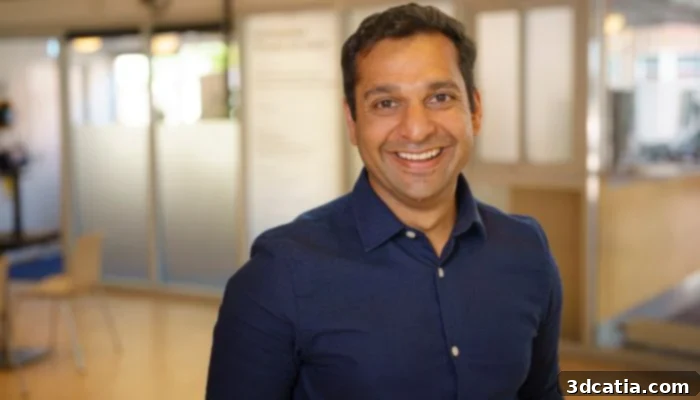
Dr. Kunal Masania is researching “living materials” for aerospace applications as part of the AM-IMATE project (photo credits: TU Delft)
Sustainable Solutions: From Aircraft Interiors to a Circular Economy
The benefits of these living materials extend far beyond their extraordinary self-healing attributes. Their fundamental organic origin inherently champions greater sustainability, addressing pressing environmental concerns faced by numerous industries today. Dr. Masania emphasizes this crucial aspect: “Our materials are very light and more sustainable than the materials currently in use.” This combination of lightweight design and eco-friendliness makes them highly attractive for a broad spectrum of applications, particularly in sectors where material weight and environmental impact are critical considerations. One significant focus of Dr. Masania’s ongoing research is the strategic application of these advanced composite materials as a construction material for aircraft interiors. The potential here is immense and could usher in a new era of aviation sustainability.
Imagine a future where the aircraft interiors we experience are no longer predominantly crafted from petroleum-derived plastics and heavy metals. By replacing these conventional materials with bio-based, living alternatives, a genuinely circular economy concept could be achieved within the aerospace industry. Dr. Masania explains the profound implications: “Currently, aircraft interiors are largely made of plastic and metal. If we replace these, we are no longer dependent on fossil fuels and can offer better end-of-life solutions. If we use living materials, the aircraft components could be broken down and returned to nature.” This vision represents a paradigm shift, moving away from a linear “take-make-dispose” model to a regenerative one where materials can be composted or recycled back into biological cycles, significantly reducing waste, carbon footprint, and reliance on finite resources. The introduction of these lightweight, sustainable, and potentially self-repairing materials could also lead to reduced fuel consumption for aircraft, further contributing to environmental protection and operational efficiency.
Building Beyond Earth: The Vision for Extraterrestrial Habitats
Dr. Masania’s ultimate goal is to pioneer the creation of structural components for aerospace applications that are not only high-performing but also exceptionally durable and adaptable. He envisions a future where technical structures behave much like living organisms: “The aim is to create technical structures that behave like living organisms and can sense and adapt to mechanical stresses.” This capacity for sensing and adaptation is paramount for structures operating in the unpredictable and hostile environments of space, where conditions can change rapidly and maintenance is extremely challenging. A lunar or Martian habitat, for instance, could benefit immensely from materials that detect micro-fractures caused by thermal expansion/contraction or minor impacts, and then initiate autonomous repairs.
The potential of these bio-integrated materials for construction in space is truly immense. They could form the fundamental basis for new extraterrestrial habitats, offering a revolutionary approach to colonization. The concept hinges on leveraging in-situ resources. For example, lunar regolith or Martian soil, which are abundant on these celestial bodies, could be effectively combined with fungi and other local resources. Instead of launching vast quantities of building materials from Earth – an endeavor that is prohibitively expensive and logistically complex – future space settlers could “grow” their homes. This method significantly reduces launch mass and costs, making sustainable long-term human presence in space a far more achievable objective. Imagine 3D printing structures on the Moon using a fungi-based ink mixed with lunar dust, creating self-repairing habitats that adapt to their environment and even potentially filter air or water. This innovative approach promises to unlock new frontiers in space exploration and human settlement, moving beyond rigid, inert structures to dynamic, living architectures capable of unprecedented resilience and autonomy.
The Future of Bio-Integrated Construction: Ongoing Research and Global Impact
The AM-IMATE project, a cornerstone of this exciting research, is slated to receive funding from the European Union through 2027. This continued support underscores the strategic importance of developing bio-inspired and self-healing materials for both terrestrial and extraterrestrial applications. The implications of this work extend beyond aerospace and space construction, potentially influencing fields such as biomedical engineering, civil infrastructure, and sustainable manufacturing. As research progresses, the challenges of scaling these materials for large-scale production, ensuring their long-term stability in diverse environments, and navigating regulatory frameworks will become central. However, the foundational breakthroughs achieved by Dr. Masania and his team provide a compelling glimpse into a future where our built environment is smarter, more sustainable, and truly alive. You can explore more about this pioneering project and its ambitious goals by visiting the official project page HERE.
We are eager to hear your thoughts on the transformative potential of the AM-IMATE project and the innovative “living materials” being developed! How do you envision these fungi-based technologies shaping the future of space exploration or sustainable industries? Please share your insights and opinions in a comment below, or engage with us on our vibrant social media platforms, including LinkedIn, Facebook, and Twitter pages! Don’t miss out on the latest advancements and breaking news in 3D printing and materials science; make sure to sign up for our free weekly newsletter here to receive updates directly in your inbox! For visual content and deeper dives into related topics, you can also find all our compelling videos on our dedicated YouTube channel.
*Cover Photo: Close-up of the “living materials” by Dr. Kunal Masania (photo credits: InnoRenew CoE)