
From Ocean Waste to Sustainable Style: How 3D Printing Revolutionizes Buttons with Finisterre and Recycled Marine Plastic
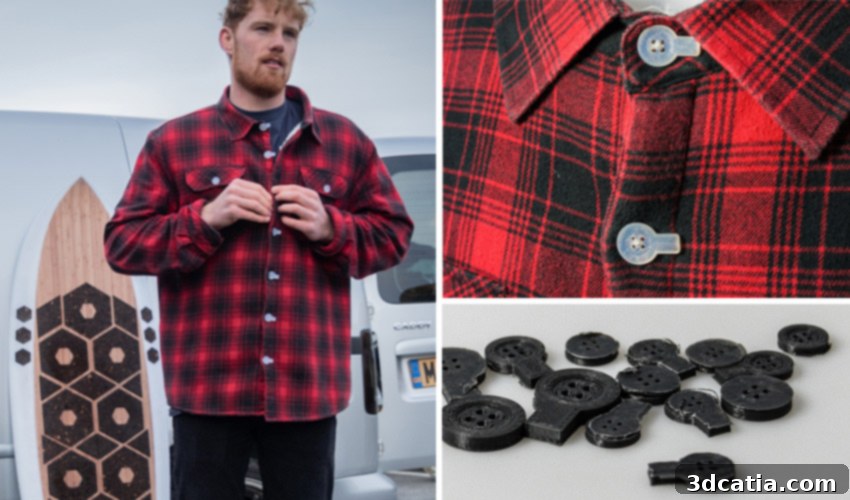
In a world increasingly conscious of its environmental footprint, innovation in sustainable manufacturing is paramount. Finisterre, a renowned British brand deeply rooted in surf culture and a commitment to protecting the oceans, has embarked on a pioneering journey. This journey merges cutting-edge additive manufacturing technologies with a profound dedication to sustainability, focusing on an often-overlooked component of our clothing: the button. The brand questioned, “Why not 3D print the accessories that allow us to ‘close’ our clothes – from essential buttons to practical zipper pulls?” This ambitious inquiry led to a remarkable collaboration, bringing together Fishy Filaments, a visionary company transforming discarded fishing nets into printing filaments, alongside AddiFab and a talented student from Falmouth University. The outcome? Ergonomic, highly functional 3D printed buttons, distinguished by a unique tab design that vastly improves usability, especially for cold or wet hands, a common challenge for surfers and outdoor enthusiasts.
The Hidden Environmental Cost of Conventional Buttons
While seemingly insignificant, the global production of buttons carries a substantial environmental burden. It might surprise many to learn that approximately 50,000 tons of these small accessories are manufactured annually. A staggering proportion of this production originates in China, necessitating extensive global transport flows that contribute significantly to carbon emissions. Furthermore, a common material for these buttons is Nylon 6, a synthetic polymer whose production alone generates nearly half a million tons of CO2 each year. This highlights a critical area where innovative solutions are desperately needed. Additive manufacturing, or 3D printing, emerges as a powerful tool to mitigate this environmental impact. By enabling on-demand, local production, it reduces the need for mass overproduction and minimizes reliance on lengthy, carbon-intensive supply chains, paving the way for a more sustainable future in fashion accessories.
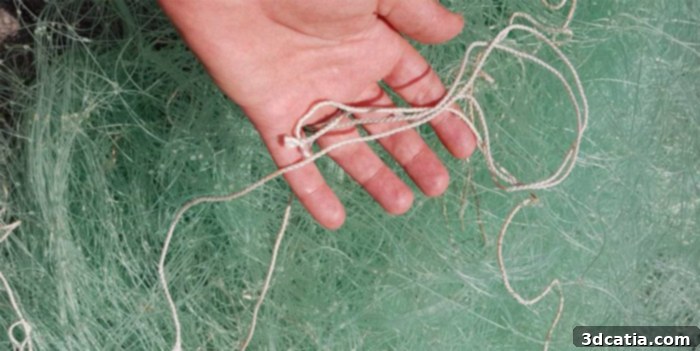
Fishy Filaments designs 3D printing filaments with fishing nets, contributing to a circular economy.
Innovating for Ergonomics: Niall Jones’ Surfer-Inspired Design
At the heart of this groundbreaking project was Niall Jones, a student from Falmouth University, whose ingenuity brought the revolutionary button design to life. Niall recognized the inherent frustrations associated with traditional buttons, particularly in challenging conditions like cold or wet hands – a daily reality for surfers. His design philosophy centered on creating a practical shape that would allow for quick and effortless attachment and detachment in any situation. Through a meticulous iterative design process, he developed several prototypes. The model featuring a distinctive small tab consistently outperformed the others, proving to be the most effective solution. Niall’s hands-on testing methodology was as authentic as his design: “The best way to test the performance of the buttons would be to test them with cold hands. I spent two hours surfing without gloves in December – it was cold for sure. When I got out of the water, I tested several of my models and that’s how I found the right one.” This dedication to real-world application ensured that the final design wasn’t just theoretically sound but practically superior. Once the 3D model was perfected and the necessary STL file prepared, Fishy Filaments stepped in, providing the innovative material required to bring Niall’s vision to tangible form.
Fishy Filaments: Transforming Ocean Waste into Valuable Resources
The backbone of this sustainable initiative is Fishy Filaments, a company at the forefront of the circular economy. Their remarkable process involves collecting plastic granules from discarded fishing nets, preventing an estimated 60 tons of marine pollution annually from Newlyn harbor alone. These collected granules undergo a transformative process, either being converted into high-quality printing filaments or prepared for injection molding. For the Finisterre button project, Fishy Filaments supplied their signature Marine Nylon®, a robust and versatile nylon-based filament derived entirely from recycled marine plastic. Niall Jones eloquently emphasizes the profound environmental advantage of this material: “Fishy Filaments nylon has only 2-3% of the environmental impact of virgin nylon. In other words, for every virgin nylon button made, we could make 46 buttons with Fishy Filaments nylon before we reach the same environmental footprint. Imagine the difference: 1 virgin nylon button versus 5 Fishy Filaments buttons for a single shirt.” This stark comparison vividly illustrates the immense potential for reducing the carbon footprint of fashion accessories through material innovation. The choice of Marine Nylon® was indeed a promising step towards sustainability. However, after initial rounds of 3D printing several prototypes, Niall observed a critical challenge: the finish quality, while acceptable for prototyping, was not refined enough to meet the stringent aesthetic and detailed requirements of a professional clothing line. Buttons, by their very nature, are small, and adding intricate brand details or achieving a perfectly smooth surface finish proved difficult with conventional FDM (Fused Deposition Modeling) 3D printing techniques.
The Evolution of Production: From 3D Printing to Hybrid Manufacturing
Recognizing the limitations of FDM 3D printing for achieving the required professional finish, the project partners pivoted their strategy while retaining the core principles of sustainability and innovation. They turned to injection molding, a manufacturing process renowned for its ability to produce highly detailed and polished components at scale. Crucially, even with this shift, the innovative spirit of additive manufacturing remained integral. The molds themselves, essential for the injection molding process, were precisely 3D printed. This hybrid approach allowed them to preserve the unique and ergonomic tab shape developed by Niall Jones, ensuring that the functionality and user-friendliness of the buttons were not compromised. The synergy between 3D printing (for mold creation) and injection molding (for final product manufacturing) offered the best of both worlds: the design freedom and rapid iteration of additive manufacturing combined with the high-quality finish and scalability of traditional mass production techniques. This adaptability demonstrates a pragmatic approach to sustainable manufacturing, where different technologies are utilized for their respective strengths. These small, meticulously crafted accessories have already begun to make a significant impact, garnering enthusiastic feedback from consumers who praise their enhanced practicality and ease of use. This project stands as a testament to how thoughtful design, innovative material sourcing, and intelligent manufacturing strategies can collectively lead to products that are not only eco-friendlier but also superior in functionality. For those interested in delving deeper into the specifics of this pioneering initiative, comprehensive details are available HERE.
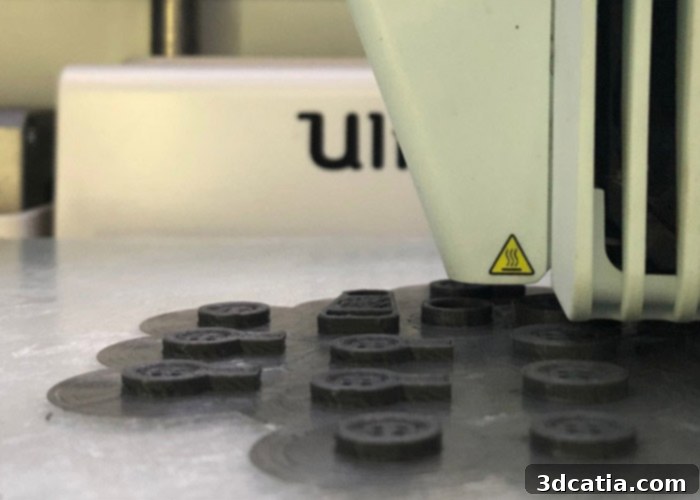
While FDM 3D printing is excellent for prototyping, it proved not accurate enough for the intricate details and smooth finish required for professional-grade buttons.
The Broader Impact: Small Buttons, Big Change for Sustainable Fashion
The collaboration between Finisterre, Fishy Filaments, AddiFab, and Falmouth University represents far more than just the creation of a better button. It embodies a crucial step forward in the sustainable fashion movement and the broader adoption of circular economy principles. By addressing an often-overlooked yet pervasive source of waste – clothing accessories – this project demonstrates that even the smallest components of our everyday items can be reimagined for environmental benefit. The initiative showcases the immense potential of utilizing marine plastic waste, transforming it from a harmful pollutant into a valuable resource. This not only cleans up our oceans but also provides a sustainable alternative to virgin materials, significantly reducing carbon emissions and reliance on fossil fuels. Furthermore, the focus on local sourcing and production, as facilitated by Fishy Filaments’ operations and the potential for localized manufacturing through additive technologies, helps shrink global supply chains and fosters regional economic resilience.
This project serves as an inspiring case study, illustrating how interdisciplinary collaboration and a commitment to innovation can tackle complex environmental challenges. It pushes the boundaries of what is possible in sustainable design, proving that eco-friendly solutions can also be highly practical and aesthetically pleasing. The success of these ergonomically designed, recycled buttons from Finisterre and Fishy Filaments sends a powerful message to the fashion industry: sustainability is not just a trend but an imperative, achievable through creative thinking and the strategic application of advanced manufacturing techniques. As consumers increasingly demand transparency and ethical practices from brands, projects like this set a new standard, demonstrating a genuine commitment to environmental stewardship and product excellence.
What are your thoughts on these innovative 3D printed buttons and the use of recycled marine plastic in fashion? We’d love to hear your perspective! Share your comments below or engage with us on our Facebook and Twitter page. Don’t miss out on the latest advancements and news in the additive manufacturing world – remember to sign up for our free weekly Newsletter, delivering all the essential 3D printing updates directly to your inbox!