
Colossus: Revolutionizing Large-Scale 3D Printing with Sustainable FGF Technology
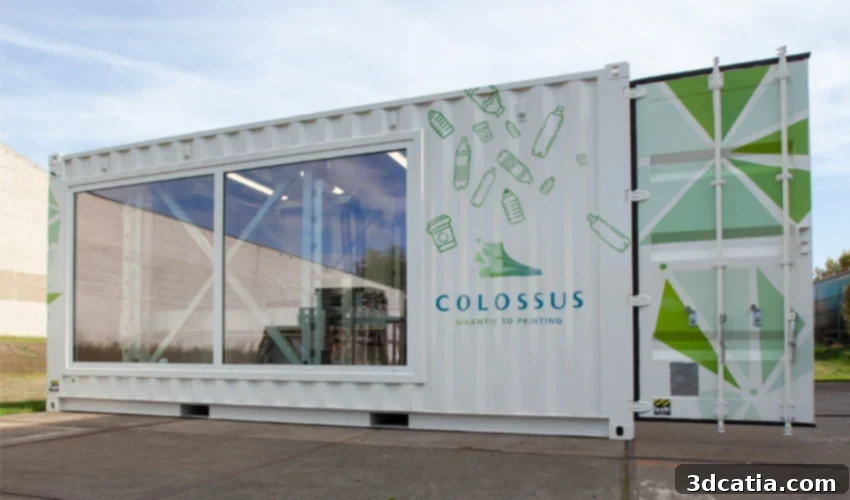
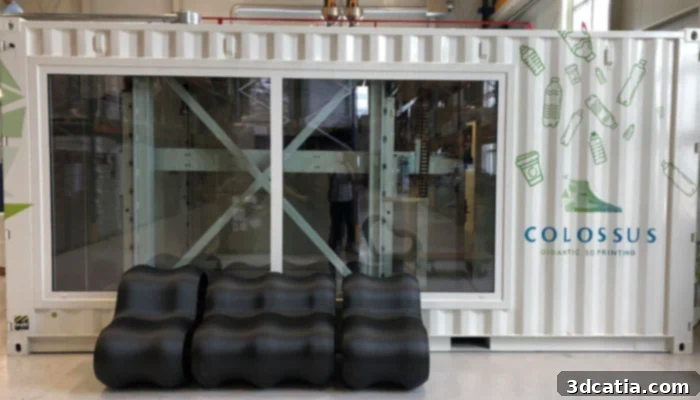
Colossus, an innovative startup proudly based in Genk, Belgium, stands at the forefront of the additive manufacturing revolution. The company has engineered one of the world’s largest and most technologically advanced Fused Granular Fabrication (FGF) printers, marking a significant milestone in the industry. Beyond its impressive scale, the Colossus printer distinguishes itself as the first fully integrated, transportable 3D printing system, designed with an emphasis on flexibility and on-site production. This pioneering system was developed with a clear focus on specific applications, particularly for the creation of furniture, diverse construction applications, and other large-scale 3D objects. A core tenet of Colossus’s philosophy is its unwavering commitment to sustainability, placing special attention on the ability to process and print with recycled materials. By ingeniously combining cutting-edge technology with environmental responsibility, Colossus is actively working to give plastics a crucial second life, transforming waste into valuable products. The impact of their work is already evident in large-scale projects utilizing recycled materials, as well as collaborations with renowned events and organizations like Tomorrowland, ABinbev, and Essencia. We recently had the exclusive opportunity to delve deeper into this groundbreaking company with Philippe Daniel Mérillet, CEO and Founder of Colossus. In our interview, he shared invaluable insights into his company’s vision and how it continues to innovate and reshape the landscape of 3D printing technology.
A Visionary Approach to Additive Manufacturing

My name is Philippe Daniel Mérillet, and I come from French and Swiss origins. My upbringing was quite international, as my parents’ work took us all over the world. This global perspective has undoubtedly influenced my entrepreneurial journey. Colossus, as a company, represents the culmination of a powerful combination: a truly exceptional team driven by a shared ambition to develop and manufacture a cost-effective, large-scale FGF 3D printing system. From the very inception, our goal was to build a printer that was not only robust and efficient but also inherently designed for a wide range of materials, with a significant emphasis on recycled plastics. This commitment to sustainability isn’t just a feature; it’s deeply embedded in our company’s DNA. We actively champion this ethos through various initiatives, including Theoneproject.eu, which we co-own and through which we explore innovative ways to repurpose plastic waste. Our vision extends beyond merely printing objects; it’s about fostering a more sustainable manufacturing ecosystem and demonstrating the immense potential of recycled materials in high-tech applications.
The Ingenious Concept: A 3D Printer in a Container
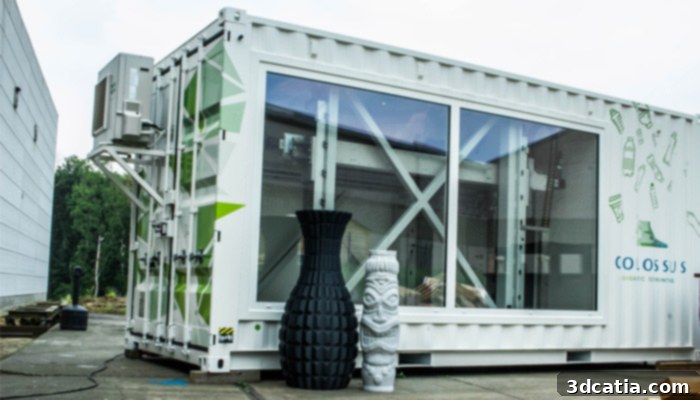
The genesis of our unique containerized 3D printer system is rooted in a very practical and inspiring experience. Yannick Aerts, my esteemed co-founder at Colossus, and I were actively involved in a project at the “Pukkelpop” festival in Belgium. Our mission was to collect and process plastic waste from the festival grounds, subsequently transforming it into new objects through 3D printing. Yannick had always harbored a lifelong dream of constructing a giant FGF printer, and concurrently, we knew that the festival organizers were keen on printing furniture directly from their accumulated waste. This convergence of ideas sparked two primary objectives: first, to design and build a printer large enough to produce a full-sized chair in under three hours, thereby proving its industrial viability for large objects. Second, and equally crucial, was the need for it to be easily transportable. Conventional large-scale robotic arms and industrial printers typically require specialized, expensive transportation and often demand a meticulously controlled, dedicated environment. By ingeniously integrating our printer within a standard shipping container, we dramatically reduce the complexities and costs associated with transport. This innovative approach makes our system ideal for on-location printing, perfectly suited for dynamic environments such as festivals, trade fairs, or even remote construction sites. We can literally arrive on-site before an event begins, print all the necessary furniture and structures, and then efficiently pack up and depart, offering unparalleled flexibility and efficiency for large-scale, on-demand manufacturing.
Unpacking the Colossus Printer’s Technical Prowess
The Colossus printer is engineered with a suite of advanced technical specifications that enable its unparalleled performance in large-scale FGF 3D printing. A critical feature is its integrated material drying system, which is paramount for achieving high-quality prints, especially when working with high-performance or hygroscopic materials. Proper material drying prevents common printing issues like porosity, poor layer adhesion, and surface imperfections, ensuring the structural integrity and aesthetic finish of the final product. Our printer boasts an impressive print volume of 5 square meters, allowing for the creation of truly massive objects that would be impossible with conventional 3D printers. This vast build area opens up new possibilities for architectural elements, large furniture pieces, and industrial components. The heated bed, capable of reaching temperatures up to 90 degrees Celsius, is essential for maintaining optimal adhesion during the printing process, preventing warping, and ensuring dimensional stability, particularly with larger prints and engineering-grade polymers. Furthermore, the Colossus system features full retraction capabilities, which are vital for producing clean, precise prints with minimal stringing and oozing, enhancing overall print quality. When it comes to speed, our printer can achieve print rates of up to 15 kilograms per hour, depending on the specific material being used and the complexity of the design. This high throughput makes it an incredibly efficient solution for industrial-scale manufacturing, drastically reducing production times and costs compared to other methods. With an extrusion temperature capability of up to 400 degrees Celsius, the Colossus printer offers exceptional material versatility, allowing us to process and extrude a wide array of polymers and composite compounds, pushing the boundaries of what is achievable in FGF printing.
A Palette of Possibilities: Materials Optimized for FGF
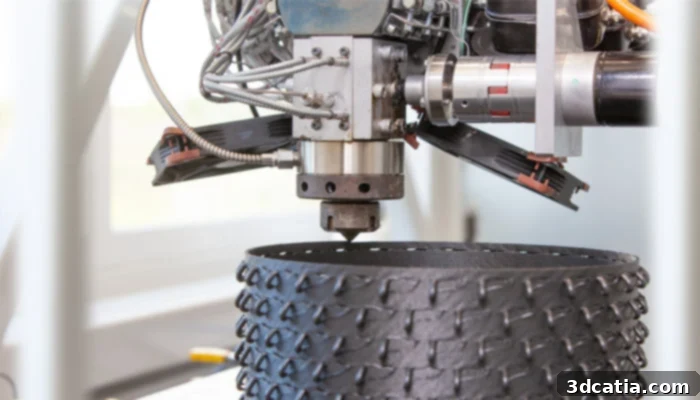
Our success in expanding the possibilities of FGF 3D printing is significantly bolstered by our strategic partnership with MCPP, a distinguished group company of Mitsubishi Chemical. This collaboration has been instrumental in allowing us to extensively modify, test, and perfect a diverse range of materials specifically tailored for the unique demands of FGF printing. The benefits of this partnership are exemplified by our PLA stone compound, which can incorporate an impressive up to 55% stone content. Such a high filler concentration would be virtually impossible to achieve with traditional Fused Deposition Modeling (FDM) due to filament extrusion challenges. This demonstrates FGF’s superior capability in handling highly filled materials, opening doors to objects with unique aesthetics and tactile properties. We currently offer a robust portfolio of eight distinct compounds, with plans to release even more innovative materials in the spring. Our current range includes advanced options like Carbon P, known for its strength and stiffness; MABS, offering excellent mechanical properties and heat resistance; PLA STONE, providing a natural, textured finish; PPL (Polypropylene-like) and RPP (Recycled Polypropylene), emphasizing our commitment to sustainable, high-performance recycled plastics; RPET (Recycled PET), another vital component of our eco-friendly material strategy; and specialty compounds like PLA-wood and PLA-bronze, which allow for the creation of objects with the appearance and feel of wood or metal, respectively. Each material is meticulously developed to ensure optimal printability, superior mechanical properties, and broad application potential across various industries, further solidifying Colossus’s position as a leader in material innovation for additive manufacturing.
Diverse Applications: From Artistic Creations to Industrial Solutions
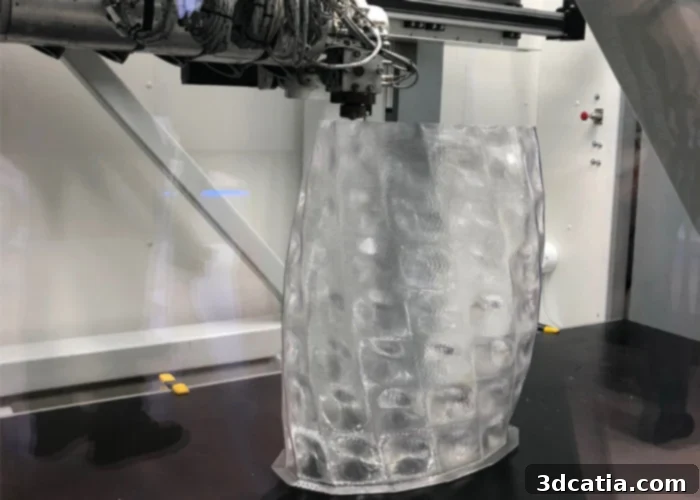
The versatility of the Colossus FGF printer, combined with our specially developed materials, means that the potential applications are virtually limitless. We tailor our materials and printing processes specifically for various applications, making almost anything possible. Currently, our technology has been successfully utilized in crafting intricate design pieces, including elegant lamps, ergonomic chairs, and unique art installations, demonstrating the aesthetic and functional capabilities of large-scale 3D printing. Beyond artistic and design-oriented projects, we are also actively engaged in developing and implementing applications for demanding industrial sectors, such as the automotive industry, where we are working on printing functional automotive parts that meet rigorous performance standards. A truly exciting and ambitious project currently underway in Belgium involves the construction of a completely 3D-printed, two-story house. Colossus will play a pivotal role in this landmark initiative by printing all the interior furniture and various separate structural components, including custom window and door fixtures. This project highlights the transformative potential of FGF 3D printing in construction, offering unprecedented levels of customization, waste reduction, and efficiency. From personalized home furnishings to critical industrial components and revolutionary architectural elements, Colossus’s technology is enabling a new era of large-scale, customized manufacturing.
The Future Landscape of Large-Scale Additive Manufacturing
Looking ahead, I firmly believe that FGF printing represents the most financially viable and impactful method for manufacturing large objects in small to medium series. This conviction stems from several key advantages that FGF holds over traditional manufacturing processes and even other 3D printing technologies. Firstly, the consumables for FGF printers, particularly when utilizing recycled granular materials, are significantly cheaper than those used in many other manufacturing processes, leading to substantial cost savings. Secondly, FGF technology allows us to print objects of much larger dimensions, breaking conventional size barriers and enabling the creation of components previously considered unprintable. Thirdly, there is a massive speed difference; our printers can produce parts at a remarkable pace, translating directly into a substantial price reduction in overall manufacturing costs and shortened lead times. Finally, the quality of FGF prints and the assortment of available materials continue to improve at an astonishing rate, expanding the range of applications and performance characteristics. I am confident that Colossus, through its innovative FGF systems, will play a crucial role in lowering the entry barrier for small-series large-scale manufacturing. This will empower designers and engineers to fundamentally change the way they conceptualize, produce, and ultimately, how we consume goods. By making large-scale additive manufacturing more accessible, cost-effective, and sustainable, we aim to foster an era of greater creativity, localized production, and reduced environmental impact, truly revolutionizing industrial processes.
Collaborate with Colossus: Shaping a Sustainable Future
At Colossus, we are constantly seeking to push the boundaries of what’s possible with large-scale 3D printing. We are always keenly interested in connecting with and collaborating closely with talented designers, visionary artists, and pioneering projects that are exploring new and exciting applications for our technology. If you have exceptional designs for large-scale objects, innovative ideas for sustainable manufacturing, or exciting new projects that could benefit from the unique capabilities of our FGF printing system, we sincerely encourage you to get in touch with us. We believe that by fostering strong partnerships and pooling our collective expertise, we can together profoundly change the future of sustainable additive manufacturing, creating a more efficient, cost-effective, and environmentally responsible industrial landscape.
What are your thoughts on Colossus, our startup of the month, and their groundbreaking work in large-scale FGF 3D printing? We’d love to hear your feedback! Please let us know your comments below or engage with us on our Facebook and Twitter pages. To stay updated with all the latest news and innovations in the world of 3D printing, remember to sign up for our free weekly Newsletter, delivered straight to your inbox!