
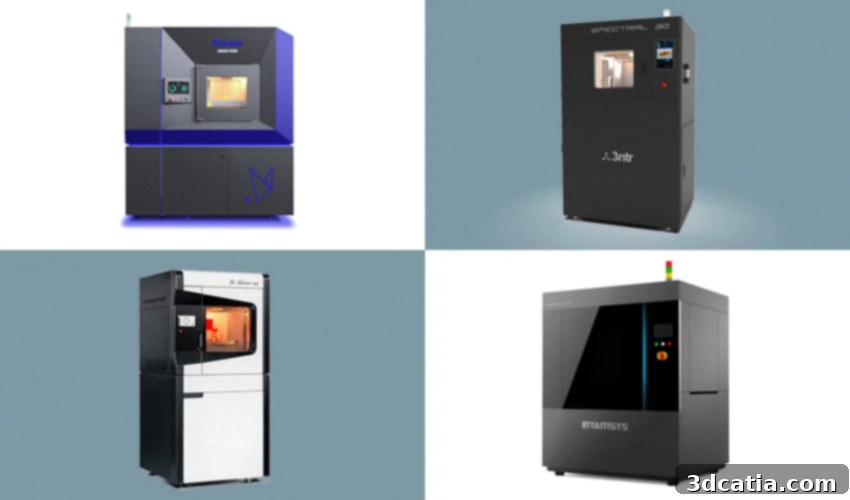
Elevate Your Engineering: Discover the Leading FDM 3D Printers for PEEK and ULTEM
The landscape of additive manufacturing is continuously evolving, with a growing demand for advanced engineering materials that can withstand extreme conditions and deliver superior performance. Users across various industries are increasingly seeking technical materials that not only meet stringent requirements but also push the boundaries of what’s possible with 3D printing. This surge in demand has propelled exponential growth in the materials market, driving innovations aimed at offering higher-performance solutions for complex applications. Among these cutting-edge materials, the high-performance thermoplastics segment stands out, particularly materials like PEEK, PEKK, and PEI (commonly known as ULTEM). These specialized polymers, often supplied in filament form for Fused Deposition Modeling (FDM) 3D printers, boast impressive chemical characteristics and mechanical properties, sometimes rivaling those of certain metals. Their exceptional strength, thermal stability, and chemical resistance make them indispensable for critical applications in sectors like aerospace, medical, and automotive.
However, working with these high-performance thermoplastics presents unique challenges. Printing PEEK, ULTEM, and similar materials requires highly specialized FDM 3D printers capable of managing precise and demanding thermal environments. This includes maintaining an extrusion temperature often exceeding 350°C, operating with a heated build chamber that can reach over 100°C, and utilizing a print plate capable of sustaining temperatures well above 100°C to ensure optimal layer adhesion and prevent warping. These intricate technical constraints explain the relatively limited number of compatible 3D printers available on the market. To assist you in navigating this specialized segment, 3Dnatives has curated an alphabetical list of industrial FDM 3D printers that are expertly engineered to print PEEK and ULTEM materials effectively, unlocking new possibilities for high-strength, high-temperature components.
Apium P400
The Apium P400, launched in 2022 by the German manufacturer Apium, is a sophisticated 3D printer designed for high-performance materials. It offers a generous print volume of 400 x 300 x 300 mm, enabling the production of substantial parts. Key to its capability for PEEK and ULTEM is its advanced thermal system, featuring a build plate that can reach an impressive 200°C and a nozzle capable of rising to 540°C. This machine is also equipped with an IDEX (Independent Dual Extruder) system, which significantly enhances user productivity by allowing the simultaneous printing of two identical parts or two different parts in mirror mode. What truly distinguishes the Apium P400 is its innovative zone heating system. Instead of heating the entire chamber, an infrared heating device integrated into the printer head precisely targets specific areas. This intelligent approach not only optimizes energy consumption but also promotes superior adhesion between layers, a critical factor for achieving high-quality prints with challenging materials like PEEK and ULTEM, minimizing defects and improving part integrity.
BigRep’s ALTRA 280 3D Printer
BigRep’s ALTRA 280 stands as a formidable industrial FDM printer, specifically engineered for the most demanding high-performance materials. It boasts an exceptionally large print chamber measuring 500 mm x 700 mm x 800 mm, offering an impressive print volume of 280 liters. This expansive build space facilitates the creation of complex prototypes and robust end-use parts on a grand scale. To effectively process materials like ULTEM 9085 and PEEK, both the printing chamber and the printing table are designed to reach high temperatures of up to 180°C. During the printing process, the heated chamber functions beyond mere temperature control, actively contributing as a hardening system. This crucial feature significantly improves the mechanical properties, overall functionality, and dimensional stability of the printed parts, ensuring they meet rigorous industrial standards. The ALTRA 280 is equipped with four DSXs (Direct Synchronized Extruders), each capable of operating at 450°C and feeding up to 20 kg of material in a single cycle, ensuring uninterrupted production with the added security of two respective backup extruders. Each DSX also integrates advanced cooling channels and multiple sensors for continuous monitoring and precise control. This machine is ideally suited for high-performance industries such as aerospace, where robust, geometrically complex tooling and highly functional prototypes are paramount.
Creabot PEEK-300
The Creatbot PEEK-300 from the Chinese manufacturer Creatbot is an innovative 3D printer specifically engineered for producing parts from challenging materials like PEEK. Its standout feature is the integrated “Direct Annealing System,” a unique technology that performs an annealing process directly during printing. This method is critical for achieving the highest possible part quality, actively preventing common issues such as deformation and cracking that can occur with high-performance polymers. By incorporating annealing into the print cycle, the Creatbot PEEK-300 eliminates the need for time-consuming and often complex post-processing steps. This dual-extrusion machine is robustly built, capable of heating its extruders up to an impressive 500°C. The printing plate can reach 200°C, while the build chamber is maintained at 120°C, creating the ideal thermal environment for PEEK. It offers a substantial printing volume of 300 x 300 x 400 mm in single extrusion mode, or 240 x 300 x 400 mm when utilizing dual extrusion. Despite its powerful capabilities, the PEEK-300 remains a relatively compact machine, integrating a suite of features designed to streamline and facilitate the printing process, making high-performance material printing more accessible and reliable.
EXT 220 MED 3D Printer From 3D Systems
The EXT 220 MED 3D printer from 3D Systems represents a cutting-edge solution not only for high-performance polymers, including PEEK, PEKK, and PPSU, but it is also meticulously designed for the stringent requirements of medical implant creation. What truly sets this platform apart is its unique combination of an integrated clean room and precise temperature control, making it suitable for direct use even within hospital environments. The printer features a build volume of Ø 220 x 160 cm, optimized for specialized medical applications. Its suite of advanced features ensures unparalleled quality and safety: a fully controllable build chamber heating system, laminar airflow for homogeneous temperature distribution, adaptive local temperature management, and specific optimizations for clean room operation. Furthermore, it boasts ASTM F2026 validation and comprehensive high-performance polymer compatibility, cementing its status as an ideal machine for medical settings. The EXT 220 MED has already been successfully deployed for critical applications such as craniomaxillofacial implants, interbody fusion devices, trauma bone plate trial implants, and retractor blades. Its impressive thermal capabilities include a maximum operating temperature of 500°C for the nozzle, 300°C for the build plate, and 250°C for the build chamber, providing the necessary conditions for processing these advanced biomaterials with exceptional precision and reliability.
The F3300 From Stratasys
Stratasys is pushing the boundaries of industrial FDM 3D printing with the introduction of the F3300, a groundbreaking machine engineered for speed, efficiency, and reliability. This printer significantly elevates throughput, offering up to twice the speed and overall output of conventional FDM printers. Simultaneously, it contributes to a notable reduction in the total cost per part through more efficient material utilization and increased part yield. Leveraging cutting-edge hardware and sophisticated software solutions, the F3300 dramatically improves both productivity and print reliability, making it an ideal choice for demanding sectors such as automotive, aerospace, general manufacturing, and medicine. The F3300 is designed for operational ease, incorporating user-friendly functions like autocalibration that help reduce overall printing time. Its versatility extends to material processing, as it is capable of handling a wide array of advanced thermoplastics. These include ASA, nylon 12CF FDM, as well as high-performance polymers like ULTEM™ 9085 and Antero 800NE, a specialized PEKK-based material known for its exceptional properties. The F3300 is a substantial industrial system, measuring 600 x 600 x 800 mm and weighing 1360 kg, indicative of its robust construction and capacity for heavy-duty production.
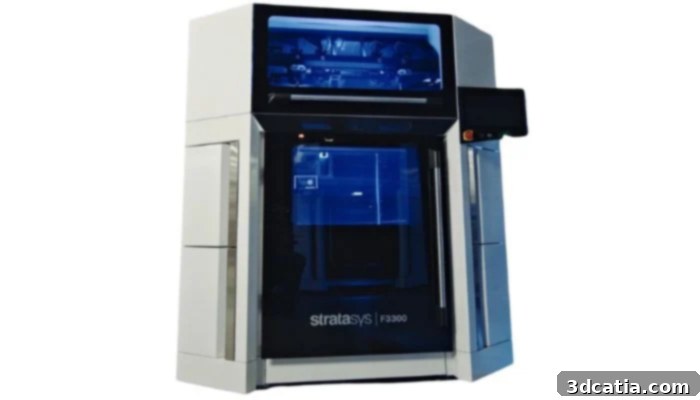
Photo Credits: Stratasys
FUNMAT PRO 610HT
The FUNMAT PRO 610HT, from industrial FFF 3D printing solution provider INTAMSYS, is an exceptional machine tailored for large-format 3D printing of high-performance materials. Boasting a substantial build volume of 610 x 508 x 508 mm, it caters to the production of sizable and intricate components. This printer is compatible with an extensive range of advanced polymers, including PEEK, PEEK-CF, PEEK-GF, PEKK, PEI9085, PEI1010, and PPSU. To facilitate the successful printing of these demanding materials, it features a 300°C uniformly heated chamber and dual nozzles capable of reaching 500°C, allowing for the effective use of dedicated support materials. The build chamber is further optimized with an advanced liquid-cooling system for enhanced heat dissipation. This critical feature helps to prevent warpage and other common issues associated with high-temperature materials, ultimately leading to parts with superior mechanical strength and dimensional accuracy. The FUNMAT PRO 610HT delivers a superior surface finish for complex geometries, thanks to its precise closed-loop servo control system. Moreover, it integrates a suite of automated features for seamless, continuous 24/7 printing, including auto-cleaning nozzles, filament auto-reloading, and comprehensive jam and absence warnings. This industrial-grade printer also holds Grade D certification in CE & MD standards, as well as CE (EMC/RED/LVT) certifications, confirming its compliance with rigorous industry application standards.
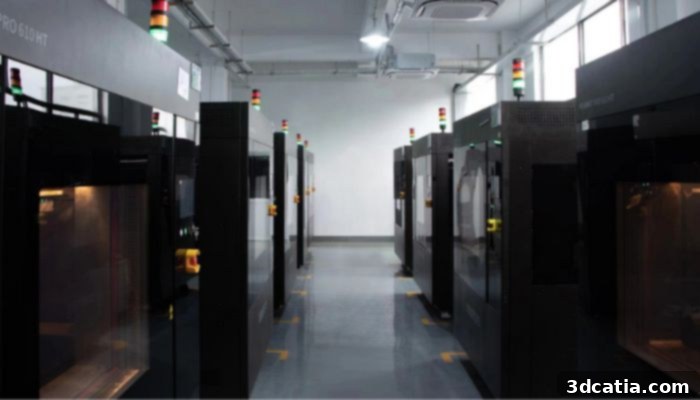
Photo Credits: INTAMSYS
The Gearbox HT2 PEEK 3D Printer From 3DXTECH
Michigan-based 3DXTECH, founded in 2014, set out with a clear mission: to advance the functionality of 3D printing. Among their impressive lineup of PEEK FFF 3D printers, the Gearbox HT2 stands out as a robust machine specifically engineered for printing large-scale, fast, and highly accurate components. Its technical specifications are designed to meet the rigorous demands of high-performance polymers. The printer boasts an expansive maximum printing volume of 457mm x 457mm x 813mm, providing ample space for substantial parts. Critically, it features high manufacturing temperatures, with the build chamber reaching up to 225ºC and the extruder capable of an impressive 500ºC. These elevated temperatures are essential for successfully processing materials like PEEK and ULTEM. The Gearbox HT2 further enhances print reliability with a vacuum printing plate, a removable plastic sheet serving as an optimal manufacturing surface, and a sophisticated filament storage system equipped with heating and active drying capabilities. This comprehensive thermal management and material handling system allows for the consistent creation of parts using a wide range of high-performance materials, including PEEK, PEKK, Ultem, PA12, PA6, and PC, as well as special grade materials such as carbon fiber, fiberglass, and flame retardant composites.
The Essentium HSE 280i HT PEEK 3D Printer
Nexa3D, a company founded in 2016 and renowned for developing and manufacturing some of the world’s fastest 3D printers, expanded its portfolio significantly with the integration of Essentium. This collaboration brought forth the Essentium HSE 280i HT, an innovative PEEK 3D printer that distinguishes itself with a unique dual extruder system. Uniquely, its independent extruders operate freely along both the X and Y axes (IDEX configuration), offering unparalleled flexibility and efficiency in multi-material or multi-part printing. The Essentium HSE 280i HT is engineered to tackle common industrial challenges related to speed, durability, and scalability, making it a powerful solution for high-volume production. A significant advantage is its open ecosystem, a feature highly sought after by 96% of manufacturers who value greater control over their materials and processes. From a technical standpoint, this printer is equipped with two print heads, each featuring a Hoozle Generation 5 heated nozzle that can reach an impressive 550ºC and supports diameters from 0.4 to 0.8 mm. Measuring 1590 x 1350 x 2490 mm and weighing 850 kg, the Essentium HSE 280i HT is a substantial industrial machine built for demanding applications, delivering precision and speed for high-performance thermoplastic printing.
Hylo, a Machine Designed by AON3D
Building upon the success of the AON M2+, AON3D, the Canadian company, introduces Hylo, representing their fifth generation of high-temperature 3D printers. Hylo is an industrial-grade machine meticulously designed for precision and robust performance, particularly with advanced polymers. It features a spacious printing plate measuring 650 x 450 x 450 mm, providing ample volume for large-scale components. A critical feature for high-performance materials is its printing chamber, which can precisely and controllably reach temperatures of up to 250°C. Driving the Hylo’s exceptional capabilities is sophisticated software that leverages automatic learning algorithms to maximize both performance and productivity. This intelligent system is supported by an array of over 25 integrated sensors, which continuously monitor the entire printing process. These sensors analyze part quality in real time and are capable of detecting any potential defects, ensuring consistent and reliable output. The Hylo is also remarkably fast, with printing speeds that can reach up to an impressive 500 mm/s. In terms of material compatibility, Hylo is highly versatile, supporting a wide range of standard polymers, advanced composites, and, crucially, a comprehensive selection of high-performance materials, making it a flexible solution for diverse industrial applications.
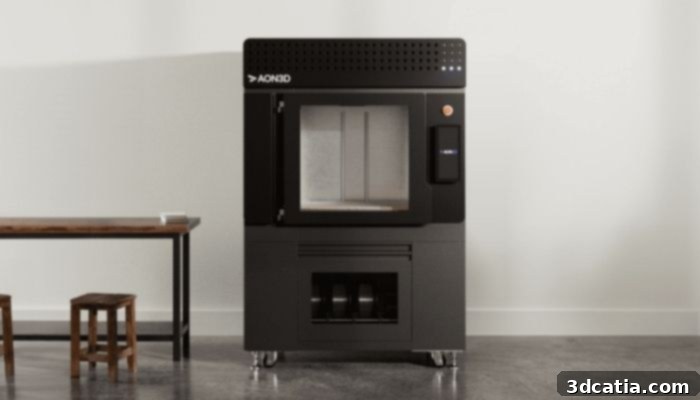
Photo Credits: AON3D
INDUSTRY F421 From 3DGence
The INDUSTRY F421 from 3DGence stands as a flagship industrial 3D printer specifically engineered to process high-performance polymers such as ULTEM, PEEK, and PEKK. This machine is lauded by the manufacturer for guaranteeing exceptional quality, precise dimensional accuracy, and consistently reproducible results, which are critical for demanding industrial applications. It impresses with its remarkable printing speed, capable of reaching up to 400 mm/s and even 1 meter per second, making the INDUSTRY F421 an invaluable tool for rapid prototyping and accelerating product development cycles. The printer’s large print volume of 380 x 380 x 420 mm allows for the production of significant models in a single print job, reducing the need for assembly. Beyond standard high-performance materials, this 3D printer also supports additionally reinforced materials, further enhancing the durability and performance of the resulting final parts. Each 3DGence INDUSTRY F421 can be outfitted with specialized hardware to ensure the safe and effective printing of these reinforced materials. A standout feature is its advanced three-stage filtration system, which offers an exceptional level of filtration performance rarely found in FFF technology printers. This unit efficiently retains macro particles, nanoparticles (VOC, UFP), solvent vapors, and other harmful gases, thereby ensuring user safety and maintaining the continuity and quality of the technological process in industrial environments.
MAGIC-HT-MAX
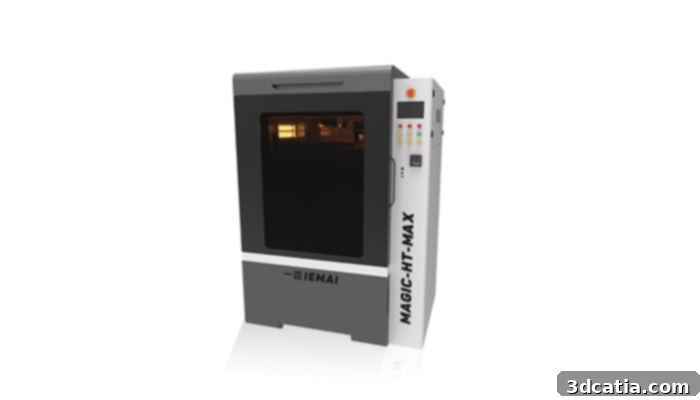
Introduced earlier this year, the MAGIC-HT-MAX continues the tradition of high-performance 3D printers offered by the Asian manufacturer IEMAI 3D. This robust machine is designed for the manufacturing of high-performance parts, leveraging FDM technology to work with an impressive array of over 16 different materials, including critical polymers like PEEK, PEKK, and ULTEM. It features a substantial printing volume of 500 x 500 x 700mm, accommodating large-scale industrial components. To ensure optimal adhesion and prevent warping, the MAGIC-HT-MAX is equipped with a heated tray that can reach up to 180°C. Furthermore, it integrates a sophisticated liquid cooling system, essential for maintaining stable temperatures during prolonged, high-temperature printing. User convenience and reliability are enhanced by an end-of-filament sensor and the crucial ability to automatically recover and resume printing in the event of a power failure, minimizing material waste and production delays. Despite being a powerful industrial machine, IEMAI 3D specializes in providing accessible and affordable solutions for players in the additive manufacturing industry, making high-performance printing more attainable for a broader range of businesses.
 miniFactory Ignite PEEK 3D Printer
 miniFactory Ignite PEEK 3D Printer
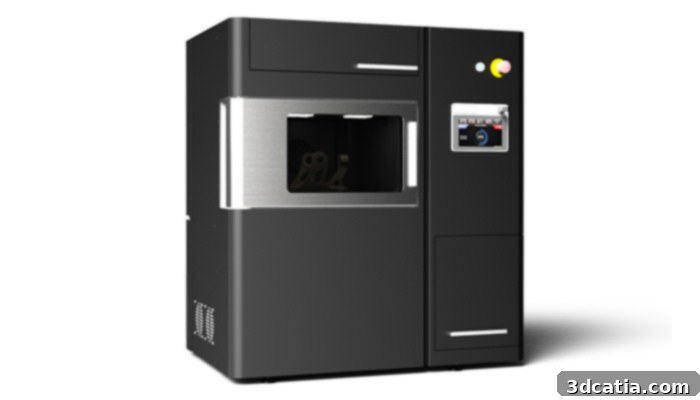
With the IGNITE, miniFactory delivers an industrial 3D printing solution that strikes an excellent balance between performance and price. The company’s core objective is to make high-performance technology accessible while upholding the highest standards of quality. The IGNITE offers a generously sized build area of 600 x 400 x 400 mm, providing ample space for diverse applications, coupled with compatibility for a wide selection of advanced materials. Users can confidently print with demanding polymers such as ULTEM AM9085F™, PACF, ABS, ASA, PEKK-A, PVDF, PEEK, and PEKK. The printer incorporates a precisely controlled heated chamber, which is crucial for preventing thermal stress and ensuring optimal layer bonding with these high-temperature thermoplastics. An integrated station for drying filaments further ensures material readiness and print quality. The dual extruder system facilitates the easy printing of support structures, enabling the creation of complex geometries. The IGNITE is versatile, suitable for developing robust prototypes, producing large-format models, and manufacturing high-performance end-use parts. For enhanced quality assurance, the printer features remote control capabilities and a layer-by-layer check function, allowing users to monitor and verify print quality throughout the entire process.
A150 Series
Orion AM is a specialized company dedicated to industrial additive manufacturing, focusing on advanced applications that utilize aerospace-grade polymers. It is therefore no surprise that their A150 Series of 3D printers is engineered for compatibility with high-temperature, high-performance polymers, including critical materials like PEEK and PEKK. This advanced industrial additive manufacturing system incorporates a unique process known as Thermal Radiation Heating (TRH). TRH employs thermal radiation directed in all directions to efficiently heat the printed object up to a precise 300°C. This omnidirectional heating ensures uniform temperature distribution throughout the part, allowing the resulting components to exhibit superior strength properties and improved mechanical integrity. The A150 Series offers impressive thermal capabilities, with the printing bed reaching a maximum temperature of 300°C and the extruder achieving up to 500°C. Thanks to the TRH system, the chamber temperature can reach an exceptional 315°C, while the layer heater temperature goes even higher, up to 370°C, providing an optimal environment for challenging materials. The A150 solutions are compatible with a comprehensive range of advanced polymers, including PEEK, PAEK, PEKK, PEI, ULTEM1010, ULTEM9085, ABS, PC, PA6, PA12, and PPSF/PPSU, catering to a diverse array of high-demand applications.
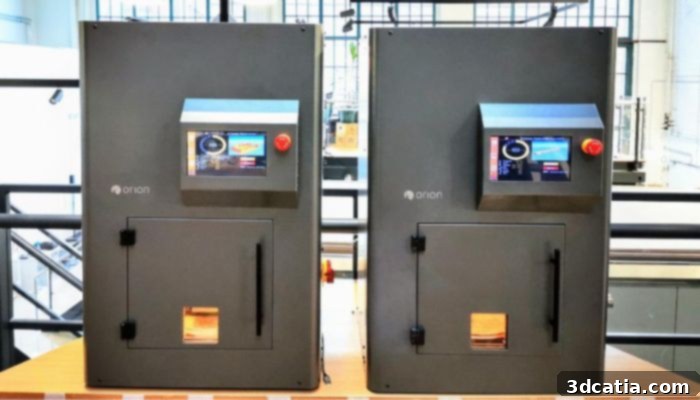
Photo Credits: Orion AM
Roboze ONE +400 Xtreme
Italian 3D printing manufacturer Roboze is renowned for its specialization in the production of large, complex parts and custom batches using its advanced additive manufacturing solutions. While the heading refers to the ONE +400 Xtreme, the provided description details the capabilities of the ARGO 500, a flagship machine introduced in 2017. The ARGO 500 is engineered for professional and industrial use, boasting an impressive maximum extruder temperature of 550°C and a build chamber capable of reaching 180°C, crucial for processing high-performance thermoplastics effectively. This robust 3D printer features a substantial print bed size of 500 x 500 x 500 mm, allowing for the creation of large-scale components, and has a total weight of 1700 kg, indicative of its sturdy industrial construction. A defining characteristic of the ARGO 500 is its fully automatically regulated process variables. From the precise leveling of the build plate to the meticulous calibration of the extruder and even the automatic change of filament, every critical process is automated, minimizing the need for human intervention and ensuring consistent print quality. Furthermore, this 3D printer is equipped with advanced remote maintenance modules, which significantly reduce downtime and consequently enhance overall productivity in demanding production environments.
Spectral 30
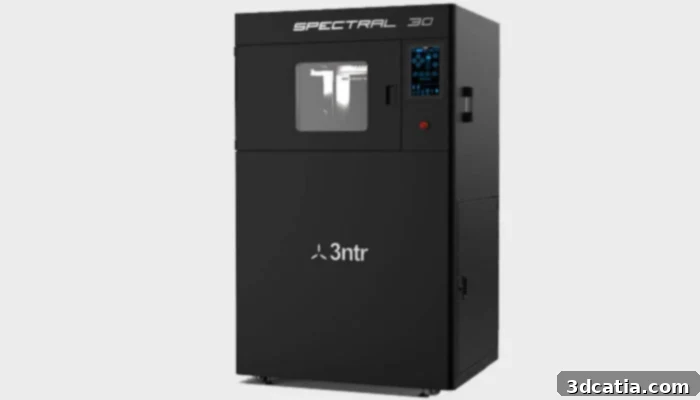
The Italian manufacturer 3ntr, a specialist in high-performance 3D printers, has developed the Spectral 30, a machine specifically engineered for compatibility with demanding polymers such as PEEK, ULTEM, and PPS. This printer is outfitted with a powerful electronic system designed to control temperature with optimal precision, enabling the creation of complex parts that exhibit superior mechanical properties. The Spectral 30 offers a robust build volume of 300 x 300 x 300 mm, providing ample space for industrial applications. It is equipped with four extruders, each capable of reaching a high temperature range of up to 500°C, ensuring sufficient thermal energy for a variety of high-temperature filaments. The build chamber can be heated up to 250°C, creating a stable thermal environment essential for preventing warping and improving layer adhesion with these advanced thermoplastics. Additionally, the printer includes a dedicated heated compartment for storing high-performance thermoplastics, maintaining them at optimal conditions to ensure consistent print quality. The build plate itself can be heated to an impressive 300°C, further enhancing adhesion and thermal management for challenging materials, making the Spectral 30 a versatile and reliable tool for advanced additive manufacturing.
Zortrax Endureal
Last year, Polish manufacturer Zortrax unveiled its groundbreaking new machine, the Zortrax Endureal, designed to meet the rigorous demands of industrial high-performance 3D printing. With a substantial print volume of 400 x 300 x 300 mm and a remarkable maximum precision of 100 µm on the Z-axis, it is capable of producing highly detailed and accurate components. The Endureal is equipped with a dual extruder system and an aluminum build plate, meticulously engineered to improve the adhesion of challenging high-performance thermoplastics. Among its most critical features is an advanced thermal management system, which provides precise control over both the chamber temperature and the extrusion temperature, creating the ideal environment for materials like PEEK and ULTEM. To ensure optimal performance and user peace of mind, the printer integrates 17 sensors that allow users to monitor the print job in real time and receive alerts in the event of any machine failure or deviation. Zortrax complements the Endureal with its own specialized range of materials, including Z-PEEK, known for its exceptional wear and abrasion resistance; Z-PEI 9085, ideal for aerospace applications; Z-ESD for electrostatic discharge protection; and Z-ULTRAT Plus. According to Zortrax, the Endureal is an ideal industrial machine for the design and production of critical components in aerospace and medical applications, where material integrity and precision are paramount.
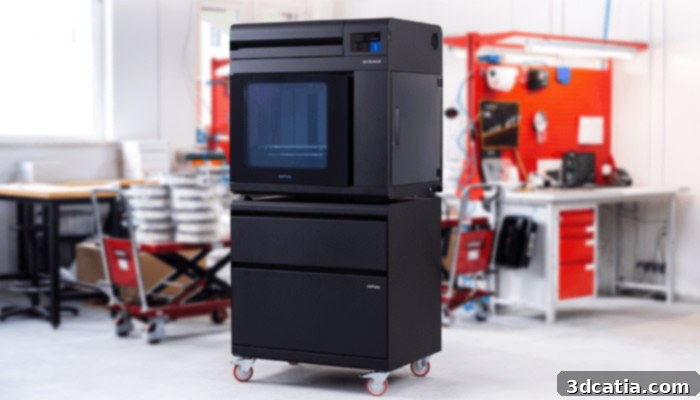
The extensive range of sophisticated FDM 3D printers highlighted above demonstrates the significant advancements in additive manufacturing technology tailored for high-performance polymers. Each machine offers a unique combination of features, from advanced thermal management and robust build volumes to intelligent monitoring systems and specialized material compatibility. These industrial solutions are instrumental in meeting the escalating demands for parts that exhibit exceptional mechanical strength, thermal stability, and chemical resistance. Choosing the right machine ultimately depends on your specific application needs, considering factors like target industry, desired part size, material properties, and required precision. By investing in these specialized FDM printers, manufacturers can unlock the full potential of PEEK, ULTEM, and other advanced thermoplastics, driving innovation and transforming possibilities across sectors such as aerospace, medical, and automotive. The future of high-performance additive manufacturing is here, enabling the creation of components that redefine engineering limits. Did we miss any essential PEEK or ULTEM 3D printers in our ranking? Let us know in a comment below or on our LinkedIn, Facebook, and Twitter pages! Don’t forget to sign up for our free weekly newsletter here for the latest 3D printing news straight to your inbox! You can also find all our videos on our YouTube channel.