
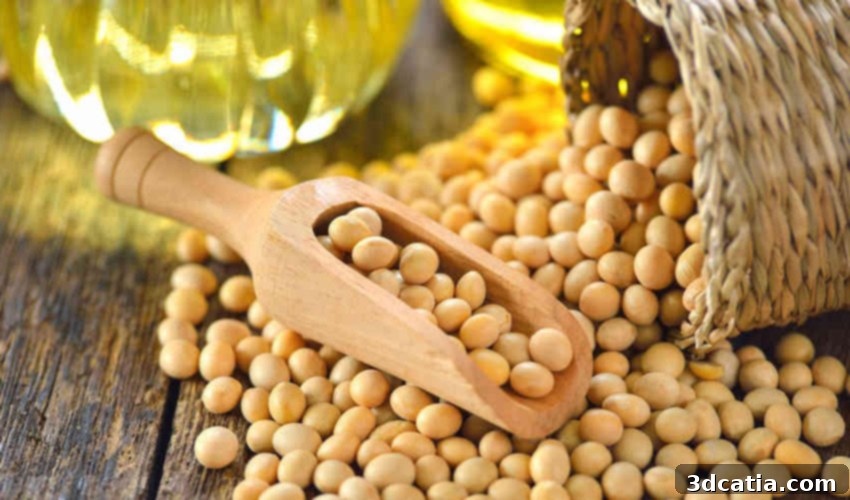
From Farm to Filament: Pioneering Sustainable 3D Printing with Soybean Hulls
In a groundbreaking development that promises to reshape the landscape of sustainable manufacturing, a dedicated team of researchers at the University of Louisville (UofL) Conn Center for Renewable Energy Research and Department of Mechanical Engineering has achieved a remarkable feat: transforming discarded soybean shells into a highly functional and environmentally friendly 3D printing material. This innovative project harnesses a significant agricultural waste product, recovering valuable natural fibers from soybean hulls to create composite printing materials suitable for a diverse range of industrial applications. Bolstered by a substantial $350,000 in funding from the United Soybean Board, this research not only addresses critical environmental concerns but also adds significant economic value to one of the world’s most extensively cultivated seeds, particularly within the United States. This initiative stands as a testament to the power of scientific inquiry in turning industrial byproducts into high-value resources, propelling the additive manufacturing sector towards a more sustainable future.
The global soybean market is an colossal industry, with the United States, Brazil, and Argentina dominating production. Together, these three agricultural powerhouses are responsible for producing nearly 80% of the world’s soybeans, amounting to over 215 million tons annually. The processing of such vast quantities of soybeans into various products, ranging from oils and animal feed to tofu and soy milk, inevitably generates an enormous volume of waste. In the United States alone, an staggering 8 million tons of soybean hulls are discarded each year. This monumental waste stream represents both an environmental challenge and a significant economic opportunity. It is precisely at this juncture that the innovative team at the University of Louisville steps in, offering a brilliant solution to repurpose these abundant hulls. Their methodology not only salvages valuable resources from what was previously considered waste but also champions the principles of the circular economy – a concept gaining increasing traction within the 3D printing industry. As businesses across all sectors strive to enhance sustainability, 3D printing, already recognized for its inherent ability to reduce material waste compared to traditional manufacturing, is now at the forefront of exploring even more eco-conscious material sources and closed-loop production systems.
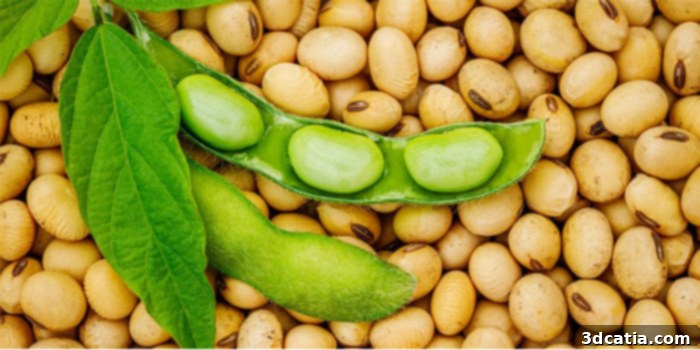
The research team wants to recycle the waste from soybean processing, turning it into valuable 3D printing material.
The scientific methodology developed by the UofL researchers is both ingenious and multi-faceted, demonstrating a comprehensive approach to waste valorization. The initial crucial step involves transforming the biomass of the soybean hull into xylose, a naturally occurring low-calorie sugar. This particular sugar is highly beneficial, especially suitable for individuals with diabetes, adding another layer of value to the processing chain. Once this valuable xylose substance has been successfully extracted, the remaining material is further processed to recover the potent natural fibers. These robust fibers are then earmarked for the development of advanced 3D composite printing material. Remarkably, these recovered fibers constitute approximately 80% of the initial soybean hull biomass, highlighting the efficiency and yield of their process. Mahendra Sunkara, the esteemed director of the Conn Center, articulates the far-reaching implications of this research: “Agriculture and agricultural processing are keys to economic development and employment in the US. Xylose separation and the use of soy hull fibers for natural fiber composites are potent opportunities for addressing worldwide farming economics, nutrition issues, and material needs from a renewable source.” His statement underscores the project’s capacity to deliver multi-sector benefits, from bolstering agricultural economies to offering sustainable solutions for global material demands and even contributing to nutritional advancements.
The potential impact of these soybean fibers on the additive manufacturing industry is significant and transformative. Traditionally, high-performance 3D printing applications, particularly those requiring enhanced strength-to-weight ratios, have heavily relied on synthetic materials such as carbon or glass fibers. While effective, these materials often come with high production costs, significant energy consumption, and environmental concerns regarding their origin and disposal. The introduction of soybean fibers presents a viable, sustainable alternative that could directly replace or augment these conventional materials. The primary objective is to achieve a similar, if not superior, reduction in the overall weight of a printed part while simultaneously maintaining or even increasing its structural integrity and strength.
The research team’s ambitious goals include developing a robust and economically viable method for the efficient recovery of these natural fibers, seamlessly integrating them into a polymer matrix, and ultimately producing high-quality 3D printing filaments. This process involves intricate material science to ensure optimal bonding between the natural fibers and the chosen polymer, which could range from biodegradable options like PLA to more durable engineering plastics. The inherent challenges include maintaining fiber consistency, managing moisture absorption, and ensuring homogenous dispersion within the polymer to achieve predictable and repeatable mechanical properties in the final printed objects.
While the promise is immense, critical questions naturally arise regarding the specific advantages of soybean fibers when compared to established high-performance options like carbon or aramid fibers. The potential benefits are multi-faceted and compelling: could they offer significantly lower production costs, making advanced materials more accessible? Is the production process inherently simpler and less energy-intensive, leading to a smaller environmental footprint? Could the resulting material be lighter, opening new avenues for applications where every gram counts, such as in aerospace or automotive sectors? Furthermore, the overarching question of sustainability looms large: being derived from a renewable agricultural byproduct, soybean fibers inherently offer a significant advantage in terms of resource renewability and potential biodegradability, aligning perfectly with global initiatives for eco-friendly manufacturing. This research aims to provide concrete answers to these questions, pushing the boundaries of what is possible in sustainable additive manufacturing. The applications for such bio-based composites are vast, extending from lightweight structural components in transportation to eco-conscious consumer products, and even potentially in biomedical applications where biocompatibility and biodegradability are highly valued. By creating a closed-loop system that transforms agricultural waste into advanced materials, the UofL team is not just developing a new product; they are laying the groundwork for a more resource-efficient and environmentally responsible industrial future.
This pioneering effort at the University of Louisville is part of a broader, global movement towards more sustainable practices in additive manufacturing. Beyond soybean hulls, researchers worldwide are exploring a variety of biomass sources, recycled plastics, and biodegradable polymers to reduce the environmental impact of 3D printing. The role of strategic funding, such as that provided by the United Soybean Board, is crucial in accelerating these innovations, transforming promising laboratory concepts into scalable industrial solutions. These advancements are not merely incremental improvements but represent a fundamental shift in how we conceive, source, and utilize materials in manufacturing. The long-term vision includes developing materials that are not only performant but also align with circular economy principles, ensuring that resources are reused, recycled, or biodegraded, minimizing waste and pollution throughout their lifecycle.
The journey from raw agricultural waste to a refined 3D printing filament involves overcoming numerous technical challenges. These include ensuring the consistent quality and mechanical properties of natural fibers, optimizing their interface with various polymer matrices to prevent delamination or weakening, and scaling up the extraction and compounding processes to meet industrial demands. Furthermore, developing robust extrusion processes for filament production that can handle composite materials with natural fibers without degradation is vital. Despite these complexities, the UofL team’s dedication and the initial success are highly encouraging. Their work illuminates a clear path towards integrating renewable resources into mainstream manufacturing, offering significant benefits for both the environment and the economy. We will continue to keep you posted on the exciting progress of this transformative project! In the meantime, you can find more detailed information on their work by visiting the Conn Center’s website.
What are your thoughts on the innovative use of soybean hulls for 3D printing material? We’d love to hear your perspective! Let us know in a comment below or join the conversation on our Facebook and Twitter pages! For the latest updates, breaking news, and in-depth analysis from the world of additive manufacturing, make sure to sign up for our free weekly Newsletter here, delivering all the essential 3D printing news straight to your inbox!