
Airbus Helicopters Embraces Metal 3D Printing for Next-Generation Aircraft: A Leap Towards Sustainable and Efficient Aviation
The aerospace industry, a sector defined by relentless innovation and an unyielding pursuit of efficiency, has found a powerful ally in additive manufacturing. Airbus, a global titan in aeronautics, has long been at the forefront of integrating 3D printed parts into its aircraft. For several years, Airbus has actively utilized and continued to refine this transformative technology, pushing the boundaries of what’s possible in aircraft design and production. This ongoing commitment underscores the critical role 3D printing plays in shaping the future of flight, offering unprecedented capabilities for weight reduction, performance enhancement, and supply chain optimization.
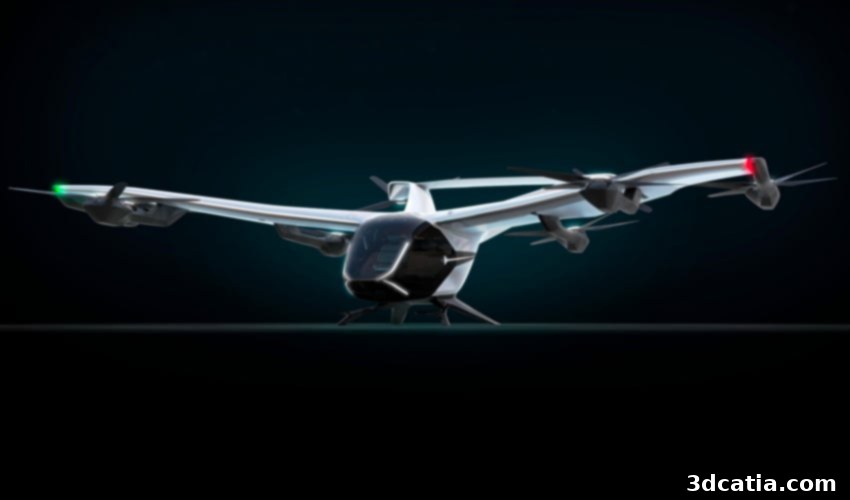
Building on this extensive experience, a significant announcement came this year from Airbus Helicopters SAS, a key subsidiary of the Airbus brand. The company revealed its strategic adoption of metal 3D printed parts for its upcoming and most ambitious designs. This move signifies a pivotal moment, transitioning additive manufacturing from specialized applications to core structural and functional components within their advanced helicopter and aircraft platforms. To facilitate this industrial-scale integration, Airbus Helicopters SAS is collaborating with German 3D printer manufacturer TRUMPF, renowned for its cutting-edge laser and additive manufacturing solutions. At a newly established 3D printing center in Germany, Airbus Helicopters will leverage TRUMPF’s advanced machinery to manufacture critical components for a diverse range of models. These include the innovative electric CityAirbus, designed for urban air mobility; the experimental high-speed Racer helicopter, pushing performance limits; and mainstream passenger aircraft like the Airbus A350 and A320, where efficiency and reliability are paramount. This broad application across different aircraft types highlights the versatility and scalability of metal additive manufacturing, solidifying its position as a cornerstone technology for the aerospace sector.
The rationale behind this significant investment in metal 3D printing is multifaceted, primarily driven by the imperative to enhance performance while simultaneously reducing operational costs and environmental impact. Helmut Färber, head of the 3D printing center at Airbus Helicopters SAS in Donauwörth, eloquently articulated this vision, stating, “With innovative manufacturing processes, we are working on the helicopters of the future. Among other things, 3D printing helps reduce the weight of components.” This reduction in weight is not merely an incremental improvement; it delivers profound benefits across the operational spectrum. Lighter 3D printed parts enable Airbus Helicopters SAS operators to achieve substantial cost reductions, primarily through decreased fuel consumption. This directly translates into lower CO2 emissions during flights, contributing significantly to the aviation industry’s sustainability goals. The ability of additive manufacturing to produce complex components as a single, consolidated piece further amplifies these weight savings. Unlike traditional manufacturing methods that often involve assembling multiple parts, 3D printing allows for design optimization that integrates several functions into one component, eliminating fasteners and connectors, which inherently add weight. Beyond the tangible benefits of reduced weight and improved efficiency, these 3D printed components are engineered to be extremely stable and robust. They not only meet but often exceed the exceptionally stringent safety requirements and certification standards applied to aircraft, ensuring that innovation never compromises passenger and crew safety.
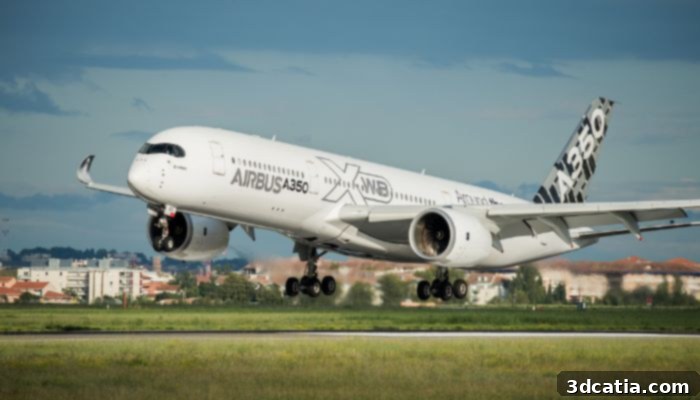
Photo credits: Airbus
The partnership between Airbus Helicopters and TRUMPF is a synergy of expertise, combining aerospace engineering prowess with advanced manufacturing technology. Richard Bannmüller, CEO of TRUMPF Laser and System Technology, emphasized the strategic importance of this collaboration: “With its manufacturing know-how, TRUMPF is a reliable partner to the aviation industry worldwide. Our 3D printing systems are a key technology on the path to sustainable flying and they reduce dependency on long supply chains.” This statement highlights two critical advantages. Firstly, TRUMPF’s deep understanding of laser technology and metal processing makes them an ideal partner for producing high-quality, flight-ready components. Secondly, the capability of additive manufacturing to localize production and optimize material usage directly addresses the growing need for more sustainable aviation practices and resilient supply chains. In an era marked by global disruptions, reducing reliance on extended and potentially vulnerable supply chains offers a significant operational advantage, ensuring continuity and flexibility in manufacturing processes. This strategic alliance is not just about producing parts; it’s about fundamentally rethinking how aircraft components are designed, manufactured, and supplied.
TRUMPF’s state-of-the-art machines empower Airbus Helicopters SAS to manufacture high-strength structural components with exceptional precision and material integrity. These advanced metal powder 3D printers are capable of processing specialized aerospace-grade metals such as titanium and aluminum – materials vital for their high strength-to-weight ratio and corrosion resistance. Titanium, known for its incredible durability and ability to withstand extreme temperatures, is ideal for critical structural parts, while aluminum alloys offer excellent lightness and workability. A significant ecological and economic advantage of TRUMPF’s metal powder bed fusion technology is the ability to reuse leftover powder that is not fused during the printing process. This contrasts sharply with many other additive manufacturing techniques or traditional subtractive methods, which often generate substantial material waste. As Richard Bannmüller succinctly pointed out, “Additive manufacturing saves expensive raw material and can lower production costs in the aviation industry. 3D printers only use the material that designers actually need for their components and that ends up taking off in the aircraft.” This precise material usage not only reduces waste but also significantly lowers the overall cost of production for high-value components, making metal 3D printing an economically viable and environmentally responsible solution for aerospace manufacturing. The ability to design complex geometries that are impossible with conventional methods, coupled with efficient material utilization, positions this technology as a game-changer for the industry. Furthermore, the localized production capability offered by these advanced printers enhances supply chain robustness, mitigating risks associated with global logistics and geopolitical uncertainties. This strategic move by Airbus Helicopters, powered by TRUMPF’s technology, represents a clear pathway toward more agile, cost-effective, and sustainable aviation manufacturing.
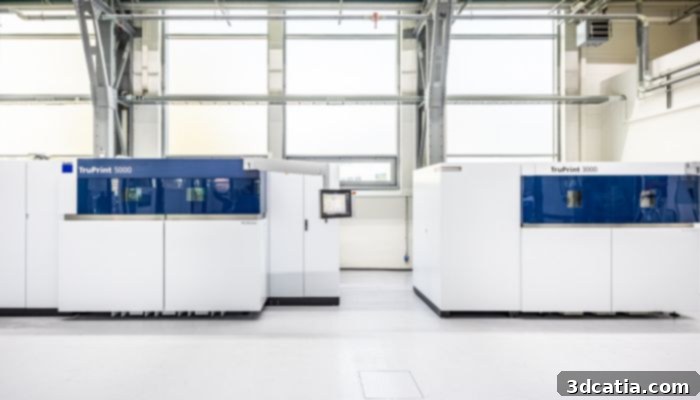
Photo credits: TRUMPF
The future implications of Airbus Helicopters’ deepened commitment to metal 3D printing are vast. This initiative is not merely about manufacturing individual parts; it’s about catalyzing a broader paradigm shift in aerospace design and production. By embracing additive manufacturing for complex, flight-critical components, Airbus Helicopters is paving the way for aircraft with enhanced performance characteristics, greater fuel efficiency, and a significantly reduced environmental footprint. This move will undoubtedly inspire further innovation across the sector, encouraging other manufacturers to explore and adopt similar advanced manufacturing techniques. The ongoing development of new materials suitable for 3D printing, alongside improvements in machine capabilities and post-processing techniques, promises an even more revolutionary future where design constraints are continually challenged and overcome. Moreover, the emphasis on local production through facilities like the new 3D printing center in Germany strengthens regional manufacturing capabilities and contributes to economic resilience. This strategic investment underscores a long-term vision for sustainable aviation, where technological innovation and environmental responsibility go hand in hand. The lessons learned and advancements made in this partnership between Airbus Helicopters and TRUMPF will undoubtedly contribute to the evolution of aerospace engineering, setting new benchmarks for efficiency, safety, and ecological performance in the skies of tomorrow. To delve deeper into the intricacies of this collaboration and its impact, further details can be explored on the official TRUMPF newsroom: HERE.
What are your thoughts on Airbus Helicopters’ strategic decision to integrate TRUMPF’s 3D printers for manufacturing critical components for its advanced aircraft? Do you believe this represents a significant turning point for sustainable and efficient aviation? We invite you to share your insights and comments below, or engage with us on our LinkedIn, Facebook, and Twitter pages! For the very latest updates in the world of 3D printing, don’t forget to sign up for our free weekly newsletter here, delivering the most pertinent news straight to your inbox! Additionally, you can discover all our engaging video content by visiting our YouTube channel.
*Cover Photo Credits: Airbus