
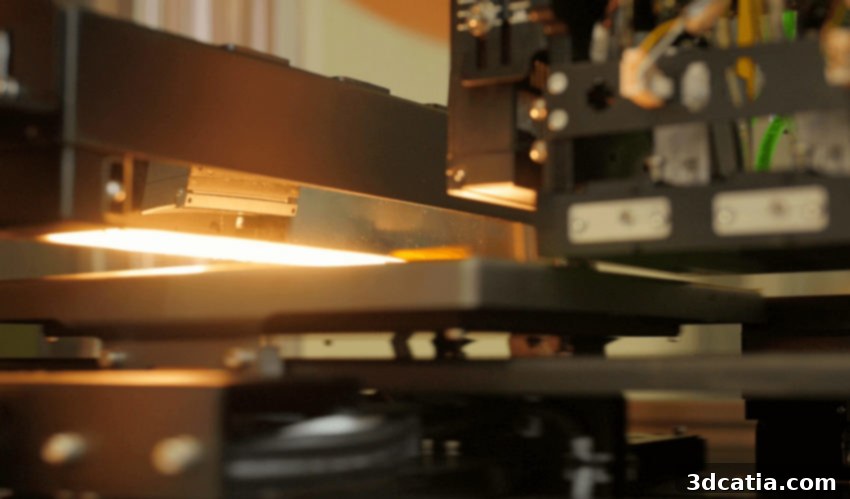
Nano Dimension: Pioneering the Future of Electronics with Additive Manufacturing and DragonFly LDM™ Technology
In the rapidly evolving landscape of advanced electronics, Nano Dimension stands out as a visionary Israeli manufacturer, specializing in intelligent machines designed for the 3D printing of high-fidelity active electronic and electromechanical subassemblies. This innovative approach addresses a critical demand for components essential to cutting-edge technologies like AI-powered drones, autonomous vehicles, sophisticated satellites, next-generation smartphones, and even in vivo medical devices. These applications universally require accelerated iterative development, necessitating rapid prototyping and efficient, on-demand production cycles. Through its groundbreaking additive manufacturing methods, Nano Dimension is not just producing integrated circuits; it’s doing so with unprecedented speed, performance, and complexity, fundamentally transforming how electronic components are designed and manufactured.
At the heart of Nano Dimension’s revolutionary capabilities is its proprietary DragonFly LDM™ technology, a significant advancement building upon the acclaimed DragonFly Pro precision system. This system is synergistically integrated with specialized software, including a SOLIDWORKS add-in, allowing engineers to seamlessly design and directly print complex electronic circuits. The ability to additive manufacture sophisticated circuit boards using inkjet printing has recently culminated in a pivotal patent for the company, further solidifying its leadership in the 3D printed electronics sector. This patent not only validates their innovative process but also unlocks immense potential for creating entirely new categories of electronic devices that were previously impossible or impractical to produce with traditional methods.
Nano Dimension’s remarkable technological achievements are mirrored by its astonishing financial trajectory. After successfully raising $657 million in the fourth quarter of 2020, the company swiftly followed with another offering, securing an additional $332.5 million. This aggressive capital raising strategy positioned Nano Dimension to accumulate a staggering $1 billion of capital in a remarkably short span of just a few months. This financial powerhouse move involved the issuance of 35 million shares, priced at $9.50 each, reflecting a substantial 21.6% increase since December of the previous year and an incredible 1,661% increase since the year before that. While the company experienced a challenging period between January and September 2020, with revenue shrinking by 72% and net losses rising from $7 million in 2019 to $31 million, the dramatic turnaround in the last quarter of 2020 underscores the market’s growing confidence in its technology and future prospects. This resurgence aligns with the broader boom in the 3D printing industry, where additive manufacturing firms are experiencing unprecedented growth, often attributed by analysts to the accelerating demands of the Fourth Industrial Revolution for increased automation and advanced manufacturing capabilities, areas where additive manufacturing, particularly Nano Dimension’s solutions like the DragonFly LDM™, is uniquely positioned to excel, especially for Industry 4.0 and the Internet of Things (IoT) applications.
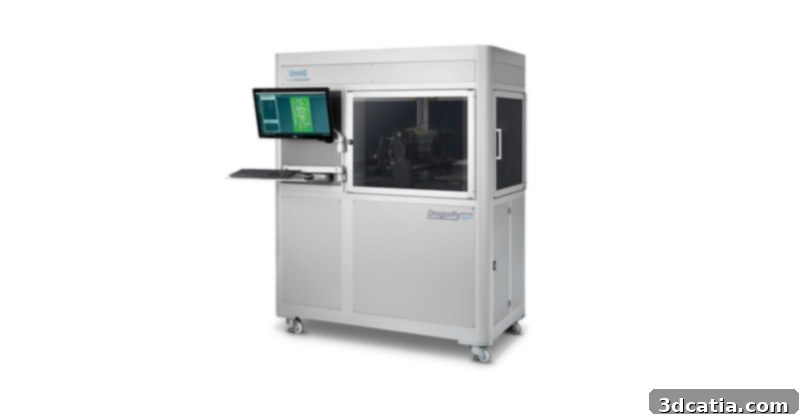
The DragonFly LDM™ Pro (Photo Credit: Nano Dimension)
A significant catalyst behind Nano Dimension’s recent surge in success and investor confidence is undoubtedly its recently obtained patent for “rigid-flexible printed circuit board fabrication using inkjet printing.” This patent is a testament to the company’s pioneering efforts in developing next-generation electronic capabilities. The profound implications of this newly patented technology are vividly articulated in an excerpt from the patent itself, highlighting the transformative potential of rigid-flexible composite electronics. These advanced electronics represent a new era of design, exhibiting properties of both stretching and bending flexibility. Such characteristics bestow electronic devices with unprecedented conformity to bending and twisting, alongside the remarkable capability to stretch and compress over a large strain scale. This level of adaptability and resilience opens up a myriad of applications, particularly in fields demanding highly conformable and resilient electronic systems.
The impact of rigid-flexible electronics, made possible by Nano Dimension’s inkjet printing technology, is particularly significant in biomedical engineering. Here, the creation of epidermal electronic devices and implantable devices benefits immensely from the soft and conformable nature of these circuits. Imagine sensors that seamlessly adhere to the skin, monitoring vital signs without discomfort, or implants that integrate more naturally with biological tissues, reducing rejection risks and enhancing functionality. Beyond the medical realm, the burgeoning demand for wearable electronics finds a perfect partner in rigid-flexible PCBs. Devices that conform to the human body, offering enhanced comfort and durability, are now more attainable. Furthermore, industries requiring sensors, antennas with complex geometries, or RFIDs to be precisely placed on curved or irregular objects will experience a paradigm shift. This technology enables a new level of integration and performance, allowing electronic functionalities to be embedded directly into product designs in ways previously unimaginable, pushing the boundaries of miniaturization, functionality, and form factor for a vast array of smart devices and systems.
The DragonFly LDM™ is more than just a 3D printer; it’s a sophisticated additive manufacturing system specifically engineered for electronic circuitry. This innovative platform is uniquely capable of additively manufacturing 3D Printed Circuit Boards (PCBs) with unparalleled precision and efficiency. The core of this system integrates a high-precision inkjet deposition printer, which utilizes specially formulated nano-inks – both conductive and dielectric – with optimized 3D software. This synergy enables the meticulous layer-by-layer additive manufacturing of complex electronic circuitry, extending beyond traditional PCBs to include advanced antennas, intricate sensors, and high-performance capacitors directly within a single, integrated process. The ability to print multi-layered circuits with embedded components in a single build cycle significantly reduces the complexities and lead times associated with conventional electronics manufacturing.
A cornerstone of the DragonFly™ system’s effectiveness is its foundation in Lights-out Digital Manufacturing (LDM). This concept represents a transformative approach to production, enabling a continuous build 3D printing technology that operates autonomously, around the clock, with minimal to no human intervention. This lights-out capability is a critical differentiator, allowing Nano Dimension to proudly position its DragonFly LDM™ as the sole comprehensive additive manufacturing platform for the continuous, uninterrupted 3D printing of electronic circuitry. The implications for industries demanding high throughput and rapid iteration are profound. Imagine design engineers being able to test new circuit designs overnight, significantly compressing development cycles and accelerating time-to-market for new products. This level of automation and continuous operation not only enhances productivity but also drastically reduces operational costs associated with manual oversight and traditional multi-step PCB fabrication processes.
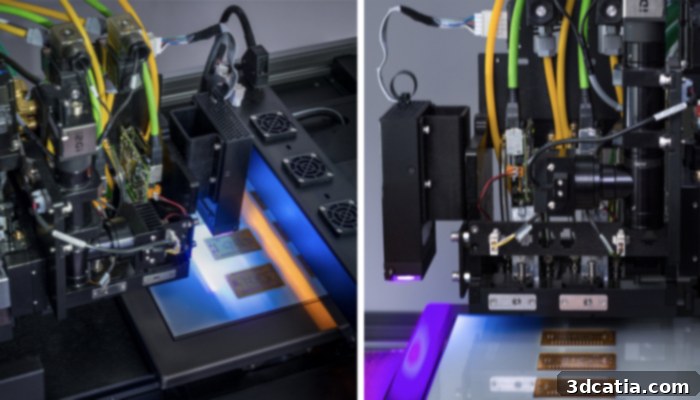
The DragonFly LDM™ Pro printing a PCB (Photo Credit: Nano Dimension)
The integration of DragonFly LDM™ technology empowers companies to internalize the entire additive manufacturing process for electronics. This in-house capability not only enhances security and intellectual property protection but also substantially decreases the strain on external resources traditionally required for prototyping and short-run manufacturing. By eliminating the need for external fabrication houses, multiple vendors, and lengthy supply chains, companies can realize considerable reductions in total expenditure compared to conventional manufacturing methods. This localized production model fosters agility, enabling quicker design iterations and immediate production adjustments, which are invaluable in today’s fast-paced technological landscape. The extensive benefits and versatile applications of DragonFly LDM™ technology, coupled with the mainstream industrial adoption of additive manufacturing methods—particularly encouraged by the transformative influence of Industry 4.0 on global supply chains—make Nano Dimension’s economic success not just unsurprising, but almost inevitable. This remarkable achievement serves as a powerful affirmation of the immense and enduring impact that the additive manufacturing industry, spearheaded by innovators like Nano Dimension, is poised to have on the future of electronics development, production, and broader technological advancement.
Nano Dimension is not merely an equipment provider; it is a catalyst for innovation in the electronics sector. By enabling the rapid, in-house production of complex, high-performance electronic circuits, including flexible and rigid-flexible PCBs, the company is empowering engineers and designers to push the boundaries of what’s possible. From developing lighter, more efficient components for aerospace to creating biocompatible electronics for medical applications and integrating smart features into everyday objects, the possibilities are virtually limitless. The continuous evolution of their nano-ink materials, coupled with advances in their inkjet deposition technology, ensures that the DragonFly LDM™ system remains at the forefront of additive electronics manufacturing, ready to meet the ever-increasing demands for miniaturization, higher performance, and customized solutions in a world that is becoming increasingly connected and intelligent. As industries worldwide embrace the principles of Industry 4.0, characterized by automation, data exchange, and smart manufacturing, Nano Dimension’s technology provides the critical infrastructure for realizing truly digital and agile electronic production processes.
What are your thoughts on Nano Dimension’s revolutionary DragonFly LDM technology and its potential to reshape the future of electronics manufacturing? Share your insights by leaving a comment below or engaging with us on our Facebook and Twitter pages! Don’t miss out on the latest advancements and news in the 3D printing world—sign up for our free weekly Newsletter here to get essential 3D printing updates delivered straight to your inbox!