
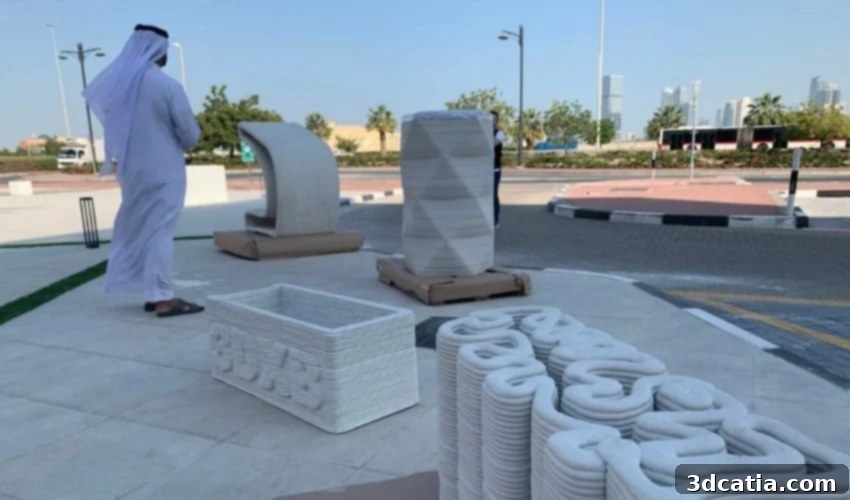
Dubai Breaks Ground: The World’s First 3D Printed Mosque Redefines Sacred Architecture
The landscape of construction and building is being rapidly transformed by the advent of 3D printing technology. This innovative approach offers unprecedented efficiencies, accelerated project timelines, and the remarkable ability to construct complex structures with precision and on-demand. From residential homes and modern offices to luxury resorts, 3D printing has consistently pushed the boundaries of what’s possible in architecture. Now, the world is poised to witness another groundbreaking first: the construction of the world’s only 3D printed mosque, slated for completion in Dubai. This pioneering project underscores the United Arab Emirates’ commitment to technological advancement and sustainable development.
The ambitious initiative is spearheaded by the Islamic Affairs and Charitable Activities Department (IACAD) of the UAE Government, signifying a blend of traditional values with cutting-edge innovation. Construction is set to commence in October of this year, with an estimated completion target of 2025. Once finished, this landmark mosque will comfortably accommodate 600 worshippers, making it a significant community hub, albeit on a smaller scale compared to the UAE’s grandest religious structures. For context, the majestic Sheikh Zayed Grand Mosque in Abu Dhabi, a symbol of Islamic architectural splendor, has the capacity to host over 40,000 people. This contrast highlights a strategic focus not on sheer size, but on innovative methodology and sustainable construction practices for future development.
The construction process itself will be a marvel of modern engineering. Three specialized technicians will oversee the printing operations, utilizing a sophisticated combination of proprietary raw materials and a meticulously formulated concrete mix. At the heart of this process lies a state-of-the-art 3D robotic printer, capable of printing at an impressive rate of two square meters per hour. This advanced system, managed by a team of just three workers, demonstrates the significant leap in labor efficiency and speed that additive manufacturing brings to the construction industry. The design vision for this unique mosque has been brought to life by the renowned architecture firm JT+Partners. Their diverse portfolio, which includes everything from opulent resorts in the Seychelles to luxurious hotels across the Middle East, showcases their expertise in crafting iconic and functional spaces, making them an ideal choice for this innovative blend of tradition and technology. Their involvement ensures that the mosque will not only be structurally sound and technologically advanced but also aesthetically pleasing and culturally resonant.
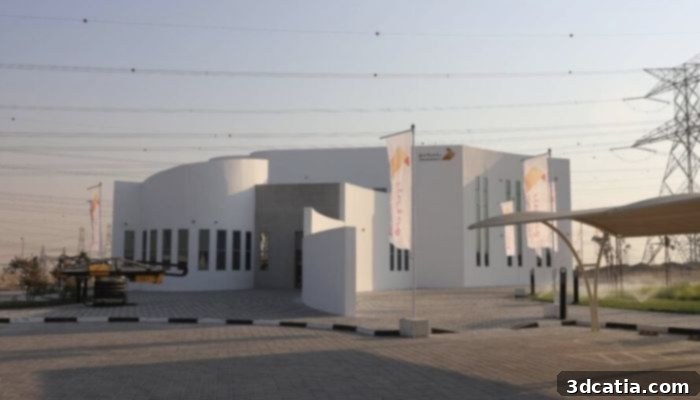
In 2019, Apis Cor completed what was then the world’s largest 3D printed building, in Dubai, setting a precedent for ambitious projects. (Photo credit: Apis Cor)
This groundbreaking mosque project is a cornerstone of the broader UAE 3D Printing Strategy, an ambitious government initiative launched to position the Emirates at the forefront of global innovation. The strategy sets a bold target: to ensure that 25% of all construction in the country is based on 3D printing technology by the year 2025. This visionary goal reflects a deep understanding of the transformative potential of additive manufacturing across various sectors. The strategy meticulously focuses on three primary sectors: construction, medical, and consumer goods, aiming to integrate 3D printing into the fabric of these vital industries.
To facilitate this widespread adoption and create a robust ecosystem for 3D printing, the strategy is built upon five critical pillars: robust infrastructure, a clear and supportive legislative structure, substantial funding mechanisms, cultivation of skilled talent, and understanding and stimulating market demand. Each pillar is designed to create an environment where 3D printing can thrive – from ensuring the necessary physical and digital infrastructure is in place, to establishing laws that promote innovation, providing financial incentives, developing a highly skilled workforce, and fostering a market eager for 3D printed products and services. Furthermore, the UAE Government has established the Strategic Alliance, a collaborative body dedicated to promoting additive manufacturing. This alliance aims to bolster the UAE’s status as a pivotal global hub for this technology by fostering the production of a diverse range of high-quality products, essential supplies, and specialized services, thereby attracting investment and expertise to the region.
The significance of this project was eloquently articulated by Hamad Al Shaibani, the IACAD director-general, who stated, “Building the first mosque in the world to be built with 3D printing technology is a distinguished project in the world built with this feature, and this work is a translation on the ground of the vision of His Highness Sheikh Mohammed.” This statement not only highlights the unique global standing of the project but also emphasizes its direct alignment with the visionary leadership of His Highness Sheikh Mohammed bin Rashid Al Maktoum, Vice President and Prime Minister of the UAE and Ruler of Dubai. His vision consistently champions innovation and technological adoption as key drivers for Dubai’s growth and its future as a smart city. The 3D printed mosque is a tangible manifestation of this commitment, demonstrating how advanced technologies can be leveraged to create culturally significant structures that are both modern and deeply rooted in tradition. It symbolizes a future where efficiency, sustainability, and architectural ingenuity converge.
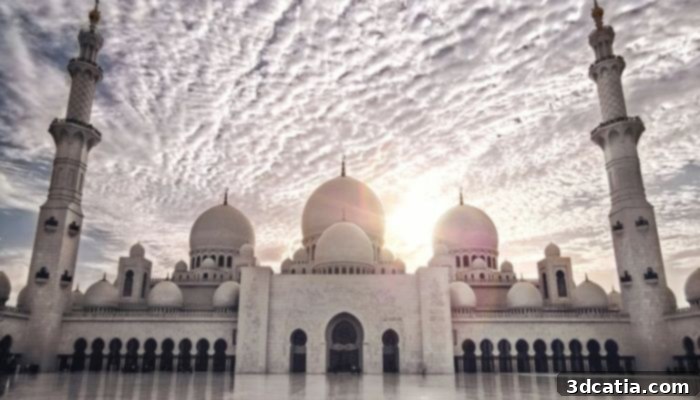
The UAE boasts several impressive mosques, such as the magnificent Sheikh Zayed Grand Mosque in Abu Dhabi, showcasing a rich architectural heritage.
Beyond the mosque, Dubai and the wider UAE continue to solidify their reputation as a burgeoning global hub for 3D printing and advanced manufacturing. Recent developments further underscore this commitment. A notable joint venture was recently announced between Australian additive manufacturing specialists Amaero and Rabdan Industries PLC, a prominent entity based in Abu Dhabi. This collaboration has led to the formation of Falcon Advanced Metals PLC, a strategic initiative poised to significantly advance metal additive manufacturing, large-format 3D printing capabilities, and sophisticated metal powder production within the region. The establishment of a specialist center through this venture will not only drive technological innovation but also create new industries and high-skilled jobs, enhancing the UAE’s economic diversification efforts.
Furthermore, public perception and government policy are strongly aligned in supporting this technological push. A recent YouGov study revealed that a substantial majority of UAE residents express a belief that the government should continue to invest heavily in 3D printing technology. This widespread popular support, coupled with robust governmental interest and strategic investments, creates an exceptionally fertile ground for the growth of additive manufacturing. It signals that this revolutionary technology is not merely a fleeting trend but is indeed becoming a crucial and integral part of the industrial and economic landscape in the United Arab Emirates. The future promises continued innovation, with Dubai and the UAE leading the charge in demonstrating how 3D printing can construct not just buildings, but an entire future of smart, sustainable, and technologically advanced cities.
What are your thoughts on this pioneering 3D printed mosque, and what broader implications do you foresee for the technology’s application in future construction projects? We encourage you to share your insights and comments below, or engage with us on our Linkedin, Facebook, and Twitter pages! For the very latest updates in 3D printing news delivered straight to your inbox, don’t forget to sign up for our free weekly Newsletter here. You can also explore all our informative videos and engaging content on our dedicated YouTube channel.