
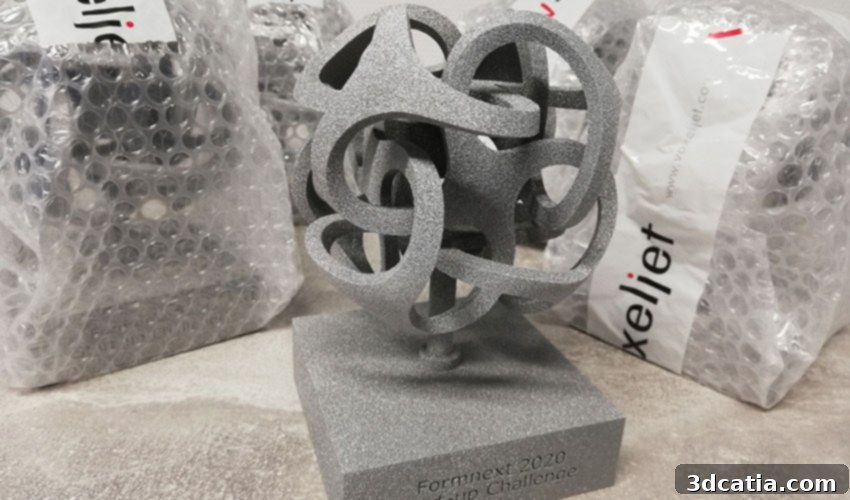
Formnext Startup Challenge 2020: Pioneering Innovations Driving the Future of Additive Manufacturing and Sustainability
The Formnext Startup Challenge is a renowned annual competition that spotlights the most promising and inventive young companies in the additive manufacturing (AM) sector. As the industry gathers for Formnext Connect, the digital edition of the premier global exhibition for additive manufacturing, it’s the perfect opportunity to delve into the groundbreaking achievements of this year’s winners. These five startups not only represent the cutting edge of technical development but also underscore the increasing importance of sustainability within the rapidly evolving 3D printing landscape. The competition’s focus on innovative solutions, especially those contributing to ecological responsibility, is a clear indicator of the industry’s direction, with investors paying close attention to these impactful advancements. In parallel, the prestigious purmundus challenge, under the theme “Geometry and Material in Harmony,” also unveiled its winners, celebrating ingenious applications of 3D and 4D printing in product design and manufacturing.
This year’s Formnext Startup Challenge saw five exceptional startups capture the jury’s attention with their transformative innovations. Hailing from diverse geographical locations, these companies are set to redefine different aspects of the additive manufacturing workflow. The winners include Addiguru from the United States, specializing in real-time monitoring; AM Flow from the Netherlands, focused on automated post-processing; Molyworks, also from the US, leading in sustainable metal recycling; NetmatX from Switzerland, pioneering high-performance polymers; and TOffeeAM from the UK, revolutionizing automated design software. The emphasis on sustainability this year was particularly strong, as highlighted by the CEO of AM Ventures: “Making a contribution to sustainable development is no longer just an added bonus for startups; it’s crucial to their success, and it also provides them with major business opportunities. Plus, more and more investors are factoring sustainability into their decision-making, and it won’t be long before they all do.” This ethos was perfectly embodied by Molyworks, the deserving recipient of the inaugural AM Ventures Impact Award, recognizing their significant contribution to environmental stewardship.
Addiguru: Advancing Real-Time Process Monitoring in Metal AM
Quality control and process monitoring are paramount in additive manufacturing, especially for critical applications in sectors like aerospace and medical. Addiguru addresses this crucial need by offering an intuitive and cost-effective real-time monitoring system tailored for additive manufacturing. What sets their technology apart is its broad compatibility: it can seamlessly integrate with AM units from various manufacturers, whether they are well-established systems or newly developed machines, particularly those working with metal. The core of their system involves a high-resolution camera positioned to observe the powder bed from above. This camera connects to an external computer, where proprietary software automatically identifies and captures relevant images of the build process. These images are then fed into a sophisticated self-learning algorithm that meticulously analyzes the data in real-time. By continuously scrutinizing the build, the algorithm can promptly detect any anomalies or deviations from the expected parameters, immediately alerting the user. This proactive approach significantly enhances process reliability, reduces material waste, and ensures the production of high-quality parts, mitigating costly failures and rework. Addiguru’s solution empowers manufacturers to gain unparalleled insight and control over their AM processes, paving the way for more consistent and defect-free production.
AM Flow: Streamlining Post-Processing Through Automation
While 3D printing technologies have made significant strides in automation, the post-processing stage of the additive manufacturing workflow often remains a bottleneck, characterized by manual labor and inconsistent results. This lack of automation is a major hurdle for scaling up production to high volumes. Recognizing this critical gap, the Dutch startup AM Flow has developed an innovative end-to-end solution for post-processing, bringing advanced Industry 4.0 technologies to the AM sector. Their mission is to digitalize and automate the entire post-production chain, from the moment a part exits the printer to its final packaging and transport. By doing so, AM Flow aims to drastically reduce the high labor costs typically associated with manual post-processing, thereby making additive manufacturing more economically viable for mass production. The company’s comprehensive suite of solutions covers essential steps such as precise component recognition, efficient handling, intelligent sorting, and automated packing. To achieve this level of automation, AM Flow leverages an array of cutting-edge technologies, including sophisticated 3D shape recognition algorithms, robust industrial image processing systems, and advanced AI software. This integrated approach ensures that products and processes are seamlessly automated once the initial 3D printing phase is complete, transforming post-processing from a laborious manual task into an efficient, digitalized operation.
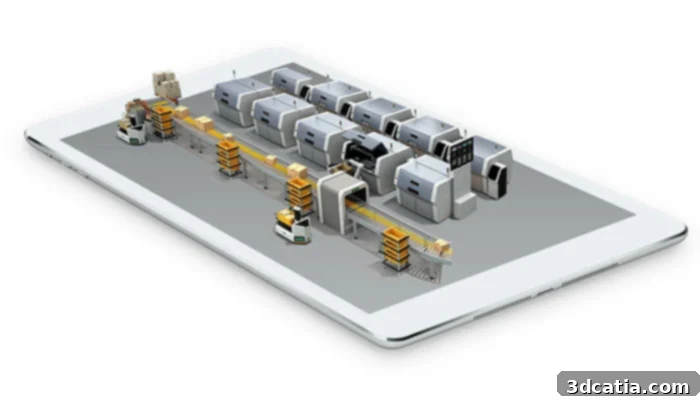
Image via AM Flow
Molyworks: Revolutionizing Sustainable Metal Powder Production
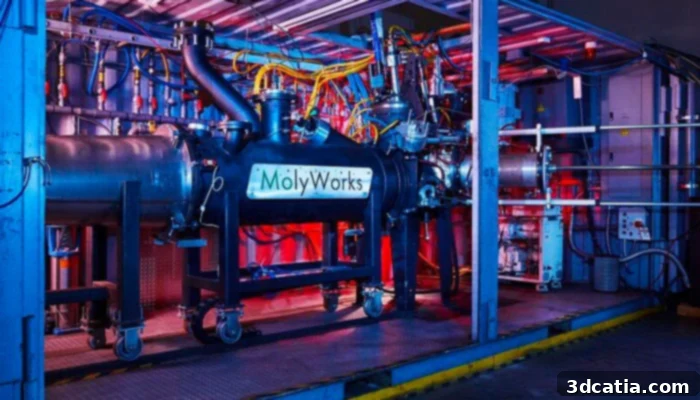
Sustainability in manufacturing is no longer an option but a necessity. The Californian startup Molyworks is at the forefront of this movement within additive manufacturing, tackling the significant challenge of metal waste. Their ambitious goal is to establish a truly sustainable method for recycling scrap metal, such as swarf, used powders, and discarded components, and reintroducing it into the production cycle to create high-quality metal powder for 3D printing. This innovative closed-loop approach drastically reduces the demand for virgin materials and minimizes industrial waste. The journey began in 2015 when its founders, working out of a garage, developed the foundational technology. This has since evolved into the sophisticated Greyhound system, which combines a mobile melting furnace with a state-of-the-art powder atomization system. Molyworks’ dedicated team has successfully conducted trials with an impressive range of 21 different metals, including widely used materials like titanium, steel, nickel, aluminum, and copper, demonstrating the versatility and robustness of their process. The profound environmental impact of the Greyhound system was a key factor in Molyworks winning the inaugural AM Ventures Impact Award. By enabling the reuse of metal, the system has the potential to save vast quantities of natural resources and energy. The company underscores the urgency of their mission by highlighting a stark statistic: metal production currently accounts for seven percent of the world’s total energy consumption. Molyworks’ technology offers a powerful solution to make metal additive manufacturing significantly more eco-friendly and resource-efficient.
NematX AG: Pushing Boundaries with High-Performance Polymer 3D Printing
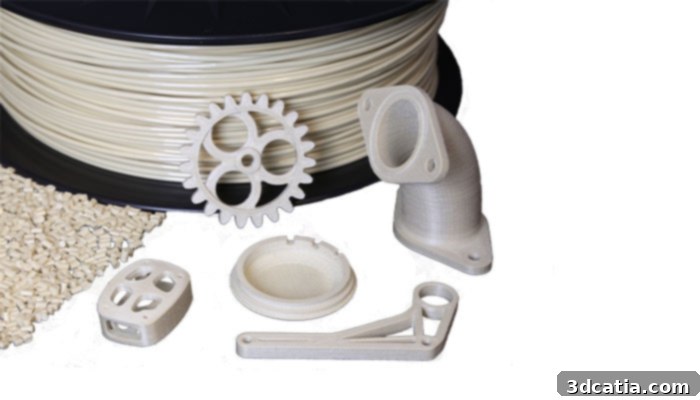
The world of polymer additive manufacturing is continuously seeking materials that can withstand extreme conditions and deliver superior performance. NematX AG, a dynamic Swiss startup spun off from ETH Zurich in 2020, is poised to lead the next generation of high-performance polymer 3D printing. Their proprietary “Nematic 3D Printing” technology promises to significantly elevate the benchmarks for end-use components, moving beyond the limitations of conventional polymer printing methods. This innovative approach focuses on enhancing material properties at a fundamental level, allowing for the creation of parts with unparalleled strength, thermal resistance, and chemical inertness. NematX is targeting industries where component reliability under harsh environmental conditions is non-negotiable. These include critical sectors such as aerospace, where parts are exposed to extreme temperatures and pressures; medical applications, demanding biocompatibility and sterilization resilience; advanced electronics, requiring high dielectric strength and heat dissipation; and various industrial applications where components must endure corrosive environments or heavy mechanical loads. By pushing the boundaries of what’s possible with high-performance polymers, NematX AG is enabling engineers and designers to realize applications previously unattainable with additive manufacturing, opening new avenues for product innovation and functional integration.
ToffeeAM: Intelligent Design Automation for Optimal Additive Manufacturing
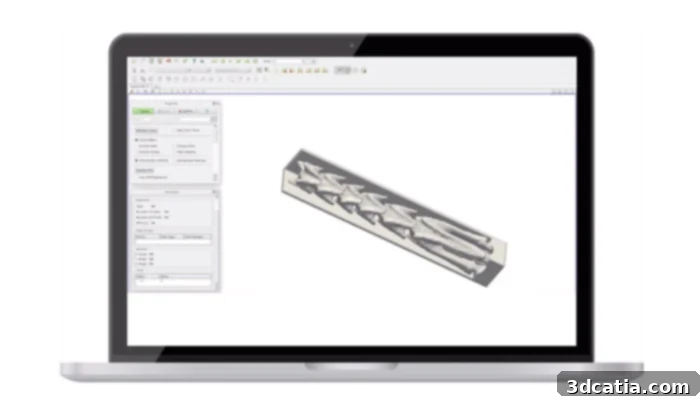
Design optimization is a cornerstone of effective additive manufacturing, allowing for the creation of lightweight, high-performance components that would be impossible to produce with traditional methods. The British startup TOffeeAM, which has previously been featured in an interview on 3Dnatives, is revolutionizing this critical phase with its sophisticated automated design software. This intelligent solution dramatically simplifies the design process, requiring only a few key inputs from the user: the defined design space, specific fluid or material conditions, and the desired performance characteristic to be optimized within the component. From these parameters, the software (known as TOffee) autonomously generates optimized geometries that maximize efficiency and performance. Founded as a spin-off from Imperial College London, TOffeeAM now licenses its powerful software to a growing base of industrial clients. The TOffee software is remarkably versatile, capable of optimizing not just individual parts but entire complex systems. This capability can lead to significant benefits, such as a substantial reduction in the overall number of parts required in an assembly, thereby simplifying manufacturing, reducing weight, and cutting costs. TOffeeAM’s technology is already making a tangible impact in high-stakes industries, including the demanding world of Formula 1, where marginal gains in performance are crucial, as well as in the aviation and oil and gas sectors, where lightweighting, structural integrity, and efficiency are paramount. Their automated design approach streamlines the entire engineering workflow, unlocking the full potential of additive manufacturing for complex, high-performance applications.
The innovations presented by these Formnext Startup Challenge winners offer a compelling glimpse into the future of additive manufacturing. From real-time monitoring and automated post-processing to sustainable material recycling and advanced design and polymer capabilities, these startups are addressing key challenges and expanding the horizons of what 3D printing can achieve. Their contributions, especially those recognized by the AM Ventures Impact Award, highlight a pivotal shift towards more efficient, sustainable, and intelligent manufacturing practices. We eagerly anticipate exploring these pioneering companies and their advancements further during Formnext Connect, and also discovering the creative breakthroughs of the purmundus challenge winners. You can connect to Formnext Connect HERE and cast your vote in the purmundus challenge HERE. What are your thoughts on these latest innovations in additive manufacturing? Share your insights and opinions in a comment below or connect with us on our Facebook and Twitter pages! Don’t miss out on future updates by signing up for our free weekly Newsletter.