
Formnext 2019 Revisited: A Deep Dive into the Top 3D Printing Innovations That Shaped the Future
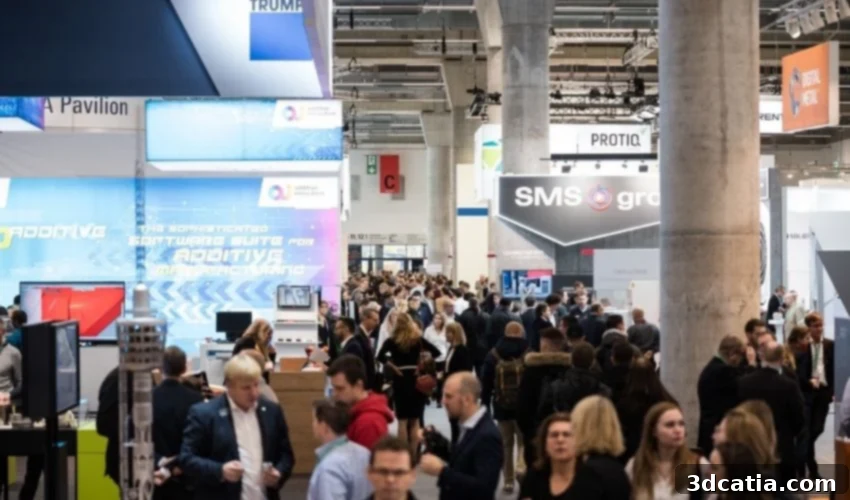
Formnext stands as the premier global exhibition and conference dedicated to additive manufacturing and industrial 3D printing. Each year, it draws innovators, manufacturers, and enthusiasts from across the globe to Frankfurt, Germany, to showcase the latest advancements and discuss the future of this transformative technology. In 2019, Formnext was no exception, serving as a vibrant hub where cutting-edge 3D printer manufacturers unveiled their most recent, groundbreaking products. From compact desktop units designed for rapid prototyping and specialized applications to robust industrial-grade systems built for demanding production environments, attendees discovered an unparalleled array of solutions tailored to virtually any 3D printing need imaginable.
While 3D printing technologies have continued their rapid evolution since 2019, with significant strides made in material science, machine precision, and software integration, revisiting past milestones offers valuable insights into the industry’s trajectory. As the additive manufacturing world geared up for Formnext 2021, which ran from November 16th to 19th that year, we took the opportunity to look back at some pivotal moments from Formnext 2019. Our aim was to highlight the innovations that captured our attention and, in many ways, set the stage for subsequent developments. This article, complementing an insightful video from the event, delves deeper into some of our top picks for 3D printers showcased at Formnext 2019, featuring pioneers like 3DCeram, Meltio, and AM Polar, among others. These companies demonstrated a diverse range of additive manufacturing processes, pushing the boundaries of what was possible in their respective domains. Join us as we explore these innovative machines and reflect on their impact on the additive manufacturing landscape.
Formnext 2019: A Snapshot of Additive Manufacturing’s Momentum
Formnext 2019 was a significant event, reflecting a period of accelerated growth and diversification within the additive manufacturing industry. The exhibition floor buzzed with excitement, showcasing not just finished products but entire ecosystems – from design software and advanced materials to sophisticated post-processing solutions and automated workflows. The emphasis was clearly shifting from niche prototyping to mainstream industrial production, with many exhibitors highlighting increased build volumes, faster print speeds, and enhanced material compatibility. This convergence of hardware, software, and materials underscored the industry’s maturation, signaling a clear path towards wider adoption across various sectors, including automotive, aerospace, medical, and consumer goods.
Manufacturers were keenly focused on addressing key challenges such as cost-effectiveness, reliability, and scalability. This led to a plethora of innovations designed to make additive manufacturing more accessible and competitive compared to traditional manufacturing methods. The event also highlighted a growing trend towards hybrid manufacturing systems, which combine additive and subtractive processes within a single machine, offering unparalleled flexibility and efficiency. Security, data integrity, and intellectual property protection in a digital manufacturing environment were also prominent discussion points, reflecting the industry’s increasing readiness for large-scale integration into global supply chains.
Our Top Picks: Pioneering Technologies from Formnext 2019
Our video from Formnext 2019 captured some of the most impressive and forward-thinking 3D printing technologies on display. We meticulously selected machines that demonstrated significant technological leaps, addressed unique manufacturing challenges, or opened up entirely new application possibilities. Here, we expand on some of these standout innovations, providing a deeper understanding of their capabilities and the impact they have had since their unveiling.
3DCeram: Mastering the Art of Ceramic Additive Manufacturing
3DCeram, a French company, has established itself as a global leader in ceramic 3D printing, and their presence at Formnext 2019 underscored their expertise in this specialized field. Their focus lies in developing and manufacturing high-performance ceramic parts using additive manufacturing processes, primarily based on stereolithography (SLA) technology adapted for ceramic slurries. Unlike traditional polymer-based SLA, 3DCeram’s technology precisely solidifies ceramic suspensions layer by layer, enabling the creation of intricate and highly dense ceramic components.
The appeal of ceramic 3D printing stems from the unique properties of ceramics: exceptional hardness, high temperature resistance, chemical inertness, and biocompatibility. These characteristics make ceramic parts indispensable in industries such as aerospace (e.g., lightweight, heat-resistant components), biomedical (e.g., dental implants, bone scaffolds), luxury goods (e.g., watch components, jewelry), and industrial applications (e.g., nozzles, insulators). At Formnext 2019, 3DCeram showcased printers capable of handling various ceramic materials, including alumina, zirconia, and silicon nitride, demonstrating their commitment to expanding the material palette and application scope for ceramic additive manufacturing. Their solutions offer unparalleled precision for complex geometries that would be impossible or prohibitively expensive to produce with conventional methods, truly pushing the boundaries of material science and manufacturing.
Meltio: Revolutionizing Metal 3D Printing with Hybrid DED Technology
Meltio, an innovative Spanish company, made a significant splash at Formnext 2019 with its groundbreaking metal 3D printing technology. Meltio specializes in Directed Energy Deposition (DED) processes, specifically utilizing a unique wire-laser DED approach. This method involves feeding metal wire into a melt pool created by a high-power laser, which then deposits material layer by layer to build or repair metal parts. What sets Meltio apart is its integration strategy, offering solutions that can be standalone 3D printers, integrated into CNC machines to create powerful hybrid manufacturing systems, or even robotic arm integrations.
The advantages of Meltio’s technology are substantial. By using wire as a feedstock instead of powder, it drastically reduces material costs and waste, making metal 3D printing more economically viable for a broader range of applications. It also allows for multi-metal printing within a single component, enabling the creation of functionally graded materials with varying properties across the part. This capability opens doors for innovative designs in industries like tooling, automotive, and aerospace, where localized material properties can optimize performance. Meltio’s systems are known for their robustness, ability to print large parts, and the potential for rapid prototyping, repair, and even small to medium batch production of complex metal components. Their presence at Formnext 2019 highlighted a critical shift towards more cost-effective and versatile metal additive manufacturing solutions.
AM Polar and the Diverse Landscape of Industrial Additive Manufacturing
While “AM Polar” may refer to a specific, perhaps lesser-known, exhibitor or a representative term for a category of solutions at Formnext 2019, the overarching theme it would fall under is the vast and diverse world of industrial additive manufacturing. Formnext is renowned for showcasing the full spectrum of industrial 3D printing technologies beyond just ceramics and metals, encompassing a wide array of polymer-based systems, composite materials, and specialized applications.
Industrial additive manufacturing encompasses technologies like Selective Laser Sintering (SLS) for strong, functional polymer parts; Fused Deposition Modeling (FDM) at an industrial scale for large, durable components; Material Jetting for multi-material and full-color prototypes; and various other Binder Jetting and Vat Polymerization (SLA/DLP) systems designed for high throughput and precision. Companies exhibiting at Formnext often present solutions that address specific industrial needs: from manufacturing jigs, fixtures, and tooling, to producing end-use parts with complex geometries, or enabling mass customization at an unprecedented scale.
Exhibitors in this category at Formnext 2019 were pushing boundaries in several key areas: increasing build chamber sizes to facilitate the printing of larger components, improving print speeds to meet production demands, and developing new materials with enhanced mechanical, thermal, and chemical properties. Many focused on integrating AI and machine learning into their systems for predictive maintenance, optimized print parameters, and quality control, further solidifying the industry’s move towards smart manufacturing. The diversity of these offerings demonstrated that industrial additive manufacturing was no longer a single technology but a collection of powerful tools, each suited to specific challenges and applications, collectively driving a new era of manufacturing flexibility and efficiency.
From Formnext 2019 to Formnext 2021 and Beyond: Two Years of Accelerated Progress
The innovations seen at Formnext 2019 were foundational, but the subsequent years leading up to Formnext 2021 saw even more rapid acceleration in 3D printing technology. Manufacturers focused on refining existing processes, making them faster, more reliable, and more scalable. We witnessed significant improvements in software, with advanced simulation tools and generative design capabilities becoming more integrated and user-friendly. Material science continued to evolve, introducing a wider range of high-performance polymers, composites, and exotic metal alloys, expanding the application possibilities for additive manufacturing even further.
Furthermore, the global events between 2019 and 2021 highlighted the critical role of additive manufacturing in supply chain resilience and localized production. The ability to rapidly design and produce parts on demand, without reliance on complex global logistics, brought 3D printing into sharper focus as a strategic manufacturing solution for many industries. This period also saw increased emphasis on sustainability, with companies developing more energy-efficient machines, recyclable materials, and processes that reduce waste, aligning additive manufacturing with broader environmental goals.
Watch the Video and Engage with the Community
We invite you to watch the video above and experience a visual tour of these groundbreaking printers and more from Formnext 2019. It provides a unique perspective on the atmosphere of innovation and the sheer diversity of solutions presented at one of the world’s leading additive manufacturing events. See if you agree with our choices for the top picks from that year, and perhaps discover a technology you hadn’t considered.
Which of these incredible 3D printers at Formnext 2019 caught your eye the most, or which one do you think had the greatest impact? Let us know your thoughts and insights in a comment below! Your perspectives are invaluable as we collectively navigate the exciting future of additive manufacturing. You can also join the conversation and connect with us on our Linkedin, Facebook, and Twitter pages, where we regularly share the latest news and insights from the world of 3D printing. Don’t miss out on crucial industry updates – remember to sign up for our free weekly Newsletter here, delivering the most important 3D printing news straight to your inbox! For more visual content and comprehensive coverage of additive manufacturing, you can also find all our videos on our dedicated YouTube channel. Stay informed, stay innovative!