

Unmasking Ghost Guns: The Forensic Science of Tracing 3D-Printed Firearms
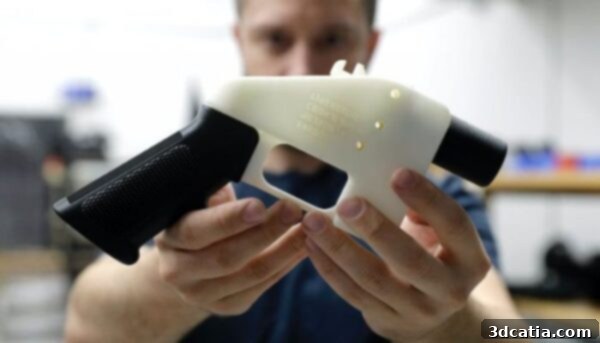
The advent of 3D printing has undoubtedly revolutionized manufacturing, empowering creators across various fields to bring their innovative designs to life. However, this transformative technology also presents a darker side, with a concerning rise in its application for illicit activities. Among these, the proliferation of 3D-printed firearms, often referred to as “ghost guns,” stands as a particularly contentious and challenging issue for authorities worldwide. A 2024 report from the United States National Library of Medicine (NLM) explicitly confirms that the use of these weapons is on the ascent, highlighting their growing popularity “in various regions, regardless of the strictness of firearm regulations or cultural context, and not just as a last resort.” These untraceable weapons, lacking serial numbers or traditional registration, pose significant hurdles for law enforcement investigations, making it incredibly difficult to link them back to their manufacturers or users. It is precisely this critical gap that criminologist Kirk Garrison aims to address, having pioneered a groundbreaking forensic method designed to trace 3D-printed firearms back to their origin.
Kirk Garrison, an experienced criminologist with the San Bernardino Sheriff’s Department, has dedicated years to understanding and combating the escalating threat of 3D-printed firearms and their components. His observations chronicle a concerning evolution: while earlier instances often involved 3D printing technology being used to modify semi-automatic weapons into fully automatic ones, he now increasingly encounters firearms that are entirely fabricated using additive manufacturing. This shift underscores a growing sophistication in the illicit use of 3D printing. Through meticulous microscopic analysis, Garrison made a pivotal discovery: the internal hardware of 3D printers leaves unique, distinct markings on the plastic objects they produce. These subtle yet consistent imperfections act like a unique “fingerprint,” offering a potential pathway to identify the specific machine used to create a weapon. Driven by this profound insight, Garrison co-authored an initial research paper on this innovative forensic method in 2023 with Steven Pavlovich from the University of Western Australia. Building on this foundational work, a second, more comprehensive edition of the study is currently underway, in collaboration with esteemed researchers from the University of Central Oklahoma, promising further validation and refinement of this critical technique.
Unique “Fingerprints”: How 3D Printer Tool Marks Can Identify Specific Models
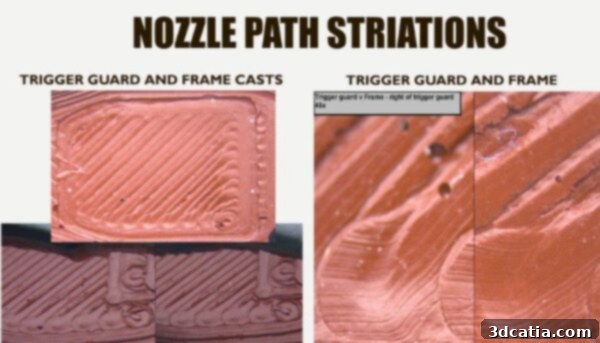
Garrison’s forensic methodology is rooted in his groundbreaking discovery of characteristic tool marks embedded within the plastic of 3D-printed parts. His extensive research demonstrates that during the additive manufacturing process, the filament deposition follows highly specific and often unique paths, which can serve as powerful indicators of the exact model of printer utilized. Beyond the filament paths, the texture and microscopic imperfections of the printer’s metal heat bed also impart identifiable traces onto the finished object. These minute structural anomalies, often invisible to the naked eye, act as crucial clues, allowing forensic experts to determine the type of 3D printer involved in the manufacturing process. To enhance the precision of this identification, Garrison’s team developed a custom algorithm capable of even pinpointing the specific print nozzle. This advanced analytical tool has achieved remarkable success, matching printed weapon parts to the printer in approximately 75 percent of cases, representing a highly promising and potentially game-changing development for forensic science and criminal investigations.
The “fingerprints” left by a 3D printer are a complex interplay of mechanical and material factors. Each printer, even within the same model series, exhibits minute variations in its components, calibration, and wear patterns over time. The extrusion nozzle, for example, develops unique microscopic abrasions and imperfections as it heats and pushes filament, leaving distinct striations or patterns on the deposited plastic layers. Similarly, the movement system (motors, belts, and lead screws) introduces subtle inaccuracies and resonant frequencies that translate into unique patterns in the finished print. The heated build plate, which provides the foundation for the print, often has its own microscopic texture, wear, or even embedded dust particles that get transferred to the first layer of the printed object. By meticulously analyzing these microscopic details—layer line consistency, surface texture, tool marks, and specific deposition patterns—the custom algorithm can differentiate between printers, creating a unique signature for each machine. This level of detail moves beyond simply identifying the brand and model, offering the potential to link a specific ghost gun to a specific machine, provided a reference sample is available.
Despite the significant promise of Garrison’s research, it is crucial to acknowledge certain inherent limitations and complexities that impact its immediate practical application. To date, the comprehensive analysis has primarily been conducted on models belonging to the Prusa MK4S type. While popular, this focus means that the generalizability of the findings to the vast array of other 3D printer models currently available on the market remains to be fully established. A key challenge arises from the highly customizable nature of these machines; users can easily modify hardware components, swap out nozzles, alter build plates, or use a diverse range of filaments and print settings. Such alterations would undoubtedly affect the characteristic “fingerprints” left on the printed objects. Consequently, when dealing with modified hardware or entirely different 3D printer models, the results of Garrison’s forensic analysis are likely to vary significantly, meaning the current data, while encouraging, is not yet universally reliable across all scenarios.
The journey from a promising research method to a fully deployable forensic tool in criminal investigations involves overcoming numerous practical hurdles. One major challenge lies in establishing a comprehensive database of “fingerprints” from a wide range of 3D printer models, including those that are commonly used for illicit purposes. Without a vast comparative database, matching an unknown ghost gun component to a specific printer would be akin to finding a needle in a haystack. Furthermore, the cost and logistical complexity of acquiring, analyzing, and maintaining such a database for law enforcement agencies are substantial. There’s also the element of rapid technological advancement in 3D printing; new printer models and improved filaments are continuously introduced, requiring ongoing research and updates to the forensic methodology. These factors mean that while Garrison’s approach provides a vital proof-of-concept, its widespread implementation will necessitate significant investment in research, infrastructure, and standardized protocols to ensure its reliability and admissibility in legal proceedings.
Credit: Kirk Garrison
Moreover, while tracing a weapon back to a specific 3D printer model represents a significant investigative leap, it constitutes only one piece of a complex puzzle in a criminal investigation. Forensic methods can only be effectively applied when there is already a reasonable suspicion of a crime and physical evidence has been recovered. The ultimate goal is not just to identify the printer, but to link that printer to an individual, which requires additional investigative work, intelligence gathering, and potentially other forms of digital forensics. In this broader context, Garrison’s innovative approach, despite its promising initial results and ongoing refinement, is not yet ready for immediate, widespread practical use in every case. It represents a crucial step forward in the fight against untraceable ghost guns, offering law enforcement agencies a new, powerful tool to help combat this escalating threat. Further development, validation across diverse printer types, and integration into existing forensic frameworks will be essential for its full potential to be realized. You can find more information about this developing field HERE.
What are your thoughts on this innovative approach to enhance the traceability of 3D-printed firearms and strengthen criminal investigations? We invite you to share your insights and comments below, or engage with us on our LinkedIn or Facebook pages! Additionally, stay informed about the latest advancements in additive manufacturing by signing up for our free weekly Newsletter, delivered directly to your inbox. You can also explore all our video content on our dedicated YouTube channel.
Photo Cover: Liberator, ‘The first 3D-printed pistol shown in its individual parts.’