
Revolutionizing Global Aid: How Field Ready Leverages 3D Printing for Local Impact and Humanitarian Innovation
The advent of 3D printing technology has ushered in a new era of manufacturing, fundamentally changing how products are conceived, produced, and distributed. One of the most transformative advantages of additive manufacturing is its inherent ability to facilitate localized production and enable on-demand optimization of objects and parts. This means an end to the reliance on extensive physical inventories or complex global supply chains that span continents. With the power of 3D technologies, individuals and organizations can manufacture specific items from a digital file, precisely when and where they are needed. This groundbreaking capability offers unparalleled flexibility and responsiveness, making it a critical asset in various sectors.
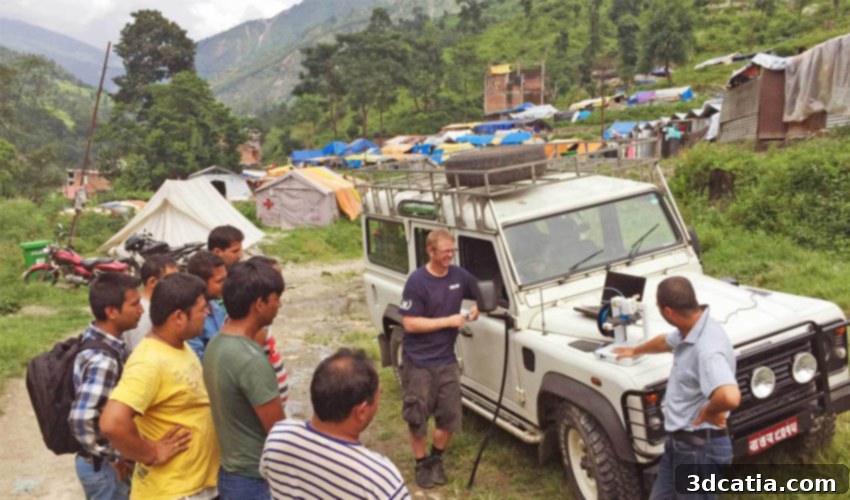
This pivotal advantage particularly resonated with Field Ready, an innovative association dedicated to assisting some of the world’s most vulnerable populations, often situated in the immediate aftermath of natural disasters or ongoing humanitarian crises. Field Ready has strategically integrated 3D printers into its operations to create a wide array of essential everyday objects and specialized tools, delivering direct and immediate relief to those who need it most. We recently had the distinct pleasure of interviewing Dr. Eric James, the visionary director of Field Ready. During our conversation, Dr. James generously shared the inspiring origins of his idea and elaborated on the profound benefits that additive manufacturing brings to humanitarian aid efforts.
3DN: How did you come up with the idea of creating Field Ready?

Dr. Eric James
Field Ready emerged from a confluence of critical realizations and deep-seated motivations, driven by a clear understanding of the challenges and opportunities within the humanitarian sector. At its core, the organization was founded on an unwavering passion for providing tangible assistance to individuals facing extremely difficult circumstances. This profound desire to help others has been, and continues to be, the primary driving force for every individual closely associated with Field Ready, fostering a culture of dedication and empathy.
Beyond this core passion, there was also a significant degree of frustration with the prevailing status quo in humanitarian aid. Historically, the aid sector has often been characterized by its slow pace in adopting new technologies and innovative methodologies, frequently lagging behind other industries in terms of transformative change. This perceived innovation deficit highlighted a critical need for new approaches that could deliver aid more efficiently and effectively. Finally, and perhaps most importantly, there was a profound recognition of the immense opportunity to do something truly transformative. While the scale of global humanitarian needs is undeniably massive and often overwhelming, so too is the potential for implementing positive change through strategic innovation and the intelligent application of advanced technologies.
The foundational concepts underpinning Field Ready were first meticulously developed in the vibrant innovation hub of Silicon Valley in August 2012 by Drs. Eric James and Nick Haan. However, these groundbreaking ideas were not born in a vacuum; they were deeply rooted in and informed by decades of invaluable, on-the-ground experience gained in some of the world’s most challenging environments, including South Sudan, Afghanistan, and Haiti. This extensive field experience provided a crucial practical understanding of the real-world needs and logistical complexities inherent in humanitarian response. The organization was formally incorporated in 2013, subsequently achieved its US 501c3 non-profit status the following year, and has since expanded its registration to operate effectively in a growing number of countries, solidifying its global reach and commitment.
Field Ready actively addresses critical humanitarian and reconstruction aid needs by fundamentally transforming existing logistics paradigms. This transformation is achieved through the strategic integration of cutting-edge technology, innovative design principles, and, crucially, by engaging local communities and aid workers in entirely new and empowering ways. Our core operational model involves the local manufacturing of useful items precisely where they are needed, thereby enabling immediate, localized solutions to pressing problems. Beyond just production, we are committed to knowledge transfer; we systematically impart these essential manufacturing and problem-solving skills to others through comprehensive training programs and robust capacity-building initiatives. Our organization is at the forefront of pioneering innovative approaches to tackle the most formidable challenges across various sectors, from healthcare to infrastructure. The overarching impact of this unique methodology is a dramatically improved efficiency in aid delivery, making humanitarian assistance faster, significantly cheaper, and ultimately, far more effective and tailored to specific community requirements.
3DN: What made you decide to use 3D printing in your projects?
Our decision to integrate 3D printing into Field Ready’s humanitarian projects was driven by a deep understanding of its transformative potential as an exponential technology. This characteristic means it possesses a multitude of inherent advantages that are particularly well-suited to the dynamic and often resource-constrained environments where we operate. Firstly, its remarkable flexibility allows us to adapt quickly to diverse and rapidly evolving needs, producing highly customized parts and tools on demand, irrespective of their complexity. This contrasts sharply with traditional manufacturing, which often requires significant lead times and specialized equipment for each unique item. Secondly, the technology’s increasingly low cost, particularly for desktop and portable units, makes it an economically viable solution for local production, significantly reducing overheads associated with shipping and warehousing. Finally, and perhaps most importantly for Field Ready, is its unparalleled ability to create truly useful and impactful items directly in the field, wherever our work takes us. This localized manufacturing capability bypasses fragile supply chains, accelerates response times, and empowers communities to participate in their own recovery and development, making 3D printing an indispensable tool in our humanitarian toolbox.
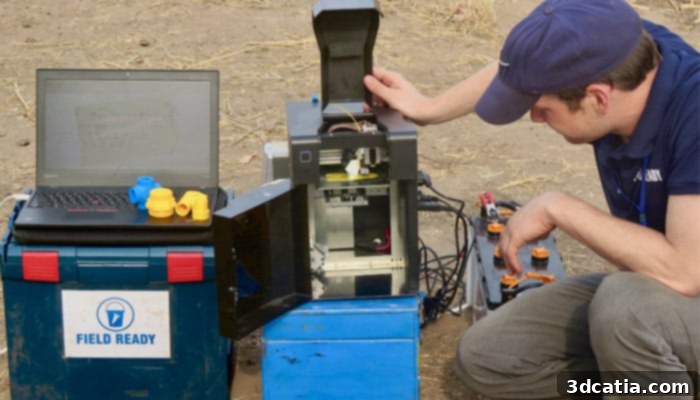
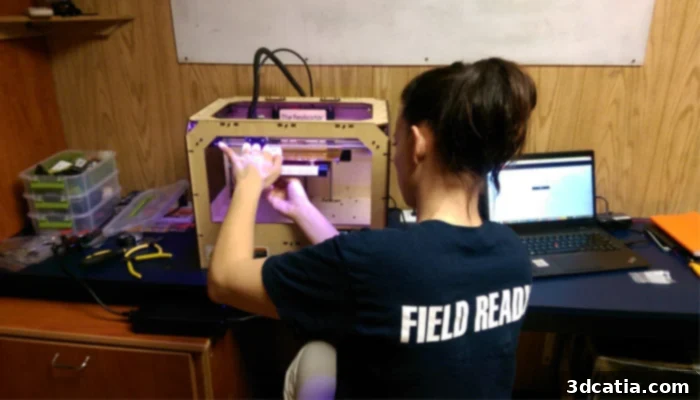
Setting up the 3D printer on-site | Credits: Field Ready
3DN: What do you print to help people and what kind of printers and materials do you use?
At Field Ready, our approach is rigorously needs-driven; we always begin by thoroughly assessing the specific requirements of the communities we serve and work backward from there. In essence, we do not start with a predetermined technology and then search for problems it might solve. Instead, we identify urgent problems and then determine the most appropriate technological solutions, with 3D printing frequently emerging as a highly effective tool. This localization of problem-solving is achieved through the application of participatory development techniques, actively involving community members in the identification of needs, combined with a human-centered design philosophy. This ensures that the items we produce are not only useful but also culturally appropriate and directly address the immediate challenges faced by people.
The items we create are incredibly diverse, reflecting the varied needs in humanitarian contexts. This may include essential health and medical supplies, such as custom prosthetic parts, surgical tool replacements, or adaptive aids for people with disabilities. We also produce vital water and sanitation components, like bespoke pipe connectors or spare parts for water filtration systems that are unavailable through conventional channels. Furthermore, our efforts extend to items related to energy, such as housings for solar lamps or components for small-scale power solutions, and even simple but crucial things that children or the elderly need for comfort and daily living, like specialized toys or assistive devices. The flexibility of 3D printing, often using robust and accessible FDM (Fused Deposition Modeling) printers with materials like PLA, PETG, or ABS, allows us to address these diverse requirements effectively.
Iteration is a cornerstone of our design and manufacturing process, and 3D printers prove to be an invaluable tool in this regard. For example, we’ve produced unique and often hard-to-source replacement parts for medical professionals in remote clinics. If a device doesn’t fit perfectly during an initial trial, or if after using it, a physician suggests a modification to improve its functionality, or even if a simple aesthetic change like color is requested, we can relatively easily and quickly produce an updated version. This rapid prototyping and iteration capability ensures that the final product is optimally suited to the user’s needs, minimizing waste and maximizing utility. We maintain a focus on widely available, robust 3D printers and durable, field-appropriate materials that can withstand challenging environmental conditions.
To democratize access to these vital designs, we have meticulously created and maintain an extensive catalog of parts, available in an easily accessible PDF format. This catalog is designed for broad usability, allowing anyone – be they technical specialists, product designers, seasoned engineers, or individuals with no formal technical training – to review the available solutions. The corresponding printable CAD (Computer-Aided Design) files are securely maintained online, ensuring global accessibility. This comprehensive repository includes dozens of readily 3D printable parts, alongside numerous other essential items that leverage basic, appropriate technology principles. This open-source approach fosters collaboration and enables widespread local production, truly empowering communities to become self-sufficient.
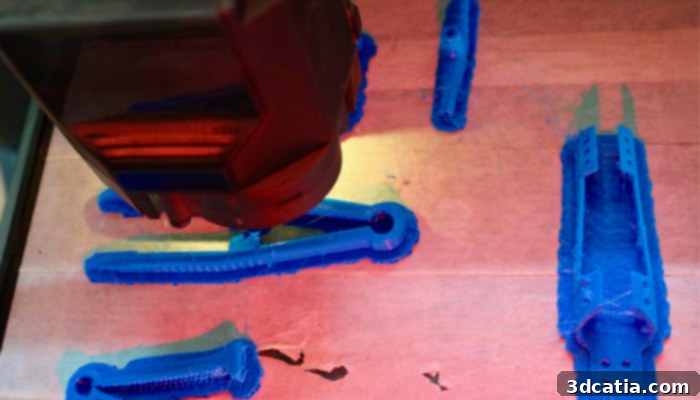
Different 3D printed pieces | Credits: Field Ready
3DN: In your opinion, what are the benefits of using 3D printing for humanitarian aid?
The benefits of integrating 3D printing, and indeed a broader range of advanced technologies, into humanitarian aid are multifaceted and profound. At Field Ready, we strategically employ various technologies and relevant software solutions to achieve extraordinary results in localized manufacturing. The specific choice of technology is always dictated by the precise needs we identify within the unique contexts and situations where we operate. In numerous instances, our work is guided by the principles of “appropriate technology,” which inherently prioritizes the perspective of the end-users, particularly those with limited resources. This approach typically involves solutions that are small-scale, often labor-intensive, easily replicated and repaired using locally available parts, decentralized in their application, and environmentally gentle. It’s crucial to clarify that “scale” here refers to the physical size and complexity of the manufacturing sites, not the output or ultimate impact; indeed, our activities are designed to reach and positively affect people on a very large scale, ensuring widespread benefit.
Simultaneously, we actively work with and leverage “exponential technology,” including its powerful application in additive manufacturing, which holds astounding potential for rapid innovation and impact. Additive manufacturing encompasses a wide spectrum of tools beyond just 3D printers, including CNC routers for subtractive manufacturing, laser cutters for precise material processing, and various types of molding machines for batch production. This broad suite of technologies offers an expansive range of applications, enabling us to tailor solutions to extremely diverse requirements. These technologies are especially vital to our operational approach given their inherent flexibility and their immense potential for further evolution and capability as they continue to mature. The ability to rapidly design, prototype, and produce customized items on-site fundamentally changes the paradigm of aid delivery, making it far more responsive and effective.
Ultimately, Field Ready’s forward-thinking approach is not solely informed by the technological tools available today but is deeply shaped by a visionary understanding of what will become possible in the years to come. For instance, while many advanced items leveraging concepts such as nanotechnology are currently only at the conceptual stage, we anticipate that in the near future, these will reach a readiness level where rigorous field trials will not only be necessary but also feasible. Our organization is committed to continuing to pioneer this anticipatory approach, ensuring we remain at the forefront of technological integration in humanitarian contexts. Crucially, whatever the specific technology employed, people will always remain at the absolute center of our methodology. We view specific technologies merely as powerful tools to effectively address distinct problems and navigate complex challenges, always with the human element as our paramount concern. This ensures that innovation serves humanity, rather than the other way around.
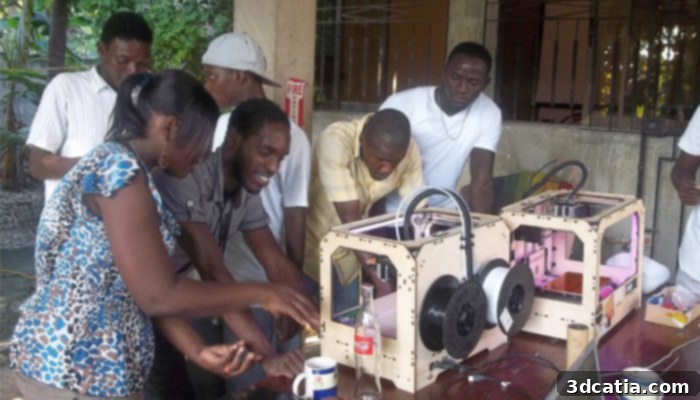
3DN: What are the challenges?
While the advantages of integrating advanced manufacturing, particularly 3D printing, into humanitarian aid are undeniable, it’s important to acknowledge and address the significant challenges that accompany this innovative approach. There are quite a few hurdles we navigate on a regular basis. One primary concern is the inherent cost associated with the initial investment in equipment, particularly for more robust or specialized machines, and the ongoing expense of materials, which can fluctuate. Another challenge stems from the inherently experimental nature of these evolving technologies; determining the precise right use cases for specific contexts requires continuous evaluation and adaptation, as what works in one disaster zone might not be optimal in another. This often involves trial and error, which, while valuable, can consume time and resources.
Beyond these broader considerations, there are also very practical, on-the-ground issues that can significantly impact the success of specific prints. Power outages are a frequent occurrence in many remote or disaster-affected regions, demanding reliable backup power solutions or highly energy-efficient printers. Environmental factors such as pervasive dust and high moisture levels can critically affect print quality, lead to equipment malfunctions, or degrade material integrity. Despite these challenges, our teams are constantly finding innovative ways to manage and mitigate these issues, developing robust workflows and adapting our equipment to perform in harsh conditions. It’s crucial to reiterate that, as powerful and versatile as 3D printing is, it is not a universal panacea for every humanitarian need. We firmly view it as yet another incredibly valuable “tool in the toolbox,” one that complements other appropriate technologies and traditional aid methods, rather than replacing them entirely.
3DN: What are your future projects?
Field Ready is actively engaged in a number of incredibly exciting and impactful future projects, both geographically and product-wise, as we continue to expand our reach and refine our methodologies. Geographically, we are particularly focusing on deepening our engagement in East Africa and Latin America, where we plan to return to existing operational areas and initiate new projects to address pressing needs. We are also carefully exploring opportunities in more sensitive regions, such as Syria, where the humanitarian imperative is immense despite the operational complexities. A significant new initiative will soon see us starting projects specifically aimed at assisting the Rohingya refugees, providing them with critical, locally manufactured aid. Furthermore, we are committed to expanding our vital work in the Pacific region, an area characterized by a large number of fragile island states that are highly vulnerable to climate change and natural disasters, making localized manufacturing solutions particularly crucial for resilience building.
From a product development perspective, we are actively dedicated to the mass production of key relief items and health-related supplies that have proven their efficacy and are consistently in high demand. This strategic shift towards scalable production aims to amplify our impact and ensure a more consistent supply of essential goods. We are also pursuing a number of important technological breakthroughs. One notable project in progress is the development of an advanced, field-ready water monitoring device, which promises to significantly improve public health outcomes by ensuring access to safe drinking water in vulnerable communities. This device will leverage low-cost sensors and easy-to-deploy interfaces, making it suitable for remote and resource-scarce environments.
Beyond specific projects, we are vigorously pursuing a comprehensive partnership approach, striving to create an expansive ecosystem that inherently stresses the values of humanity, human rights, community empowerment, and genuine inclusiveness. In practical terms, this vision involves fostering and nurturing a growing global group of individuals and organizations deeply involved in “humanitarian making.” This movement is about harnessing and amplifying the power of local manufacturing capacity so that anyone, anywhere in the world, can gain the skills and access the tools needed to produce what they require for survival, recovery, and development. We are also proactively enhancing our capacity to respond with unparalleled speed and effectiveness to rapid-onset disasters, such as devastating earthquakes, destructive tsunamis, and violent conflicts. Our unwavering commitment remains to continue providing critical relief and empowering local resilience wherever and whenever we can, building a more prepared and self-sufficient global community.
Credits: Field Ready
3DN: Any last words for our readers?
At Field Ready, we hold a powerful vision for a better world – one where every individual and community is empowered to make what they need, fostering an intrinsic sense of self-reliance and building profound resilience against future challenges. Our pioneering approach, which integrates advanced localized manufacturing with humanitarian principles, is not merely a temporary fix but a transformative paradigm. We firmly believe that this methodology will eventually become mainstream, evolving to a point where current, more traditional aid delivery methods are considered antiquated and inefficient by comparison. As the underlying technology continues its rapid advancement – becoming increasingly user-friendly, more cost-effective, and simultaneously more sophisticated in its capabilities – it is absolutely crucial that this progress is matched by the right mindset. This mindset must be fundamentally open to embracing change, exploring new possibilities, and recognizing the potential for abundance that these technologies unlock. To paraphrase the great inventor Thomas Edison, what is truly needed now is “a tiny bit of inspiration and a lot of perspiration” – the vision to see what’s possible and the dedication to make it a reality for those who need it most.
You can find more detailed information about Field Ready and their impactful work by visiting their official website HERE.
What are your thoughts on Field Ready’s innovative use of 3D printing in humanitarian aid? We encourage you to share your perspectives in a comment below or engage with us on our Facebook and Twitter pages! Don’t forget to sign up for our free weekly Newsletter to receive all the latest news and insights in the world of 3D printing delivered directly to your inbox!