
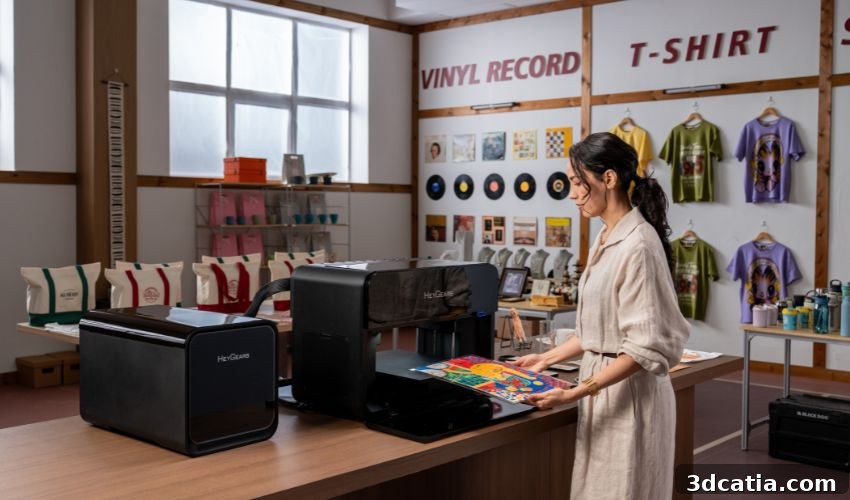
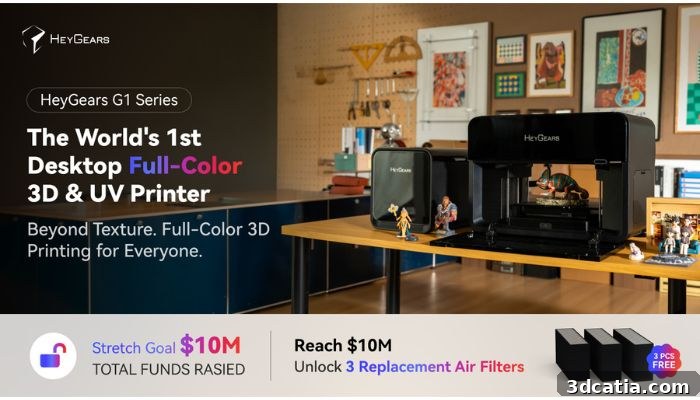
Since the G1 Series launched on Kickstarter on July 23, the campaign’s comments have turned into an active dialogue between HeyGears and potential backers. We first introduced the platform in our earlier coverage and followed up with the campaign launch report. The project has already hit its $10 million stretch goal, unlocking a free gift for every backer. As pledges continue to arrive, two concerns consistently recur among prospective buyers: the long-term cost of running the machines and independent proof that the G1 performs as demonstrated. Below we summarize the most common questions and how HeyGears has responded.
The Headline Concern: Printhead Cost and Lifespan
A top concern among backers is the cost and lifespan of the printhead, which is viewed as an expensive consumable. HeyGears frames the decision around total cost of ownership rather than the initial purchase price. The higher-end G1X uses the industrial Epson I3200-U1HD printhead, which the company estimates will last around 2,100 hours with normal use and routine automatic maintenance. By comparison, the entry-level G1 uses the Epson F1080, which is rated for approximately 700 hours. HeyGears points out that the I3200-U1HD also enables faster UV printing and greater lifetime output per head, arguing that fewer replacements help offset the higher upfront cost of the printhead.
To address buyer concerns, HeyGears offers a 180-day warranty on printheads, with repair or replacement subject to inspection. The printer itself carries a one-year warranty. Customers in the U.S. and Europe are also able to access local service engineers for support and repairs, which the company says will help minimize downtime and ensure ongoing performance.
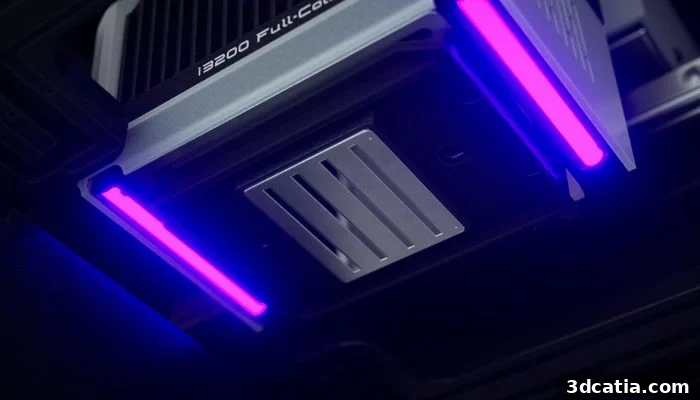
The Epson I3200-U1HD printhead.
Maintenance, Cleaning, and Idle Time
Closely related to printhead longevity is the risk of nozzle clogging, especially for users who do not run the machine every day. HeyGears says the G1 Series includes three cleaning modes—Jetting, Regular Cleaning, and Deep Cleaning—each designed for a different level of maintenance and to reduce the likelihood of nozzle issues over time.
Jetting is intended for quick nozzle checks and minor recovery. It ejects ink through the nozzles without extracting it, allowing the system to verify nozzle status and keep nozzles moist during operation.
Regular Cleaning is meant for everyday upkeep when the printer is in regular use. This mode uses ink extraction to preserve printhead function and can run automatically during long print jobs to reduce the chance of nozzle degradation.
Deep Cleaning is a more thorough process that uses cleaning fluid to service the printhead system. It is recommended after extended idle periods—typically more than two weeks—when switching between different printing modes, or whenever a comprehensive maintenance cycle is needed.
These three cleaning routines are designed to work together to keep printhead performance stable and to maintain consistent print quality over the long term, whether the user prints daily or intermittently.
The Total-Cost-of-Ownership Case for Ink
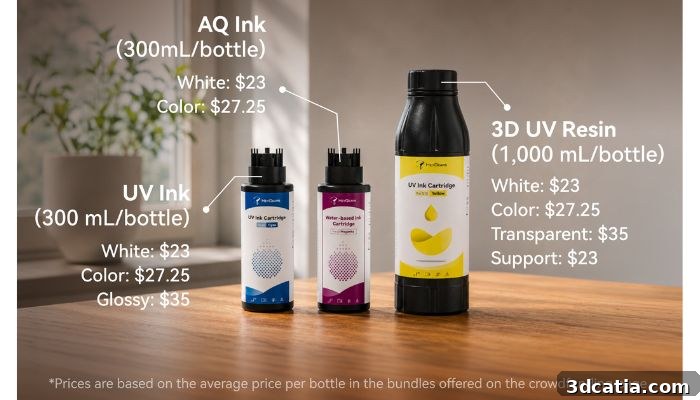
Ink cost is another common question. HeyGears produces its own full-color and UV inks, formulated specifically for the G1 Series printheads. The company says it has focused on keeping prices low for the highest-consumption materials—such as UV white ink and support resin—which drive day-to-day operating costs. HeyGears also emphasizes that its inks are low-odor and made with skin-safe formulations, aiming to make the machines suitable for desktop or studio environments where odor and safety are considerations.
The Validation Gap
Many backers have asked for independent validation: hands-on reviews, close-up footage of prints, and detailed looks at demanding output such as transparent parts, fine text, and complex models. HeyGears has begun to address this by sharing more in-depth demonstrations and sponsored reviews that walk through the full print workflow and show macro and full-angle views of finished parts. These materials aim to demonstrate real-world capability beyond studio-produced examples.
More independent reviews and real-world tests are expected to appear in the coming weeks, which should help potential buyers evaluate print quality, material behavior, and the machine’s day-to-day reliability. That additional evidence will be important for backers weighing the trade-offs between upfront investment and ongoing operating costs.
The Kickstarter campaign remains active through September 11 at 9:00 AM PDT. Throughout the campaign HeyGears continues to answer questions from the community and provide updates on testing and support. For buyers focused on long-term cost and proven performance, the emerging third-party reviews and expanded documentation are likely to be decisive.
*All Photo Credits: HeyGears