
Sweet Innovation: Revolutionizing Chocolate Art with 3D Printing Technology
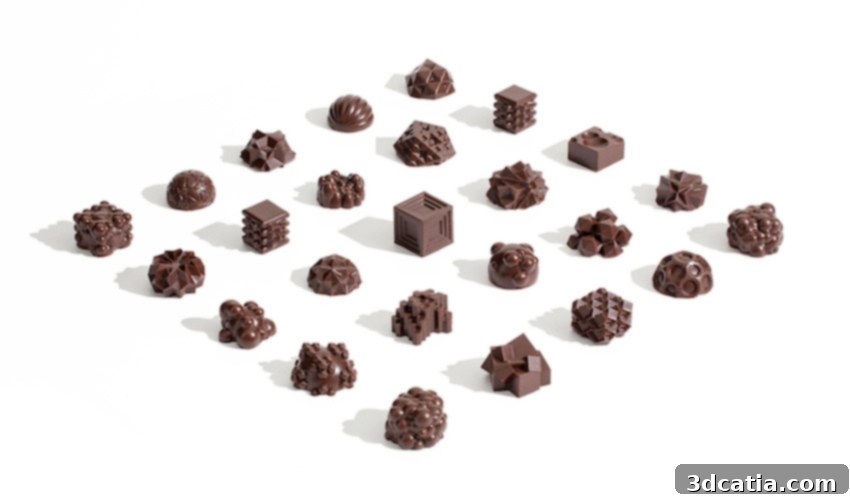
Have you ever encountered chocolates so intricately designed, so visually captivating, that you hesitate to take the first bite? Welcome to the fascinating world of 3D chocolates, where cutting-edge 3D printing technology meets the timeless artistry of confectionery. This remarkable fusion is championed by visionary artists like Ryan L. Foote, who seamlessly blends advanced digital fabrication techniques with traditional chocolate-making methods to craft an extraordinary range of unique chocolates, each boasting unparalleled shapes and often surprising flavors. By leveraging 3D printing to create highly detailed food molds, Foote is able to design and produce geometries that were once deemed impossible, pushing the boundaries of what edible art can be. These aren’t just sweets; they are miniature sculptures, a testament to innovation that makes them almost too beautiful to eat.
The Evolution of 3D Printing in the Culinary World
A closer inspection of contemporary chocolate making reveals that 3D printing has firmly established its niche within the culinary landscape. An increasing number of chocolatiers and confectioners are exploring and adopting food 3D printing, primarily for the creation of intricate molds essential for shaping their delectable treats. The ability to design and produce custom molds with unprecedented detail has opened up a new realm of creative possibilities, allowing artisans to move beyond conventional forms. While mold creation remains the most prevalent application, the industry has also seen ventures into direct chocolate printing. Manufacturers like 3D Systems, for instance, developed the CocoJet, a specialized machine capable of extruding successive layers of melted chocolate to build objects directly. However, the direct chocolate printing market is still in its nascent stages; these machines face challenges related to material viscosity, temperature control, cooling times, and scalability, which have limited their widespread commercial adoption. Despite these hurdles, the innovation continues, driven by a desire to integrate technology into every facet of food production and presentation.
Ryan L. Foote: Blending Craftsmanship with Digital Precision
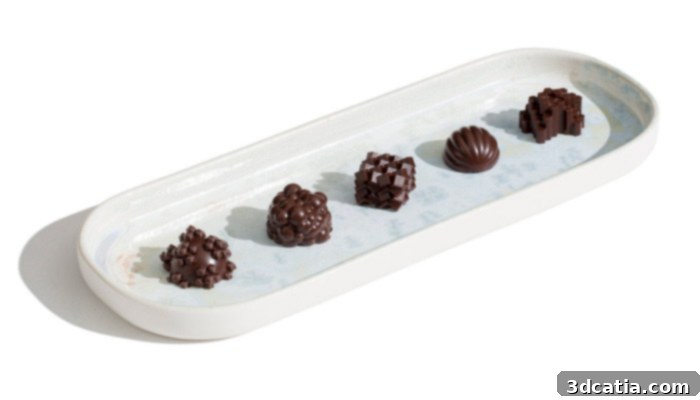
At the heart of this sweet revolution is Ryan L. Foote, whose unique approach defines the synergy between traditional confectionery and modern technology. Foote meticulously utilizes 3D printing to fabricate his molds, into which he subsequently pours his chocolate mixtures. This strategic use of 3D technologies allows his chocolates to achieve complex, often organic, and geometrically intricate shapes that would be utterly impossible to replicate using conventional molding techniques. His vision extends beyond mere novelty; it’s about reinventing an classic for the contemporary palate and aesthetic. Foote articulates his mission, stating, “For the last few years I have been working on reinventing the traditional soft centered chocolate for the digital age. There have been some exciting things happening in the bean-to-bar space but I felt the traditional bon bon has remained more or less the same.” This statement encapsulates his commitment to innovation, pushing beyond the ingredient-focused bean-to-bar movement to redefine the form, texture, and overall experience of the classic bonbon.
Foote’s artistic process is a testament to the power of cross-disciplinary inspiration. He draws heavily from architecture, nature, and geological formations, translating the intricate patterns of minerals, crystals, and topographical maps into edible designs. This unique blend of influences results in chocolates that are not only delicious but also conceptually rich and visually stunning. The 3D printed molds enable him to capture these inspirations with unparalleled precision, transforming abstract concepts into tangible, edible art pieces.
A Symphony of Flavors: From Australian Botanicals to Hong Kong Traditions
The innovation in Ryan L. Foote’s chocolates isn’t limited to their groundbreaking forms; it extends profoundly to their flavor profiles. Defying conventional expectations, he ventures into realms of rather unusual and exotic aromas, meticulously pairing them with his geometrically complex creations. His culinary explorations draw inspiration from diverse sources, including indigenous Australian plants and traditional flavors deeply rooted in Hong Kongese culinary heritage. This bold approach allows him to offer a truly unique sensory experience, where taste and sight are equally stimulated. For instance, a quick browse of his offerings reveals tantalizing options such as chocolates infused with salted coconut, refreshing eucalyptus, or a rich, decadent red bean ganache. These flavors are not merely added; they are carefully integrated to complement the intricate structures, creating a holistic and immersive tasting journey. Each chocolate becomes a narrative, telling a story of cultural fusion and artistic exploration, making every bite an adventure for the senses.
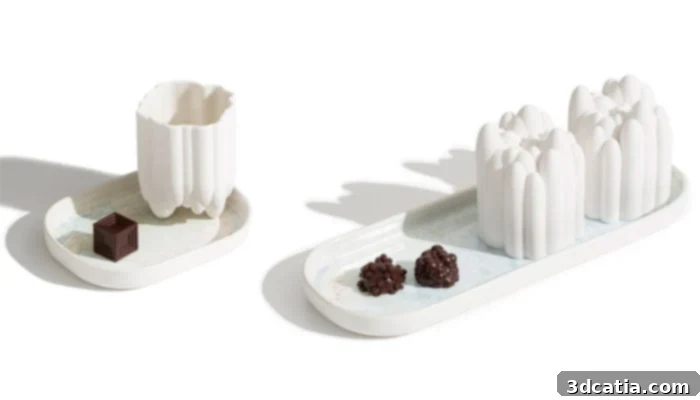
Foote has also designed cups and trays through 3D printing, extending his artistic vision beyond chocolates.
Beyond Confectionery: Expanding the Experience with 3D Printed Tableware
Ryan L. Foote’s artistic vision transcends the realm of chocolate alone. Recognizing that the presentation is as crucial as the product itself, he has extended his innovative use of 3D printing to create a line of exquisite ceramic tableware items. These pieces, ranging from elegantly designed cups perfect for sipping hot chocolate to sophisticated trays ideal for presenting his unique sweets, are all crafted from 3D printed molds. This holistic approach ensures a cohesive aesthetic experience, where the vessel complements the edible art it holds. The same principles of complex geometry and artistic inspiration that define his chocolates are evident in his tableware, creating a unified and immersive sensory journey. This expansion into ceramics underscores Foote’s commitment to elevating the entire culinary ritual, making every interaction with his creations a memorable one. The tableware not only enhances the presentation of his chocolates but also serves as functional art, bringing his distinctive design philosophy into everyday life.
The Journey from Vision to Indulgence: A Successful Kickstarter Campaign
The groundbreaking nature and sheer appeal of Foote’s project were unequivocally validated through a highly successful Kickstarter campaign. This crowdfunding initiative, which concluded triumphantly in mid-November, garnered significant support from backers eager to experience this unique blend of art and technology. The campaign’s success was not just a financial victory; it was a clear indication of a widespread public appetite for innovative, artisan chocolates that push creative boundaries. The overwhelming response enabled Foote to expand his production capabilities and broaden the availability of his exotic chocolate creations, perfectly timed as the festive season approached and the new year beckoned. This successful venture transformed a visionary concept into a tangible reality, allowing more enthusiasts to savor these extraordinary confections. The Kickstarter campaign effectively served as a launchpad, establishing Foote’s brand as a pioneer in the edible art space and setting the stage for future expansions and even more adventurous culinary explorations.
The Future of Artisan Confectionery in a Digital Age
Ryan L. Foote’s work with 3D printed chocolates stands as a powerful testament to the transformative potential of technology in traditional crafts. His journey illuminates a path forward for artisan confectionery, demonstrating how digital tools can unlock unprecedented levels of creativity and precision without compromising the soul of handmade goods. This integration of technology paves the way for a future where customization is key, allowing chefs and chocolatiers to create bespoke edible experiences tailored to individual preferences and special occasions. Imagine personalized chocolates with intricate designs representing initials, logos, or even miniature landscapes. The challenges that once limited food 3D printing, such as material limitations and speed, are steadily being overcome by ongoing research and development in materials science and machine engineering. As these technologies mature, we can anticipate a broader adoption of 3D printing not only for molds but potentially for direct, multi-material food fabrication, leading to novel textures, flavors, and nutritional profiles. Foote’s pioneering spirit is inspiring a new generation of culinary artists to explore the intersection of science, art, and gastronomy, promising an exciting and delicious future for the world of food.
Join the Conversation on 3D Printed Delights!
What are your thoughts on these innovative 3D chocolates and the burgeoning field of food 3D printing? Do you find the blend of technology and traditional craftsmanship appealing, or do you prefer chocolate made by more conventional methods? We would love to hear your opinions and insights. Share your thoughts in a comment below or join the discussion on our Facebook and Twitter pages! Don’t miss out on the latest advancements and stories from the world of additive manufacturing. Be sure to sign up for our free weekly Newsletter to receive all the exciting news in 3D printing delivered straight to your inbox!