
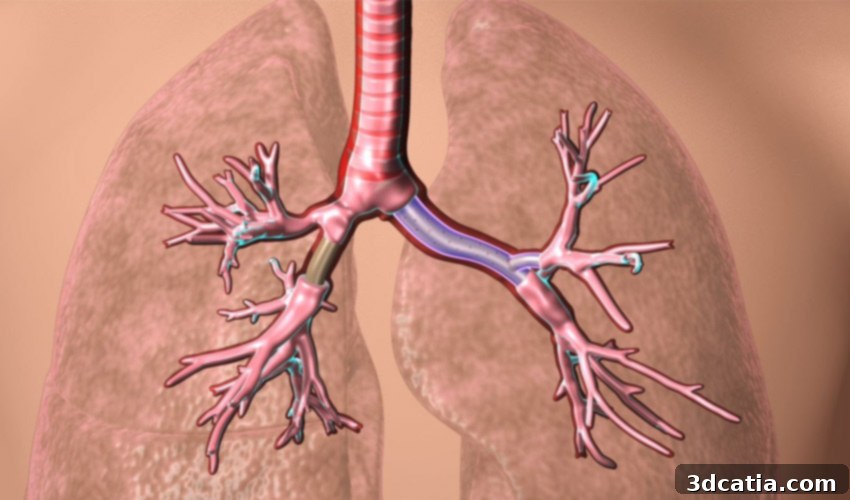
FDA Approves Custom 3D Printed Airway Stents: A Revolution in Respiratory Care
In a groundbreaking advancement for personalized medicine, the U.S. Food and Drug Administration (FDA) has officially approved a new generation of custom-made airway stents. These innovative devices, developed by Dr. Tom Gildea, a distinguished physician at the Cleveland Clinic, represent a significant leap forward in treating various respiratory conditions. Unlike traditional, mass-produced stents, these patient-specific devices are meticulously designed to conform precisely to an individual’s unique anatomy. Their primary function is to maintain an open airway, thereby facilitating easier and more natural breathing for patients suffering from airway obstructions. Crafted using state-of-the-art 3D printing technology combined with medical-grade silicone injection, these custom airway stents promise not only a superior fit but also significantly enhanced durability, potentially outlasting conventional stents by a considerable margin. This FDA approval paves the way for wider accessibility to this transformative technology, offering new hope and improved quality of life for countless patients nationwide.
The Critical Need for Airway Stents: Understanding the Challenges of Traditional Solutions
The necessity for a medical stent arises from a multitude of physiological issues that can compromise vital bodily functions. For instance, in cardiology, stents are often implanted to restore proper blood flow to the heart when coronary arteries become narrowed or blocked due to conditions like atherosclerosis, often exacerbated by aging. While alternative procedures like bypass surgery exist, they are highly invasive and carry significant risks, making stent placement a less aggressive and often preferred option. However, traditional stents, which come in a limited range of standardized sizes and shapes, frequently present challenges. The human anatomy is incredibly diverse, and a “one-size-fits-all” approach often falls short when it comes to internal medical devices. A stent that doesn’t perfectly conform to the patient’s specific morphology can lead to a host of serious complications. These issues can include mechanical flexing or migration of the device, localized tissue damage or necrosis due to improper pressure points, and the accumulation of mucus, leading to dangerous airway plugging. Such complications can necessitate further interventions, increase patient discomfort, and ultimately, undermine the efficacy and safety of the initial procedure, highlighting a critical gap in conventional medical device manufacturing.
The Revolutionary Role of 3D Printing in Medical Devices
This is precisely where the transformative power of additive manufacturing, commonly known as 3D printing, enters the medical arena as a game-changer. By leveraging advanced imaging techniques, physicians can now overcome the limitations posed by standard device sizes. The process begins with a high-resolution Computed Tomography (CT) scan, which captures incredibly detailed three-dimensional data of the patient’s internal anatomy. This digital blueprint serves as the foundation for creating a perfectly tailored medical device. From this precise anatomical data, medical professionals can digitally model a stent that is meticulously adapted to the patient’s specific artery or airway. This capability ensures an unprecedented level of customization, guaranteeing that the final device will fit flawlessly within the patient’s unique biological structure. Dr. Tom Gildea’s pioneering work exemplifies this paradigm shift, demonstrating how 3D printing can usher in an era of truly personalized healthcare, where medical devices are crafted with unparalleled precision to meet individual patient needs, thereby minimizing risks and maximizing therapeutic outcomes.
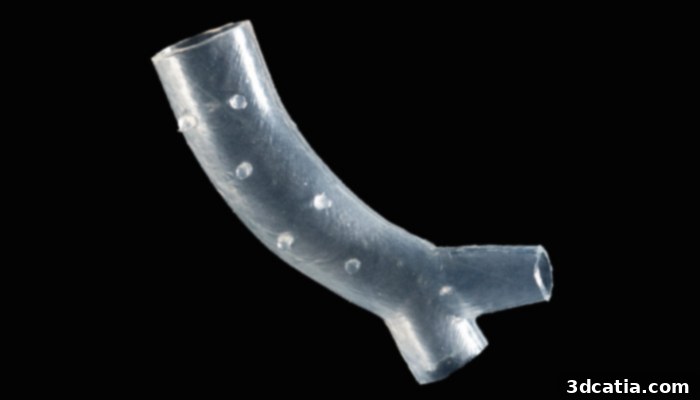
The stent was made using a 3D printed mold | Credits: Cleveland Clinic
Engineering Precision: The Process Behind Custom 3D Printed Stents
From CT Scan to Custom Mold
The innovative process for creating these life-changing custom stents begins with meticulous data acquisition and sophisticated digital design. As Dr. Gildea explains, after gathering comprehensive anatomical data from a high-resolution 3D scan, such as a CT scan, medical engineers create an incredibly precise digital model of the patient’s airway. This digital model is then used to design and 3D print a negative mold. While Dr. Gildea has not publicly specified the exact 3D printing technology or machine utilized for mold creation, it is widely presumed that an FDM (Fused Deposition Modeling) 3D printer would be more than capable of producing the necessary accuracy and detail for such a mold. FDM printers are renowned for their ability to create complex geometries from various thermoplastic materials, making them an ideal choice for manufacturing custom molds. The mold itself is then carefully prepared for the next critical stage of the process, ensuring that every curve and contour of the patient’s airway is perfectly replicated.
The Superiority of Medical Silicone
Once the custom mold is ready, a carefully selected medical-grade silicone is injected into it. Silicone is an excellent choice for airway stents due to its inherent biocompatibility, flexibility, and inertness within the human body. Unlike rigid metallic stents that can sometimes cause irritation or erosion, silicone stents adapt more naturally to the dynamic movements of the airway during breathing and swallowing. The injection molding process ensures that the silicone perfectly takes the shape of the 3D printed mold, resulting in a stent that is an exact anatomical replica. This material choice and manufacturing precision contribute significantly to the stent’s ability to remain stable and functional within the patient’s body, reducing the risk of complications often associated with less adaptable materials. The combination of precise anatomical modeling and superior material properties culminates in a truly custom-made stent designed for optimal patient comfort and therapeutic effectiveness.
Unprecedented Durability and Patient Benefits
Beyond the immediate benefit of a superior fit, the custom stents designed through this 3D printing-enabled process offer a remarkable advantage in terms of durability. Dr. Gildea highlights that these innovative stents are significantly more robust and long-lasting than their traditional counterparts. Whereas conventional stents typically require replacement every 90 days – a burdensome and recurrent procedure for patients – these custom silicone stents could potentially remain functional for up to a full year before needing to be changed. This tenfold increase in lifespan not only dramatically reduces the frequency of medical interventions but also alleviates the psychological and physical strain on patients. Furthermore, comprehensive studies have already demonstrated that these custom-made silicone stents are associated with reduced procedure times, leading to quicker recovery and less time spent in the operating room. Crucially, patients receiving these personalized stents have reported substantial improvements in their symptoms, experiencing more natural and comfortable breathing. Ultimately, this represents a win-win scenario, benefiting both the patient through enhanced comfort and quality of life, and the medical team through more efficient and effective treatments.
A Breath of Fresh Air: Dr. Gildea’s Vision and Patient Impact
Dr. Tom Gildea articulates the profound impact of this innovation on patients’ lives: “Breathing is something many people take for granted, but for many of these patients, every breath can be difficult. It has been rewarding to see patients receiving the customized stents feel immediate relief. We are thrilled to be able to offer this technology to more patients across the country and grateful to the patients and donors who have worked with us to help get this project off the ground.” His words underscore the critical importance of this development, transforming a fundamental, often unconscious act of life into a comfortable reality for those who have struggled. The immediate relief experienced by patients is a testament to the efficacy of personalized medical devices. This sentiment highlights not only the medical achievement but also the deeply humanistic aspect of improving the daily lives of individuals who face chronic respiratory challenges. The collaborative effort, spanning from dedicated research to generous donor support, has been instrumental in bringing this vital technology from concept to clinical reality, promising a future where customized care is the standard.
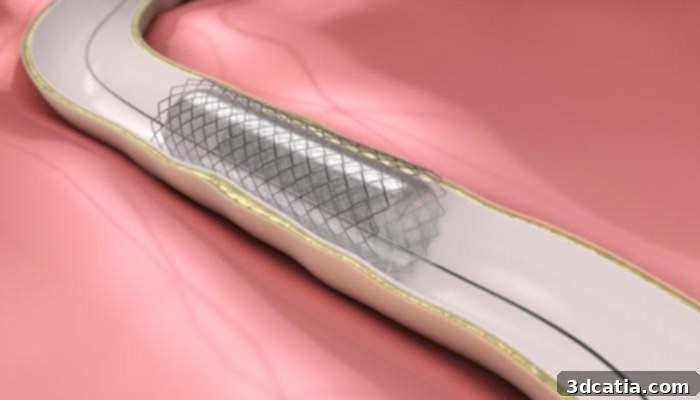
A conventional stent has an average lifespan of 90 days.
Bringing Innovation to Market: VisionAir Solutions
Following the crucial FDA approval, the dedicated teams at the Cleveland Clinic are moving swiftly to establish a specialized entity for the commercialization and broader distribution of these groundbreaking stents. This new venture, aptly named VisionAir Solutions, will be solely focused on bringing this advanced technology to medical institutions and patients across the United States. By the close of the current year, VisionAir Solutions aims to initiate sales of its custom airway devices to a select number of medical facilities, gradually expanding its reach. This strategic commercialization plan underscores the significant market potential and the pressing need for such personalized medical solutions. The establishment of VisionAir Solutions is a critical step in scaling this innovation, ensuring that more patients suffering from debilitating airway obstructions can benefit from the superior fit, durability, and comfort offered by these 3D printed silicone stents. This effort will not only transform individual patient outcomes but also potentially reshape the landscape of respiratory care. For more detailed information on this pioneering development, interested parties are encouraged to visit the official Cleveland Clinic website.
The Future of Personalized Medicine Through Additive Manufacturing
The approval and commercialization of these custom 3D printed airway stents represent more than just a single product launch; they symbolize a profound paradigm shift in healthcare. This achievement firmly establishes additive manufacturing as a cornerstone technology for the future of personalized medicine. The ability to design and produce patient-specific medical devices on demand opens up a vast array of possibilities across various medical disciplines. From custom implants and prosthetics that offer unparalleled comfort and functionality to highly precise surgical guides that enhance procedural accuracy, 3D printing is poised to revolutionize how medical care is delivered. This innovation at the Cleveland Clinic demonstrates how advanced technologies can be harnessed to address complex anatomical challenges, leading to significantly improved patient outcomes, reduced recovery times, and ultimately, a better quality of life. As research and development continue, we can anticipate further breakthroughs, making customized, highly effective medical solutions more accessible and commonplace, thereby shaping a healthier future for all.
Engage With Us
What are your thoughts on these innovative 3D printed airway stents and their potential impact on respiratory health? We invite you to share your insights and comments below. You can also join the conversation on our Facebook and Twitter pages! Don’t miss out on the latest advancements and news in the world of 3D printing. Sign up for our free weekly Newsletter to get all the cutting-edge updates delivered straight to your inbox.